Fresh Meadow
Short light-green fibres create the base. Individual darker and longer grass groups together with small wildflowers prevent a monotonous surface. Different meadow materials can be combined for a naturally varied result.

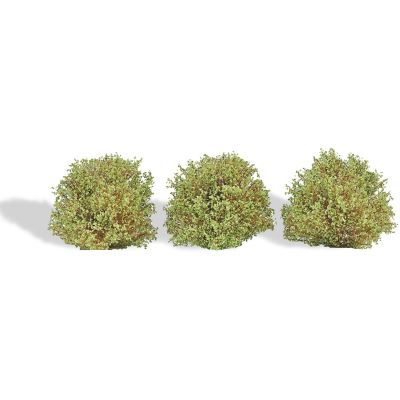
Fresh green meadows, flowering fruit trees, the first wildflowers, young shrubs, lush stream banks and awakening agriculture transform a model railway into a lively spring landscape.
Creating spring scenery on a model railway does not mean painting every open surface in the brightest possible green. It is precisely the transition between seasons that makes spring so interesting. Fresh grass grows amongst older blades, young leaves have different shades of green from a full summer canopy, and the first flowers appear between areas of still-visible soil.
A believable spring layout therefore relies on several vegetation layers. Earthy brown tones remain visible along field edges, slopes and beneath trees. Short, lighter grass fibres sit above them, followed by occasional longer blades, small bushes and young tree foliage. White, yellow, pink and red blossoms are used only as accents, which makes them much more effective.
Spring also does not arrive everywhere in the landscape at exactly the same time. A sunny meadow may already look fresh and green while a shaded forest edge still shows dark areas of exposed ground. A flowering orchard beside a largely bare cultivated field is therefore not contradictory; it can make the season look especially convincing.
The connection between nature and the railway is equally important. Young vegetation grows along railway embankments , grass appears between lightly used paths, trees create a fresh green background and vegetation beside a stream can be denser and more vigorous.
An entire layout does not have to look identical everywhere. Several different spring scenes create spatial variety while a shared colour palette keeps the overall landscape coherent.
Short light-green fibres create the base. Individual darker and longer grass groups together with small wildflowers prevent a monotonous surface. Different meadow materials can be combined for a naturally varied result.
Fruit trees with white or pink blossoms are one of the clearest spring themes. Irregular tree spacing, meadow beneath the trees and a small country path create a classic rural scene.
A forest edge should contain several height levels: ground, grass, low shrubs, young trees and larger deciduous trees. Light new growth in the foreground can be contrasted with darker woodland further back.
Small flower beds, flowering shrubs, young plants, garden paths and the first outdoor activities around houses and farms add human life and a clear seasonal reference.
Vegetation can be denser beside the water. Different grass lengths, bushes and occasional trees follow the stream while gravel and earth remain visible and define the shape of the bank.
Freshly worked fields, young crops, tractors, country tracks and neighbouring meadows create a strong contrast between brown and green. Rural buildings can be found in the Agriculture Building range.
Convincing spring scenery combines several related colours. The most important relationship is between fresh green, more muted ground colours and a small number of light blossom shades. An entirely neon-green landscape quickly loses its natural visual depth.
Rule of thumb: Large surfaces should consist mainly of natural green and ground colours. Blossom shades work best as small focal points. This keeps fruit trees, flower beds and field edges clearly visible without making the entire landscape overly colourful.
Base-coat the terrain using brown, ochre and muted green shades. Path edges, bare patches and gaps between vegetation then remain natural even when later scenery material does not completely cover every surface.
Spring meadow grass and suitable mats quickly establish the basic appearance. Individual static grassing allows several colour shades to be mixed and prevents hard boundaries between different areas.
Longer fibres suit fences, embankments, ditches and field edges. Short and long vegetation together create the irregular surface of naturally grown scenery.
Light-green shrubs suit forest edges, gardens, paths and railway embankments. Several different sizes placed together look much more natural than identical bushes positioned at regular intervals.
Deciduous trees do not all need to have the same colour. At a spring forest edge, light young trees can stand in front of somewhat darker vegetation. This alone can create convincing depth without an additional scenic backdrop.
One flowering fruit tree can communicate spring more effectively than covering the entire layout with colourful flowers. Group blossoms only where the scene makes botanical and visual sense.
Grass mats, many scatter materials and foliage products can be used across several scales. Individual plants, trees and particularly tall grass tufts should, however, have visible dimensions appropriate to the scale.
| Gauge / Scale | Spring Scenery | Pay Particular Attention To |
|---|---|---|
| Z · 1:220 | Very fine meadows, small blossom accents and low bushes | Use individual plants sparingly and avoid oversized areas of strong colour. |
| N / Nm · approx. 1:160 | Broad meadows, forest edges and flowering landscape groups | Fine materials look especially convincing along longer railway routes. |
| TT · 1:120 | Meadows, gardens, young woodland and agriculture | Offers an excellent balance between broad scenery and visible individual plants. |
| H0 / H0e / H0m / H0f · 1:87 | Highly detailed orchards, gardens, embankments and field edges | Very wide choice of trees, flowers, figures and vegetation materials. |
| 0 / 0e · approx. 1:45 | Individual plants, larger grass tufts and detailed gardens | Make the ground texture clearly visible between plants. |
| 1 · 1:32 | Large individual trees and strongly three-dimensional vegetation | Fine branch and leaf structure becomes especially important. |
| G / IIm | Large-scale scenery combined with real garden vegetation | Use only suitable weather-resistant materials outdoors. |
Decide whether you want to represent early or more advanced spring. The earlier the point in the season, the more open soil and bare branches may remain visible. Later in spring, meadows and tree canopies become denser.
Soil beneath trees and along paths and field edges should already be complete before vegetation is applied. Small open areas then look intentional rather than like gaps in the scenery material.
Grass mats are quick to use, while electrostatic fibres allow greater variation. A mixture of several shades of green looks considerably more natural than one completely homogeneous surface.
Use longer blades, grass tufts and low bush material in these areas. Vegetation should not end along an exact straight line, but should merge irregularly into the neighbouring ground.
Do not place flowering fruit trees randomly in a dense forest. They fit especially well beside villages, gardens, field paths and orchard meadows. Several lighter leaf colours create young growth within woodland.
Wildflowers, garden plants and flowering shrubs work best in groups. This creates focal points beside paths, houses, meadow edges and gardens without covering the dominant green scenery.
Hikers, cyclists, gardening and agricultural work bring the scene to life. Place figures where their activity can be explained by paths, buildings or the surrounding landscape.
Do not assess the layout only from a few centimetres away. If one colour stands out too strongly, blend it with more neutral vegetation tones. The result remains lively but harmonious.
A realistic spring landscape needs visible differences between meadow grass, bushes, young foliage, forest ground and damp areas. Small amounts of brown soil and older vegetation should remain visible. This contrast is precisely what makes fresh green appear convincing.
Spring landscapes are created by combining several product groups. Meadows form the base, foliage and bushes provide height, flowers create colour accents and figures together with agricultural elements bring the season to life.
Spring meadows, flower meadows, scatter grass and materials for electrostatic grassing.
Young deciduous trees, fruit trees and tree groups for gardens, orchards and forest edges.
Fresh spring green, flowering bushes and natural transitions towards taller vegetation.
Blossoms, flower beds, garden plants and colourful accents for villages and countryside scenery.
Light-green leaf and foliage materials for building and refining young trees and shrubs.
Farms, barns and operational buildings for rural spring scenes.
Hikers, cyclists and other figures for the beginning of the outdoor season.
Small landscape details for riverbanks, gardens, paths and natural scenery.
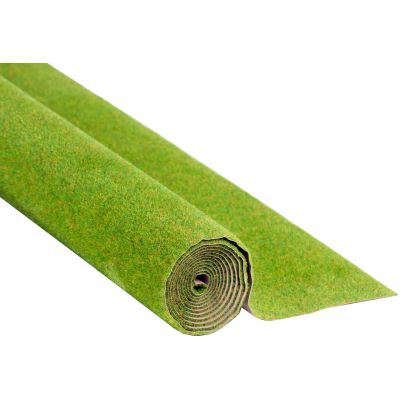
Large grass mat providing a quick base for fresh meadows and spring landscape areas.
View Product →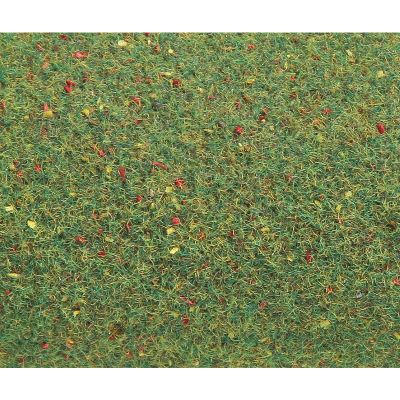
Vegetated terrain mat with flower accents for rural scenery, fields and meadows.
View Product →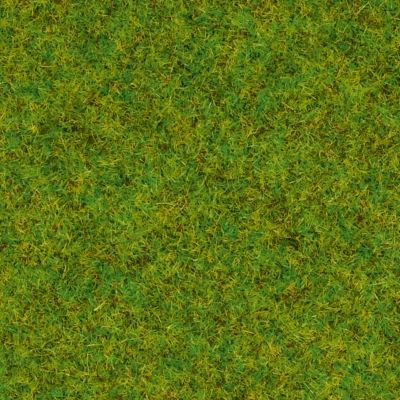
Fine grass fibres for individually creating meadows, verges and natural transitions.
View Product →
Larger pack of fresh grass fibres for continuous meadow areas and landscape transitions.
View Product →
Distinctive spring feature for gardens, villages and flowering orchard meadows.
View Product →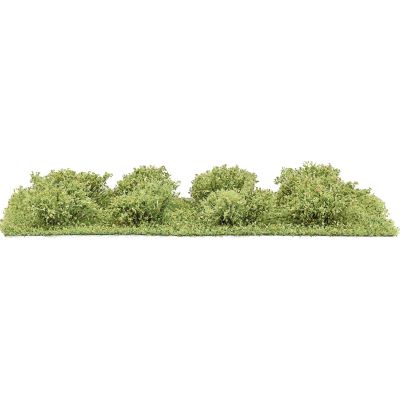
Fine low shrubs for forest edges, paths, gardens and natural vegetation transitions.
View Product →
Light-green bushes for gardens, meadows, parks and fresh forest edges.
View Product →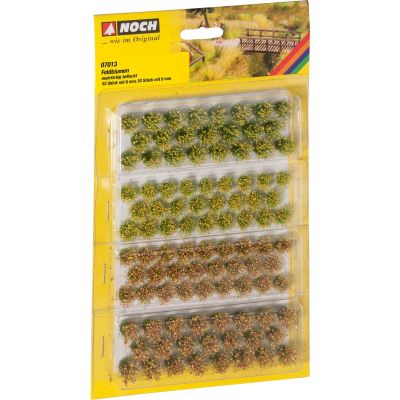
Flowering grass tufts for paths, meadow edges and rural landscape scenes.
View Product →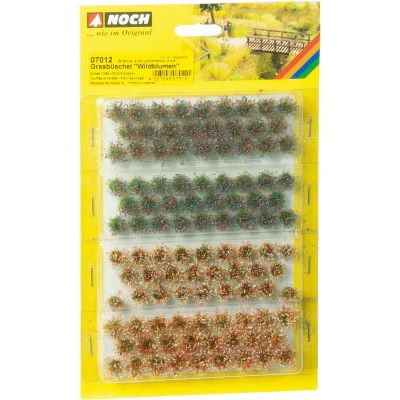
Multi-coloured grass tufts for individual flower groups and natural meadow scenery.
View Product →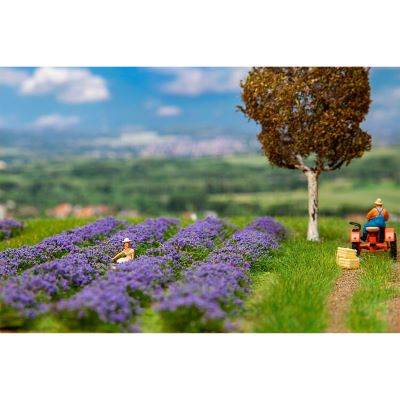
Blue-violet flowering plant groups for gardens and rural field scenes.
View Product →
Plants, paths and garden details for a lively rural spring scene.
View Product →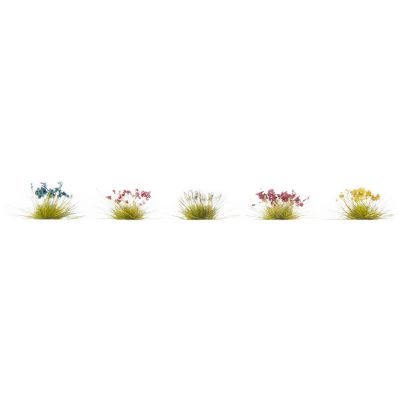
Individual colourful plants for flower beds, path edges and maintained green spaces.
View Product →When this section approaches the viewport, the finder loads additional suitable products from current English Modellbahnshop categories. Results can then be filtered by product name, gauge, manufacturer, scenery area and product group. Detected archived items are excluded and availability information is deliberately not displayed.
Suitable current products will be loaded when this section approaches the viewport …
Scenery materials from different manufacturers can be combined effectively. Brands with a broad range of grass, trees, bushes, flowers and landscape accessories are particularly useful for creating varied spring scenery.



Spring scenery especially benefits from mixing several grass colours, tree shapes and bush structures. The manufacturer overview also leads to Heki, Silhouette and further specialists for model vegetation.
These answers cover colour selection, grassing, trees, blossoms, model railway gauges and converting an existing layout to spring.
Several light and medium green shades work well, complemented by brown soil and a few white, yellow or pink blossoms. One single very strong green generally looks less natural.
Fresh grass can be noticeably lighter than a dry summer meadow. The most convincing result combines fresh green with a few darker or older blades.
Flowering fruit trees are one of the clearest seasonal themes. Deciduous trees with young light-green canopies and areas that are not yet fully leafed also work very well.
Small groups are usually sufficient. Blossoms should provide focal points while most of the surface remains grass and natural ground. This prevents a flower meadow from appearing artificial.
Yes. Lighter bushes, young foliage colours, flowering fruit trees and new meadow areas can make an existing landscape look considerably more spring-like. Existing darker vegetation does not need to be removed completely because it can provide depth.
Yes. Visible soil on fields, beneath trees, beside paths and in lightly vegetated areas is very useful. It prevents the landscape from becoming one artificially closed green surface.
Yes. Many grass mats, fibres and foliage materials are universal. Individual trees, flowers and tall bushes should nevertheless have visible dimensions appropriate to the respective model size.
Begin with earthy ground and low grass. Add shrubs and young trees at different heights, followed by larger deciduous trees in the background. Several shades of green create the necessary depth.
A flowering orchard meadow, a garden beside a station or a freshly vegetated railway embankment needs relatively little space while still communicating the season very clearly.
Young green fields can be combined with still-brown cultivated ground. Agricultural vehicles, field paths, farm buildings and meadows create a logical rural context.
Content updated on . For specific dimensions and processing instructions, the information on the respective product page remains authoritative.
From meadows and forests to water, mountains, rocks, gauges, track planning, technology and rolling stock, the central guide provides access to the relevant model railway topics.