Modellbahn Keks
Welcome!
Our cookies offer you a fast, relaxed and full-featured shopping experience. Some are necessary to operate the website and its functions. Others help us to improve our services. If you agree to this, simply consent to the use of cookies for preferences, statistics and marketing by clicking on "OK". Alternatively, you can deactivate individual cookies under "Customise cookies" or all cookies, except those required for the function of our website, under "Reject all".
Model railway with a locomotive, coaches and scenery for beginners entering the hobby
Plan simply, choose confidently and start running trains

Model Railways for Beginners | Getting Started & Starter Sets

Which gauge suits your available space? Should your first model railway use analogue or digital control? This beginner’s guide takes you from the initial idea and system choice to a suitable starter set and a model railway that can grow step by step.

An easy-to-understand introduction

What Does a Beginner Need for a Model Railway?

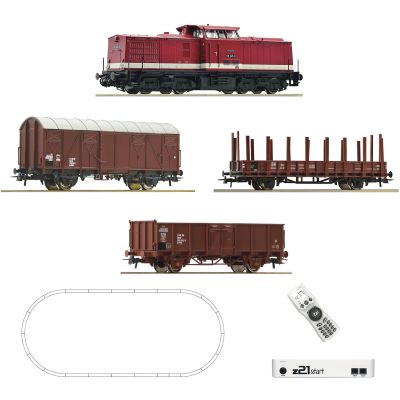
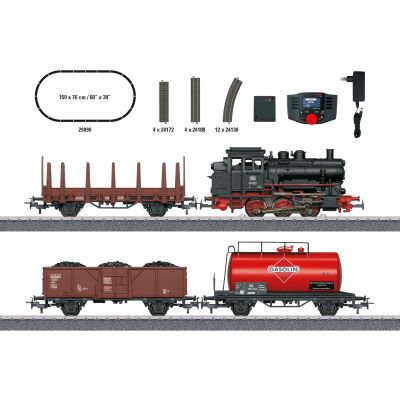
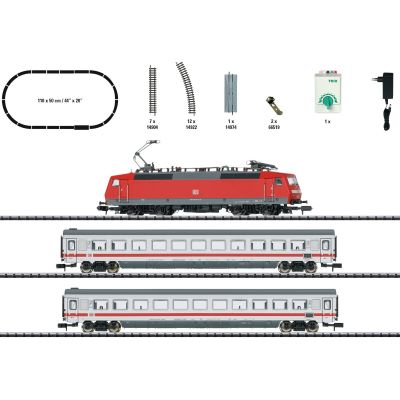
For your first operating railway, you need a locomotive, matching coaches or wagons, a closed track oval or another continuous route, a power supply and a suitable controller. The simplest way to obtain these coordinated components is with a model railway starter kit . The included components are designed to work together and can be put into operation after assembly.

Before selecting a particular model, make three decisions. How much permanent or temporary space is available? Which gauge can be operated sensibly within that area? Do you initially want to control one train with a straightforward analogue controller, or operate several locomotives with lighting and sound functions using digital control?

A good first model railway does not have to be large. A reliable oval with one turnout, a siding and a small station teaches more useful basics than an overloaded track plan that is difficult to reach and prone to faults. Start with a manageable layout and consider from the first purchase how the track, control system and vehicles can be expanded later.

Eight manageable steps

How to Begin Your First Model Railway

Make the fundamental decisions in this order. This helps prevent incompatible purchases and creates a railway that matches your available space, budget and preferred type of operation.

1

Measure the Available Space

Measure the length, width and accessible depth. Consider doors, furniture, sloping ceilings, radiators and the space required to operate the railway.

Recommendation

Do not plan a layout deeper than you can safely reach from at least one side.

2

Select a Gauge

H0 offers a large selection, TT saves space, N permits long routes and Z suits particularly small areas. G is intended for large indoor and garden railways.

Recommendation

Wherever possible, examine models in your preferred gauge in person before buying.

3

Choose the Power System

In H0, a distinction is made between two-rail systems and the Märklin-compatible centre-contact system. Vehicles must suit the existing track and power system.

Recommendation

For every future purchase, note the gauge, two-rail or centre-contact system and analogue or digital control.

4

Choose Analogue or Digital Control

Analogue control is easy to understand for a single train. Digital control permits independent locomotive operation, lights, sound, shunting mode and later digitally controlled turnouts.

Recommendation

Anyone planning to operate several locomotives in the long term should consider starting digitally.

5

Select a Starter Set

Do not consider only the locomotive. Check the track system, controller, included rolling stock, space required by the oval and the available expansion packs.

Recommendation

Track with an integrated roadbed is useful for frequent assembly and dismantling on a table or floor.

6

Build a Simple Track Plan

Begin with an oval and add a turnout with a siding. This allows continuous running, shunting, wagon storage and the first realistic operating sequences.

Recommendation

Avoid tight reverse curves and unnecessarily complicated turnout arrangements in your first plan.

7

Test the Railway

Run several laps in both directions and test trains with coaches or wagons being pushed. Secure or ballast the track only after reliable operation has been confirmed.

Recommendation

Pay particular attention to joints, turnouts, connection points and the smallest radius.

8

Add Scenery Step by Step

Begin with a station, platform, road and a few buildings. Terrain, vegetation, lighting and further scenes can be added later.

Recommendation

Complete one small area first instead of starting work everywhere at the same time.

Scale, space requirements and handling

Which Model Railway Gauge Is Suitable for Beginners?

There is no single best gauge. The right choice depends on the available space, the desired train length and how important large, easy-to-handle details are to you. Narrow-gauge and field-railway variants are available in addition to the standard-gauge sizes.

Gauge Typical Scale Model Track Gauge Strength What Beginners Should Consider
Z 1:220 6.5 mm Extremely space-saving and suitable for long routes in a small area. Small vehicles require clean track, good lighting and careful handling.
N 1:160 9 mm Long trains, extensive scenery and compact stations. An excellent choice when space is limited; a rerailer is useful.
TT 1:120 12 mm A good compromise between space saving and visible detail. Particularly interesting for DB, DR and Central European prototypes.
H0 1:87 16.5 mm Very large selection of vehicles, track, buildings and accessories. Requires more space; distinguish between two-rail and centre-contact systems.
H0m 1:87 12 mm Metre-gauge railways such as the RhB and other mountain railways. Narrow-gauge vehicles require their own suitable track.
H0e 1:87 9 mm Light and narrow-gauge railways with tight curves. A good introduction for a small, scenery-focused layout.
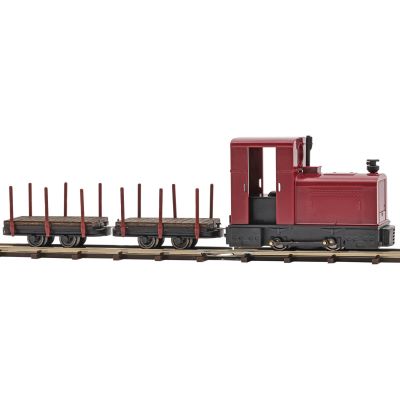
H0f 1:87 6.5 mm Field railways, mines, quarries and industrial railways. Small vehicles and short plans are suitable for dioramas.
S 1:64 22.5 mm Large, clearly visible models. Comparatively uncommon in Europe, with a smaller selection.
0 usually 1:45 32 mm Strong visual detail and intensive shunting operation. Requires considerable space; compact point-to-point layouts are practical.
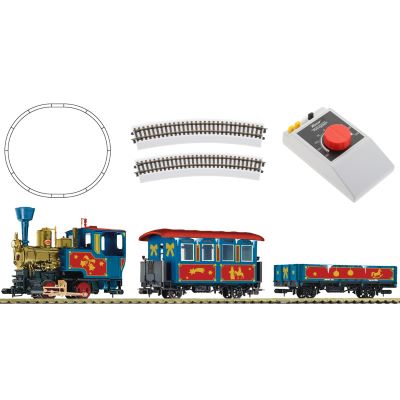
0e usually 1:45 16.5 mm Large narrow-gauge models using comparatively tight curves. Suitable for small shunting, local railway or Christmas layouts.
1 1:32 45 mm Very large models with extensive functions. Requires considerable space and a correspondingly higher budget.
G often 1:22.5 45 mm Robust vehicles for indoor and garden railways. Plan for radii, weather exposure, power supply and secure storage.
II 1:22.5 64 mm for standard gauge Very large, prototypically scaled standard-gauge models. A specialist size with substantial space requirements and a limited selection.
Technology without unnecessary obstacles

Analogue, Digital, Two-Rail or Centre-Contact?

These terms describe different aspects of a model railway. Analogue or digital refers to the control system. In H0, two-rail or centre-contact describes how the traction current is collected from the track.

Starting with Analogue Control

On a traditional analogue railway, the controller determines the voltage in the track section. This makes controlling one train particularly straightforward. Several independently moving trains require separate electrical sections and additional switches.

Suitable for

A first oval, one train, a small field railway or an uncomplicated seasonal layout.

Later expansion

Many analogue locomotives can be converted to digital operation later when their construction and interface permit it.

Starting with Digital Control

On a digital railway, every locomotive has its own address. Several locomotives can be controlled independently on the same track. Depending on the model, lighting, sound, shunting mode and further functions can be switched separately.

Suitable for

Multiple-train operation, sound-equipped models and a railway that may later include turnout control or feedback modules.

Important

The decoder and digital command station must support common protocols. DCC is widely used with many two-rail systems.

H0 AC and H0 DC

In model railway retail, H0 AC usually refers to the Märklin-compatible centre-contact system with stud contacts and a pickup shoe. H0 DC generally refers to a two-rail system in which the two running rails carry separate electrical poles.

Before buying a vehicle

Always check which system the model is designed for. The outer track gauge is the same for both H0 systems.

Rule for beginners

The same gauge does not automatically mean that current collection, wheelsets and digital equipment are compatible.

From a starter pack to your first layout

What Should Be Added After the Starter Set?

Do not immediately buy many separate locomotives. Additional track, a turnout, a siding and a small station usually provide more operating enjoyment because they give the first train a purpose.

1. Track Expansion

Add a turnout and siding that match the existing track system. Mix track from different systems only with the appropriate transition sections.

2. Rerailer

A rerailer positions every wheel correctly on both rails. It is especially practical for long vehicles and the smaller N and Z gauges.

3. Station and Platform

Begin with a small building. Before construction, check that the platform, track spacing and longest planned train fit together.

4. Cleaning and Maintenance

Dust and dirt reduce reliable current collection. Use only suitable cleaning products and oil vehicles solely in accordance with the manufacturer’s instructions.

5. Matching Coaches and Wagons

Expand the existing train rather than buying random individual vehicles. Consider the railway company, era, coupling and vehicle length.

6. Scenery Construction

Begin with road paint, a few trees, grass fibres and one small terrain section. Large mountains and tunnels should be built only after reliable test runs.

The most common beginner’s mistake: starting an excessively large layout with too much track before testing operation, accessibility and wiring. A smaller completed layout provides more experience and can later be reused as a module or section of a larger railway.
20 recommendations for different ways of getting started

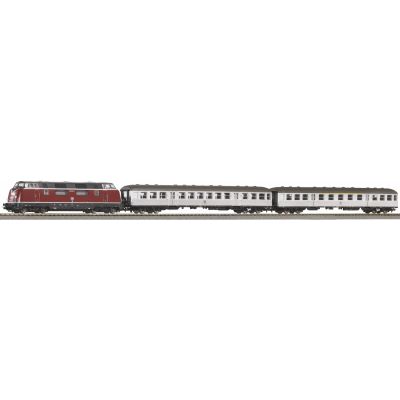
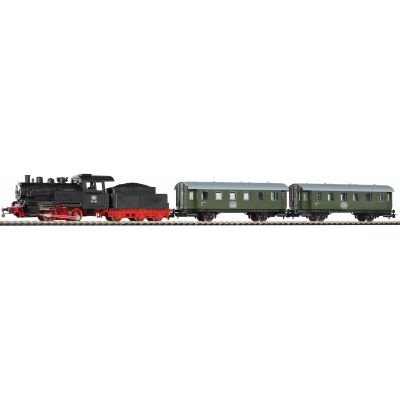
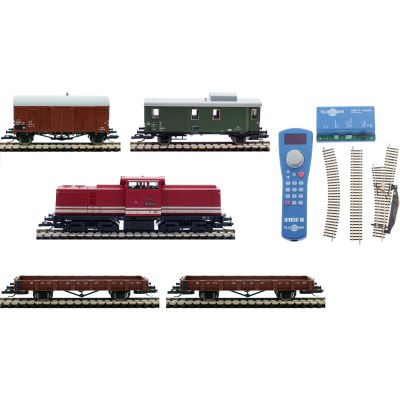
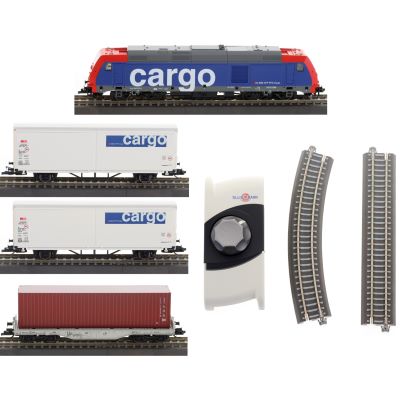
Model Railway Starter Sets for Beginners by Gauge

The selection includes analogue and digital sets, historic and modern trains and compact specialist railways. When comparing products, consider not only your favourite train but also the track system, control equipment, required base area and future expansion possibilities.

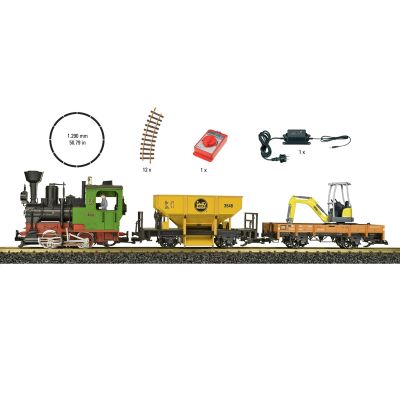
G Gauge – Robust Models for the Home and Garden

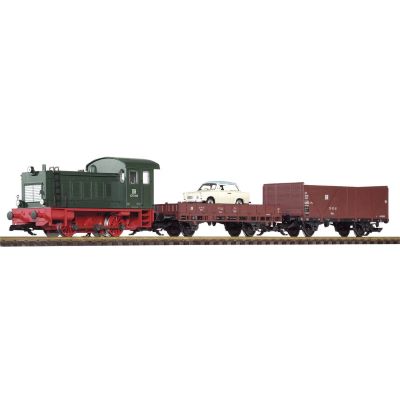
Large vehicles are easy to handle and visually impressive. For outdoor operation, the track base, power supply and weather-protected storage must be considered from the beginning.

Questions and easy-to-understand answers

Frequently Asked Questions About Model Railways for Beginners

Which Model Railway Is Best for Beginners?

For many beginners, a complete H0, TT or N starter set is the easiest solution. H0 offers a very large selection, TT saves space while remaining easy to handle and N permits long routes in a small area. The deciding factors are the available space, preferred train length and desired model size.

Should a Beginner Start with Analogue or Digital Control?

Analogue control is suitable for a straightforward layout with one train. Digital control is useful when several locomotives should operate independently or lighting and sound functions are required. Anyone planning a railway that will grow over time often benefits from an expandable digital system from the beginning.

How Much Space Does a First Model Railway Need?

This depends on the gauge and the included curve radius. An N-gauge starter set often requires considerably less space than a comparable H0 set. Always check the assembled dimensions stated in the product description and allow an additional safety margin around the track.

How Much Does a Sensible Introduction to Model Railways Cost?

The price depends strongly on the gauge, control system and equipment. Analogue H0 sets are often less expensive than extensive digital sets with sound. Allow an additional amount for track expansion, a rerailer, cleaning equipment and the first scenery materials.

Can Vehicles from Different Manufacturers Be Combined?

Often they can, provided the gauge, power system, wheelsets, couplings, minimum radius and digital protocol are compatible. In H0, it is particularly important to distinguish between two-rail and centre-contact versions. Coaches and wagons from different manufacturers are usually easier to combine than locomotives.

Can a Model Railway Initially Be Built on the Floor?

Track with an integrated roadbed is suitable for temporary assembly on a table or clean floor. Carpet fibres, animal hair and dust can enter gears and axles, however. A smooth base or simple board protects the vehicles and makes assembly easier.

Which Gauge Is Suitable for Children?

Large and robust vehicles are easier to handle than very small models. The specific age recommendation, small parts that could be swallowed and the required adult supervision are decisive. Model railway sets for adults are not automatically toys for young children. Always observe the manufacturer’s instructions.

What Is More Important: Lots of Track or Good Scenery?

For beginners, a simple and reliable track plan is more important than a large amount of track. One turnout and a siding already provide genuine railway operation. Free space for buildings, roads, vegetation and a station makes the later layout more believable and less overcrowded.

How Can Derailments Be Prevented on the First Layout?

Connect rail joiners completely, lay the route on a level surface and avoid kinks. Check turnouts and transitions and test the longest train in both directions. Secure or ballast the track only after successful test runs.

Which Era Is Suitable for Model Railway Beginners?

Any era is possible. Choose a period whose locomotives and rolling stock appeal to you. Eras III and IV offer steam, diesel and electric traction, while Eras V and VI allow modern ICE, regional and freight trains. A clearly defined era makes future purchases easier.

Your First Model Railway Is Only the Beginning

Expand your knowledge of gauges, track planning, digital technology, locomotives, rolling stock, railway eras, scenery construction, maintenance and prototypical operation.

Open the Main Guide