Modellbahn Keks
Welcome!
Our cookies offer you a fast, relaxed and full-featured shopping experience. Some are necessary to operate the website and its functions. Others help us to improve our services. If you agree to this, simply consent to the use of cookies for preferences, statistics and marketing by clicking on "OK". Alternatively, you can deactivate individual cookies under "Customise cookies" or all cookies, except those required for the function of our website, under "Reject all".
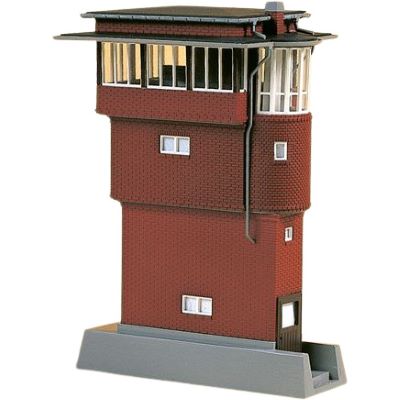
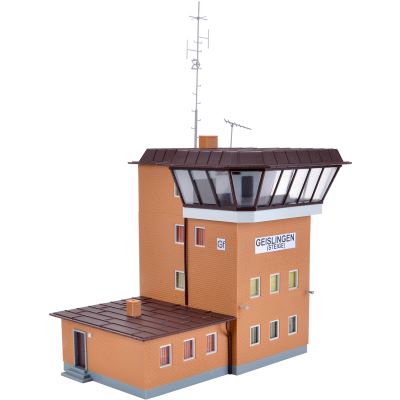
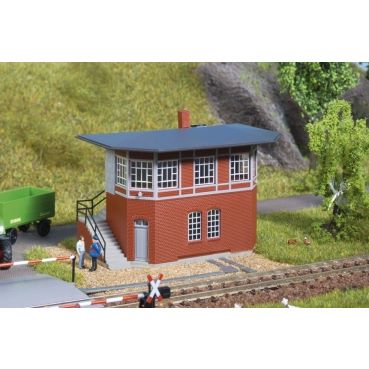
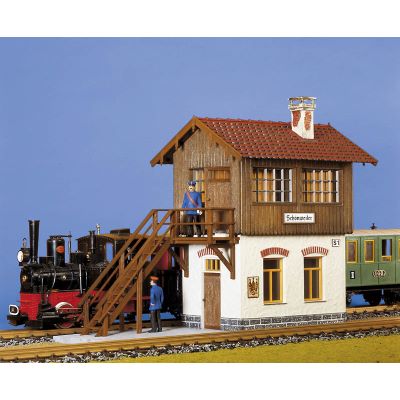
Auhagen Erfurt signal box as a historic H0 model railway signal box building
Turnouts · Signals · Routes · Railway Operation

Signal Boxes for Model Railways | Buildings & Control

From mechanical signal boxes with lever frames to digital route control: signal boxes connect railway architecture, turnouts, signals and understandable train operation to create a particularly fascinating model railway theme.

Combine Architecture with Operational Logic

What Is a Signal Box and Why Does It Belong on a Model Railway?

Signal Boxes for Model Railways | Buildings & Control combines two areas that are often confused with one another: the visible signal-box building and the actual control system of the model railway. On the real railway, a signal box controls and secures turnouts, signals and routes so that train and shunting movements can take place in an organised and safe manner.

Historic signal boxes were therefore often positioned where many turnouts converged: at station entrances, station throats, junctions and shunting areas. From an elevated operating room with extensive glazing, railway staff could overlook the track layout. Mechanical lever frames were connected to turnouts and signals by wire runs or rodding.

A model building from Auhagen, FALLER, Kibri, PIKO or Pola does not automatically control the model railway. The kit initially represents only the architecture. Working turnouts and signals require suitable drives, switches, decoders, digital command stations or computer control.

This separation is especially useful on a model railway. A mechanical signal box representing Era II or III can stand visibly beside the tracks while modern digital decoders operate beneath the layout. Prototypical historic architecture and convenient modern model railway control can therefore be combined without difficulty.

From Wire Runs to Digital Interfaces

How Has Signal Box Technology Developed?

Different generations of interlocking technology did not replace one another overnight. Older and more modern systems could remain in operation side by side for many years. A particular prototype and operating period are therefore more useful for model railway planning than one rigid cut-off date.

1

Mechanical Signal Box

Lever Frame & Wire Runs
Particularly attractive for historic model railways

Turnouts and semaphore signals are operated using mechanical levers, wire runs, tensioners and pulley systems. On a model railway, wire-run channels, point lanterns and tensioning devices can be represented as distinctive technical details beside the track.

2

Electromechanical Signal Box

Mechanics Meets Electricity
Transition between two generations of railway technology

Mechanical operating principles are combined with electrical monitoring and control. Externally, these installations can still use traditional signal-box buildings with large areas of glazing.

3

Relay Interlocking

Electrical Route Logic
Track-diagram panels define the operating environment

Relays perform a large proportion of the safety dependencies. Routes are set on a schematic track diagram. More functional signal-box buildings and colour-light signals are particularly suitable for later railway eras.

4

Electronic and Digital Interlockings

Computer-Based Control
Operation no longer needs to take place directly beside the tracks

Electronic and digital interlockings can control extensive railway areas by computer. On a modern model railway, a discreet technical building may therefore be sufficient, or an older signal box can remain standing even though it no longer performs an operational function.

Turnout Sets the Route
Route Is Locked
Signal Shows Proceed
Train Movement Takes Place
Building Form Follows Its Operational Location

Which Types of Signal Box Are Suitable for Model Railways?

The different signal-box models available from Modellbahnshop offer considerably more variety than the familiar small tower beside the railway line.

Classic Signal-Box Building

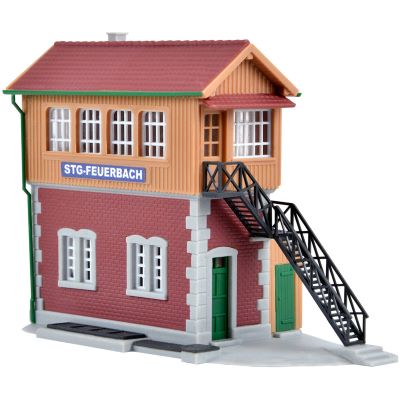
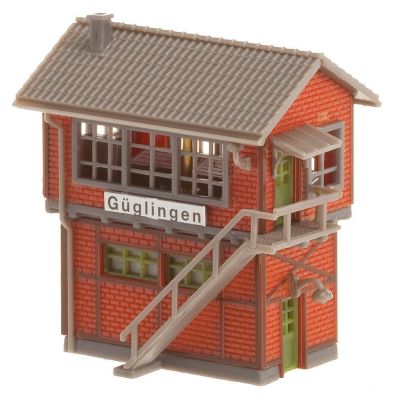
A substantial lower floor supports a highly glazed operating room. This form works especially well at station entrances, larger turnout ladders and historic main lines.

Over-Track Signal Box

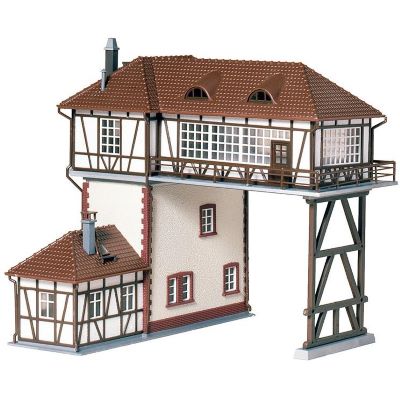
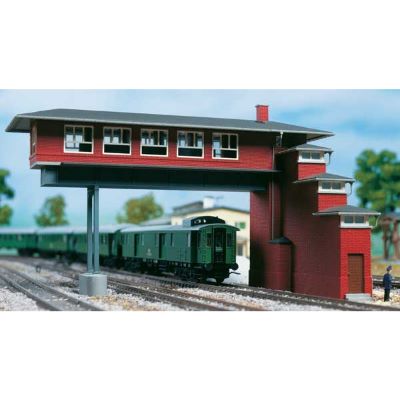
The building stands directly above one or more tracks. Clearance height, track-centre spacing and any overhead line must therefore be checked carefully before installation.

Bridge Signal Box

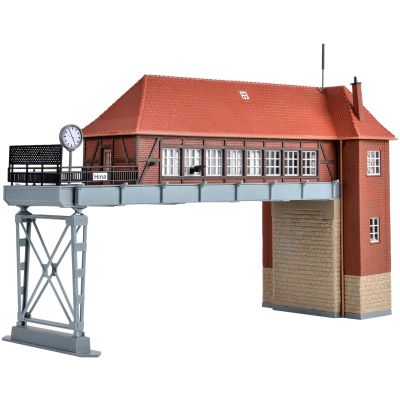
Large structures span a multi-track station throat or track field. Models such as Saalfeld or Hamm become prominent focal points in main stations and large shunting areas.

Point Operator's Signal Box

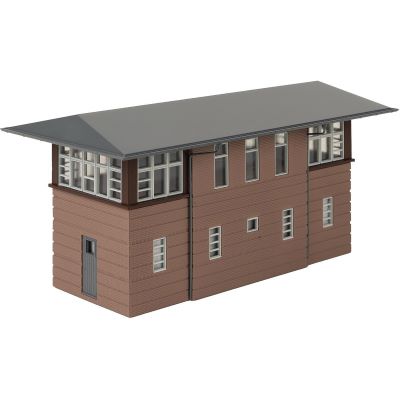
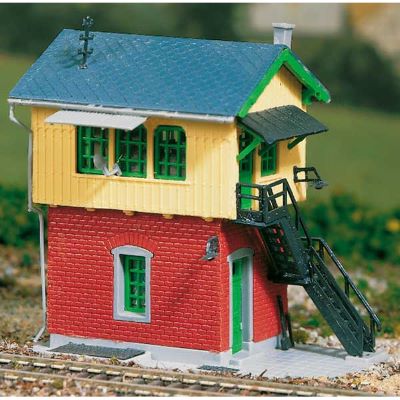
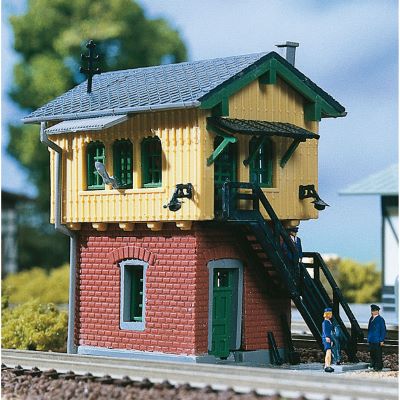
Smaller buildings control a limited section of a station. They suit branch lines and situations in which several signal boxes control different station throats.

Modern Functional Building

Relay and electronic equipment does not require a romantic observation tower. A modern functional building therefore works particularly well for Era V, Era VI and contemporary main lines.

Decommissioned Signal Box

A historic building can remain visible on a modern model railway. Bricked-up windows, weathered façades or a new use can tell the story of changing railway technology.

The Building Needs an Operational Reason for Being There

Where Should a Signal Box Be Positioned on the Layout?

A particularly believable location is at the station throat. Entrance turnouts, exits and several signals are often concentrated there. A historic signal-box building should be positioned so that its operating room has a plausible view over the railway area being controlled.

Other suitable locations include junctions, larger shunting areas, locomotive depots and heavily branched track fields. On a small branch line, one compact building at the station entrance may be sufficient. Large stations can have several signal boxes.

Over-track and bridge signal boxes must be considered during track planning. Adding a building above existing track afterwards can create problems with vehicle clearance, track-centre spacing and overhead wiring. Models such as the Kibri Hamm bridge signal box and Auhagen Saalfeld bridge signal box therefore specify concrete clearance dimensions.

Planning tip: initially position the assembled signal box without fixing it permanently and run your longest rolling stock through every neighbouring track. Only then should the building, surrounding scenery and nearby platforms be fixed permanently.

From a Simple Switch to an Automatic Route

How Can Signal-Box Operation Be Implemented on a Model Railway?

Actual control of the model railway can remain completely independent of the visible building. A historic signal box can therefore retain its prototypical appearance while turnouts and signals are controlled conveniently using modern digital equipment.

Control Type Operation Suitable For Advantage
Manual Turnout Directly at the track Small branch lines Simple and immediate
Analogue Control Panel Push-buttons and switches Small to medium-sized layouts Easy to understand
Track-Diagram Panel Schematic track plan Stations and shunting areas Turnout positions are immediately visible
Digital Command Station Hand controller, display or app Digital layouts Central accessory control
Computer Control Software and feedback Larger layouts Routes and automation

Suitable decoders, feedback modules and other digital accessory technology can be found in the Digital Accessories category. The technically correct combination depends on the digital command station, turnout drive, signal and data format being used.

The Visible Language of the Signal Box

Match Signals and Turnouts to the Signal-Box Era

Signal box, signals and turnouts should create one coherent technical scene. Mechanical signal boxes combine particularly well with semaphore signals, visible point lanterns and historic railway buildings. Modern relay and electronic installations can instead be combined with colour-light signals, electric drives and technical cabinets.

From a Z-Gauge Signal Box to Garden Railway Architecture

Signal Boxes for Z, N, TT, H0, 0, 1 and G

Gauge Scale Particular Strength Product Range Note
Z 1:220 Extremely compact station throats FALLER offers a particularly compact Z-gauge signal box.
N 1:160 Extensive track fields in a small area Auhagen, Kibri and other manufacturers offer several different architectural forms.
TT 1:120 Particularly suitable for DR and DB station scenes Auhagen offers classic buildings and bridge signal boxes.
H0 / H0e / H0m 1:87 Largest selection and widest scenic variety FALLER, Auhagen, Kibri, Vollmer and further manufacturers.
0 approx. 1:45 Strong architectural impact Smaller ready-made range; scratch-building and accessory combinations are especially interesting.
1 1:32 Large individual building projects Signal boxes are often realised as individual building projects.
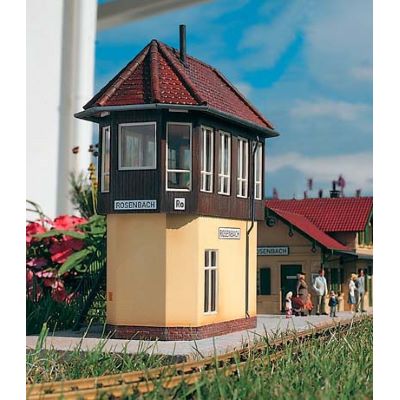
G / IIm often approx. 1:22.5 Prominent garden railway architecture PIKO and Pola offer large signal-box buildings.
Current Signal-Box Models

Signal Boxes from Z Gauge to Garden Railways

The selection ranges from a Z-gauge signal box only a few centimetres tall to large command signal boxes for G gauge. The following models represent particularly different architectural forms and model scales.

H0 Gauge · Largest Selection

Classic, Over-Track and Bridge Signal Boxes in 1:87

TT Gauge · 1:120

Historic and DR Signal Boxes for Compact Stations

N & Z Gauges · Particularly Compact

Signal-Box Buildings for Small Model Railway Layouts

G Gauge · Garden Railway

Large Signal Boxes with Strong Architectural Presence

Search Buildings and Operating Technology Together

Filter Current Signal Boxes, Signals and Control Products Live

When this section approaches the viewport, the finder checks current English pages for railway facilities, signals, digital accessories and lighting. Signal-box buildings and matching operating technology can therefore be filtered together and loaded progressively. Recognised archive, B-stock and clearance pages are excluded.

Current signal boxes and operating technology will be loaded when this section approaches the viewport …

Manufacturer Worlds at Modellbahnshop

Manufacturers for Signal Boxes and Signalling Technology

The selection ranges from specialist building manufacturers to brands supplying working signals and digital control technology. Architecture and railway operation can therefore be combined deliberately across different manufacturers.

Building and Technology Do Not Need to Come from the Same Manufacturer

An Auhagen, FALLER or Kibri signal box can, for example, be combined with Viessmann signals and digital accessory control. Gauge, era, signal type and technical compatibility are the decisive factors.

Open Manufacturer Overview
Frequently Asked Questions About Signal Boxes and Control

Questions About Signal Boxes on Model Railways

What Does a Railway Signal Box Do?

A signal box controls and secures turnouts, signals and routes. Depending on the technology, this may be done mechanically, electromechanically, using relays or with computer-based electronic systems.

Does a Signal-Box Kit Automatically Control My Model Railway?

No. The kit initially represents only the signal-box building. Turnouts and signals require their own drives together with switches, decoders or a compatible digital control system.

Where Should a Signal Box Be Positioned on the Layout?

Typical locations include station throats, large turnout ladders, junctions, shunting areas and locomotive depots. The position should have an understandable operational purpose within the track plan.

What Is an Over-Track Signal Box?

An over-track signal box stands above one or more railway tracks. Clearance height, track-centre spacing and any overhead line must therefore be checked before the model is installed.

What Is a Bridge Signal Box?

A bridge signal box spans a larger part of a track field. It works particularly well as a prominent focal point at multi-track main stations and large shunting areas.

Which Signals Suit a Mechanical Signal Box?

Semaphore signals are especially characteristic of many historic German railway layouts. The exact signal type and aspects should nevertheless match the represented railway administration, route and era.

Can a Historic Signal Box Be Combined with Digital Control?

Yes. The visible building and the technical model railway control system are independent. Modern decoders and feedback modules can therefore operate beneath the layout while a historic mechanical signal box is represented above it.

Are Signal Boxes Available for Z, N and TT Gauges?

Yes. Particularly compact models are available for Z, while Auhagen and Kibri offer several N-gauge variants. Auhagen also provides classic TT buildings and the Saalfeld bridge signal box.

Are Signal Boxes Available for Garden Railways?

Yes. PIKO and Pola offer large signal-box buildings for G gauge. Their size makes them particularly prominent structures in garden railway stations.

How Can a Signal-Box Building Be Made More Realistic?

Interior equipment, lighting, railway staff, point lanterns, cable cabinets, wire-run channels and an operationally plausible track field can significantly improve the overall effect.

What Is an ESTW?

ESTW is the German abbreviation for an electronic interlocking. Turnouts, signals and routes are controlled and monitored by computer, and extensive railway areas can be operated from central control locations.

Can Model Railway Software Set Complete Routes?

With a compatible digital command station, accessory decoders, feedback modules and suitable software, several turnouts and signals can be controlled together as a complete route.

Content and product links checked on . For signals, decoders and turnout drives, the technical information on the respective product page and from the manufacturer remains authoritative.

From the Signal Box to Complete Model Railway Operation

Further detailed topics covering stations, tracks, signals, digital technology, scenery, gauges and rolling stock can be found in the central Model Railway Guide.

Open the Model Railway Guide