
Fences, railings and gates








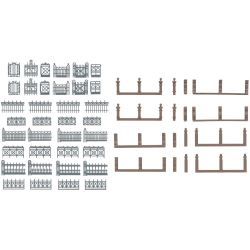


Are you looking for fences, railings and gates that make your model railway layout look more structured, realistic and full of everyday detail?
Then this category is exactly the right place: with suitable model railway fences, garden fences, pasture fences, wooden fences, iron railings, industrial fences, gates, balustrades, bridge railings and construction fences, you can create clear boundaries, safe paths and believable miniature scenes.
Why are fences, railings and gates important for model railway scenery?
Fences, railings and gates help organise the landscape and show where areas begin and end. They make gardens, farms, stations, roads, bridges and industrial yards look more realistic.
What belongs to the fences, railings and gates category?
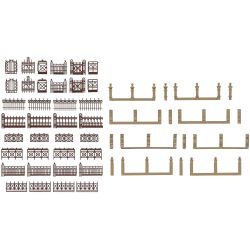
This category includes wooden fences, pasture fences, garden fences, iron railings, balustrades, industrial fences, wall fences, construction fences, snow fences, bridge railings and matching gates. These accessories are useful for villages, towns, farms, parks, railway areas, roadsides and industrial scenes.
Why start with a garden fence?
A garden fence is a simple way to make residential houses look lived-in. It defines private space and works well with flowers, paths, figures, sheds and garden furniture.
When is a pasture fence the right choice?
A pasture fence is ideal for farms, meadows, horses, cattle and rural branch line scenery. It creates a natural boundary between fields, roads and railway tracks.
Why are wooden fences so popular?
Wooden fences suit villages, farms, gardens, forest paths and older railway scenes. Their natural look blends well with grass, trees, barns and rural buildings.
What does an old wooden fence add?
An old wooden fence adds age, charm and weathered detail. It is perfect for countryside layouts, abandoned corners, farmyards and nostalgic village scenes.
When should you use iron railings?
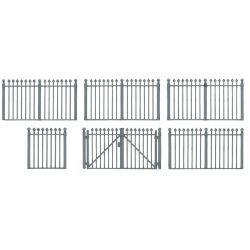
Iron railings are suitable for town houses, villas, parks, public buildings, bridges and station areas. They create a more formal and elegant boundary than a wooden fence.
Why are balustrades useful?
Balustrades add decorative detail to terraces, stairs, parks, viewpoints and historic buildings. They are especially effective in town scenes and scenic pedestrian areas.
What does an industrial fence add?
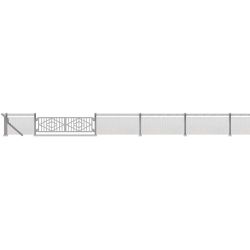
An industrial fence makes factories, depots, warehouses and railway facilities look more secure and functional. It helps separate public roads from working areas.
Why include gates?
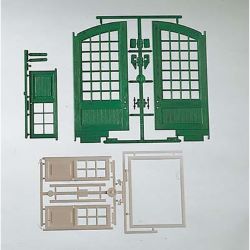
Gates make fenced areas believable because they show where people, vehicles or animals can enter. They are important for gardens, farms, factory yards, railway depots and private roads.
When are construction fences useful?
Construction fences are ideal for building sites, roadworks, station renovations and temporary closed areas. They add modern detail and make construction scenes more convincing.
What are snow fences used for?
Snow fences are useful for winter landscapes, mountain routes and exposed railway lines. They help protect roads or tracks visually and create a strong alpine atmosphere.
Why are bridge railings important?
Bridge railings make bridges and elevated routes look safer and more realistic. They also add fine detail to railway bridges, road bridges, platforms and pedestrian crossings.
Which scales are available for model railway fences?
Model railway fences are available for many scales, including H0, H0/TT, TT, N, G, Z, H0e and 0. Choosing the correct scale is important so that fence height, gate width and railing details match figures, vehicles and buildings.
Typical fence and railing products at a glance
Why are H0 fences so popular?
H0 fences are popular because the scale offers enough size for visible posts, rails, gates and decorative details. They are easy to combine with H0 houses, figures, roads and vehicles.
When should you choose N scale fences?
N scale fences are ideal for compact layouts where towns, gardens and fields need realistic structure without taking too much space. Fine details are important so the fence does not look too heavy.
Why are TT fences practical?
TT fences offer a good balance between visibility and compact scenery design. They work well for villages, station areas, gardens, farms and small industrial scenes.
What makes G scale fences special?
G scale fences are larger, stronger and highly visible. They are especially suitable for garden railways, outdoor-style scenery, farm areas and large residential scenes.
How do fences improve village scenes?
Fences give villages a clear structure by separating gardens, farms, paths and roads. A few well-placed fences can make houses and fields feel naturally connected.
How do fences improve farm scenes?
Fences are essential for farm scenery because they define paddocks, pastures and animal areas. They work especially well with barns, stables, tractors, hay bales and livestock figures.
How do railings improve town scenes?
Railings add detail to stairs, walls, parks, terraces and public spaces. They make urban scenes look safer, more organised and more realistic.
How do gates improve residential scenes?
Gates make gardens and private properties look accessible and planned. They also create a natural place for paths, mailboxes, figures and parked bicycles.
How do industrial fences support factory scenes?
Industrial fences help define the boundary of a working site. They look realistic around warehouses, fuel depots, workshops, loading yards and railway sidings.
Can fences be used near railway tracks?
Yes, fences are very useful near railway tracks because they separate public areas from railway property. They fit well beside stations, depots, level crossings and industrial sidings.
Can fences be used around stations?
Yes, fences and railings can improve station areas with platform boundaries, parking edges and pedestrian guidance. They make station scenes more structured and safer.
Can railings be used on bridges?
Yes, railings are important on bridges because they add safety and scale detail. Bridge railings are useful for railway bridges, road bridges and pedestrian overpasses.
Can fences be used in parks?
Yes, fences and decorative railings work very well in parks, cemeteries and public gardens. They help frame paths, lawns, fountains, monuments and benches.
Can fences be used in dioramas?
Yes, fences are excellent for dioramas because they define a scene quickly. A small gate, path and fence line can already tell a complete story.
How do fences support scenery composition?
Fences guide the viewer’s eye through the layout and create natural lines in the scenery. They help connect buildings, roads, fields and tracks visually.
How do fences support storytelling?
Fences show what an area is used for: private garden, pasture, factory yard or railway property. This makes the scene easier to understand at first glance.
Why is fence height important?
Fence height must match the scene and scale. A low garden fence, a farm fence and an industrial fence should not all have the same visual height.
Why is material style important?
Material style changes the atmosphere of the scene. Wood looks rural, iron looks formal, concrete looks modern and wire fencing looks industrial.
How does weathering improve fences?
Weathering makes fences and railings look more natural and less new. Faded paint, rust, dust, moss and darker post bases create a realistic used appearance.
Can fences be painted?
Yes, many model railway fences can be painted to match the era, region and scenery style. Painting is useful when different fence parts should look consistent.
How do grass and bushes improve fence lines?
Grass and bushes help fences blend into the landscape. Small tufts, weeds and shrubs along the base make a fence look naturally placed.
How do paths work with gates?
Paths make gates look functional because they show where people walk. A gate without a path can look decorative, while a gate with a path looks believable.
How do vehicles work with gates?
Vehicles help explain larger gates at farms, factories and depots. Trucks, tractors and service cars make fenced areas look active and useful.
Which brands are important for fences, railings and gates?
Important brands include Auhagen, Busch, Faller, Kibri, Noch, Piko, Pola, Sommerfeldt, Technomodell and Vollmer. These brands offer wooden fences, pasture fences, garden fences, iron railings, industrial fences, gates and bridge railings for many scales.
Why are Noch fences useful?
Noch fences are useful for pasture fences, rural fence sets, garden fences, balustrades and decorative scenery details. They fit well into farms, villages, parks and residential scenes.
What makes Busch fences practical?
Busch fences are practical for wooden fences, mesh fences, construction fences, snow fences and rural detail scenes. They are especially useful for varied countryside and town scenery.
Why choose Faller fences?
Faller fences are useful for garden fences, field fences, wall fences, railings and special scenery boundaries. They work well in H0 and N layouts with towns, villages and stations.
What do Auhagen fences add?
Auhagen fences add Central European detail for houses, railway areas, gates and bridge railings. They are especially useful for H0, H0/TT and TT layouts.
Why are Kibri industrial fences interesting?
Kibri industrial fences are interesting for railway facilities, factories and depot scenes. They help create realistic boundaries around working areas.
What should beginners consider before buying?
Beginners should start with a garden fence, pasture fence or simple railing that matches the main scene. These accessories are easy to place and quickly improve the layout.
What should advanced modellers consider?
Advanced modellers often focus on scale accuracy, post spacing, weathering, gates, ground blending and scene logic. These details make fence lines look natural instead of decorative only.
What should you check before buying model railway fences?
Before buying model railway fences, check scale, height, material style, total length, gate options and intended scene. Also consider whether the fence should be painted, weathered or combined with walls and vegetation.
How do you place fences realistically?
Fences should follow property lines, paths, roads, fields or railway boundaries. Slight curves and small irregularities often look more natural than perfectly straight lines.
How do you make a gate scene realistic?
A realistic gate scene needs a path, road, driveway or yard behind it. Adding signs, figures, vehicles or plants makes the entrance feel used.
How do you avoid common fence mistakes?
Avoid fences that are too high, too straight or placed without a clear purpose. The best fence lines explain the scene and support the surrounding buildings and landscape.
Which SEO terms fit this category?
Important SEO terms include fences, railings and gates, model railway fences, model train fences, garden fence, pasture fence, wooden fence, iron railing, industrial fence, bridge railing, construction fence, snow fence, gate set, H0 fence, N scale fence, TT fence and G scale fence.
Additional semantic terms such as balustrade, field fence, mesh fence, wall fence, villa fence, rural fence, railway boundary, depot fence, farm gate, garden gate, railing set, scenery boundary, weathering, grass tufts and model railway scenery strengthen the topical relevance of this category.
Selection guide for fences, railings and gates
Buy fences, railings and gates for realistic model railway scenery
Whether you need a garden fence, pasture fence, wooden fence, iron railing, balustrade, industrial fence, bridge railing, construction fence, snow fence or matching gate: the right fence details give your layout more order, realism and scenic depth.
With carefully selected model railway fences, railings and gates, you can create gardens, farms, stations, bridges, parks, factories, depots and village roads that look more believable. This makes fences, railings and gates one of the most effective scenery categories for turning open layout areas into complete miniature scenes.