More Grip on the Rail
Metal wheels have limited adhesion on smooth model railway rails. An elastic traction tyre increases friction on a driven wheel, allowing motor power to be converted more effectively into pulling force.

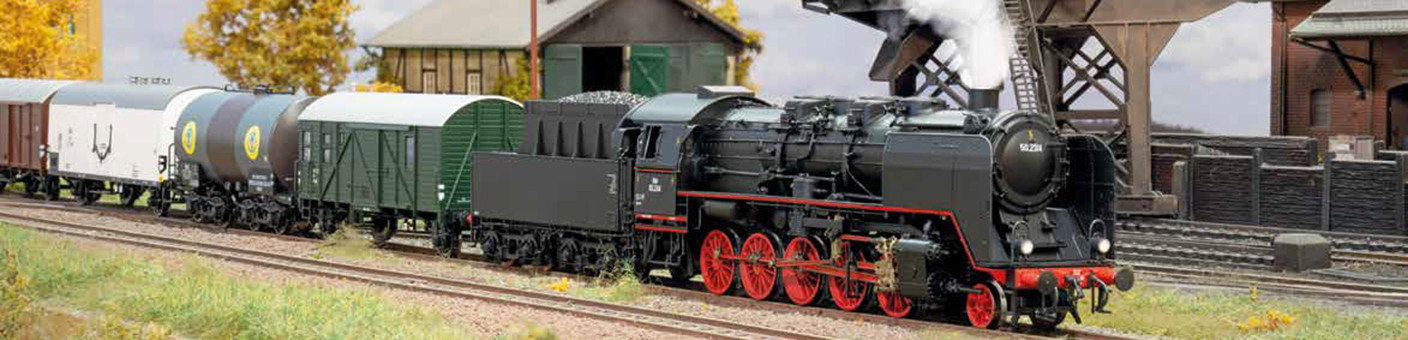
Worn, hardened or missing traction tyres can noticeably reduce a locomotive's pulling power. Learn how to identify the correct replacement part, remove the old tyre, clean the wheel groove, fit the new ring without twisting it and test the locomotive safely afterwards.
Traction tyres are small elastic rings fitted into a groove on selected powered wheels of a model locomotive. They increase the friction between wheel and rail and help the locomotive when starting, climbing gradients and pulling longer trains.
As the material ages, traction tyres can become hard, brittle, cracked or excessively stretched. A tyre may also come off the wheel or become twisted inside the groove.
Typical symptoms include powered wheels spinning unusually easily, significantly reduced pulling power or uneven running. Before dismantling the locomotive, however, also inspect the rails and wheels. Heavy contamination can cause very similar symptoms.
The exact spare-part assignment is crucial. A rubber ring that simply looks approximately the right size is not automatically suitable. Diameter, width, thickness, wheelset design and locomotive model must match.
The manufacturer's part number, locomotive catalogue number, operating instructions and spare-parts diagram are therefore more reliable than selecting a traction tyre solely according to gauge or measured diameter.
On many models, replacing the tyre is straightforward. The actual construction can nevertheless differ considerably. On one locomotive the tyre can be fitted directly to the installed wheel; on another, a gearbox cover or even the wheelset must first be removed.
The traction tyre increases grip between a powered wheel and the rail. Correct size, thickness and position are important because the tyre also affects the running height and smoothness of the wheelset.
Metal wheels have limited adhesion on smooth model railway rails. An elastic traction tyre increases friction on a driven wheel, allowing motor power to be converted more effectively into pulling force.
Traction tyres are particularly useful for locomotives pulling heavy trains, climbing gradients or using a compact chassis with comparatively low vehicle weight.
A wheel surface covered by a traction tyre normally does not provide direct electrical contact with the rail head. Manufacturers therefore distribute electrical pickup and traction tyres deliberately across different wheels or axles.
The groove is designed for a specific tyre thickness. A tyre that is too thick can make the vehicle stand higher on that wheel and cause uneven running. A tyre that is too large can slip out of the groove, while an undersized tyre is stretched unnecessarily.
Identify the correct traction tyre using the exact locomotive model, place the vehicle without power on a padded surface, carefully remove the old ring, inspect and clean the wheel groove, fit the new tyre without twisting it and then test free movement and pulling power at low speed.
The locomotive item or catalogue number is usually more useful for finding the correct spare-parts list than the locomotive class alone.
Fine tweezers, a small screwdriver, possibly a needle and a soft locomotive cradle are sufficient for many models. Work precisely rather than using force.
A twisted tyre or a ring that sits partly outside the wheel groove can cause uneven running and may come off again.
First rotate the wheels carefully by hand where the construction allows it. Afterwards, test the locomotive at low speed without a heavy train.
The following steps describe the general procedure. Chassis, bogies, coupling rods and gearbox covers can be designed differently depending on manufacturer and model. Remove only components that are intended to be dismantled on the specific vehicle.
Note the manufacturer, locomotive catalogue number and existing spare-part number. Only then compare diameter and width. Different versions of the same locomotive class may use different wheelsets.
When in doubt, use the spare-parts diagram or search using the exact locomotive item number.
Disconnect the power supply and place the locomotive on a stable, soft foam surface or locomotive cradle. Do not place pressure on roof details, pantographs or separately fitted parts.
Collect small screws in a container and, before removing a wheelset, take a photograph showing its original position.
Some tyres can be replaced directly on the installed wheel. On other vehicles, a bogie or gearbox cover must first be removed and the wheelset may have to be taken out.
Steam locomotives may additionally involve coupling rods, crank pins or other parts of the running gear.
Lift the old traction tyre using fine tweezers, a needle or a very small flat-blade screwdriver and carefully pull it away.
Do not insert the tool deeply between the tyre and wheel. The wheel surface, flange and fine groove must not be damaged.
Carefully remove remaining fragments of the old tyre and visible dirt. The running surface intended for the traction tyre should remain free from oil and grease because lubricants reduce the required friction.
Gearbox lubrication points must be treated separately.
Place the tyre into the groove at one point and then guide it evenly around the wheel. Stretch it only as much as necessary.
Afterwards, check the entire circumference. The tyre must not be twisted and must not extend beyond the flange or inner edge of the wheel.
Reinstall the wheelset and covers in their original positions. Carefully check that the wheels move freely.
Test the locomotive slowly and without a heavy load first. Only after smooth running has been confirmed should normal pulling power be tested with the usual train.
If there is no clear instruction, coupling rods are under tension or delicate cables must be disconnected, professional servicing is the safer solution.
Unnecessary dismantling should be avoided particularly on high-value, new or manufacturer-warranty vehicles.
Traction tyres are not exclusively an H0 topic. Whether a locomotive uses traction tyres depends on its specific drive design. Gauge helps narrow the search, but never replaces checking the manufacturer, locomotive number, spare-part number and intended wheel diameter.
| Gauge / Scale | What to Consider | Related Guide |
|---|---|---|
| Z Gauge | Very small wheels and components. Use only precisely assigned spare parts and work particularly carefully. | Z Gauge |
| N Gauge | Small traction tyres react sensitively to twisting and incorrect dimensions. Fine tweezers and good lighting are especially helpful. | N Gauge |
| TT / TTe | Several different tyre diameters are available in TT. Do not choose simply by the designation “TT”; compare the vehicle and dimensions. | TT Gauge |
| H0 AC / DC | H0 offers a particularly large selection. Some spare tyre sets are additionally assigned to particular AC or DC wheelsets. | H0 Gauge |
| H0e / H0m / H0f | Narrow-gauge vehicles have their own chassis designs. Always identify the replacement part using the exact model. | H0m Gauge |
| 0 / 0e | Larger wheelsets make handling easier, but exact manufacturer and vehicle assignment remains essential. | Check the exact vehicle spare-parts list |
| Gauge 1 | Vehicles can be mechanically complex. Check instructions and spare-parts drawings before dismantling. | Check the exact vehicle spare-parts list |
| G Gauge | Considerably larger tyre diameters are used. Suitable replacements are available for selected LGB and PIKO garden railway vehicles. | G Gauge |
Important: gauge narrows down the search but never replaces checking the manufacturer, exact vehicle number, spare-part number, width, thickness and intended wheel diameter.
The range includes individual replacement tyres and multi-piece sets for H0, TT, N and larger scales. Always compare the product specification with the spare-parts documentation for your exact locomotive.
Set of ten H0 traction tyres with a nominal diameter of 15 mm for suitable Märklin vehicles.
View Product →Ten replacement traction tyres measuring 10 × 6.4 mm for selected PIKO H0 vehicles.
View Product →Ten replacement tyres for selected Märklin H0 locomotives and powered models.
View Product →Set of eight 8-mm traction tyres for selected Tillig TT powered vehicles.
View Product →Set of ten traction tyres measuring 8 × 5.6 mm for compatible PIKO TT vehicles.
View Product →Ten N-gauge traction tyres for compatible Fleischmann powered vehicles.
View Product →Use the shop filters to narrow the range by manufacturer, gauge and product specification before checking compatibility with your exact locomotive.
The exact replacement part number is more important than choosing solely by wheel diameter. Manufacturer spare-parts pages help identify parts for individual locomotive families.






Manufacturer-specific spare-part search for PIKO locomotives, multiple units and rolling stock.
Suitable replacement components for numerous Roco vehicles.
Replacement parts for Fleischmann H0 and N locomotives and rolling stock.
Spare parts and accessories particularly for TT and other Tillig vehicles.
A traction problem does not always originate from the traction tyre itself. Wheelsets, drivetrain components, dirt and lubrication can also influence locomotive performance.
Complete product category with brand and gauge filters.
Wheelsets, pickups, motors, couplings and further vehicle parts.
Maintenance products for the locations specifically intended for lubrication and cleaning.
Request assistance when the exact replacement component cannot be identified directly.
Most problems after replacement are caused by an incorrectly selected tyre, incorrect installation or another mechanical problem that was mistaken for traction-tyre wear.
Two tyres with a similar diameter can have different widths or thicknesses. Check vehicle and spare-part compatibility before selecting the replacement.
The ring must lie flat inside the wheel groove around its complete circumference. A twist can cause uneven running and may make the tyre come off again.
Oil and grease belong only at lubrication points specified by the manufacturer. The traction tyre and its wheel groove should remain clean and dry.
The original wheelset position can be important, particularly on steam locomotives, powered axles and vehicles with current pickup contacts. Take a photograph before dismantling.
First check smooth rotation, then perform a test run without a heavy load. Only afterwards should the locomotive's normal pulling power be tested.
Dirty track, contaminated wheels, stiff-running coaches or a mechanical drivetrain problem can also reduce pulling power. Narrow down the cause before dismantling the locomotive.
If wheelsets, coupling rods, delicate cables or difficult-to-reach chassis components must be removed, professional servicing can be the safer solution.
Short answers about selecting the correct tyre, installation, wear, lubrication and troubleshooting.
The safest method is to use the manufacturer, locomotive catalogue number and corresponding spare-part number. Gauge and measured diameter are useful additional characteristics, but they should not replace a clear model-specific assignment.
No. On some constructions the tyre can be fitted directly to the installed wheel. Other models require removal of a gearbox cover and wheelset. Follow the instructions for the specific vehicle.
Typical signs include cracks, hardening, excessive stretching, a missing ring or a tyre that no longer sits correctly in the wheel groove. A sudden reduction in pulling power can also indicate tyre wear.
The new ring may not be sitting completely inside the groove, may be twisted or may have the wrong thickness. Disconnect the locomotive from power, inspect the installation again and slowly rotate the affected wheel where possible.
No. The traction surface is intended to generate friction and should therefore remain free from oil and grease. Lubricant belongs only at bearing, gearbox or joint locations explicitly specified by the vehicle manufacturer.
Yes. The current Modellbahnshop traction-tyre category includes products for H0, TT, N and G. Whether a particular vehicle uses a traction tyre and which exact ring fits depends on its drivetrain construction.
This is not recommended. Outside and inside diameter, width, thickness and material influence fit and smooth running. A clearly assigned replacement part is the safer choice.
Check that the tyres are seated correctly, that rails and wheel surfaces are clean, that the coaches roll freely and that the drivetrain operates correctly. If the problem remains, professional inspection may be required.
Continue with guides covering locomotive cleaning, lubrication, repairs, spare parts, digital technology, gauges and reliable model railway operation.