MEC Aachen e.V.
Aachen · North Rhine-Westphalia

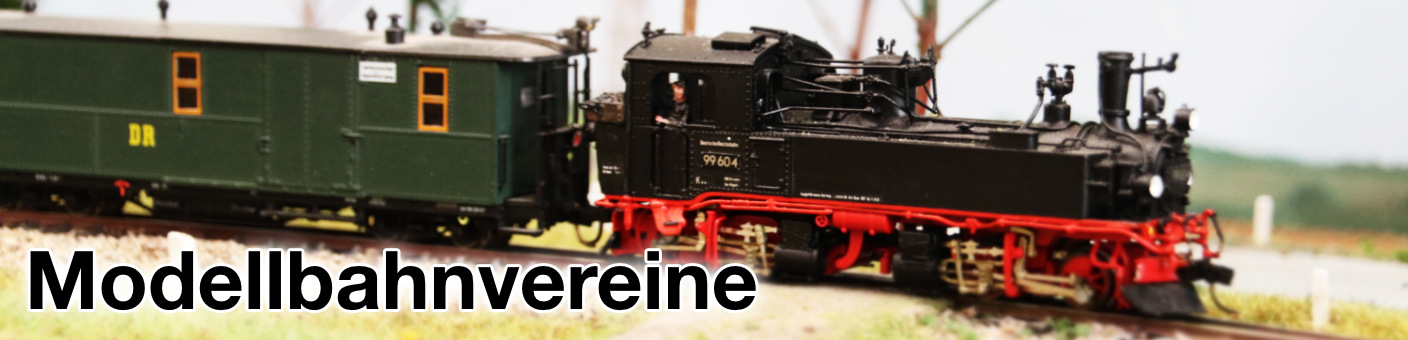
Find model railway clubs in Germany, meet other enthusiasts and discover shared layout building, digital operation, scenery construction, vehicle maintenance and realistic railway operation from Z gauge to garden railways.
Model Railway Clubs in Germany | Clubs by Postcode & Region brings together railway modellers who do not only want to operate trains at home but also want to plan, build, digitise and design layouts together and present them at exhibitions.
Different areas of expertise come together within a club: electronics, woodworking, landscape construction, vehicle technology, digital control and prototype-oriented railway operation complement one another.
A model railway club may operate a permanently installed club layout, build transportable modules or have several working groups for different gauges.
Some members may be particularly interested in historic vehicles, while others focus on modern digital technology, timetable operation, building construction, narrow gauge or garden railways. This mixture makes a club interesting for beginners and experienced model builders alike.
The major advantage is the shared project. An extensive station, a large hidden staging yard or long modular routes can be realised differently by several people than on a small home layout.
Clubs may also share specialist tools, knowledge about different track systems and experience with repairs, decoder questions and technical troubleshooting.
When looking for a club, distance should not be the only factor. The gauge, layout concept, electrical system, digital technology, frequency of meetings and atmosphere at club evenings are also important. Visiting a club personally before joining is usually the best way to find out how it actually builds and operates.
The following list contains the club addresses currently maintained by Modellbahnshop. Filter the list by federal state, postcode or club name. Before visiting, check the individual club website because meeting times, exhibitions and club premises can change.
22 clubs in the Modellbahnshop selection.
| Postcode | Club | Federal State | Website |
|---|---|---|---|
| 01099 | Minibahnclub Dresden e.V. | Saxony | Open Club → |
| 03042 | Eisenbahnclub Spreewaldbahn Cottbus e.V. | Brandenburg | Open Club → |
| 04463 | Freunde der Eisenbahn Großpösna e.V. | Saxony | Open Club → |
| 04552 | Bornaer Modellbahnverein e.V. | Saxony | Open Club → |
| 06502 | Modellbahnclub Thale/Harz e.V. | Saxony-Anhalt | Open Club → |
| 06886 | Modellbahnclub Lutherstadt Wittenberg e.V. | Saxony-Anhalt | Open Club → |
| 08056 | Modellbahnclub Zwickau e.V. | Saxony | Open Club → |
| 08459 | Modellbahnfreunde Neukirchen e.V. | Saxony | Open Club → |
| 09113 | Modellbahnclub Chemnitz-Rottluff e.V. | Saxony | Open Club → |
| 16540 | MEC Oranienburg 1964 e.V. | Brandenburg | Open Club → |
| 19061 | Schweriner Modellbahnclub e.V. | Mecklenburg-Vorpommern | Open Club → |
| 23966 | Modelleisenbahn-Club Wismar e.V. | Mecklenburg-Vorpommern | Open Club → |
| 31535 | Modelleisenbahnclub Neustadt a. Rbge. e.V. | Lower Saxony | Open Club → |
| 39179 | Barleber Modellbahnverein e.V. | Saxony-Anhalt | Open Club → |
| 50126 | Modelleisenbahn-Club Bergheim (Erft) e.V. | North Rhine-Westphalia | Open Club → |
| 60386 | Modellbahnfreunde Riederwald | Hesse | Open Club → |
| 63110 | HEB Hobbyeisenbahner 1983 e.V. | Hesse | Open Club → |
| 78476 | Eisenbahn-Freunde Allensbach e.V. | Baden-Württemberg | Open Club → |
| 86156 | 1. Modellbahn-Club Augsburg e.V. | Bavaria | Open Club → |
| 88045 | PMC-Bodensee e.V. | Baden-Württemberg | Open Club → |
| 93059 | Modelleisenbahnclub Regensburg e.V. | Bavaria | Open Club → |
| 99086 | Eisenbahnclub Erfurt 1965 e.V. | Thuringia | Open Club → |
22 clubs in the Modellbahnshop selection. Club and link check: 11 August 2026.
The Modellbahnshop list is a selection. If you have not yet found a suitable club in your region, you can additionally search the current membership directory of the Bundesverband Deutscher Eisenbahn-Freunde (BDEF). It contains numerous railway and model railway associations together with their towns and websites.
Aachen · North Rhine-Westphalia
Berlin
Bremen
Hamburg
Karlsruhe · Baden-Württemberg
Munich · Bavaria
Stuttgart · Baden-Württemberg
Use the BDEF directory to find additional railway and model railway associations throughout Germany.
Clubs can send Modellbahnshop their club name, location, website and a short description so that this directory can gradually be expanded with further active associations.
Meet the members and see the club rooms in person. Ask when construction work takes place, when trains are operated and whether interested visitors can attend a meeting without making an immediate commitment.
In H0, both two-rail and centre-contact systems may be relevant. The digital protocol, couplings, wheelsets and existing module standards are also important if you want to use your own vehicles.
Some modellers prefer landscape construction, others programme electronics or organise prototype-oriented timetable operation. A good club offers room for different interests and skills.
Modules are especially useful for shared exhibitions and long routes. A permanently installed layout can instead accommodate complex scenery, large hidden staging yards and permanently installed technology.
Membership fees, required working hours, key regulations, youth rates and rules for using private vehicles differ between clubs. Ask to see the statutes and practical club rules.
Open days and model railway exhibitions are an excellent way to see how a club organises itself and which construction and operating priorities are actually maintained.
A club layout has to meet several requirements at the same time. It must operate reliably, provide useful work for several members, allow future expansion and perform consistently during public operating days. Good planning and documentation are therefore particularly important.
Consistent track geometry, precisely defined module transitions and reliable electrical feeds prevent problems when layouts are assembled.
Large club layouts benefit from clear rules for locomotive addresses, handheld controllers, booster sections, feedback modules and routes.
A soldering station, measuring equipment, cutting tools and safe work surfaces support repairs, layout construction and vehicle conversions.
Labelled cables, current wiring diagrams and documented modifications also help members who did not personally construct a particular section of the layout.
| Gauge | Scale | Strength in Club Operation |
|---|---|---|
| Z | 1:220 | Long routes on compact modules and extremely space-efficient construction. |
| N | 1:160 | Large stations and long train runs with comparatively shallow modules. |
| TT | 1:120 | A useful compromise between space requirements, train length and visible detail. |
| H0 | 1:87 | Very wide choice of vehicles, track systems, digital technology and accessories. |
| H0e / H0m | 1:87 | Narrow-gauge, mountain railway, heritage railway and regional specialist themes. |
| 0 / 0e | Approx. 1:45 | Large vehicles, intensive shunting and detailed vehicle construction. |
| 1 | 1:32 | Large models with highly visible vehicle and operating details. |
| G / IIm | Often 1:22.5 | Large-scale and garden railways with robust exhibition and outdoor layouts. |
Clubs are particularly valuable when knowledge is not restricted to one generation. Model railways combine woodworking, landscape construction, electronics, planning, history and digital technology.
Small club projects provide a practical introduction without requiring beginners to own a complete layout immediately.
The BDEF also supports youth activities. For schools, model railway working groups are another useful option because practical tasks such as laying track, building structures, wiring or scenery construction can be divided into manageable projects.
Anyone starting from scratch can find the basics of space, gauge, power systems, analogue and digital operation and starter sets in the Model Railways for Beginners guide . A club adds practical experience and personal support.
Different clubs use different systems. Before purchasing equipment for a club layout, always coordinate the existing gauge, track system and digital technology.





A systematic shopping list is particularly useful for club projects. Track and digital equipment must be compatible, specialist tools can be shared and starter sets are well suited to manageable beginner and youth projects.
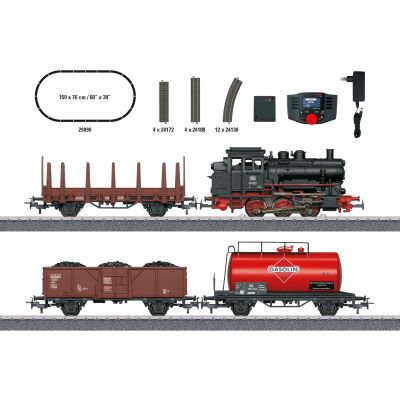
Compact foundation for railway operation, digital control and first club or youth projects.
View Product →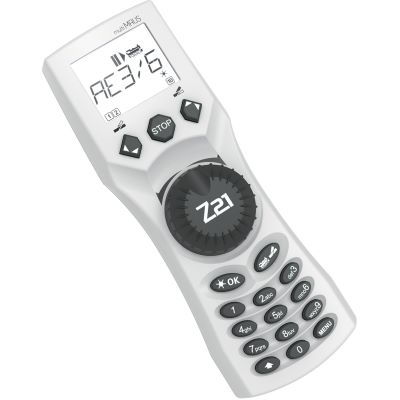
Handheld controller for digital layouts and multiple-operator operation with compatible Z21 system components.
View Product →
Example of a systematically expandable H0 track system for routes, fixed layouts and modular construction.
View Product →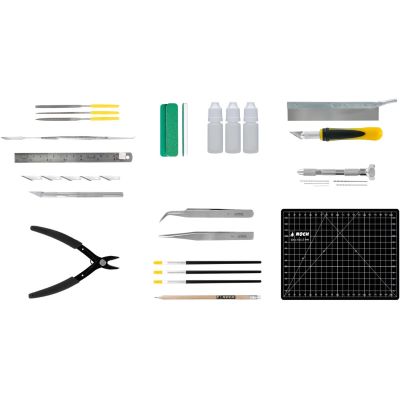
Basic workshop equipment for cutting, filing, drilling, modelling and other typical model-building tasks.
View Product →Coordinated components for beginner, youth and test projects.
Straight, curved and flexible track for permanent layouts and modular construction.
Command stations, decoders, boosters, feedback modules and switching electronics.
Equipment for cutting, measuring, soldering, drilling and precise model-building work.
Buildings, scenery, figures and details for shared construction sections.
Cleaning vehicles and equipment for reliable operation on large and frequently used club layouts.
Product availability changes continuously. Use the linked English shop categories to filter current products by project area, gauge, manufacturer and product name.
Visit large exhibition layouts and collect ideas for your own club and modular projects.
Discover Experience Worlds →Discover model railways as a shared school and youth project combining technology, creativity and teamwork.
Discover School Projects →Experience club layouts, manufacturers, new products and personal exchange at exhibitions and trade fairs.
Discover Model-Making Fairs →Discover layout construction, club projects, railway operation and model railway technology in video form.
Discover YouTube Channels →Use the postcode and federal-state filters on this page. If the Modellbahnshop selection does not contain a suitable club in your area, the BDEF membership directory provides additional railway and model railway associations organised by location.
Yes. Beginners can benefit particularly from practical knowledge and experience within a club. Ask the club about a regular meeting, trial visit or a suitable first building project.
This depends on the individual club. Possible gauges include Z, N, TT, H0, H0e, H0m, gauge 0, gauge 1 and G. Some clubs operate several layouts or separate working groups.
Often yes, provided that the vehicle, gauge, wheelsets, electrical system and digital technology are compatible with the club layout. Ask about the club's technical standards before operating your own models.
Every club sets its own membership fees. Different regulations may also apply to young people, families or required working hours. Binding information is available directly from the respective club.
A club layout is planned and built collectively. It can be permanently installed in a clubhouse or consist of transportable modules that are assembled for exhibitions and shared operating days.
Yes. Various clubs and associations actively support younger members. Ask specifically about youth groups, hands-on projects or supervised building days.
Interest in the hobby is enough for a first visit. You do not need to bring your own vehicles immediately. First become familiar with the layout, members, gauge and technical systems.
From a first small landscape module to a large digitally controlled club layout, a model railway club combines experience, workshop facilities, train operation and shared construction. Find a club in your region or continue with the complete Modellbahnshop model railway guide.
Club and link check: 11 August 2026