Z or N Gauge
Both sizes allow long routes, larger stations and extensive scenery in a comparatively small area. N is slightly easier to handle, while Z saves even more space.
Discover N Gauge →
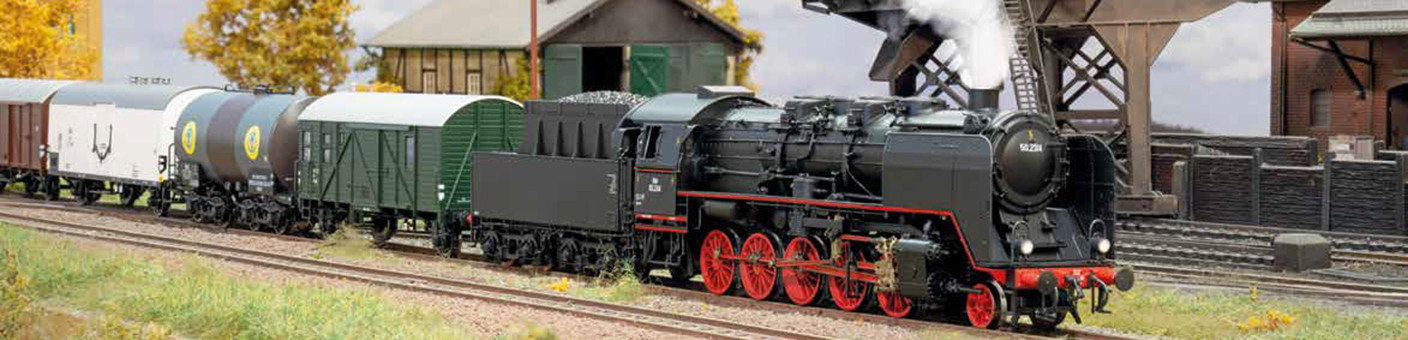
Compare Z, N, TT, H0, H0e, H0m, Gauge 0, Gauge 1, Gauge G and other model railway sizes. The overview explains scale, model track gauge, space requirements, typical curve radii, visible detail and suitable layout themes.
The scale describes how much smaller the model is than the real prototype. An H0 model at a scale of 1:87 is therefore 87 times smaller than the corresponding full-size vehicle. The model track gauge, by contrast, describes the distance between the inner edges of the rails. Standard-gauge H0 track has a distance of 16.5 millimetres.
Model sizes such as Z, N, TT, H0, 0 and 1 combine a defined scale range with particular model track gauges. Different prototype track gauges can be represented within the same model size. Standard-gauge H0 therefore runs on 16.5-millimetre track, metre-gauge H0m on 12-millimetre track and narrow-gauge H0e on 9-millimetre track.
The smallest model size does not automatically require the least personal effort. Very small vehicles permit long routes within a limited area, but they require clean track and careful handling. Large gauges show more visible detail and are easier to handle, but require considerably larger curves and more storage space.
Do not base your decision only on the size of an individual model. The important question is which trains, curve radii, stations and scenery will fit permanently within the available area.
Both sizes allow long routes, larger stations and extensive scenery in a comparatively small area. N is slightly easier to handle, while Z saves even more space.
Discover N Gauge →TT is smaller than H0 but considerably larger than N. It is suitable for compact main lines, branch lines and prototypical trains in a clearly visible size.
Discover TT Gauge →H0 offers vehicles, track systems, buildings, digital equipment and scenery products from many manufacturers. The models are highly detailed while remaining suitable for traditional home layouts.
Discover H0 Gauge →Narrow gauge permits tight curves, short trains and attractive scenery. H0e is frequently used for Saxon light railways, while H0m is used for Swiss metre-gauge railways and other mountain lines.
Discover Narrow Gauge →Large vehicles, clearly visible technology and functional couplings make Gauge 0 especially immersive. A narrow shunting layout may provide more operating interest than a complete continuous circuit.
Discover Gauge 0 Models →Both systems often use 45-millimetre track but represent different prototype gauges and model scales. Gauge G is especially widespread for garden and narrow-gauge railways.
Discover G Gauge →The curve radii are deliberately presented as approximate planning guidance. The actual permissible minimum radius always depends on the particular vehicle, track system, manufacturer and desired visual appearance.
| Model Size | Scale | Model Track Gauge | Common Compact Radii | Space Requirement | Particular Strength | Suitable For |
|---|---|---|---|---|---|---|
| Z | 1:220 | 6.5 mm | approximately 145–195 mm | very low | long trains and extensive scenery | suitcase, tabletop and miniature layouts |
| N | 1:160 | 9 mm | approximately 192–250 mm | low | extensive main-line operation in a small area | apartments, shelf layouts and long trains |
| TT | 1:120 | 12 mm | approximately 267–310 mm | low to medium | compromise between size and space | main lines, DR, DB and Central European themes |
| H0 | 1:87 | 16.5 mm | approximately 360–420 mm | medium | particularly large product selection | beginners, collectors and layout builders |
| H0m | 1:87 | 12 mm | frequently from approximately 330 mm | medium | metre gauge and Alpine railways | RhB, MGB and mountain layouts |
| H0e | 1:87 | 9 mm | frequently from approximately 228 mm | low to medium | tight narrow-gauge routes | Saxony, Austria and light railways |
| H0f | 1:87 | 6.5 mm | system-specific, very small radii possible | very low | field and industrial railways | quarries, mines and dioramas |
| S | 1:64 | 22.5 mm | manufacturer-dependent | medium to high | large, clearly visible models | specialist collectors |
| 0 | usually 1:45 | 32 mm | approximately 600–1,020 mm | high | detail, sound and shunting operation | shelf, sectional and shunting layouts |
| 0e | usually 1:45 | 16.5 mm | frequently from approximately 400–600 mm | medium to high | large narrow-gauge models in a compact area | light railways and shunting layouts |
| 1 | 1:32 | 45 mm | frequently from approximately 1,020 mm | very high | large models and extensive technology | large rooms and collections |
| G | frequently 1:22.5 to 1:29 | 45 mm | approximately 600–1,200 mm and larger | high to very high | robust indoor and garden railways | gardens, terraces and large rooms |
| II | 1:22.5 | 64 mm for standard gauge | very large and system-specific | extremely high | prototypically scaled large models | specialist layouts and collectors |
The stated radii are non-binding guidance for compact layouts. The minimum radius specified by the manufacturer for the particular vehicle is authoritative. Visible routes normally look considerably more realistic when larger radii are used.
H0 offers larger models and a particularly broad selection. TT requires less area for comparable track plans. Anyone who values a large number of manufacturers, vehicles and building kits will generally find more options in H0. Anyone planning a longer station or more extensive scenery on a medium-sized area benefits from TT.
For maximum choice, easy handling and sufficient space.
For limited space and clearly visible models.
An H0 vehicle is considerably larger and displays details particularly well from a normal viewing distance. N allows longer trains, larger curve radii and more scenery within the same area. A space that accommodates an H0 branch line may already permit a double-track main line in N.
For visible detail, digital functions and a large product range.
For main-line operation, long trains and extensive scenery.
TT is easier to handle and has a stronger visual presence from a greater distance. N saves considerably more space and is especially suitable for long passenger and freight trains. Both sizes suit compact home layouts. The final decision should be based on a real model and the planned track layout.
For a balanced compromise between vehicle size and space.
For maximum route length and extensive layout themes.
The vehicles use the H0 scale of 1:87 but represent narrower prototype railways. H0m runs on 12-millimetre track, H0e on 9-millimetre track and H0f on 6.5-millimetre track. This permits tight curves, short stations and scenery-focused light railways. Further information is available in the narrow-gauge overview .
The same model track gauge does not represent the same prototype. Gauge 1 represents standard gauge at a scale of 1:32. Gauge G commonly uses 45-millimetre track to represent larger narrow-gauge prototypes at several different scales. Vehicles can therefore differ considerably in appearance and technical design despite using the same track width.
No. Standard gauge in model size II is represented at a scale of 1:22.5 on 64-millimetre track. The widespread garden railway using 45-millimetre track normally represents narrow-gauge prototypes and is commonly sold as Gauge G.
Yes, when the prototype provides a credible reason. An H0 standard-gauge station can, for example, include an H0e or H0m narrow-gauge railway. Because scale and model track gauge can differ, each railway requires suitable vehicles, track and, where necessary, its own power supply.
The selection demonstrates how vehicle size, visible detail and possible layout themes change from H0 through TT and N to Gauge 0, Gauge 1 and Gauge G.
A large variety of models for main lines, branch lines, regional traffic and freight trains.
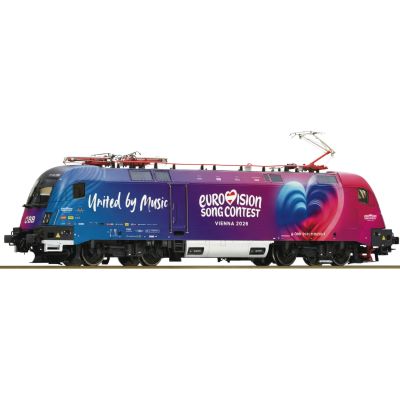
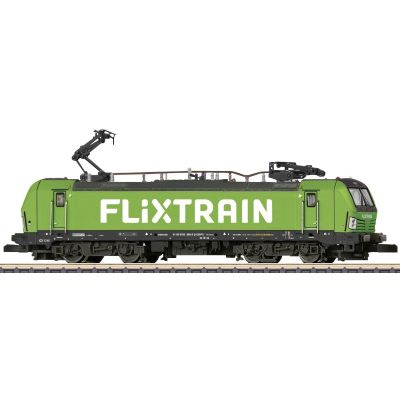
Modern electric locomotive for international long-distance passenger trains.
View Product →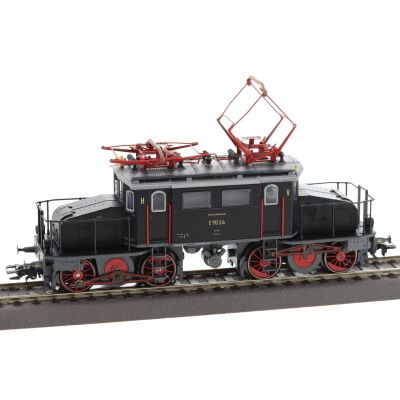
Historic electric locomotive with clearly visible details and extensive digital functions.
View Product →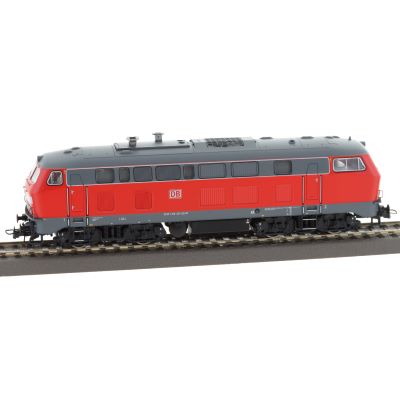
Versatile diesel locomotive for passenger, push-pull and freight trains.
View Product →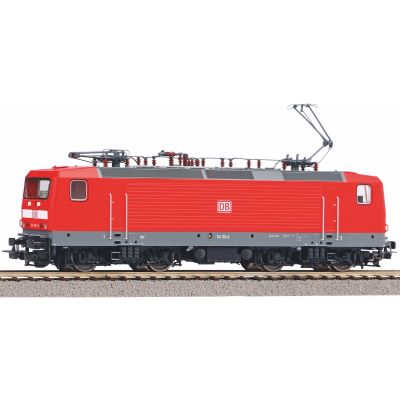
Traffic-red locomotive for Regional-Express and double-deck trains.
View Product →Clearly visible vehicles with considerably lower space requirements than H0.
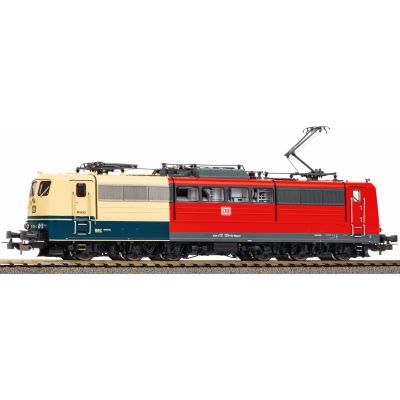
Heavy electric locomotive for long freight trains on compact layouts.
View Product →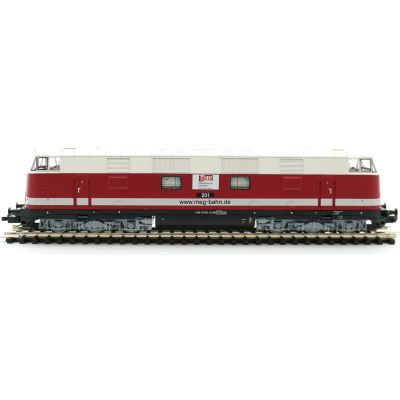
Distinctive large diesel locomotive for engineering, freight and special trains.
View Product →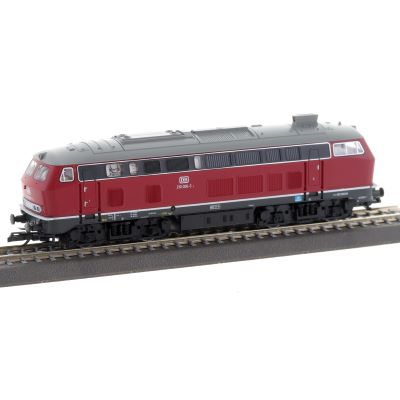
Classic Deutsche Bundesbahn diesel locomotive for high-quality passenger trains.
View Product →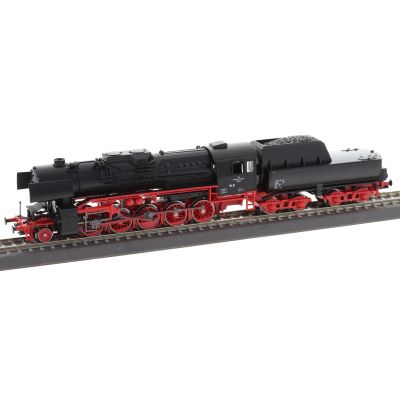
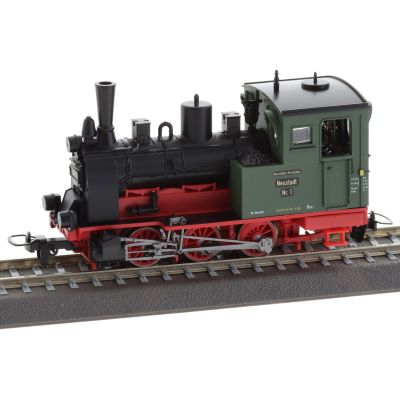
Compact steam locomotive for industrial railways, chemical works and shunting operation.
View Product →Long main-line trains, extensive scenery and stations within a compact area.
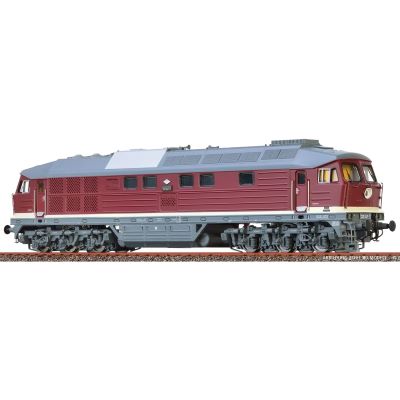
Large diesel locomotive for heavy trains at a compact model scale.
View Product →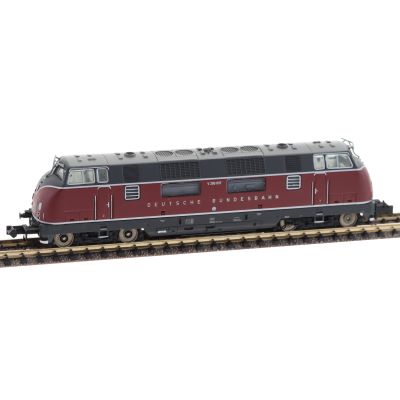
Deutsche Bundesbahn classic for express, semi-fast and heavy passenger trains.
View Product →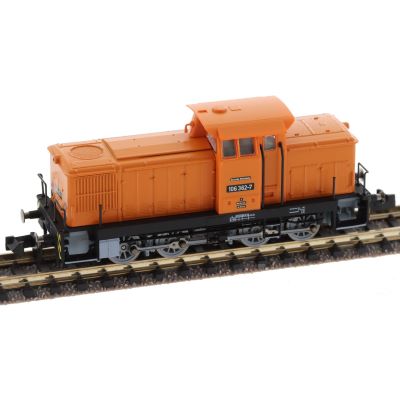
Compact shunting locomotive for freight yards and industrial sidings.
View Product →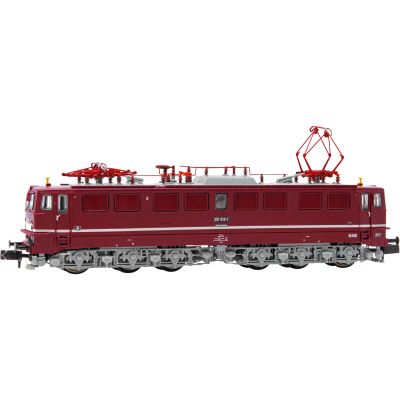
Characteristic electric locomotive for the Rübeland Railway.
View Product →Particularly compact vehicles for tabletop, suitcase and miniature layouts.
Strong visual presence combined with narrow track and compact routes.
Models for intensive shunting operation, large rooms and garden railways.
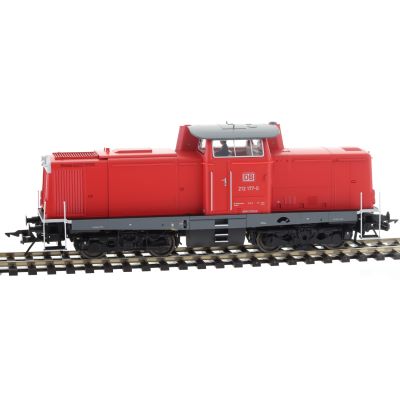
Large shunting and main-line model with a particularly strong visual presence.
View Product →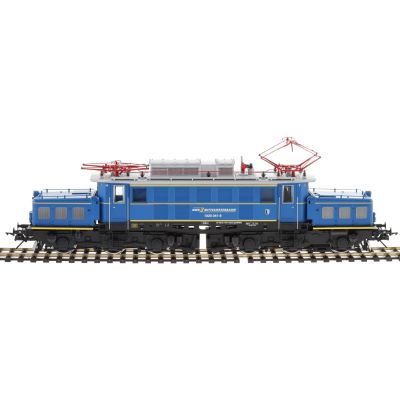
Imposing electric locomotive with sound and remotely controlled coupling.
View Product →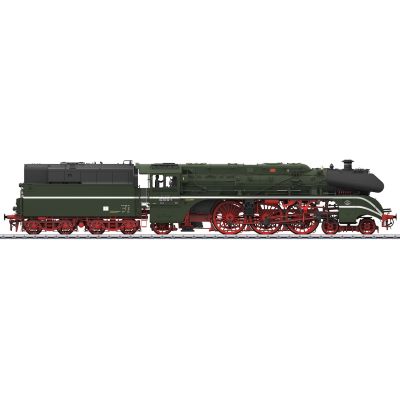
Large express steam locomotive at a scale of 1:32 with extensive technical functions.
View Product →
Robust introduction to a large indoor or garden railway.
View Product →H0 is one of the most widely used model railway sizes and offers a particularly large selection of vehicles, track, buildings and accessories. The best gauge is nevertheless the one that suits the available space and preferred layout theme.
Z requires particularly little space among the commonly used model railway sizes. N is slightly larger but easier to handle and also allows long trains to operate on compact layouts.
N and Z permit particularly long trains in relation to the layout area. TT also provides good train lengths with a stronger visual presence. Long H0 express and freight trains require correspondingly larger rooms.
Yes. TT uses a scale of 1:120 and a model track gauge of 12 millimetres. N uses the smaller scale of 1:160 and a model track gauge of 9 millimetres.
No. Both can use 45-millimetre track but represent different prototype track gauges and scales. Gauge 1 represents standard gauge at 1:32. Gauge G is commonly used for large narrow-gauge prototypes and garden railways.
No. The vehicles require tracks of different widths and are built at different scales. They can appear together only in deliberately constructed forced-perspective or exhibition scenes.
Both use the H0 scale of 1:87 but represent narrower prototype railways. H0e runs on 9-millimetre track and H0m on 12-millimetre track. The vehicles and track are therefore not directly interchangeable.
Gauge G is particularly widespread for garden railways. The vehicles and track are large and robust. Electrical equipment, track foundations, curve radii, drainage and weather-protected storage should be considered during planning.
H0 is a common starting point because of its large selection and straightforward handling. TT is interesting when space is limited, N suits long routes and G offers large, robust vehicles. A complete starter set makes the introduction easier.
Discover further information about starter sets, track planning, digital technology, locomotives, rolling stock, railway eras, scenery construction, maintenance and prototypical operation.