Patrol Duty
A patrol car outside a town hall, railway station or shop is enough for an immediately understandable everyday scene. One or two police officers complete the setting.

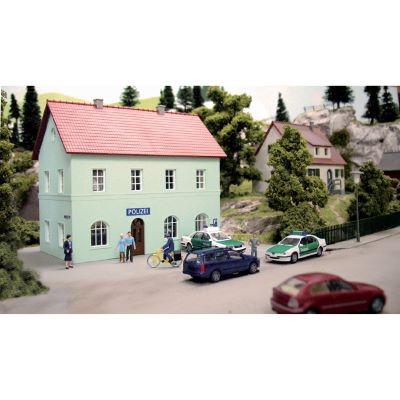
A police station, patrol car, traffic check, motorcycle unit or Volkspolizei scene needs only a few carefully positioned models to create believable everyday activity in towns, villages, station areas and road scenes.
Designing police scenes on a model railway does not automatically mean flashing blue lights and a major emergency. Everyday situations are often more convincing: a patrol car outside a police station, two officers carrying out a traffic check, a police motorcycle on a country road or visible police presence around a railway station.
Modellbahnshop provides separate English categories for Police vehicles and Police figures , together with Police + Fire brigade buildings . This makes it possible to create either one small detail or a complete official and emergency-services area.
The period is crucial. Green police cars belong to a different period from modern blue-and-silver or blue-and-white vehicles. East German layouts have their own recognisable vehicle world with Volkspolizei models such as Wartburg and Lada vehicles. Uniforms, police vehicles and the surrounding road traffic should therefore be selected together.
Restraint is equally important. An ordinary railway station does not need a major incident involving ten police cars. One patrol car and two figures can often make the scene more believable. Larger emergency scenes work best when an accident, event or other visible reason explains the stronger police presence.
A patrol car outside a town hall, railway station or shop is enough for an immediately understandable everyday scene. One or two police officers complete the setting.
A stopped vehicle, two to four officers and a safe stopping area beside the road can already create a complete scene.
Police can secure an accident scene together with ambulance and fire brigade vehicles. High-visibility clothing and logical vehicle positions make the different tasks easy to understand.
A police building, patrol vehicles and a small yard work even without an active emergency. Town centres and station areas are especially suitable locations.
Wartburg, Lada, Robur and suitable East German figures create a clearly recognisable GDR theme for appropriate Era III and Era IV scenes.
A harbour, canal, river or lake makes an unusual police scene possible. A water-police boat gives a larger water area a clear operational function.
A police motorcycle suits traffic checks, escorts and rapid patrol duties while requiring very little layout space.
Police officers on horseback are an eye-catching subject for parks, major events, town centres or historic scenes.
An office container or temporary operational base suits major events, construction sites, festivals and other temporary police deployments.
A clear scene follows a simple sequence. Viewers should be able to understand why the police are present and what the individual figures are doing.
Choose a traffic check, patrol or police-station scene first. Vehicles and figures can then be selected specifically for that purpose.
Place the vehicles loosely on the road before fixing anything. A traffic check needs a safe stopping area, while a police station needs access and parking.
Officers should face the stopped vehicle, incident or people they are dealing with. Randomly scattered figures are less convincing.
Ordinary cars, buses, bicycles and pedestrians prevent the entire layout area from looking like a permanent emergency diorama.
Practical rule: one patrol car with two appropriately positioned figures is often sufficient. The smaller the scene, the more important the vehicle position, sightlines and clearly understandable action become.
A police station does not need to be monumental. PIKO 61836 is a medium-sized H0 police station and therefore works well in a small town or urban district. Larger civic ensembles such as Vollmer 43693 combine a town hall, police station and prison into a much more representative city scene.
A police station needs at least a clear entrance from the street and parking for service vehicles. Garages are especially useful because patrol cars can be visibly associated with the building. Vollmer 47776 in N gauge combines a two-storey small-town police station with a separate three-space garage.
A temporary police base can be useful on a modern layout. The FALLER 180338 H0 office-container set for Police and DRK suits events, temporary checkpoints and larger emergency-service areas without requiring a permanent police-station building.
Police buildings also work particularly well beside other public institutions. The Authorities + Post Building category includes town halls and administrative buildings that can form a small civic district together with a police station.
A traffic check is one of the simplest and most effective police subjects. The stopped vehicle should stand outside the normal traffic lane wherever possible. Officers stand beside the vehicle rather than in the middle of passing traffic, and high-visibility equipment can make the purpose of the scene immediately clear.
The current Police figure range includes dedicated traffic-control figures as well as historic and modern police personnel. FALLER 151713 is an H0 traffic-control figure set, while Preiser 10399 represents mounted police in Germany around 1960. NOCH 35010 provides N-gauge police figures in green uniforms.
Road geometry and stopping areas should be planned before permanently installing the figures. The Build Model Railway Roads guide provides further help with carriageways, junctions and road edges. A small lay-by is often sufficient on a country road; in a town, a parking bay or roadside area can serve the same purpose.
| Era | Typical Police Appearance | Suitable Models & Scenes |
|---|---|---|
| II | Historic police uniforms and early motor vehicles | Traffic officer, early service vehicle, foot patrol and historic urban street. |
| III | Period-specific regional liveries and increasing motorisation | VW Beetle, motorcycle police, mounted police and traffic checks. |
| IV · West Germany | Green/white and later green/silver | Patrol cars, crew vehicles, traffic police and police stations. |
| III–IV · GDR | Deutsche Volkspolizei | Wartburg 353, Lada, Robur and appropriate Volkspolizei personnel. |
| V | Transition from green liveries towards blue | Green/silver and increasingly blue/silver vehicles can appear side by side during suitable transition periods. |
| VI | Blue/silver or blue/white with modern high-visibility markings | Modern patrol cars, vans, traffic-control groups, bicycle and motorcycle police. |
Transition periods allow interesting mixtures of older and newer service vehicles as long as the dates remain plausible. Police vehicle types and markings can also differ regionally. Anyone reproducing a specific city, police force or German federal state should therefore match the vehicle lettering and represented year carefully.
A railway station and its surrounding facilities provide a particularly suitable setting for police figures. Travellers, buses, taxis and road traffic already create a lively environment. One patrol car on the forecourt or two officers near the entrance can therefore look immediately believable.
An everyday station scene should not normally be completely sealed off. A foot patrol, short check or visible police presence at the entrance is often sufficient. Several vehicles and extensive barriers make more sense when a deliberately larger incident is being represented.
Historic railway-police scenes are also possible. For a general layout, however, it is usually sufficient to use police or federal-police models that suit the chosen period. Vehicle design, uniforms and the remaining station environment should all belong to the same broad timeframe.
| Gauge | Scale | Current Strength | Recommendation |
|---|---|---|---|
| Z | 1:220 | Selected police figures | Use a compact station or town-centre scene rather than a large police-station complex. |
| N | 1:160 | Police stations and numerous figure options | Ideal for a complete police-station and street scene. |
| TT | 1:120 | Vehicles and figures, especially for East German themes | Particularly useful for Volkspolizei and other East German road scenes. |
| H0 / H0m / H0e | 1:87 | Broadest range of vehicles, figures and buildings | Combine police stations, patrol vehicles, figures and specialised scenes in detail. |
| 0 | approx. 1:45 | Selected vehicles and specialist models | Use a small traffic-control or roadside scene as a focal point. |
| 1 | 1:32 | Primarily individual modelling and specialist products | Use selected figures or vehicles as individual scene elements. |
| G / IIm | often approx. 1:22.5 | Police figures and selected large-scale subjects | Use a small number of large figures in a clearly defined scene. |
West Germany, the GDR and the modern Federal Republic require different vehicles, colours and uniforms.
Choose patrol duty, a traffic check, accident investigation or station duty as the visible main subject.
Vehicle orientation determines where figures and the remaining road traffic can later be positioned.
Sightlines and distances to vehicles can explain the scene without requiring additional signs.
The checkpoint and emergency vehicles should fit logically into the existing road layout.
Cones, signs and warning equipment should be used where they support the represented operation rather than as random decoration.
Everyday activity around the police prevents the entire scene from appearing as an isolated emergency display.
Permanently fix the figures only when the action and sightlines are immediately understandable from normal viewing angles.
Patrol cars, crew vehicles, Volkspolizei models and specialist police vehicles.
Police officers, traffic police, special units, mounted police and traffic-control figures.
Police buildings, garages and temporary emergency-service bases.
Police, fire brigade, ambulance and other emergency-service vehicles.
Cars, buses and commercial vehicles for the everyday traffic surrounding the police scene.
Street, yard and building lighting for police stations and incident scenes.
Medium-sized police-station kit for a town, station district or residential area.
View Product →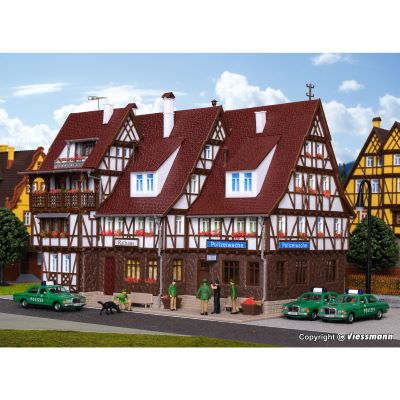
Three-part civic building combining a town hall, police station and prison with interior furnishings and LED lighting.
View Product →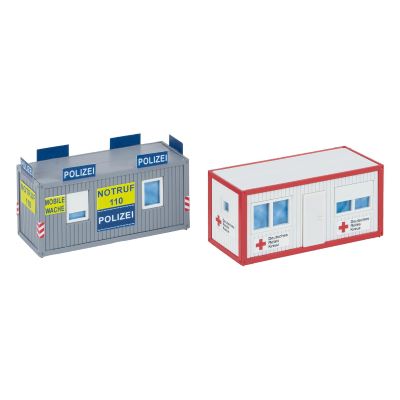
H0 office-container kit for temporary police, event and emergency-service scenes.
View Product →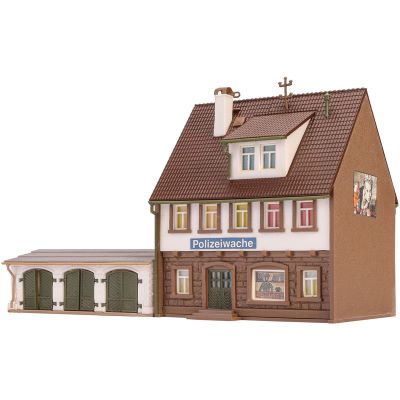
Two-storey small-town police station with a separate garage extension providing three parking spaces for emergency vehicles.
View Product →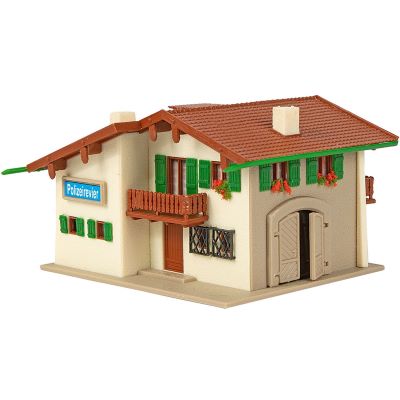
Compact N-gauge police-station kit for a small town, village or background civic scene.
View Product →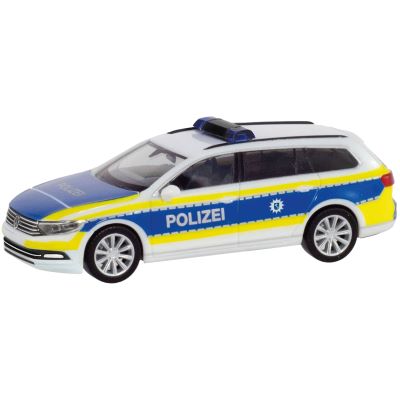
Modern Volkswagen Passat Variant police vehicle for contemporary patrol, traffic-control and station scenes.
View Product →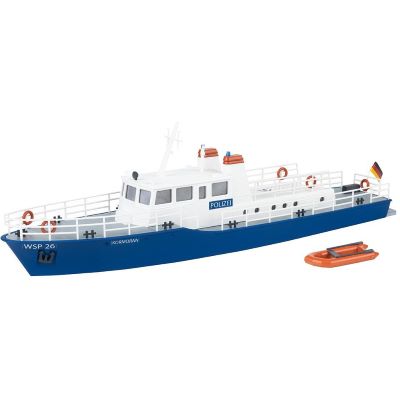
Waterline police boat for modern harbour, canal and urban-river scenes.
View Product →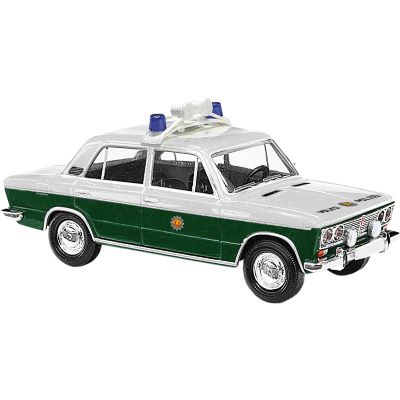
Green-and-white Volkspolizei vehicle with a non-functional blue-light beacon for GDR road and police scenes.
View Product →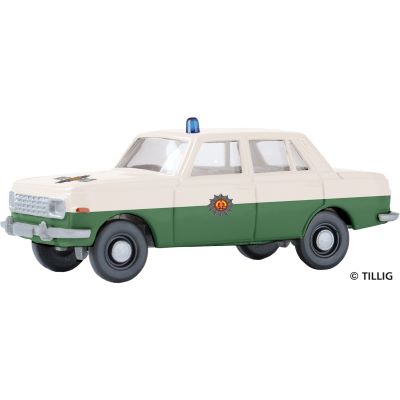
Green-and-white Wartburg 353 for authentic Volkspolizei, traffic-check and official-building scenes in TT.
View Product →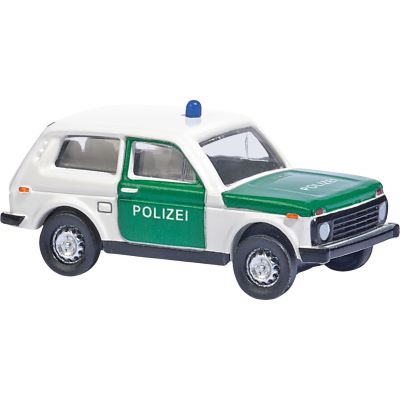
Off-road police vehicle suitable for rural patrol and post-reunification East German police scenes.
View Product →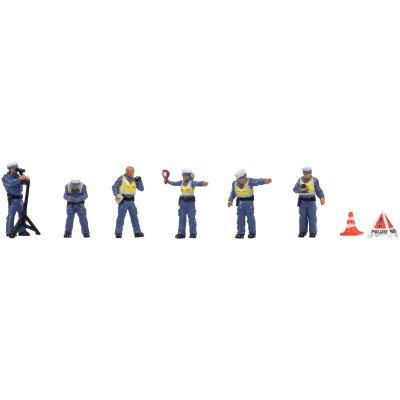
H0 police figure set for road checks, parking areas and station surroundings.
View Product →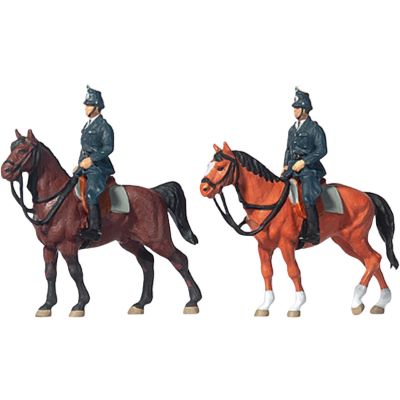
Hand-painted mounted police for historic town centres, parks and event scenes around 1960.
View Product →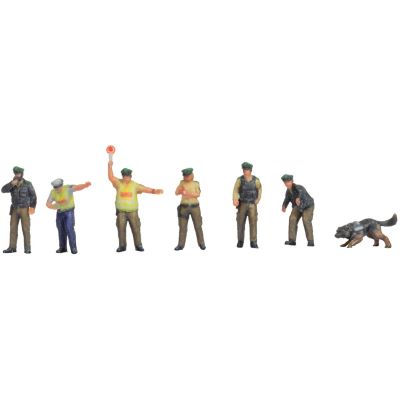
N-gauge police figures in classic green uniforms for station, town and roadside scenes.
View Product →The finder loads current products from the English Police vehicle, Police figure, Police + Fire brigade building and Emergency vehicle categories. Recognised archive, B-stock and clearance products are excluded, and only large 400px shop images are used. Prices, stock information and delivery times are deliberately not displayed.
Current police products will be loaded when this section approaches the viewport …
Buildings, vehicles and figures often come from different manufacturers. Scale, era and regional design are therefore more important than using a single brand throughout the complete scene.




A PIKO police station can easily be combined with Herpa patrol cars, FALLER figures or Busch vehicles. The scale and historical period determine whether the complete scene looks convincing.
One patrol car with two officers or a small traffic-control scene requires very little space while remaining immediately understandable.
Town centres, main streets and railway-station districts are particularly suitable. Provide road access and parking for service vehicles.
Older passenger cars, police motorcycles and historically appropriate regional police vehicles work well. If a specific prototype is being modelled, the represented year should be checked carefully.
Green-and-white and later green-and-silver police vehicles are particularly suitable for many West German Era IV and early Era V scenes.
Wartburg, Lada and Robur vehicles are characteristic choices and can be combined with suitable Volkspolizei figures.
A stopped vehicle, one patrol car and a small number of officers are enough. Position the vehicles outside the normal traffic lane wherever the road layout allows.
H0 currently offers the broadest choice of police vehicles, figures and buildings. TT and N also provide useful options for complete police scenes.
The current Police figure category includes Z-gauge police figures, allowing very small urban and station scenes to be detailed as well.
One vehicle is usually enough for normal police activity. Several patrol cars should be explained by a recognisable larger incident or event.
Yes. Station forecourts, entrances and platform areas are well suited to patrols, checks and visible police presence.
Selected offices, the entrance and yard lighting usually look more believable than illuminating the entire building uniformly.
Yes. Accident and larger emergency scenes can combine several services as long as the role of each vehicle and figure remains visually understandable.
Content, English categories and fixed product links checked on . Please additionally check scale assignments and individual product details on the respective product pages before purchase or final layout planning.
Further detailed guides covering railway stations, roads, vehicles, buildings, emergency scenes, gauges, scenery and layout planning can be found in the central Model Railway Guide.