Lush Summer Meadow
Several grass heights and green shades create a naturally grown meadow. Individual wildflowers, beige blades and irregular edges prevent the surface from looking like a green carpet.

Dense tree canopies, varied summer meadows, ripening fields, flowering plants, shady stream banks and lively leisure scenes create a warm, fully developed model railway landscape.
Creating summer scenery on a model railway means representing the landscape during its densest and most varied growth phase. Trees have full canopies, meadows show several grass heights and crops are much further developed than in spring. At the same time, strongly sunlit and dry areas may already begin to change from fresh green to yellowish or beige grass.
This combination is essential for a believable summer layout. A completely uniform dark-green surface quickly looks artificial. Natural meadows contain several green shades, occasional wildflowers, older blades of grass, open ground and areas of taller vegetation. Grass along paths and railway embankments may appear drier, while stream banks and shady woodland remain more strongly green.
Agriculture also defines the season. Grain fields, maize, sunflowers, gardens and pastures create large continuous areas of colour and provide a strong contrast with forests, villages and railway lines. Suitable materials can be found in the Grass Mats & Grass Fibres category.
Summer also offers particularly many opportunities for small everyday scenes. Hikers, cyclists, swimmers, gardening, agricultural work and camping make the season recognisable not only through vegetation but also through visible activity. This makes the layout feel alive without filling every open space with figures.
A believable summer landscape does not consist of one single type of vegetation. Different areas can look dry, lush, agricultural or carefully maintained while still belonging to the same seasonal landscape.
Several grass heights and green shades create a naturally grown meadow. Individual wildflowers, beige blades and irregular edges prevent the surface from looking like a green carpet.
Yellow to golden fields create a strong seasonal contrast with green meadows. A field track, tractor or combine harvester connects the crop naturally with the surrounding agricultural scene.
Tree canopies can be full and vigorous in summer. Different tree species, sizes and green shades nevertheless create depth. Lower bushes should stand in front of taller trees along the forest edge.
Wildflowers and field flowers work particularly well beside paths, fences and transitions between meadow and cultivated land. Small groups look more natural than evenly distributed coloured dots.
Vegetation beside a stream remains denser and more strongly green. Bushes, long grasses and occasional trees can visually emphasise the course of the water.
Vegetables, flowers, garden paths, sunflowers, climbing plants and working tools make a farmyard lively. Small details communicate both the season and the practical use of the area.
Swimmers, walking paths, parking areas and dense shoreline vegetation create a typical leisure scene. Keep the water itself relatively calm so that figures and planting do not visually compete with one another.
Strongly sunlit slopes can be less intensely green in midsummer. Beige blades, scree and a few bushes form a realistic transition towards the more carefully maintained track area.
Important: summer does not automatically mean saturated green everywhere. Sunny embankments, field tracks and dry meadow areas can already contain yellowish or beige fibres, while damp and shaded areas remain noticeably greener.
Two or three related green shades often create more convincing model vegetation than one single intense green. Add beige, gold, earth and a small number of flower colours. Mixing different fibres is particularly worthwhile across larger meadow areas.
Begin with earth, ochre and muted green shades. Even beneath dense vegetation, small gaps remain visible later. A prepared base prevents bright patches and provides additional visual depth.
Short fibres create the basic meadow. Summer mixtures can be richly green, but should be combined with some lighter and drier materials. Electrostatic grassing makes the fibres stand visibly upright.
Taller fibres belong particularly beside fences, lightly maintained paths, railway embankments and forest edges. Differences in height clearly distinguish maintained areas from more natural vegetation.
Low bushes, taller shrubs and young trees provide a transition between meadow and forest. A natural forest edge should not begin with one sudden wall of tall trees rising directly from open grass.
Fully leafed summer trees can have strong, dense crowns. Vary height, trunk spacing and green shade to prevent woodland from becoming a uniform wall. Suitable deciduous trees and forest vegetation can be found in the Model Plants range.
Agricultural crops bring order to the landscape. Beside irregular meadows and forests, straight field boundaries, vehicle tracks and farm roads provide a deliberate visual contrast.
Many grass fibres, mats and foliage materials can be used across several gauges. Trees, crops, figures and particularly tall grass tufts should, however, be visibly proportionate to the model scale.
| Gauge / Scale | Suitable Summer Scenery | Pay Particular Attention To |
|---|---|---|
| Z · 1:220 | Fine meadows, small fields and compact forest groups | Use very fine vegetation and represent individual flowers only as small colour accents. |
| N / Nm · approx. 1:160 | Broad fields, long forest edges and large meadow areas | Ideal for strong landscape effects and long trains through open countryside. |
| TT · 1:120 | Balanced combination of agriculture, woodland, villages and railway routes | Good balance between visible detail and generous landscape areas. |
| H0 / H0e / H0m / H0f · 1:87 | Detailed meadows, fields, gardens, forests and leisure scenes | Particularly wide choice of plants, trees and figures. |
| 0 / 0e / 0m · approx. 1:45 | Individual plants, long grasses and strongly textured ground | Spaces between plants and individual blades become clearly visible. |
| 1 · 1:32 | Fine individual trees and detailed vegetation groups | Tree structure and leaf appearance become especially important. |
| G / II / IIm | Large model plants combined with real garden vegetation | Use only weather-resistant materials outdoors. |
Establish the large vegetation areas before working on details. Avoid numerous small random islands. Continuous fields, forest groups and meadows produce a calmer and more convincing landscape when viewed from a normal distance.
Avoid using one uniform green base colour. Field tracks, forest ground, meadows and embankments require different starting tones. Later vegetation can then be applied more lightly and naturally.
Summer meadows are especially convincing when two or more fibre colours are mixed. Combine lush green with small amounts of golden yellow, medium green or beige and vary the fibre height between maintained and wild areas.
Grain, maize, sunflowers and other crops should not be mixed randomly. Farm tracks or narrow grass strips separate individual plots and connect them with farms and the road network.
A natural forest edge rises gradually. Low vegetation, shrubs and smaller trees stand in front of mature deciduous trees. Within the forest, the ground can be darker and vegetation less continuous.
Wildflowers suit meadow and path edges, lavender suits garden or Mediterranean scenes and sunflowers belong in agricultural areas. This gives every colourful element a logical location.
A few figures with recognisable activities are enough. A pair of hikers on a path, gardening behind a house or a vehicle working in a field looks more believable than groups of people distributed evenly across the landscape.
View the layout from a normal distance. If a meadow looks too uniform, add individual beige fibres, tufts, wildflowers and open ground. This creates a grown landscape rather than a green decorative surface.
Differences in moisture, sunlight, use and mowing mean that meadows rarely have exactly the same colour and height throughout. Beige and golden-yellow fibres are particularly useful beside paths, railway lines and dry embankments when representing midsummer.
A varied summer landscape combines several product categories. The following links lead directly to current English ranges for meadow materials, trees, bushes, flowers and rural scenery.
Grass mats, summer mixtures, wild grass and fibres in different lengths.
Oaks, lime trees, beeches, birches and other trees for dense summer woodland.
Medium-height vegetation for forest edges, paths, gardens and railway embankments.
Sunflowers, lavender, vegetables, maize and further summer plants.
Leaf and flock materials for custom tree construction and individual vegetation.
Farms, barns and buildings for fields, livestock and rural scenes.
Figures and accessories for hiking, gardens, excursions and holiday scenes.
Accessories for water, riverbanks, paths and other natural scenes.

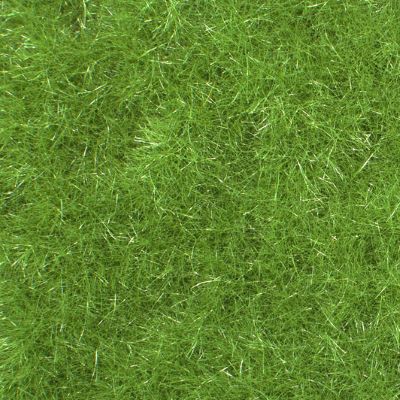
Densely flocked grass mat for larger summer meadow and green landscape areas.
View Product →
Large roll-format mat for continuous meadow and landscape surfaces.
View Product →
2.5 mm fibres for electrostatic grassing and natural meadow transitions.
View Product →
Textured vegetation mat for natural-looking summer landscape areas.
View Product →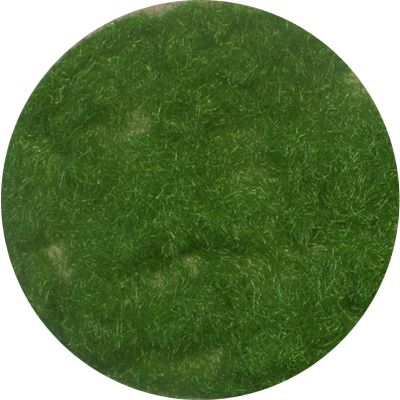
Short summer fibres for lawns, meadows and finely structured green areas.
View Product →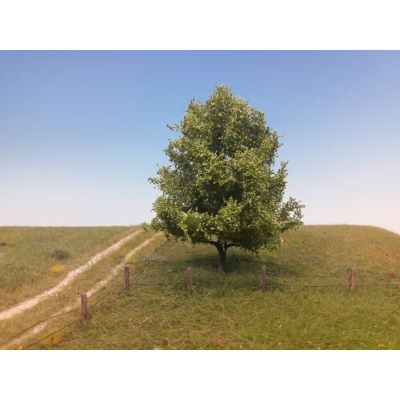
Fine deciduous tree with summer colouring for villages, parks and woodland.
View Product →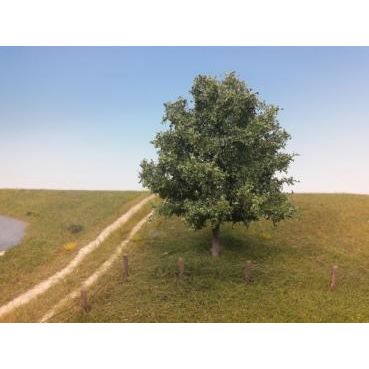
Summer-foliaged oak for forest edges, fields and park scenery.
View Product →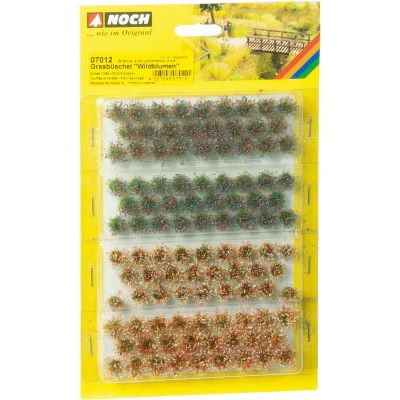
Multi-coloured tufts for meadows, forest edges and natural summer scenery.
View Product →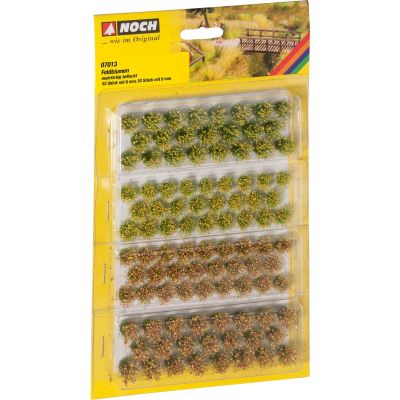
Flowering tufts for field tracks, gardens and agricultural scenery.
View Product →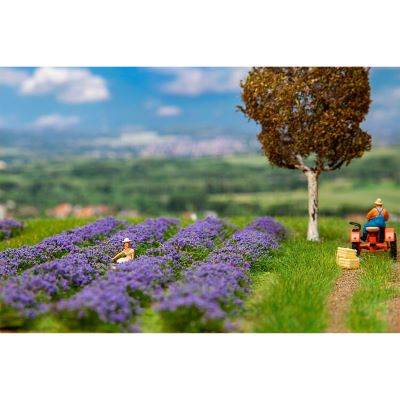
Blue-violet planting for Mediterranean and rural summer scenery.
View Product →
Sixty sunflowers for distinctive fields, gardens and farm scenes.
View Product →
Flowers, vegetables, paths and garden details for rural summer scenes.
View Product →
Structured field material for ripening grain and farm scenery.
View Product →When this section approaches the viewport, the product finder loads suitable products from several current English Modellbahnshop categories. Results can be filtered by search term, gauge, manufacturer, landscape area and product group. Detected archived products are excluded and no stock or delivery information is shown.
Current summer products will be loaded when this section approaches the viewport …
Scenery materials from different manufacturers can be combined without difficulty. Different colour palettes and structures often increase the natural variety of a summer landscape.





Especially natural results are achieved when a summer meadow does not consist of only one material. Grass mats can provide the base and then be refined with fibres, tufts, wildflowers, shrubs and individual high-quality trees.
These answers cover grass colours, forests, fields, dry areas, gauges and converting existing scenery to a summer appearance.
Summer meadows can contain medium and rich green shades. For a natural result, add lighter, golden-yellow or beige fibres. Strongly sunlit and dry areas can be considerably less green.
Spring is usually dominated by fresh light green. Summer vegetation is taller and denser, while the first dry blades can already appear. Wildflowers and fully developed crops strengthen the seasonal difference.
Deciduous trees such as oak, lime, beech and birch can be shown with fully developed canopies. Different green shades and tree heights prevent a dense forest from appearing as one uniform wall.
A convincing summer meadow combines short base fibres with occasional longer blades, several green shades, small dry areas and selectively placed wildflowers. Field and path edges can grow taller than maintained surfaces.
Grain, maize, sunflowers, vegetables and other well-developed crops are suitable. The exact stage of ripeness depends on whether the scene represents early, midsummer or late summer.
Use more dry grass fibres, dusty paths, ripening fields and slightly more muted meadow colours. Shaded woodland and damp stream banks should remain noticeably greener.
Yes. Add darker and longer grass fibres, more densely foliaged trees, taller bushes, developed fields and individual dry grass areas. Existing lighter vegetation can remain as maintained meadows or sunlit new growth.
A small grain field, group of trees, wildflower meadow or farm garden needs little space. A densely vegetated railway embankment can also make an existing railway line look immediately more summery.
Many grass fibres, mats and flock materials are suitable for several gauges. Trees, figures and larger plants should nevertheless match the visible dimensions of the respective scale.
Integrate earth, gravel, dry blades, fields, paths and several vegetation heights. Nature is rarely uniformly green in summer. Contrasts between damp and dry areas make the landscape much more believable.
Content updated on . For specific dimensions, gauge assignments and processing instructions, the information on the respective product page remains authoritative.
From meadows, forests and agriculture to water, rocks, railway embankments, gauges, layout planning, digital technology and rolling stock, the central guide provides access to suitable model railway topics.