Modellbahn Keks
Welcome!
Our cookies offer you a fast, relaxed and full-featured shopping experience. Some are necessary to operate the website and its functions. Others help us to improve our services. If you agree to this, simply consent to the use of cookies for preferences, statistics and marketing by clicking on "OK". Alternatively, you can deactivate individual cookies under "Customise cookies" or all cookies, except those required for the function of our website, under "Reject all".
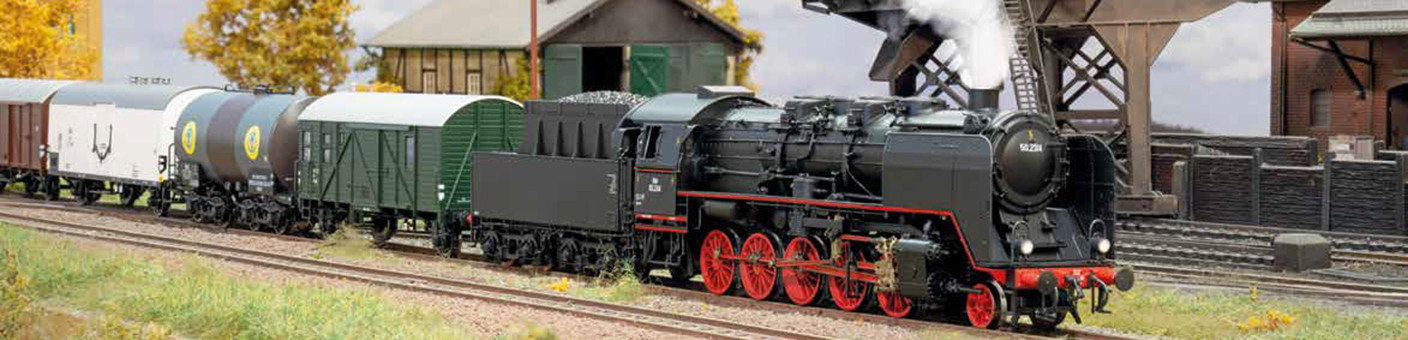
Detailed model railway layout with locomotive, passenger coaches, tracks and scenery
Plan carefully, test reliably and avoid expensive mistakes

The Most Common Beginner Mistakes in Model Railways

Too much track, the wrong gauge, incompatible control technology or scenery built before the first proper test run: this guide explains the ten most common beginner mistakes and shows how to create a reliable model railway step by step.

The most important answer first

What Is the Biggest Mistake When Starting a Model Railway?

The most common mistake is buying too quickly without following a fixed order. The available room and the desired type of operation should be considered first. Only then should you choose the gauge, track and current system, track plan and vehicles.

A favourite locomotive should not determine the entire project. Its length and minimum radius must fit the planned railway. In H0, you must also distinguish between a two-rail system and the Märklin-compatible centre-contact system. Analogue or digital operation is another separate decision.

Beginners also tend to plan layouts that are too large, install too much track and cover inaccessible areas with mountains or tunnels. Many buy additional locomotives before adding the first turnout or siding. A smaller, accessible and fully tested layout usually provides more reliable operation and more lasting enjoyment.

The model railway planning guide helps you determine the available area, suitable gauge and basic operating concept. Technical combinations can be checked in the model railway compatibility database .

Remember: plan first, test second, document everything and only then build permanently.
Interactive preliminary check

How High Is the Risk of Mistakes in Your Current Project?

Select every statement that applies to your current plans. The evaluation identifies the most urgent next steps. Your selections remain in your browser and are not submitted or stored.

Select the risk factors that apply
Ten mistakes and practical corrections

The 10 Most Common Model Railway Beginner Mistakes

Most problems do not begin with a defective product. They begin during planning, purchasing or the first construction stages. These ten mistakes can usually be prevented before they cause unnecessary costs or unreliable operation.

1

Planning a Layout That Is Too Large

A deep baseboard may look generous on paper, but the rear tracks, turnouts and buildings soon become inaccessible. Repairs then require leaning over delicate scenery or crawling underneath the layout.

Better approach

Prefer a narrow wall, L-shaped, U-shaped, sectional or modular layout with safe operating aisles and clearly defined reach zones.

2

Allowing a Favourite Locomotive to Determine the Gauge

A long express locomotive or full-length passenger train may need larger curves and longer platforms than the available room permits. Buying the vehicle first can make the later layout unnecessarily cramped.

Better approach

Compare the available space, desired train length and suitable gauges first. Select locomotives and rolling stock only after that comparison.

3

Confusing Gauge, Current System and Digital Technology

H0 initially describes a nominal size and track gauge. Two-rail, centre-contact, analogue, digital and the supported protocol are separate technical characteristics.

Better approach

Record the gauge, conductor system, operating mode and digital protocol for the layout and check those details for every powered vehicle.

4

Underestimating Curves, Reverse Curves and Gradients

A manufacturer's minimum radius does not automatically provide an attractive or reliable visible curve. Long vehicles swing outwards, while curves on gradients add resistance.

Better approach

Use larger radii wherever possible and test the weakest locomotive with the longest intended train before construction becomes permanent.

5

Installing Too Much Track in Too Little Space

An overcrowded plan leaves little room for a station, roads, buildings and believable scenery. Every additional turnout also increases cost, wiring and the number of potential fault points.

Better approach

Give every track a clear purpose such as passing, shunting, loading, locomotive storage or train formation.

6

Buying More Locomotives Before the First Turnout

Additional vehicles do not create more operational variety when every train can only circle the same oval. The railway lacks destinations and meaningful tasks.

Better approach

Add a matching turnout, siding, loading point or small station before purchasing another locomotive without a new operating role.

7

Combining Track Systems Without Checking the Transition

Rail-profile height, integrated roadbed, joiners, geometry and conductor type can differ. A mechanically possible connection is not automatically electrically reliable.

Better approach

Use manufacturer-approved transition tracks, suitable rail joiners and documented electrical connections. Test every transition under load.

8

Fixing and Ballasting Track Before Trial Operation

Slow running, pushed coaches and operation in both directions reveal imperfect joints, problematic turnouts and excessive coupling movement that may remain hidden during a quick test.

Better approach

Operate the complete provisional track plan for several days before using screws, adhesive, ballast or permanent scenery.

9

Making Hidden Track and Wiring Inaccessible

Turnouts inside tunnels, inaccessible storage tracks and unlabelled cables create recurring maintenance problems. Troubleshooting becomes difficult after the scenery is closed.

Better approach

Include removable scenery, maintenance openings and clear cable routes. Label connections and photograph hidden areas before covering them.

10

Forgetting Maintenance, Environment and Construction Costs

Dust, carpet fibres, moisture and unsuitable cleaning products can impair reliable operation. A budget focused only on rolling stock leaves too little for cables, tools and spare parts.

Better approach

Use a smooth, clean base, establish a maintenance routine and reserve part of the budget for electrical equipment, tools, cleaning and later repairs.

Evaluate beginner mistakes by nominal size

Which Beginner Mistakes Are Especially Important for Each Gauge?

Smaller gauges require particularly clean track, precise rerailing and careful handling. Larger gauges demand more space, larger radii, stronger baseboards, higher electrical capacity and suitable storage.

Gauge Family Typical Scale Frequently Underestimated Risk Recommended Correction
Z and Zm 1:220 Dust, unreliable current collection and incorrect rerailing. Use a smooth base, good lighting, clean track and a rerailer.
N, Nm, Ne and Nf 1:160 The compact scale encourages overcrowded stations and too much track. Plan calm routes, clear scenery areas and accessible sections.
TT, TTm, TTe and TTf 1:120 The available track system and vehicle range are checked too late. Compare the theme, track geometry and expansion options before buying the first set.
H0, H0m, H0e and H0f 1:87 Two-rail, centre-contact and narrow-gauge track are confused. Check the exact system designation for every powered vehicle and track component.
00 and S about 1:76 and 1:64 Couplings, national standards and the available product range are not compared. Define the prototype country, interfaces and suitable track system at the beginning.
0, 0m, 0e and 0f usually 1:45 Vehicle length, curve radius and required layout width are underestimated. Prefer a shelf, modular or point-to-point layout with intensive shunting operation.
1, 1m, 1e and 1f 1:32 Weight, radius and electrical current requirements are underestimated. Use a stable baseboard, generous curves and sufficiently powerful electrical equipment.
II, IIm/G, IIe and IIf 1:22.5 Weather protection, drainage and secure storage are omitted from garden-railway plans. Plan a permanent, weather-resistant track base and protected power supply.
III, V, VII, X and special sizes varies Safety, transportation, storage and structural requirements are underestimated. Treat the railway as a large-scale technical project with dedicated structural and operational safety planning.
Technical note: NEM standards provide a shared classification for nominal sizes, track, wheelsets and electrical interfaces. Minimum radius, vehicle overhang, track spacing and clearance must nevertheless be checked against the actual vehicles and selected track system. See the English NEM standards overview .
Eight decisions in the correct order

A Reliable Eight-Step Plan for Model Railway Beginners

Work through these decisions before permanent construction. The sequence reduces incompatible purchases, improves accessibility and creates a railway that can be expanded without rebuilding its technical foundation.

1

Measure the Entire Room

Record usable width, length, operating aisles, doors, furniture, height and the maximum safe reach depth.

2

Compare Suitable Gauges

Compare model size, train length, visibility, handling and the required base area before choosing vehicles.

3

Define the Technical System

Select the track system, two-rail or centre-contact operation and analogue or digital control.

4

Choose Coordinated Components

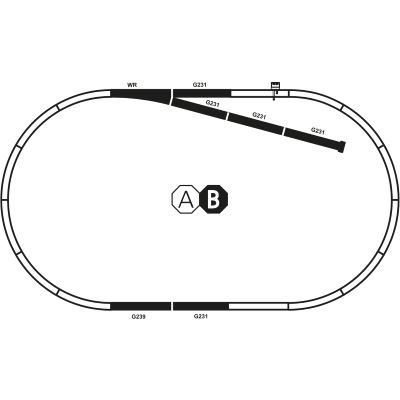
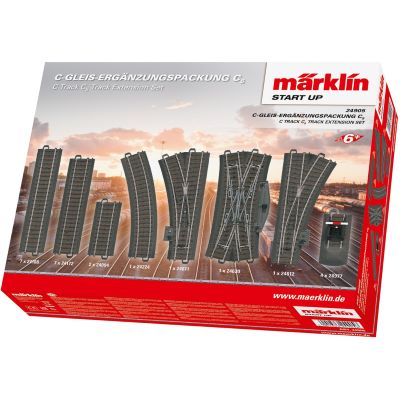
Begin with a suitable starter set or carefully verify every individually selected component for compatibility.

5

Plan Operation Before Track Quantity

Define a station, siding or loading task before adding turnouts merely to fill the available space.

6

Test Everything Provisionally

Run the longest train in both directions, slowly and quickly, pulled and pushed, over every turnout and gradient.

7

Document the Electrical System

Record power feeds, isolated sections, decoders, cable routes and hidden track with labels, notes and photographs.

8

Add Scenery Section by Section

Complete one accessible area at a time only after reliable operation has been confirmed throughout the layout.

Planning aids, starter sets and track expansions

Products That Help Prevent Common Beginner Mistakes

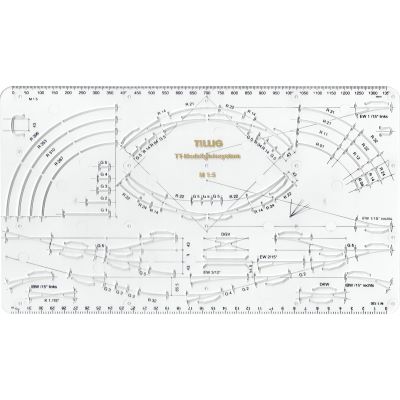
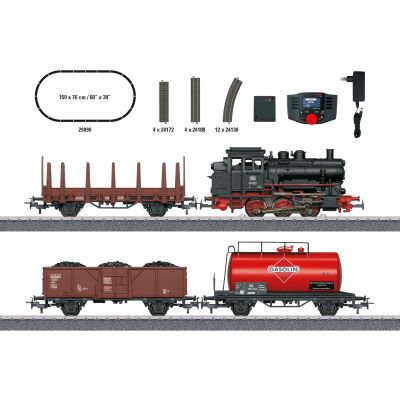
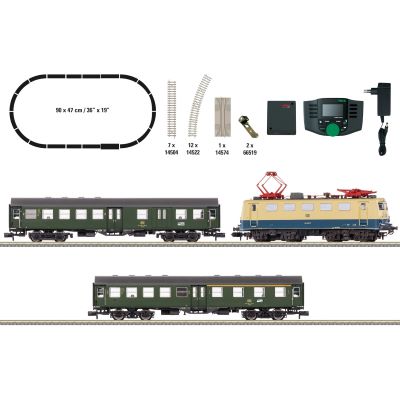
These recommendations are grouped according to their practical purpose. The gauge, track system, assembled dimensions and exact contents shown on the individual product page remain decisive before ordering.

Manufacturers for starting, planning and construction

Well-Known Model Railway Manufacturers

A manufacturer name alone does not guarantee compatibility. Always check the exact gauge, track system, conductor system, control technology, coupling and minimum radius of the individual product.

Frequently asked questions and clear answers

Frequently Asked Questions About Model Railway Beginner Mistakes

These answers cover the available space, gauge selection, track system, control technology and the most useful expansion order.

What Is the Most Common Model Railway Beginner Mistake?

The most common mistake is buying rolling stock and track before the available space, gauge, conductor system and intended type of operation have been defined. An unsuitable technical foundation often leads to further incompatible or unnecessary purchases.

Which Model Railway Gauge Is Most Forgiving for Beginners?

H0 offers a very broad selection and clearly visible models. TT and N require less space. More important than the nominal size alone is a coordinated starter set and a simple track plan whose complete route remains accessible.

Should Track Be Screwed Down or Ballasted Immediately?

No. First complete extended test runs in both directions at slow and higher speeds. Test pushed vehicles, all turnouts, reverse curves and the longest intended train before fixing the track.

Is Analogue or Digital Control Easier for Beginners?

Analogue control is straightforward for one train. Digital control is useful for operating several locomotives independently and switching lighting or sound functions. In both cases, the controller, decoder and supported protocol must be compatible.

Can Track from Different Manufacturers Be Combined?

Sometimes, but not without checking. Rail-profile height, integrated roadbed, joiners, geometry and conductor systems can differ. Use appropriate transition tracks or compensating joiners and verify the electrical connection.

How Large Should a First Model Railway Be?

It should remain completely accessible and be finishable in manageable stages. A small station with one turnout and siding usually provides more useful operation than a very large but permanently unfinished track plan.

Does a First Layout Need a Hidden Storage Yard?

No. A hidden yard permits more trains but also requires additional track, wiring and maintenance access. An open siding or accessible fiddle yard is often easier and more reliable for a first layout.

What Should Be Added After a Starter Set?

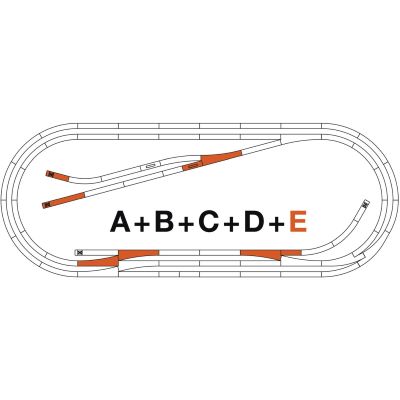
A matching turnout, siding, rerailer and suitable cleaning equipment are usually more useful than a second locomotive without a new operational task.

Avoided Beginner Mistakes Lead to Reliable Operation

Continue with the main model railway guide to explore gauges, track planning, digital technology, vehicles, scenery, maintenance and prototypical railway operation.

Open the Main Guide

Editorially reviewed and technically updated on 30 July 2026. Technical decisions should always be checked against the current manufacturer information for the exact product.