
Shunting Yard Along a Wall
A compact locomotive, two turnouts and several loading points permit individual wagons to be delivered, repositioned and collected.

Impressive locomotives, visible engineering, finely detailed driving cabs and powerful sound: Gauge 1 presents the railway prototype in an especially substantial and highly detailed size.
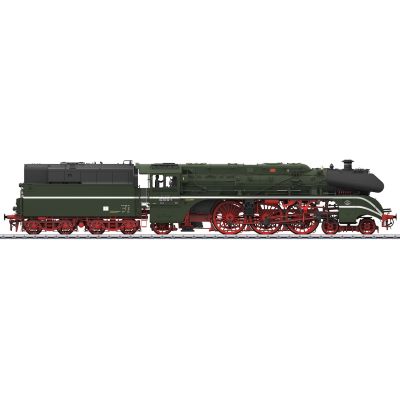
Gauge 1 is a large model-railway size at a scale of 1:32. A standard-gauge model operates on track measuring 45 millimetres between the rails. The designation therefore does not refer to track measuring one millimetre wide, but to the historically established nominal size 1. Standards tables may also show it as the Roman numeral I.
The large scale allows handrails, pipework, braking equipment, driving cabs, valve gear and lettering to be represented especially clearly. One metre on the prototype corresponds to 31.25 millimetres on the model. A prototype vehicle measuring 20 metres therefore reaches approximately 62.5 centimetres in model length. This substantial presence makes Gauge 1 attractive to collectors, layout operators and enthusiasts of digital functions.
A complete continuous circuit is not essential despite the large vehicles. A shunting route along a wall, an industrial siding, a modular layout or a digitally operated display track can already provide varied operation. Vehicle length, minimum radius, track system, coupling and control equipment should be checked together before purchasing. The gauge comparison helps with the fundamental choice.

Locomotives, railcars, wagons, track, figures and display solutions for standard-gauge models at 1:32 scale.
Open the Märklin brand world →
Road vehicles, tractors and commercial vehicles at 1:32 scale complement stations, farms, loading roads and industrial areas.
Open the Schuco brand world →
Figures and railway staff give platforms, driving cabs, workshops and everyday scenes a believable sense of scale.
Open the Preiser brand world →All variants use the same nominal size and therefore generally the same model scale. The different model track gauges each represent a different range of prototype track gauges.
| Designation | Scale | Model track gauge | Prototype range | Typical application |
|---|---|---|---|---|
| Gauge 1 / I | 1:32 | 45 mm | Standard gauge | Main lines, branch lines, goods traffic and collections |
| Gauge 1m / Im | 1:32 | 32 mm | Approximately 850 to less than 1,250 mm | Metre gauge, Alpine and regional railways |
| Gauge 1e / Ie | 1:32 | 22.5 mm | Approximately 650 to less than 850 mm | 750 mm narrow gauge and light railways |
| Gauge 1i / Ii / 1f | 1:32 | 16.5 mm | Approximately 400 to less than 650 mm | Industrial, mine and field railways |
| Gauge 1p / Ip | 1:32 | 12 mm | Approximately 300 to less than 400 mm | Very small park and specialist railways |
Classification follows NEM 010 . In German-speaking regions, the letter “f” is frequently used instead of “i” for field railways. The current Modellbahnshop selection on this page concentrates on standard-gauge Gauge 1 models using 45 millimetres.
Gauge 1 does not always have to form a room-filling oval. Short trains, working couplings and slow shunting movements make manageable layout forms interesting as well.
A compact locomotive, two turnouts and several loading points permit individual wagons to be delivered, repositioned and collected.

A small terminus combines passenger traffic, general goods, a loading road and a short locomotive run-round movement using only a few tracks.
Transportable sections can be constructed individually, stored safely and connected to form a longer route during operating sessions.
A Gauge 1 track plan is best developed around the longest vehicle and intended operation. Scenery and buildings are added afterwards.
A shunting locomotive and short goods wagons require less space than an express steam locomotive with scale-length passenger coaches.
Many vehicles specify 1,020 millimetres as the lower limit. Other models require wider radii or run considerably more smoothly on them.
A radius of 1,020 millimetres produces a track-centre diameter of 2.04 metres. Vehicle overhang and safety clearance increase the required area.
The station, run-round loop and sidings must accommodate the locomotive and wagons. A few sufficiently long tracks are better than many short ones.
Heavy large-scale models require easily accessible track, stable storage surfaces and protected transport or display locations.
The product selection covers express trains, branch lines, shunting, goods traffic, track construction and display. Every card leads directly to the relevant product page at Modellbahnshop.
Steam locomotives, electric locomotives, works locomotives and railbuses demonstrate the variety of railway operation possible at 1:32 scale.
Imposing express steam locomotive with sound and a substantial metal construction.

Green Deutsche Reichsbahn experimental locomotive with a distinctive appearance.
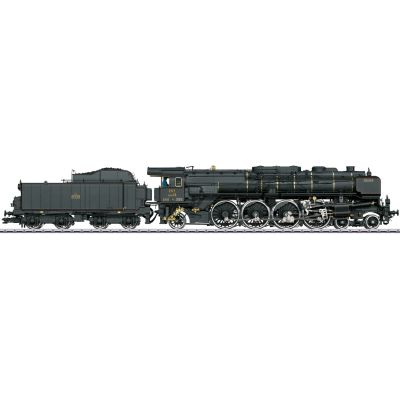
French 241 A express locomotive for prestigious passenger trains.
Characterful electric shunting locomotive nicknamed the “Flat Iron”.
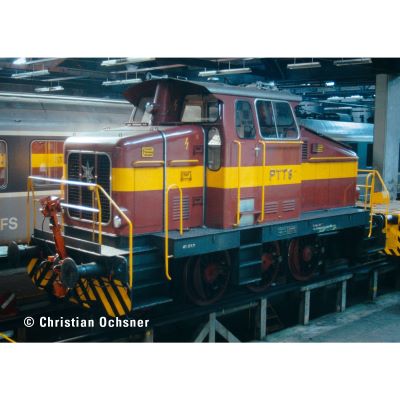
Swiss postal-station locomotive for shunting and logistics scenes.
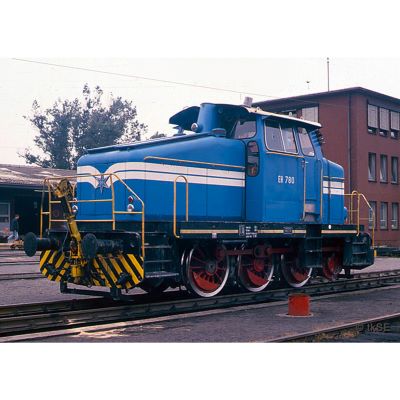
Compact steelworks locomotive for harbour, works and industrial traffic.
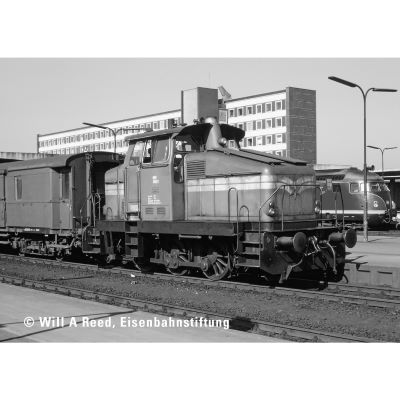
Regional private-railway locomotive for transfer trains and heavy shunting.
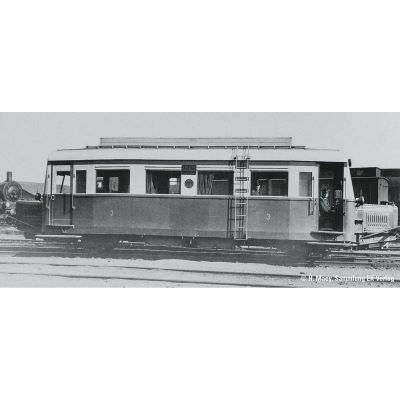
Compact branch-line railcar in wine-red and ivory livery.
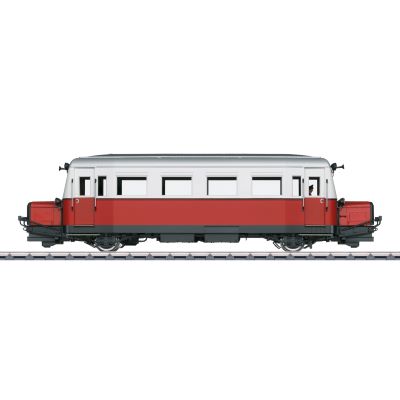
Belgian heritage vehicle for short shuttle and excursion services.

Six-axle electric locomotive for heavy Deutsche Bundesbahn goods trains.
Different wagon types create specific tasks for loading roads, goods sheds, timber operations, breweries and the steel industry.
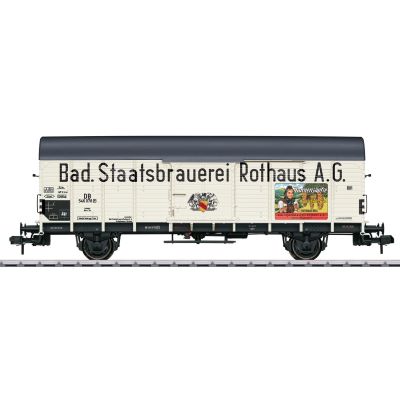
Anniversary wagon for brewery, loading and collector scenes.
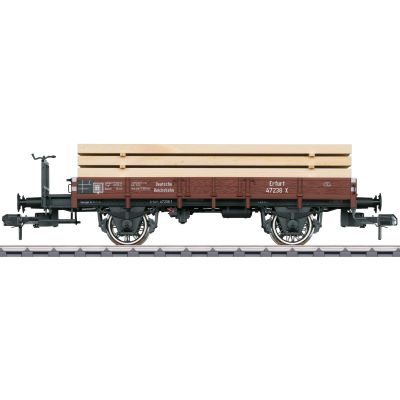
DRG wagon with a timber-beam load for a timber yard or loading road.
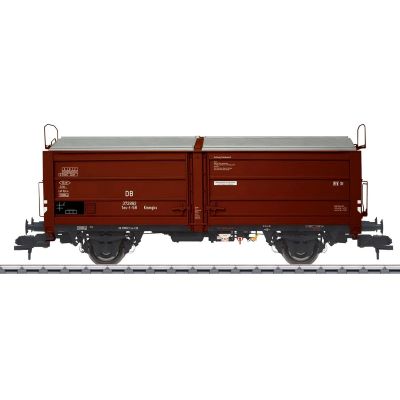
Versatile Deutsche Bundesbahn wagon for weather-sensitive goods.
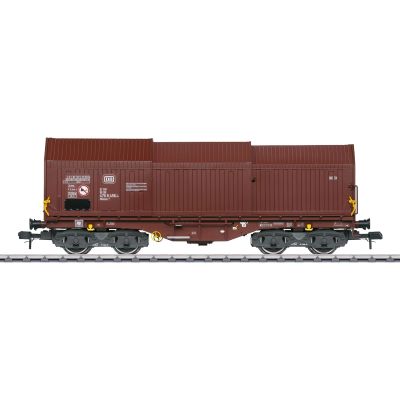
Telescopic-hood wagon for DB coil and steel traffic.
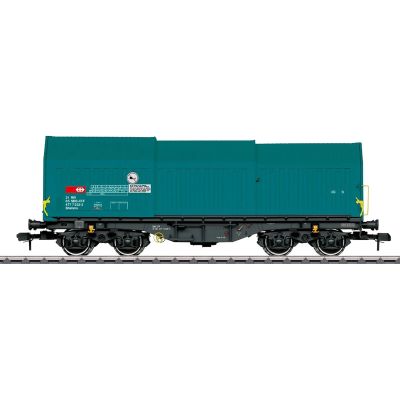
Swiss coil wagon for international industrial traffic.
Permanently coupled wagon pair for fast general-goods traffic.
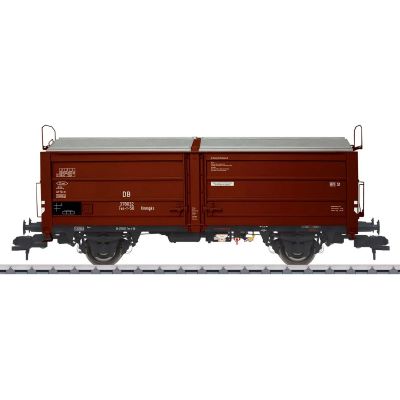
An additional running number for varied goods-train formations.
Straight and curved track form the technical foundation. Figures and display cases complement railway operation, collections and exhibitions.
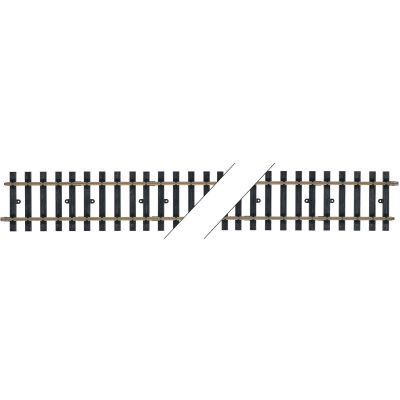
Long track section for routes and module transitions.
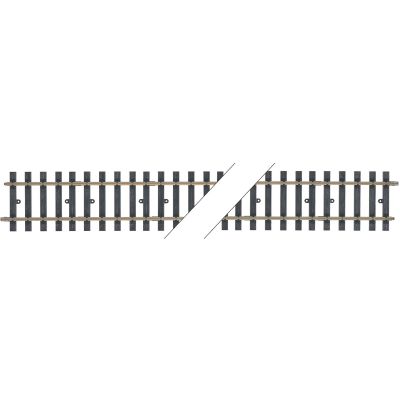
Straight track for stations, sidings and main routes.
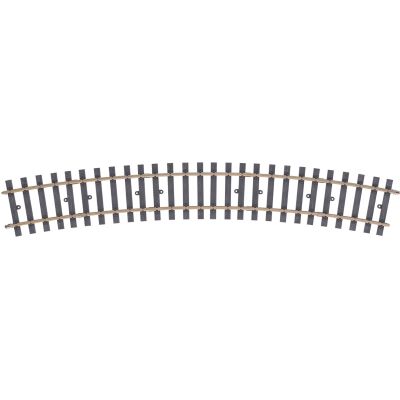
Generous curve for smooth track alignment.
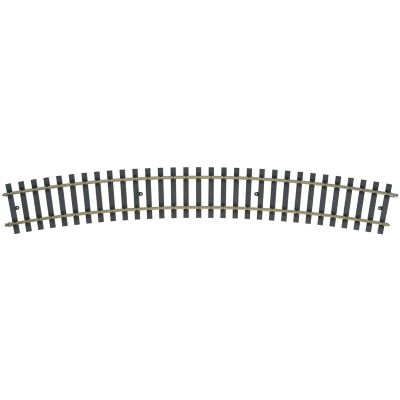
Wide radius for long coaches and a smoother train appearance.
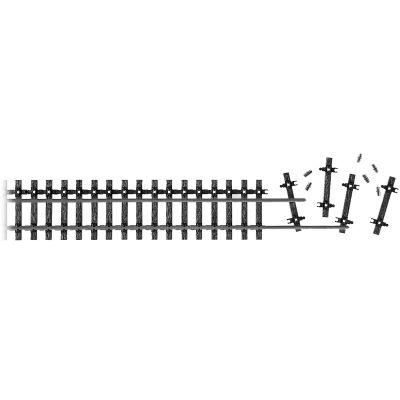
Rail profiles and sleepers for individual track projects.
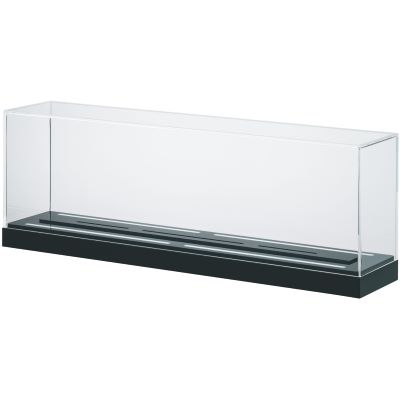
Illuminated presentation for compact large-scale models.
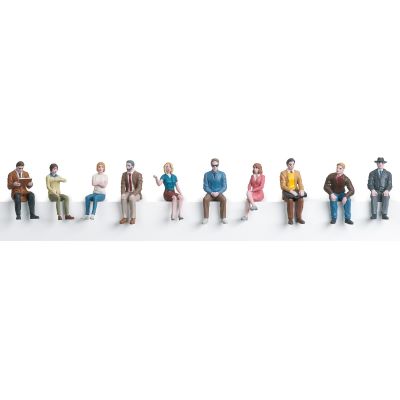
Ten figures for coaches, platforms and waiting rooms.
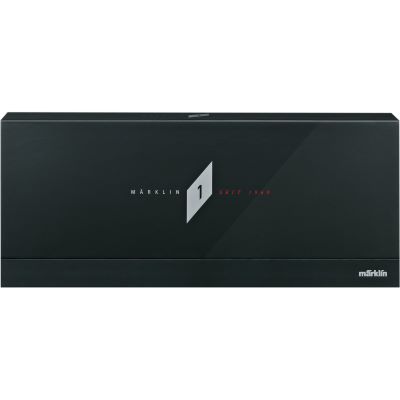
Protected presentation for high-quality Gauge 1 locomotives.
The large models permit numerous functions but require careful handling and technology suited to the particular vehicle.
Many modern models provide sound, lighting, smoke or switchable couplings. The supported protocols and functions are listed in the relevant product details.
System couplings simplify operation. Prototypical screw couplings look more delicate but require more time and good access when coupling vehicles.
Dust and deposits reduce electrical pickup. Models should be stored in dry, stable conditions, preferably in their packaging or a display case.
Vehicle overhang, the layout edge and walkways require additional space.
Both frequently use 45 millimetres but differ in scale and prototype.
Short formations already look substantial and allow more varied shunting operation.
Baseboards, modules, bridges and display cases must safely support heavy models.
Using 45 mm track does not automatically make a vehicle weatherproof or suitable for garden operation.
Gauge 1 is normally produced at a scale of 1:32 in Europe. One metre on the prototype therefore corresponds to 31.25 millimetres on the model.
Standard-gauge Gauge 1 uses a model track gauge of 45 millimetres. Narrow-gauge variants of the same nominal size use smaller track gauges.
No. Both frequently use 45 mm track. Gauge 1 represents standard gauge at 1:32 scale, while G gauge usually represents larger narrow-gauge vehicles.
The track gauge may be suitable, but the rail profile, wheelset dimensions, turnouts, power supply, coupling and minimum radius must be checked for every vehicle.
With a radius of 1,020 millimetres, the track-centre diameter is 2.04 metres. Vehicle overhang and safety clearance increase the actual base area.
The manufacturer's specification for the longest vehicle is decisive. R 1394 or R 1550 generally looks smoother with long coaches than a compact radius.
Yes. A shunting route, terminus or industrial siding permits operation without a continuous circuit and uses wall lengths efficiently.
The suffixes identify narrow-gauge variants at 1:32 scale. They use model track gauges of 32, 22.5 and 16.5 millimetres respectively.
Yes. Many current models contain decoders, sound and lighting functions. The digital format, command station and track voltage must suit the particular model.
Yes, provided that space, weight and budget are considered. A short digital shunting route is often easier to realise than a large oval.
Road vehicles, tractors and figures at 1:32 scale are proportionally suitable. The specific manufacturer's scale should be checked for every accessory.
Not automatically. Many high-quality Gauge 1 models are intended for indoor use. Outdoor operation is advisable only with products expressly designed for it.
A locomotive with two to four wagons already looks impressive. The length should suit the station tracks, run-round facility and operating purpose.
Original packaging, stable shelving and dust-protected display cases are suitable. Heavy vehicles should stand horizontally and be secured against falling.
Select the vehicle, minimum radius and operating form first. Track, wagons and digital technology can then be combined purposefully.
Content updated: 19 July 2026