Modellbahn Keks
Welcome!
Our cookies offer you a fast, relaxed and full-featured shopping experience. Some are necessary to operate the website and its functions. Others help us to improve our services. If you agree to this, simply consent to the use of cookies for preferences, statistics and marketing by clicking on "OK". Alternatively, you can deactivate individual cookies under "Customise cookies" or all cookies, except those required for the function of our website, under "Reject all".
Model railway with a locomotive and coaches for comparing analogue and digital control
Control systems, standards and conversion explained clearly

Analogue or Digital? Choose the Right Model Railway System

One train with a simple controller or several locomotives with lighting, sound and individually controlled functions? This guide compares analogue and digital model railways, explains DCC, mfx, two-rail and centre-contact systems and helps with initial purchases or conversion.

The most important decision before starting

What Do Analogue and Digital Mean on a Model Railway?

On an analogue model railway, speed is controlled primarily by the level of the traction voltage supplied to the track. All analogue locomotives within the same electrically connected section therefore react together. To keep one locomotive stationary while another moves, separate circuits, switchable sections or block controls are required.

On a digital model railway, a digital control signal is supplied to the track. A digital command station sends instructions to the address of a decoder installed in the locomotive. This allows several locomotives on the same track to be controlled independently. Depending on the decoder, lighting, sound, shunting mode, couplings, smoke generators and further functions can also be switched.

Analogue and digital describe only the method of control. Two-rail and centre-contact describe how electrical power is collected from the track. A digital layout can therefore use either a two-rail DCC system or a Märklin-compatible centre-contact system operating with mfx, Motorola or DCC.

Two practical approaches to operating trains

When Is Analogue or Digital the Better Choice?

Neither form of control is fundamentally wrong. The right solution depends on the size of the layout, the number of locomotives, the required operating convenience, the existing vehicle collection and the available budget.

Simple, direct and easy to understand

Analogue Operation

An analogue controller normally has a rotary control for speed and direction. Once the track oval has been assembled, the first train can run without entering a locomotive address or changing decoder settings.

Analogue control is especially suitable for

  • a starter set with one train operating at a time,
  • small circular, field-railway or Christmas layouts,
  • modellers who deliberately want little electronics,
  • existing analogue collections without immediate conversion,
  • simple operation using separate track sections.

An advanced analogue railway can also be created with switches, relays and separate circuits. As the number of independently operated trains increases, however, the wiring and operating effort also increases.

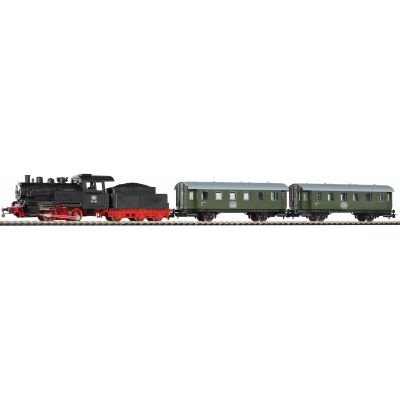
Discover Analogue Starter Sets →
Individual, expandable and feature-rich

Digital Operation

Every digitally equipped locomotive receives an address. Speed, direction and functions can be controlled using a handheld controller, command station, smartphone, tablet or model railway control software.

Digital control is especially suitable for

  • several independently operated locomotives,
  • sound, lighting and coupling functions,
  • finely adjustable acceleration and braking,
  • turnouts and signals that may later be digitally controlled,
  • feedback, routes and automated operation.

The initial setup is more technical, but a coordinated digital starter set makes it manageable. The selected system should provide sufficient expansion options for future plans.

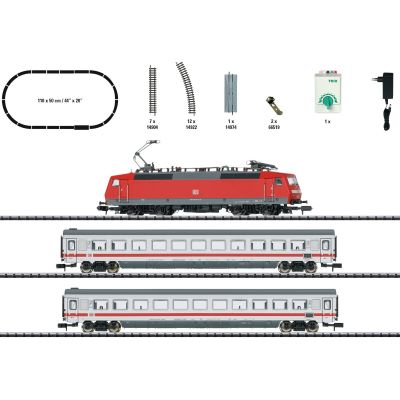
Discover Digital Starter Sets →
Functions, costs and expansion

Analogue and Digital Model Railways Compared Directly

Feature Analogue Model Railway Digital Model Railway Recommendation
Control Speed is controlled by the traction voltage in the track section. Addressed instructions are sent from the command station to the locomotive decoder. Choose analogue for one train and digital for independent multi-train operation.
Several Locomotives Independent control requires separate electrical circuits. Several locomotives can be controlled independently on the same track. Digital control provides more convenience when two or three locomotives are used regularly.
Lighting and Sound Functions normally depend on traction voltage and direction. Numerous functions can be switched individually. Choose digital control for sound and extensive lighting.
Starting Behaviour Depends on the motor, controller and traction voltage. The decoder can control acceleration, braking distance and speed curves. Digital control permits especially smooth low-speed running.
Wiring Several trains require numerous separate sections and switches. Initial train operation is possible with relatively few power feeds. Digital control does not eliminate all wiring, but it simplifies locomotive control.
Turnouts and Signals Controlled using switches, push buttons, panels and relays. Controlled using accessory decoders, a command station, an app or computer software. Digital train control and analogue accessory control can be combined.
Initial Purchase A less expensive and technically straightforward start is possible. A command station and decoders increase the initial cost. Consider long-term expansion when choosing the first starter set.
Expansion Expanded using block controls and additional electrical equipment. Expanded using boosters, feedback modules, decoders and network components. Begin digitally when automation or a large layout is planned.
Understanding the terminology

DCC, mfx, Motorola, Two-Rail and Centre-Contact Explained

Two-Rail and Centre-Contact Systems

In a two-rail system, the two running rails carry different electrical poles. In a Märklin-compatible centre-contact system, power is collected from stud contacts in the centre of the track using a pickup shoe fitted to the vehicle.

Important when buying a locomotive

The same gauge does not automatically mean the same method of current collection. In H0 in particular, every powered vehicle must be compatible with the existing track system.

DCC and RailCom

DCC is a digital data format used by numerous manufacturers. Locomotives are controlled using addresses. Configuration variables can be used to adjust the address, acceleration, braking behaviour, speed characteristics and function assignments.

Feedback

With suitable command stations, decoders and feedback modules, RailCom can transmit information from the decoder back to the digital system.

mfx and Multi-Protocol Operation

mfx is used particularly within the Märklin digital environment. Compatible locomotives can register automatically with a suitable command station. Multi-protocol command stations and decoders support several data formats and make it easier to operate vehicles from different generations.

Check before purchasing

A locomotive that supports several protocols does not necessarily provide the same range of functions in every data format.

Continuing to use existing vehicles

How Does Conversion from Analogue to Digital Work?

An existing layout does not have to be converted all at once. A step-by-step approach is useful, beginning with an assessment of the vehicles, power supply and track sections.

1

Document the System

Record the gauge, two-rail or centre-contact system, existing transformers, track systems and number of locomotives.

2

Check the Locomotives

Identify the interface, motor current, lighting, installation space and circuit board in every locomotive being considered for conversion.

3

Select a Command Station

Compare protocols, operation, output power, programming options, connections and future expansion possibilities.

4

Convert Gradually

Digitise frequently used locomotives first and test them thoroughly before converting further vehicles.

Safety information: An old analogue transformer must not be connected to the same track section as a modern digital command station without a proper technical assessment. Separate power sources clearly and follow the instructions supplied by each manufacturer. A decoder should be installed only when the motor, lighting and track connections have been electrically isolated correctly.
20 recommendations for starting and expanding

Analogue and Digital Model Railway Products Compared

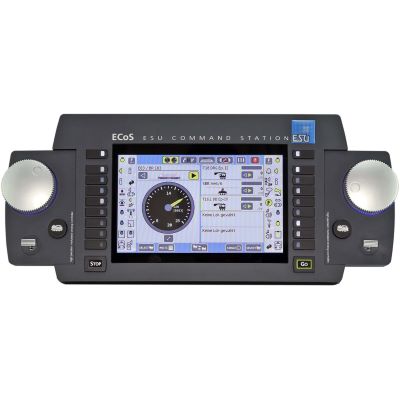
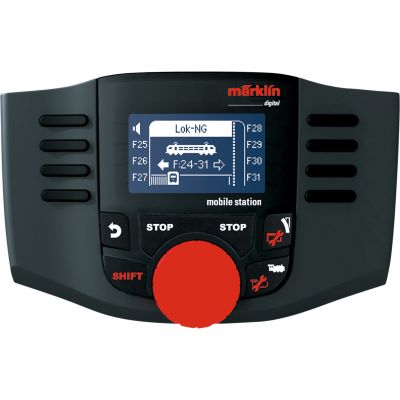
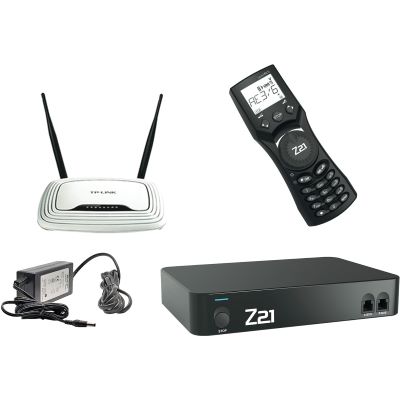
The selection ranges from simple analogue starter sets and complete digital packages to digital command stations and decoders. Check the gauge, power system, interface and supported digital protocols for every product.

Questions and easy-to-understand answers

Frequently Asked Questions About Analogue and Digital Model Railways

Is a Digital Model Railway Too Complicated for Beginners?

A coordinated digital starter set is also suitable for beginners. The locomotive, decoder, command station, track and power supply are already designed to work together. For initial operation, it is normally sufficient to select the locomotive and control its speed and functions using the handheld controller.

Can a Digital Locomotive Also Run on an Analogue Layout?

Many decoders recognise analogue DC or AC operation. This depends on the installed decoder and its settings. Not every function is available during analogue operation, so the instructions for the particular vehicle should be checked.

Can an Analogue Locomotive Run on a Digital Layout?

An analogue locomotive should not be placed on a digital layout without a suitable decoder. The continuous digital track voltage can cause unwanted behaviour, excessive heat or damage. Professional conversion is required for regular digital operation.

Does Digital Automatically Mean Märklin?

No. Digital control is available for two-rail and centre-contact layouts and for numerous gauges. DCC is used by many manufacturers. Märklin additionally uses mfx and Motorola in particular, while compatible Märklin command stations may also support DCC.

Must Turnouts Also Be Controlled Digitally?

No. Locomotives can run digitally while turnouts continue to be operated using push buttons or an analogue control panel. This mixed solution is simple, reliable and completely sufficient for many smaller layouts.

Which Digital Command Station Is Suitable for My Layout?

Check the supported data formats, output power, number of handheld controllers, programming options, feedback buses, network connections and expansion possibilities. A compact command station is sufficient for a starter oval, while a large layout may require boosters and feedback modules.

What Do Next18, PluX22 and 21MTC Mean?

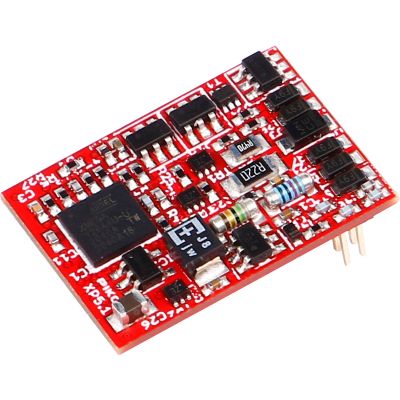
These are electrical interfaces between the locomotive circuit board and the decoder. The decoder must match the vehicle interface both mechanically and electrically. Installation space, motor current and the required function outputs must also be considered.

Is It Worth Converting an Old Analogue Locomotive?

This depends on the motor, condition, collector value, available space and required functions. Conversion may be worthwhile for a high-quality or personally important model. For simple older vehicles, a new digital locomotive may be more economical and technically reliable.

Can Different Digital Protocols Be Combined?

A multi-protocol command station can operate several supported data formats in parallel. The command station and decoder must support the relevant protocol. For clear and manageable operation, it is nevertheless useful to establish one preferred main protocol.

What Is Better for a Small Christmas Railway?

Analogue control is normally especially simple and economical for one train. When sound, switchable lighting or several operating functions are required, a digital set may also be useful on a seasonal layout.

From the Control System to a Complete Model Railway Layout

Discover further information about gauges, starter sets, track systems, wiring, decoders, digital command stations, railway eras, scenery construction and maintenance.

Open the Main Guide