
ČD / CD České dráhy – Model Railway in All Gauges
ČD as a Modern Czech Railway Prototype for Model Railways
ČD stands for České dráhy, the Czech state railway, and is a particularly interesting theme for model railway enthusiasts who want to represent international railway traffic, modern regional trains, distinctive electric locomotives, ČD Cargo freight trains and cross-border connections. ČD was founded in 1993 after the division of Czechoslovakia from the former ČSD. In the model railway sector, several related designations can therefore be found: ČSD for the historic Czechoslovak state railway, ČD for the Czech passenger railway from Era V onwards and ČD Cargo for modern freight traffic.
A ČD layout looks especially lively because it allows many different types of operation. Modern diesel railcars run on branch lines, international passenger trains connect the Czech Republic with Germany, Austria, Poland and Slovakia, while heavy ČD Cargo freight trains operate with container wagons, tank wagons or bulk goods wagons. The typical Czech electric locomotives from Škoda production, such as classes 181, 240, 242, 371 or 372, also bring a very distinctive appearance to the model railway.
At Modellbahnshop, you will find ČD models especially in H0, TT and N. There are also individual specialist themes in H0e, Z gauge, 0 gauge, Gauge 1 and G, although ČD is more of a collector or complementary theme in those scales. Important manufacturers for ČD models include Roco, PIKO, Fleischmann, Tillig, Märklin and Minitrix. With suitable electric locomotives, railcars, passenger coaches and freight train models, a believable Czech railway world can be created.
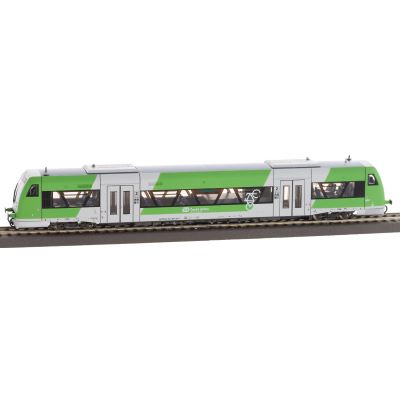
ČD in Model Form: Modern Regional Traffic
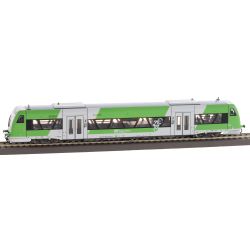
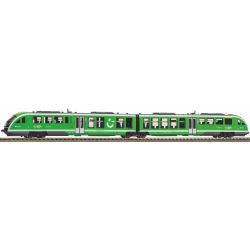
The Roco 7700003 H0 railcar 841 205-8 represents modern regional traffic of České dráhy. Railcars of this kind are ideal for branch lines, regional routes and smaller stations. They do not require long coach formations, look realistic even on compact layouts and immediately bring Czech railway flair to the model railway with their green and white ČD livery.
What Does ČD / CD Mean on a Model Railway?
On model railway products, “CD” is often used because special characters are not always used in product texts, databases or URLs. In most cases, this refers to ČD, meaning České dráhy. For freight vehicles, ČD Cargo is often used. Older models, by contrast, are usually marked ČSD for the former Czechoslovak state railway. This distinction is important if a layout is intended to look historically coherent.
ČSD models usually belong to Era III or IV and represent the railway world of Czechoslovakia. ČD models mainly belong to Eras V and VI. Era V stands for the years after 1993, when new lettering, modern colour schemes and international cooperation became increasingly visible. Era VI shows current railway operation with Railjet connections, modern passenger coaches, low-floor railcars, ČD Cargo, container traffic, multi-system locomotives and current UIC lettering.
Typical ČD Vehicles in Model Form
Typical ČD models include electric locomotives, diesel railcars, passenger coaches and freight wagons. Czech Škoda electric locomotives such as BR 181, BR 240, BR 242, BR 371 and BR 372 are especially distinctive. For modern long-distance traffic, ČD Railjet locomotives of class 1216 and suitable passenger coaches play an important role. In regional traffic, diesel railcars such as the RegioShuttle 841 or Desiro railcars are popular. For freight traffic, ČD Cargo locomotives, container wagons and modern freight wagons are central themes.
Typical ČD Themes
- Regional traffic: railcars, double-deck coaches, short push-pull trains and branch-line stations.
- Long-distance traffic: ČD Railjet, international express trains, EuroCity coaches and comfortable passenger coaches.
- Freight traffic: ČD Cargo, container wagons, tank wagons, steel trains and mixed freight trains.
- Cross-border traffic: connections to Germany, Austria, Poland and Slovakia.
- Historic transition period: ČSD vehicles in Era IV and ČD vehicles from early Era V.
Important Selection Tip
For a coherent ČD layout, era, country, vehicle lettering and train formation should match each other. A green ČD class 181 from Era V fits very well with heavy freight trains and older wagons. A modern ČD Railjet or a ČD Cargo dual-mode locomotive, by contrast, clearly belongs to Era VI and looks best with modern overhead lines, colour-light signals and current freight or passenger coaches.
ČD in All Major Gauges
Z Gauge – ČD as a Specialist Theme in 1:220 Scale
Z gauge is the smallest widely available series-production gauge and is a specialist field for ČD. The range is much smaller than in H0, TT or N. Nevertheless, the scale can be interesting when long international trains, compact routes or cross-border traffic are to be represented in very little space. European main lines, small stations, viaducts, tunnels and scenic layouts are especially suitable.
Anyone who wants to represent ČD in Z gauge will usually work with selected European vehicles, suitable buildings, modern platforms and a Czech or Central European-looking landscape. Basic products for this small scale can be found in the Märklin section. ČD specialist models are rare, but as an international complementary theme, Z gauge remains exciting for collectors and space-saving layouts.
N Gauge – Long ČD Trains in Little Space
N gauge in 1:160 scale is very well suited when long international passenger trains or freight trains are to run on a limited surface. ČD long-distance traffic and ČD Cargo freight traffic benefit from this gauge because stations, hidden yards and route sections can be planned more generously than in H0. A EuroCity with several coaches, a night train with car-carrier wagons or a container train looks convincing in N even on a medium-sized layout.
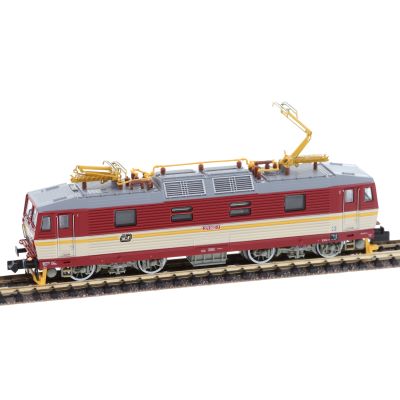
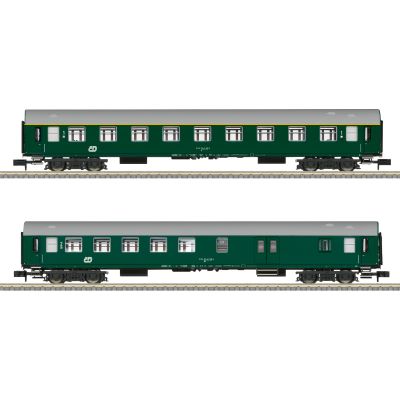
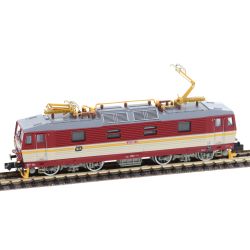
A strong example is the Fleischmann 7570031 N electric locomotive 371 002-7, ČD, Era V-VI, DC sound. Class 371 is a typical prototype for cross-border electric traffic. Express coaches, EuroCity coaches and international passenger trains fit well with it. For passenger and night train themes, the Fleischmann 6260031 N car-carrier wagon DDm, ČD, Era VI is also suitable. For classic Era V coaches, the Minitrix 18251 N express train coach set type Y/B, ČD, Era V is a good choice.
TT Gauge – ČD and ČD Cargo in 1:120 Scale
TT gauge is very interesting for ČD layouts because it offers a good compromise between visible detail and compact space requirements. The 1:120 scale is suitable for Czech border stations, freight traffic, branch lines and modern main lines. Container trains and international passenger coaches in particular look coherent in TT without the layout having to be as large as in H0.
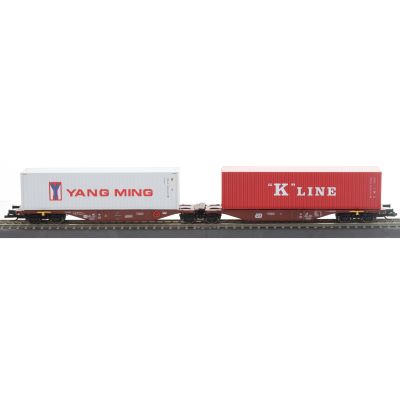
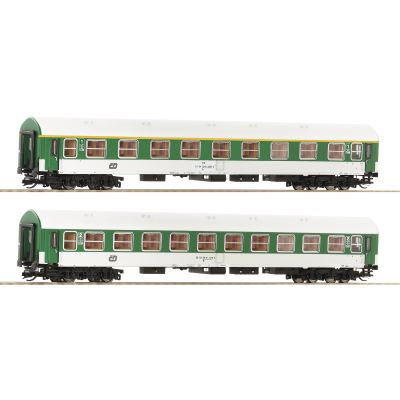
For freight traffic, the Tillig 18062 TT container wagon Sggmrss 578.0 of ČD Cargo, Era V is suitable. A modern complementary wagon is the Tillig 17482 TT START container wagon Lgs, ČD, Era VI. For passenger traffic, the Roco 6280010 TT two-piece passenger coach set, ČD, Era V is a fitting choice. For modern ČD Cargo themes, the Tillig 04871 TT dual-power locomotive 248 082, ČD Cargo, Era VI complements the range.
Why TT Fits ČD Well
TT allows longer trains than H0 on a comparable surface, but offers more visible detail than N. This is especially appealing for Czech themes: a border station with a goods track, container traffic, ČD passenger coaches and a ČD Cargo locomotive can be implemented well in TT. The alternation between passenger and freight traffic also remains clear and operationally interesting.
H0 Gauge – the Largest Selection for ČD Models
H0 in 1:87 scale is the most important gauge for ČD fans. It offers the largest selection of locomotives, railcars, passenger coaches, freight wagons and digital models. H0 provides enough size for fine roof details, pantographs, lettering, windows, interiors and technical details. At the same time, the scale remains well suited to classic home layouts.
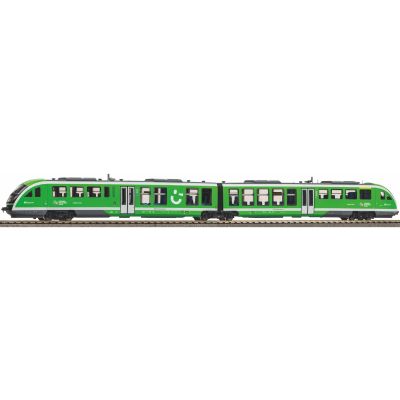
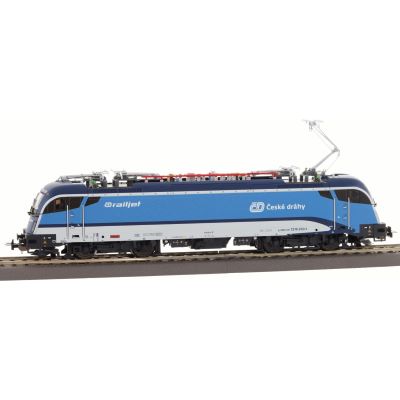
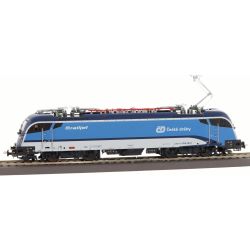
For regional traffic, the Roco 7700003 H0 railcar 841 205-8, ČD, Era VI or the sound version Roco 7710003 H0 railcar 841 205-8, ČD, Era VI, DC sound is suitable. For modern branch lines and regional routes, the PIKO 52976 H0 diesel railcar Desiro, ČD, Era VI is also a good fit. Anyone who prefers electric traction will find many suitable prototypes in the PIKO 21027 H0 electric locomotive BR 181, ČD, Era V, PIKO 51396 H0 electric locomotive BR 240, ČD, Era V, PIKO 97411 H0 electric locomotive Rh 242, ČD, Era VI, DC sound and PIKO 59845 H0 electric locomotive Rh 1216 “Railjet”, ČD, Era VI.
H0 Passenger Trains of the ČD
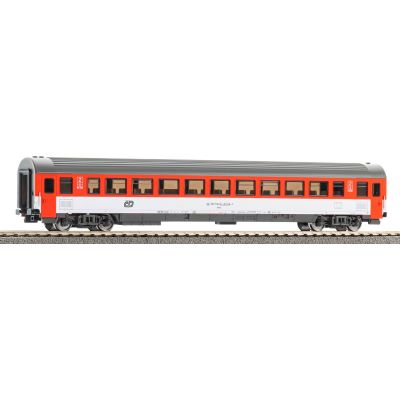
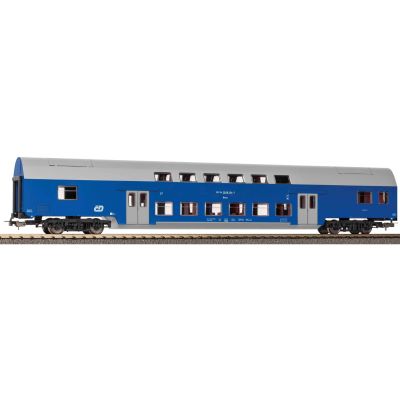
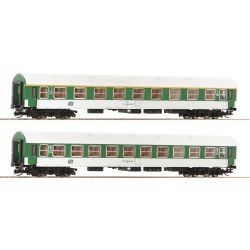
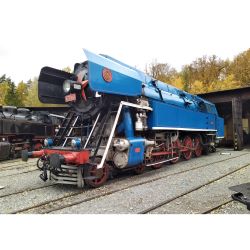
ČD passenger traffic is very varied in model form. Classic green coaches from the early ČD period, modernised blue-grey coaches, double-deck coaches and international long-distance coaches can be combined depending on the era. A suitable example is the PIKO 27745 H0 2nd class passenger coach, ČD, Era VI. For regional traffic, the PIKO 53118 H0 double-deck coach, ČD, Era V is suitable. Anyone who prefers museum or nostalgic trains will find a particularly striking prototype in the Märklin 38477 H0 steam locomotive Rh 477.0 “Parrot”, ČD, Era VI.
H0 Freight Traffic with ČD Cargo
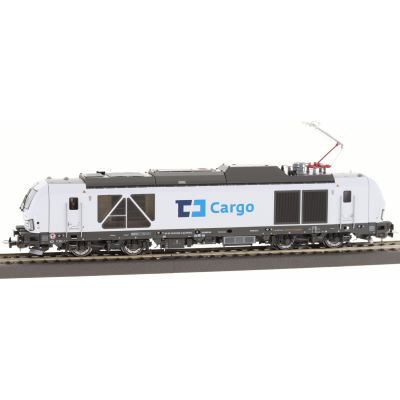
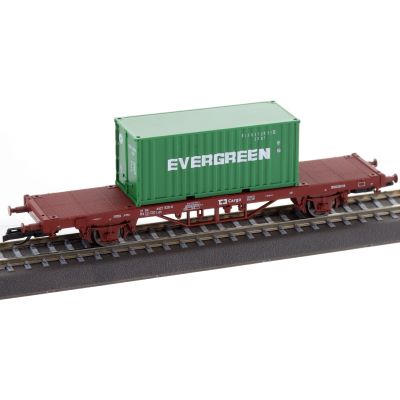
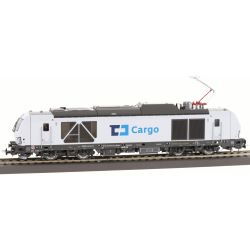
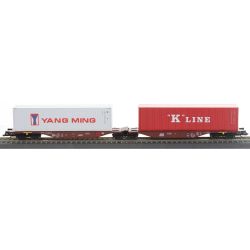
ČD Cargo is a strong theme for modern freight train layouts. The combination of Czech freight locomotives, container wagons and international wagon formations is especially interesting. The PIKO 51174 H0 dual-mode locomotive BR 248, ČD Cargo, Era VI, DC sound is ideal for modern freight trains. The PIKO 27719 H0 container wagon with 40-foot container, ČD, Era V is a suitable complement. Such wagons fit very well with container terminals, industrial sidings and international freight corridors.
H0e and H0m – Narrow Gauge as a Complement
ČD itself is mainly a standard-gauge theme in model form. H0e and H0m therefore do not play the same role for ČD as they do for Austrian or Saxon narrow-gauge railways. Nevertheless, narrow gauge can be a useful complement, for example as a museum railway, regional branch line or industrial siding next to a standard-gauge ČD route. Anyone planning such themes will find suitable basics under narrow-gauge railways.
0 Gauge and Gauge 1 – ČD as a Collector and Specialist Theme
0 gauge and Gauge 1 are more specialist areas for ČD. The range is significantly smaller than in H0, TT and N, but individual large-series, small-series or collector models can look very impressive. Large electric locomotives, passenger coaches or freight wagons with ČD or ČD Cargo lettering develop a strong presence in these scales. Complete layouts require a lot of space, but shunting modules, display cases and short demonstration routes are very appealing.
G Gauge – ČD in the Garden Railway Sector
G gauge is also not a core area for ČD, but it can be considered as an international complementary theme. Garden railway enthusiasts can design modern European freight trains, container traffic or free Czech-inspired motifs. Since ČD specialist models in G are rare, the focus is usually on thematically suitable European large-scale railway vehicles. Basics for the large scale can be found under garden railway.
Suitable ČD Models at Modellbahnshop
Which ČD Trains Fit Together?
Regional Train with Diesel Railcar
A ČD regional train is ideal for a compact layout. A single RegioShuttle 841 or Desiro railcar runs between two small stations, stops at a halt and shuttles through a rural landscape. This type of operation requires little space but looks very believable. Branch lines with simple platform equipment, small signal boxes, level crossings and short sidings are especially attractive.
International Express Train with ČD Electric Locomotive
A ČD express train fits perfectly on a main line with overhead wires. A BR 371, BR 1216 or a modern ČD electric locomotive hauls passenger coaches across the border to Germany or Austria. In H0, such trains look very detailed; in N, they can be represented particularly long and close to the prototype. A large station, long platforms, overhead lines and colour-light signals reinforce the effect.
ČD Cargo Freight Train
ČD Cargo is excellent for goods yards and modern industrial facilities. A dual-mode BR 248 locomotive can run under overhead wires and then serve a non-electrified siding. Container wagons, tank wagons and sliding-wall wagons add variety. In TT and H0, such trains can be combined very well with existing European freight wagons.
Typical Train Formations
- RegioShuttle 841 as a short ČD regional train on branch lines.
- Desiro railcar for modern Era VI local traffic.
- BR 371 with international passenger coaches for cross-border traffic.
- Rh 1216 Railjet with modern ČD long-distance coaches.
- BR 181 or BR 240 with heavy Era V freight wagons.
- ČD Cargo BR 248 with container wagons and mixed freight wagons.
- Historic Rh 477.0 “Parrot” for special and museum train operation.
Designing a ČD Layout
A ČD layout can look very different depending on the chosen theme. Modern layouts show electrified main lines, colour-light signals, long platforms, container terminals and international trains. Regional layouts show smaller stations, diesel railcars, single-track routes, level crossings and rural surroundings. Anyone who wants to represent the transition from ČSD to ČD can combine older buildings, classic coaches and modern lettering.
A border station is especially appealing. There, ČD trains meet vehicles from DB, ÖBB, PKP or ZSSK. This makes it possible to represent international passenger trains, locomotive changes, mixed freight trains and varied operation. Suitable thematic additions include Deutsche Bundesbahn, Deutsche Reichsbahn and ÖBB contexts.
Modern Regional Station
A modern regional station with ČD railcars does not need many tracks. A platform track, a passing loop and a small siding are already enough. With a RegioShuttle or Desiro, believable local traffic is created that also works well on smaller H0 or TT layouts.
ČD Cargo Terminal
A container terminal or goods yard is ideal for ČD Cargo. Container wagons, modern locomotives, lorry access roads, cranes, storage areas and sidings create a realistic freight traffic scene. In N, trains can be long; in H0, the details of the wagons and locomotives are especially effective.
Border Station with International Traffic
A border station brings a great deal of variety. ČD locomotives run alongside DB, ÖBB or ZSSK vehicles. Passenger coaches from different railway administrations can run in one train. Freight wagons from different owners also look very close to the prototype here.
Gauge Comparison for ČD Models
| Gauge | Scale | Strength for ČD Layouts | Typical Themes |
|---|---|---|---|
| Z | 1:220 | Very space-saving, ČD as a specialist theme | Compact main lines, border traffic, international trains |
| N | 1:160 | Long trains in little space | BR 371, express coaches, car-carrier wagons, ČD Cargo |
| TT | 1:120 | Good middle ground for passenger and freight traffic | ČD passenger coaches, container wagons, ČD Cargo BR 248 |
| H0 | 1:87 | Largest selection and best detail effect | RegioShuttle, Desiro, BR 181, BR 240, Rh 1216, ČD Cargo |
| H0e / H0m | 1:87 narrow gauge | Complementary theme | Museum railway, branch line, industrial siding next to standard gauge |
| 0 | 1:45 | Collector and specialist scale | Large locomotive models, shunting modules, display-case models |
| 1 | 1:32 | Premium and collector scale | Large individual models, international train formations, demonstration layouts |
| G | approx. 1:22.5 to 1:29 | Large-scale specialist theme | Free Czech-inspired motifs, European freight traffic, garden railway |
Frequently Asked Questions about ČD Models
What does CD mean in model railways?
In the model railway sector, CD usually refers to ČD, meaning České dráhy, the Czech state railway. For freight vehicles, ČD Cargo is often used. Older Czechoslovak vehicles are usually marked ČSD.
Which gauge is best for ČD?
H0 offers the largest selection and the best detail effect. TT is very suitable for compact layouts with passenger and freight traffic. N is ideal for long international passenger and freight trains in limited space. Z gauge, 0 gauge, Gauge 1 and G are more specialist areas.
Which era fits ČD?
ČD mainly belongs to Eras V and VI. Era V shows the period after 1993 with early ČD lettering and transition vehicles. Era VI shows current operation with modern railcars, Railjet, ČD Cargo and current wagons.
What is the difference between ČSD, ČD and ČD Cargo?
ČSD stands for the former Czechoslovak state railway. ČD refers to České dráhy, the Czech railway in passenger traffic. ČD Cargo stands for freight traffic and is especially interesting for modern freight train models.
Which ČD locomotives are typical?
Typical examples include electric locomotives such as BR 181, BR 240, BR 242, BR 371, BR 372 and Rh 1216. For regional traffic, railcars such as the RegioShuttle 841 and Desiro are interesting. Modern freight locomotives and dual-mode locomotives fit ČD Cargo themes.
Which coaches and wagons fit ČD layouts?
Passenger coaches from Eras V and VI, double-deck coaches, express coaches, car-carrier wagons, container wagons, tank wagons and mixed international freight wagons fit ČD layouts. For modern layouts, ČD Cargo container wagons are especially suitable.
Can ČD be combined well with DB or ÖBB?
Yes, ČD is very suitable for cross-border layouts. International passenger and freight trains can include vehicles from ČD, DB, ÖBB, PKP, ZSSK and other railways. A border station or international main line is especially believable.
Conclusion: ČD Brings Czech Railway Variety to the Model Railway
ČD and ČD Cargo are ideal themes for model railway enthusiasts who want to represent modern Central European railways. The range extends from small regional railcars and classic Czech electric locomotives to international long-distance traffic and heavy freight operation. H0 offers the largest selection, TT convinces as a compact middle ground, and N makes long trains possible on limited space.
The combination of passenger and freight traffic is especially exciting. A Desiro or RegioShuttle shuttles on the branch line, while a BR 371 takes over the international express train and ČD Cargo shunts container wagons at the freight terminal. This creates a varied layout that offers a lot both operationally and visually.
Anyone planning a ČD layout should first define gauge, era and operating focus. Suitable locomotives, railcars, passenger coaches, freight wagons, tracks, overhead lines and buildings can then be selected in a targeted way. Whether an H0 main line, TT freight yard, N express train layout or international border motif – ČD brings modern Czech railway atmosphere convincingly to every model railway layout.