Modellbahn Keks
Welcome!
Our cookies offer you a fast, relaxed and full-featured shopping experience. Some are necessary to operate the website and its functions. Others help us to improve our services. If you agree to this, simply consent to the use of cookies for preferences, statistics and marketing by clicking on "OK". Alternatively, you can deactivate individual cookies under "Customise cookies" or all cookies, except those required for the function of our website, under "Reject all".
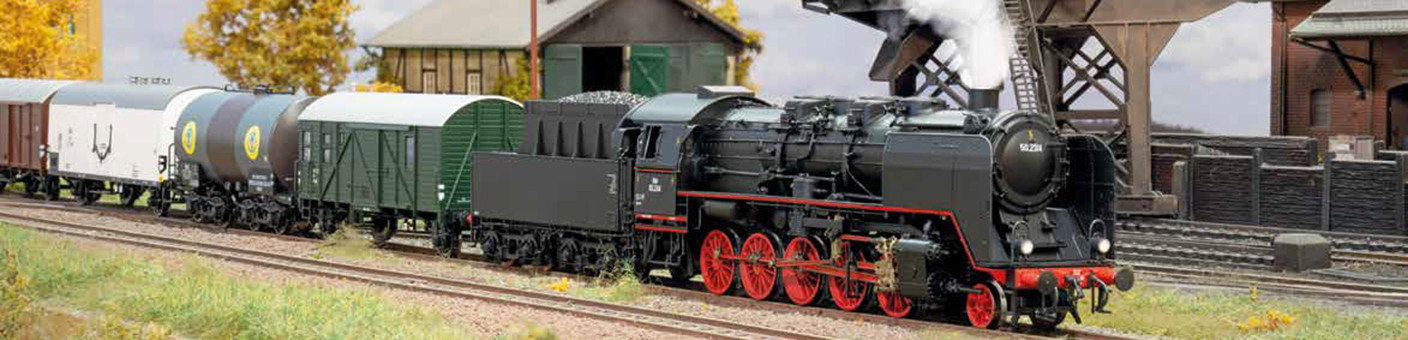
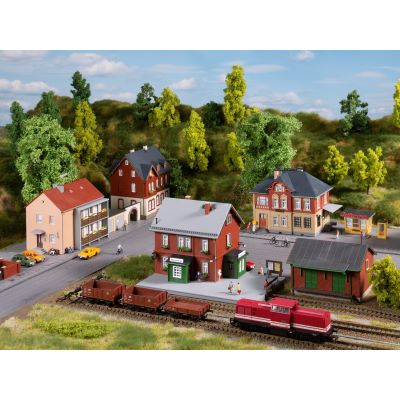
Model railway with locomotive, rolling stock, track, station buildings and detailed scenery
The complete overview of the model railway hobby

Model Railways: Gauges, Planning & Buying Guide

Model railways combine trains, technology, railway history, layout construction and creative scenery design in one miniature world. Discover gauges from Z to G, analogue and digital systems, railway eras, companies, manufacturers, track, vehicles and suitable products for starting, expanding or collecting.

From Z to Garden Railways Compare scales, gauges and space requirements
Analogue or Digital Understand control and electrical systems
Your Own Miniature World Run, build, landscape and collect
Definition, terminology and meaning

What Is a Model Railway?

A model railway reproduces real railways at a defined scale. The miniature world includes not only locomotives and rolling stock, but also track, stations, signals, bridges, tunnels, roads, landscapes, buildings, figures and realistic operating procedures.

The hobby can focus on train operation, prototype accuracy, layout construction, digital technology, scenery or the collection of selected vehicles. These areas can be combined or developed gradually.

In German, the standard spelling is Modelleisenbahn as one compound word. Modellbahn is a common shorter term. The separated form “Modell Eisenbahn” mainly appears in search queries rather than standard German spelling.

Unlike a simple toy train, a traditional model railway generally follows established scales, technical standards and identifiable railway prototypes. Vehicles use compatible couplings, wheelsets and electrical systems, while track follows a defined model gauge.

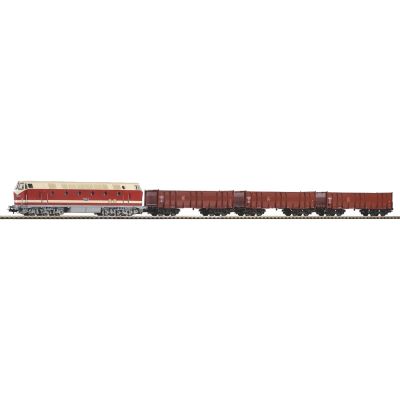
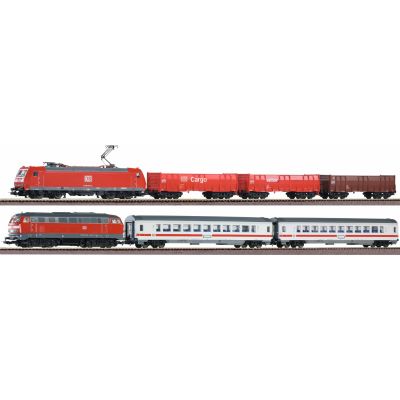
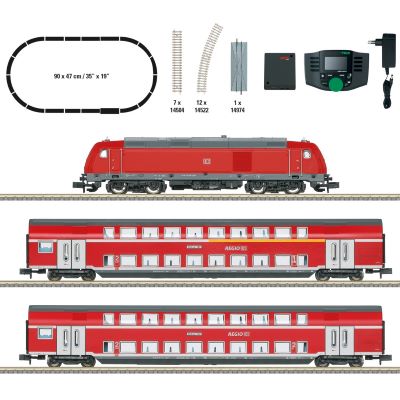
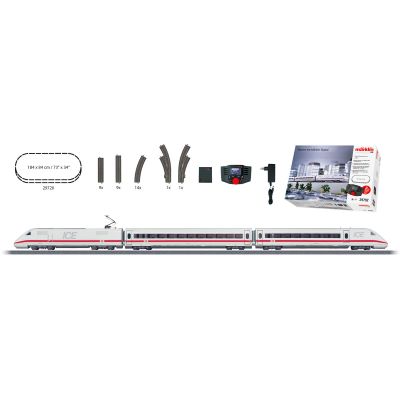
The first railway does not have to be completely prototypical. Many layouts begin with a starter kit , a simple oval and a few vehicles. A station, siding, turnouts, scenery and digital functions can be added later.

Start with a manageable concept: a reliable first route with a station and siding provides more useful experience than an oversized layout that is difficult to reach.
All components of a complete layout

Which Product Worlds Belong to a Model Railway?

A complete layout develops from several coordinated product groups. Vehicles create movement, track defines the operation and buildings and scenery create the visible environment.

Locomotives and Multiple Units

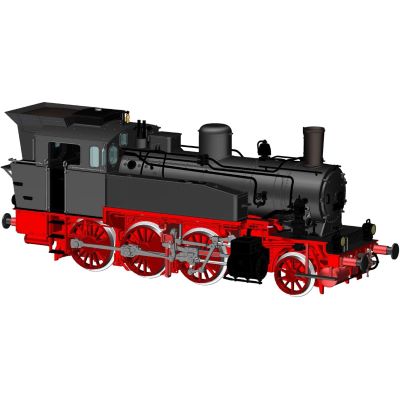
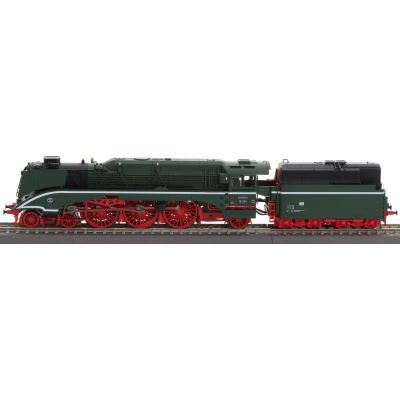
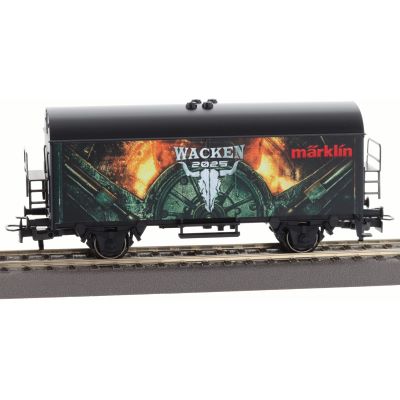
Steam, diesel and electric locomotives, multiple units, railbuses, trams and shunting locomotives form the centre of train operation.

Select by prototype

Gauge, electrical system, minimum radius, railway era and operating company must match the layout.

Passenger Coaches and Freight Wagons

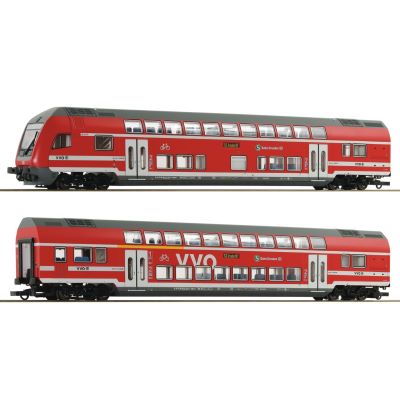
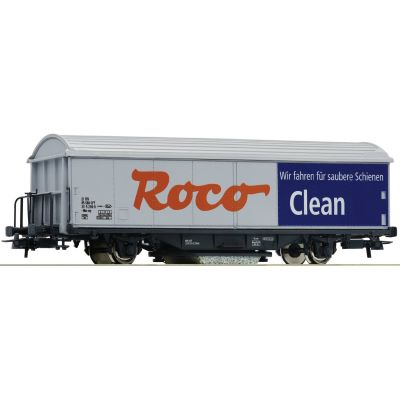
Passenger coaches, double-deck cars, sleeping cars, tank wagons, container wagons and open or covered freight wagons form complete train sets.

Plan train formations

Rolling stock should match the locomotive in era, coupling, electrical requirements and prototype operation.

Track, Turnouts and Railway Construction

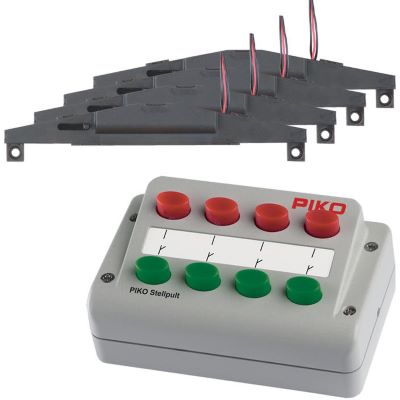
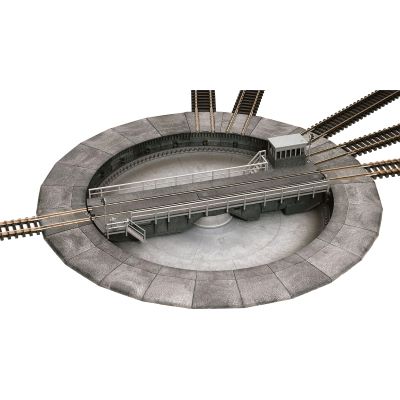
Track with or without an integrated roadbed, flexible track, turnouts, crossings, turntables and helixes determine the route and operating possibilities.

Consider future expansion

Compare radii, rail height, turnout geometry and available expansion pieces before selecting a system.

Control and Digital Technology

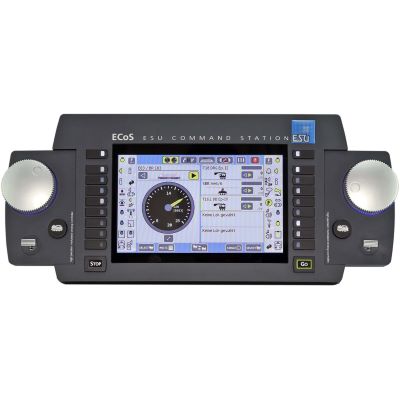
Controllers, digital command stations, locomotive and sound decoders, boosters, feedback modules and switching modules control trains and layout functions.

Check compatibility

Command station, protocol, decoder, interface and electrical system must work together.

Landscape and Nature

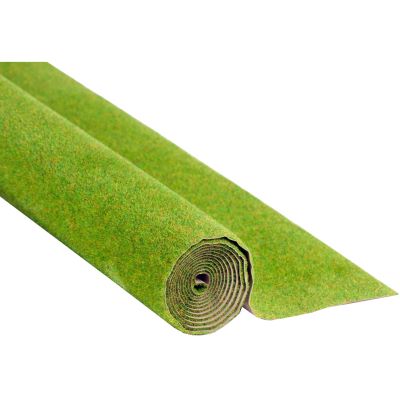
Mountains, rocks, forests, meadows, water, roads and fields connect the railway sections to form a believable miniature environment.

Build in layers

Substructure, terrain shape, colour, ground materials, vegetation and fine details are applied step by step.

Buildings and Scenes

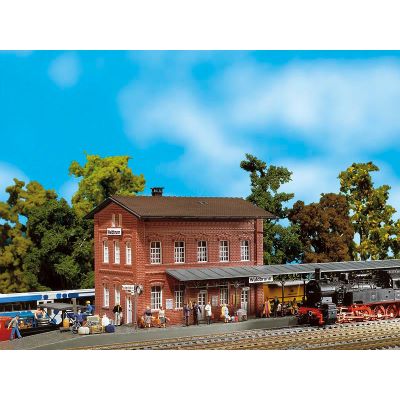
Stations, signal boxes, engine sheds, houses, factories, platforms and figures establish the theme and geographical character of the layout.

Coordinate scale and era

Architecture, road vehicles, signals and figures should suit the selected period and model scale.

From the first idea to an operating layout

How Should a Model Railway Be Planned?

Making decisions in the correct order prevents incompatible purchases and inaccessible track. Begin with the available room before choosing the gauge, system or vehicles.

01 Foundation

Measure the Available Space

Record the room, table, shelf or module area together with operating aisles and maximum safe reach depth.

Open the Planning Guide →
02 Size

Select a Gauge

Compare the model size, possible radii, train length and available product range.

Find the Right Gauge →
03 Technology

Define the System

Decide between analogue and digital control and, in H0, between two-rail and centre-contact operation.

Compare the Systems →
05 Construction

Prepare the Baseboard and Wiring

Plan track bases, power feeds, cable routes and maintenance openings before building the scenery.

Open Railway Construction →
06 Trial Operation

Test the Vehicles

Test the longest coaches, most sensitive locomotives, turnouts and gradients extensively.

Open Troubleshooting Help →
07 Scenery

Build the Landscape

Add terrain, buildings, roads and vegetation in accessible and maintainable sections.

Explore Layout Design →
08 Prototype

Select the Era and Theme

Combine vehicles, buildings, road traffic and railway companies into a coherent overall scene.

Select a Railway Era →
Scale, model gauge and required area

Which Model Railway Gauges Are Available?

The nominal size defines the scale of the miniature world. The model gauge is the distance between the rails. Smaller sizes permit longer routes within a compact area, while larger scales provide greater visual detail.

Z

Z Gauge

Scale 1:220 with a model track gauge of 6.5 mm. Particularly compact for small layouts and long routes in limited space.

Discover Z Gauge →
N

N Gauge

Scale 1:160 with a 9 mm track gauge. Suitable for long trains, large stations and extensive scenery on a limited base.

Discover N Gauge →
TT

TT Gauge

Scale 1:120 with a 12 mm track gauge. A balanced compromise between space saving, train length and visible detail.

Discover TT Gauge →
H0

H0 Gauge

Scale 1:87 with a 16.5 mm track gauge. Offers an exceptionally large range of vehicles, track systems and accessories.

Discover H0 Gauge →
S

S Gauge

Approximately 1:64 with a 22.5 mm track gauge. Larger, easy-to-see models, although less common in continental Europe.

Compare the Gauges →
0

0 Gauge

Usually scale 1:45 with a 32 mm track gauge. Large models suitable for modules, shunting layouts and wall projects.

Discover 0 Gauge →
1

Gauge 1

Scale 1:32 with a 45 mm track gauge. Impressive vehicles with clearly visible technology and substantial space requirements.

Discover Gauge 1 →
G

G, IIm and Gauge II

Large railway worlds for gardens and spacious indoor areas. G and IIm often use 45 mm track at scales around 1:22.5.

Discover G Gauge →
Nominal Size Typical Scale Model Track Gauge Particular Strength
Z 1:220 6.5 mm Very compact miniature and presentation layouts
N 1:160 9 mm Long trains and extensive scenery
TT 1:120 12 mm Balanced relationship between size and space
H0 1:87 16.5 mm Very large selection and easy handling
S 1:64 22.5 mm Large models, less common in Europe
0 1:45 32 mm Shunting layouts, modules and display projects
1 / I 1:32 45 mm Large models with visible vehicle technology
II 1:22.5 64 mm Very large standard-gauge models
G / IIm Often around 1:22.5 45 mm Robust garden and narrow-gauge railways
What do H0e, H0m, H0f, TTe and 0e mean? Additional letters identify narrower prototype gauges within the same modelling scale. “m” generally represents metre gauge, “e” typical narrow-gauge railways of approximately 750 to 800 mm prototype gauge and “f” or “i” field and industrial railways.
Power supply, control and compatibility

Analogue, Digital, Two-Rail or Centre-Contact?

Analogue and digital describe how trains and functions are controlled. Two-rail and centre-contact describe the electrical construction of the track system. These decisions must be considered separately.

Analogue or Digital Control

In analogue operation, the controller changes the voltage in the track section. Every vehicle in the same electrical section responds together.

In digital operation, each locomotive has an address. Several vehicles can be controlled independently on the same track. Lighting, sound, shunting mode, couplings, turnouts and feedback modules can be included.

Practical classification

  • Analogue: direct and easy-to-understand control
  • Digital: independent multi-train operation
  • Conversion: many analogue locomotives can be digitised
Compare Analogue and Digital Control →

H0 Two-Rail or Centre-Contact

In a two-rail system, the two running rails carry different electrical poles. Vehicles require appropriately insulated wheelsets. This system is used by many international H0 brands.

A centre-contact system uses an additional contact in the centre of the track and a pickup shoe below the locomotive. The two running rails form the common return conductor. This principle is particularly associated with Märklin H0.

Important checks

  • Buy locomotives in the correct system version
  • Wheelsets and feedback can depend on the system
  • Check digital protocol and electrical system separately
Compare H0 AC and H0 DC →
Historical classification of the miniature railway world

Which Model Railway Eras Are Available?

Railway eras divide history into characteristic periods. They help coordinate locomotives, rolling stock, buildings, signals, road vehicles, lettering and railway companies. The dates below provide a general orientation for German prototypes.

Era I

Until Approximately 1920

State railways and early steam traction

Regionally different companies, liveries, vehicle designs and early railway infrastructure.

Era II

Approximately 1920–1945

Reichsbahn period

Standardised locomotives, classic express trains and the expansion of a unified railway system.

Era III

Approximately 1945–1970

DB and DR

Steam, diesel and electric traction during reconstruction and the early modernisation of railway operation.

Era IV

Approximately 1965/70–1990

Computer numbers and modernisation

New numbering systems, modern rolling stock and the decline of regular steam operation.

Era V

Approximately 1990–2007

Railway reform and ICE services

New colour schemes, expanding private railway companies and modern European passenger and freight operation.

Era VI

Since Approximately 2007

Contemporary railway operation

Modern long-distance services, multi-system locomotives and increasingly international freight traffic.

From a starter set to a complete miniature world

Products for Model Railways, Layout Building and Operation

Open a complete product category or filter the selected examples by starter sets, vehicles, technology and scenery. Product cards do not make any statement about current availability.

16 product examples displayed

Vehicles, systems, digital technology and scenery

Important Model Railway Manufacturers

The original manufacturer logos link directly to the corresponding English brand pages. Full-range manufacturers combine vehicles, track and control systems, while specialist brands focus on narrow gauge, digital technology, buildings, lighting or scenery.

Select the project before the brand: gauge, electrical system, minimum radius and digital compatibility remain more important than the manufacturer name alone.
Knowledge, prototypes and new project ideas

Further Highlights for Model Railway Enthusiasts

Explore individual topics in greater depth or collect inspiration from exhibition layouts, railway companies, technical guides and maintenance advice.

Model Railways for Beginners

Select the available space, gauge, control, starter set and first layout in the correct order.

Open the Beginner Path →

Decoder Guide

Understand interfaces, locomotive decoders, sound, programming and common installation problems.

Open Decoder Help →

Manufacturers by Speciality

Find brands for vehicles, track, digital control, buildings, scenery and specialist technology.

Find Manufacturers →

Maintenance and Repair

Investigate contact problems, irregular locomotive operation, dirty track and decoder faults systematically.

Open Repair Guidance →

Complete Model Railway Guide

Explore all topics from starting and planning to layout building, digital technology, prototypes and maintenance.

Open the Main Guide →
Frequently asked model railway questions

Answers About Gauges, Systems and Layout Planning

These answers support the most important decisions before starting or expanding a model railway.

How Is “Modelleisenbahn” Written in German?

The standard German spelling is “Modelleisenbahn” as one compound word. “Modellbahn” is a common shorter form. The separated form “Modell Eisenbahn” mainly appears in search queries.

Which Gauge Is Particularly Suitable for Beginners?

H0 provides a very large selection and clearly visible details. TT saves more space, while N permits long trains within a compact area. The actual room remains the decisive factor.

What Is Required for a First Model Railway?

The minimum equipment consists of a locomotive or multiple unit, rolling stock, track, power supply and a suitable controller. A starter set combines these components in one coordinated package.

Should a Beginner Start with Analogue or Digital Control?

Analogue control is suitable for simple operation with a small number of trains. Digital control is useful for operating several locomotives independently and using lighting, sound or switching functions.

What Is the Difference Between H0 AC and H0 DC?

H0 DC generally uses a two-rail track system. H0 AC commonly describes the centre-contact system with a pickup shoe. Vehicles must be selected in the correct system version.

How Much Space Does a Model Railway Require?

The required area depends on the gauge, curve radii, train length and layout form. N and TT provide more route within a small area. H0, 0, 1 and G require progressively larger radii.

Can Products from Different Manufacturers Be Combined?

Buildings, scenery and figures can usually be mixed. Track, vehicles, wheelsets, couplings and digital technology require checks for gauge, electrical system and technical compatibility.

What Does a Railway Era Mean?

An era assigns vehicles and scenery to a historical period. This helps combine suitable locomotives, rolling stock, buildings, signals and road vehicles.

What Do H0e and H0m Mean?

Both use the 1:87 scale but narrower track than standard H0. H0m generally represents metre-gauge railways, while H0e models typical narrow-gauge prototypes around 750 to 800 mm.

Is a Model Railway Suitable for Children?

Yes. Robust starter sets and a simple track plan are suitable. Age information, small parts, power supplies and the manufacturer’s safety instructions must always be observed.

When Should the Scenery Be Built?

Build permanent scenery only after track, turnouts, power feeds and the longest vehicles have been tested reliably. Hidden sections must remain accessible afterwards.

Can a Model Railway Be Expanded Later?

Yes. Additional track, turnouts, vehicles, decoders, buildings and scenery can be added gradually. A widely available track system and a clear system decision make expansion easier.

From the First Locomotive to Your Own Railway World

Select the gauge, technical system and layout theme according to the available space, then explore track building, digital control, scenery and realistic operation in the complete guide.

Open the Main Guide

Editorially reviewed and updated on 31 July 2026. Scales and model track gauges follow common European model railway standards. Technical compatibility, product specifications and manufacturer instructions must be checked for each individual item.