
Deutsche Reichsbahn-Gesellschaft (DRG) – Model Railway in All Gauges
The DRG as a Classic Prototype of Era II
The Deutsche Reichsbahn-Gesellschaft, or DRG for short, is one of the most fascinating themes for model railway enthusiasts who want to recreate railway operations of the 1920s and 1930s. The DRG stands for the transition from the many former state railways to a more unified German railway system. From Prussian, Bavarian, Saxon, Württemberg, Baden and other railway traditions, a new supra-regional railway administration emerged with standardised classes, new running numbers, modernised vehicles and major technical development programmes.
For model railways, the DRG is especially appealing because it offers great variety. On an Era II layout, elegant express steam locomotives, powerful freight engines, small tank locomotives, early electric locomotives, former state railway vehicles in Reichsbahn livery, brown freight wagons, old compartment coaches, dining cars, luggage vans, postal coaches and early railcars can all be combined. The period feels historic, technically exciting and highly atmospheric. Stations often feature semaphore signals, gas lamps, cobblestones, goods sheds, loading roads, water cranes, coal bunkers and many small operating facilities.
At Modellbahnshop, you will find suitable DRG models for different gauges. The Deutsche Reichsbahn-Gesellschaft is particularly well represented in H0, N and TT. In addition, there are interesting wagons and special models in G as well as collector and large-scale options in 0 gauge and Gauge 1. With manufacturers such as PIKO, Märklin, Roco, Fleischmann, Tillig, BRAWA, Trix and Rivarossi, very different DRG layouts can be created.
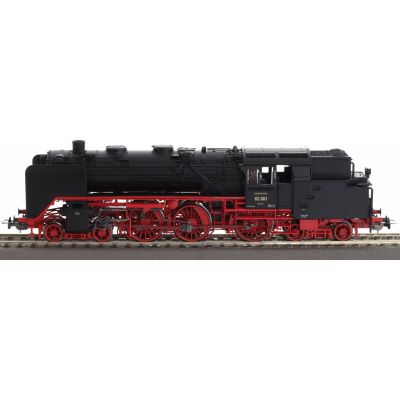
DRG Atmosphere in Model Form
On a model railway, the DRG stands for historic elegance, powerful steam locomotive technology and varied operation. An express locomotive in front of heavy passenger coaches, a tank locomotive with short passenger cars or a mixed freight train with G10, tank wagon and ballast wagons immediately creates the character of Era II. The theme looks especially coherent with semaphore signals, covered platforms, water cranes, coal cranes and classic goods sheds.
What Does DRG Mean on a Model Railway?
In the model railway sector, DRG stands for Deutsche Reichsbahn-Gesellschaft and is primarily associated with Era II. This era covers the period after the state railway era and before the post-war railway order. For model railway enthusiasts, it is important to know that DRG is not the same as DB and not the same as the DR of the GDR. DB stands for the Deutsche Bundesbahn of the Federal Republic of Germany, DR usually refers to the Deutsche Reichsbahn of the GDR, while DRG describes the Reichsbahn period before 1945. This distinction is crucial so that vehicles, lettering, colours, buildings and accessories fit together historically.
Era II: The Most Important Period for DRG Models
Era II forms the core of the DRG theme. It shows a railway world dominated by steam locomotives, while electrification and modern technology were already playing important roles. On main lines, express trains run behind large tender locomotives. On branch lines, tank locomotives, small former state railway engines or standard locomotives handle passenger and freight services. In marshalling yards, freight wagons are sorted, while general cargo, livestock, coal, timber and agricultural products are handled at loading roads.
Typical DRG Locomotives
- BR 01: elegant express locomotive for main lines and high-quality passenger trains.
- BR 02: early four-cylinder express locomotive and an exciting comparison model to the BR 01.
- BR 38.10: Prussian P8, versatile for passenger and semi-fast trains.
- BR 55.25: freight locomotive based on the Prussian G 8.1.
- BR 62: express tank locomotive for shorter, high-quality passenger trains.
- BR 86: standard tank locomotive for branch lines and mixed duties.
- E 91 and E 94: early and powerful electric locomotives for freight and mountain routes.
Typical DRG Coaches and Wagons
- Compartment coaches, semi-fast coaches, express coaches, luggage vans and postal coaches.
- Covered freight wagons such as G10 and storage wagons.
- Tank wagons, acid pot wagons, open freight wagons and ballast wagons.
- Leig units for general cargo and express goods traffic.
- Ore wagons, stake wagons and special wagons for industry and construction.
Note on Historical Representation
Era II includes a politically difficult period. On a model railway, the focus should be on railway technology, operating sequences, industrial history and historical classification. Vehicles, lettering and scenes are understood objectively as documents of their time.
DRG in All Major Gauges
Z Gauge – DRG in the Smallest Space
Z gauge in 1:220 scale is the smallest widely available series size. For DRG themes, the range is narrower than in H0, N or TT, but the scale offers special advantages: long routes, large landscapes, bridges, viaducts and stations can be represented in very little space. A DRG layout in Z gauge is especially suitable for display cases, compact layouts or a strong main-line effect on a small base area.
In Z gauge, long express trains, freight trains and main-line routes look especially good because the trains appear less compressed in relation to the layout. Anyone interested in small scales will find suitable basics in the Märklin section. DRG special models are not always available in large numbers, but with historically suitable German vehicles, old station buildings, semaphore signals and covered freight wagons, a very convincing Era II atmosphere can be created.
N Gauge – Long DRG Trains in Limited Space
N gauge in 1:160 scale is very interesting for DRG layouts. The scale allows longer trains, larger stations and realistic track layouts without the space requirements of an H0 layout. Era II benefits from this in particular: express trains, freight trains and branch-line trains can be shown longer and more believably. An N gauge layout with main line, junction station, freight tracks and hidden yard offers plenty of operation in limited space.
A strong example is the Fleischmann 7170036 N steam locomotive BR 86, DRG, Era II, DC sound. The BR 86 fits perfectly with branch lines, passenger trains, transfer freight trains and mixed traffic. Also suitable is the PIKO 40545 N electric locomotive BR E 91, DRG, Era II, incl. sound, which shows early electric freight traction in model form.
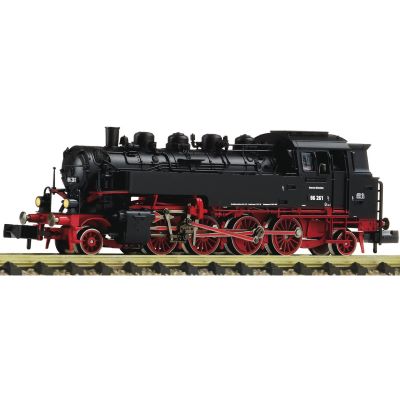
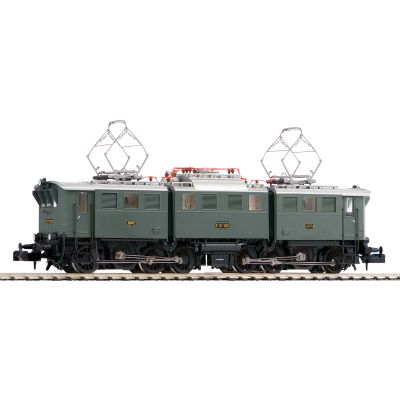
DRG Freight Traffic in N Gauge
Short and medium-length wagon trains are especially suitable for freight traffic in N gauge. One example is the Fleischmann 6660120 N 4-piece freight wagon set, DRG, Era II. With a covered freight wagon, ballast wagons and a tank wagon, typical tasks of the railway at the time can be represented. The freight train landing page is a suitable addition, because wagonload traffic was a central element of the Reichsbahn period.
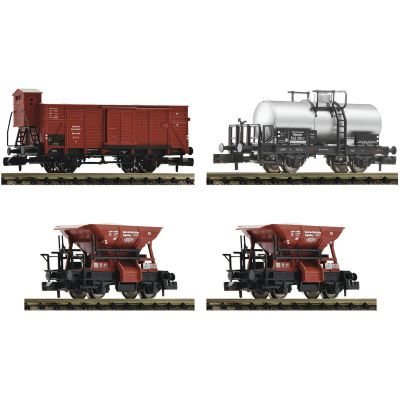
Why N Gauge Fits DRG Themes
N gauge is especially suitable when long stations, freight trains and main lines are important. The models remain compact, but offer enough detail for lettering, wagon types and typical Era II train formations.
TT Gauge – Balanced and Very Suitable for Historic Layouts
TT gauge in 1:120 scale is an ideal middle ground between N and H0. The vehicles are large enough to show many details, but require less space than H0. For DRG themes, TT is especially appealing because branch lines, smaller main lines, goods yards and railway depots can be built in a space-saving but visibly detailed way. Anyone planning an Era II layout with steam operation, semaphore signals and goods sheds will find a very good balance in TT.
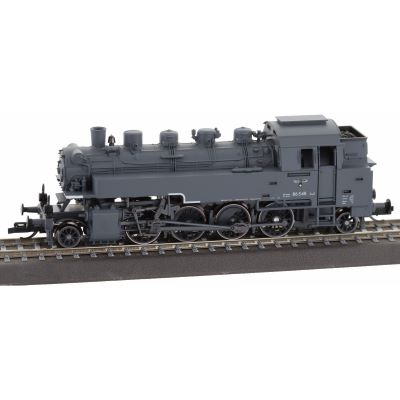
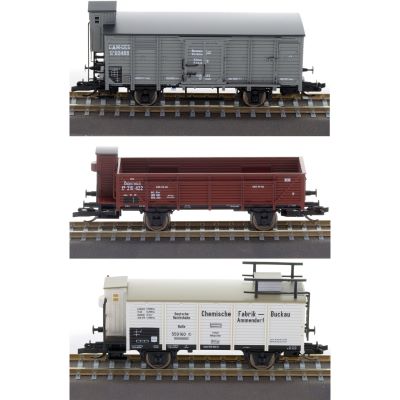
A suitable example is the Tillig 02243 TT steam locomotive BR 86, DRG, Era II. This tank locomotive is ideal for branch lines, short passenger trains, light freight trains and mixed trains. For heavier duties, the Tillig 02063 TT steam locomotive BR 42, DRG, Era II is a suitable theme. International freight traffic of the interwar period can also be represented with the Tillig 01053 TT freight wagon set CES, DRG and BBÖ, Era II.
H0 Gauge – the Largest Selection for DRG Model Railway Enthusiasts
H0 in 1:87 scale is the classic model railway size and offers the largest selection for the Deutsche Reichsbahn-Gesellschaft. Anyone who wants to build steam operation, a goods yard, express train traffic, a railway depot, engine shed, turntable, water crane, semaphore signals and detailed scenes will find especially many possibilities in H0. The models are large enough for pipes, wheels, valve gear, tenders, lettering and wagon bodies to be clearly visible. At the same time, the gauge remains manageable for home layouts.
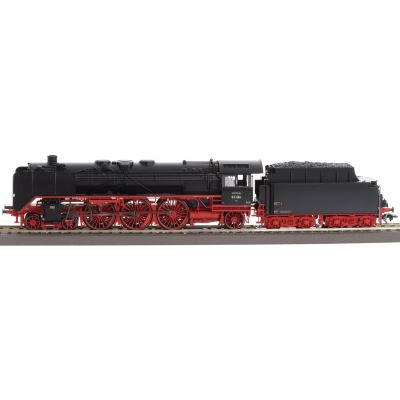
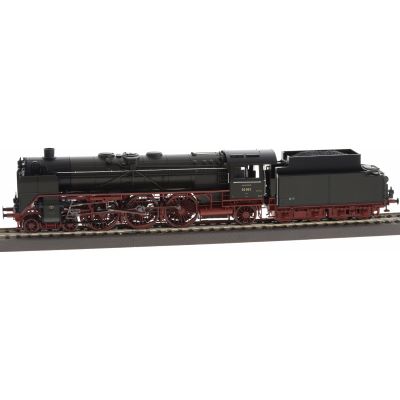
For high-quality express trains, the Märklin 39003 H0 steam locomotive BR 01, DRG, Era II, AC-MFX sound is a particularly striking model. The BR 01 stands for the modern express train service of the Reichsbahn. Equally impressive is the BRAWA 70098 H0 steam locomotive 02 003, DRG, Era II, DC sound extra. It shows the technical spirit of experimentation in the early standard locomotive period.
H0 Steam Locomotive Variety of the DRG
The DRG period can hardly be imagined without steam locomotives. In addition to express locomotives, freight engines and tank locomotives are especially important. The Rivarossi HR2808S H0 steam locomotive BR 55.25, DRG, Era II, incl. sound is ideal for heavy freight trains, transfer freight trains and industrial sidings. The PIKO 50707 H0 steam locomotive BR 62, DRG, Era II is highly suitable for short express trains, semi-fast trains and high-quality suburban trains.
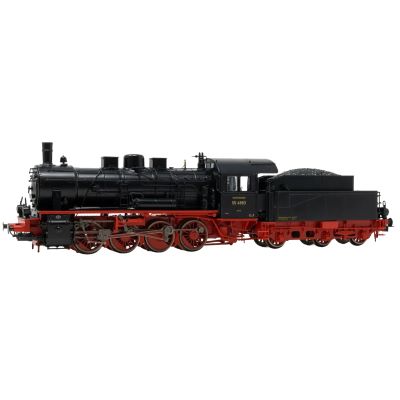
H0 Freight Wagons of the DRG
The DRG freight wagon fleet is especially important for layout operation. In addition to covered and open wagons, tank wagons, storage wagons, refrigerator wagons and special wagons play a major role. A suitable example is the BRAWA 48052 H0 covered freight wagon G “Lagerwagen”, DRG, Era II. Such wagons fit loading roads, factory sidings, general cargo traffic and short transfer trains.
H0e, H0m and Narrow Gauge with a DRG Connection
The Deutsche Reichsbahn-Gesellschaft took over many narrow-gauge lines from the former state railway period. Especially in Saxony, Württemberg, Baden and other regions, there were narrow-gauge railways that continued to perform important transport tasks in Era II. For model railway enthusiasts, H0e and H0m are therefore very appealing. Small steam locomotives, tight radii, short passenger coaches, transporter wagons, goods sheds and rural stations create a particularly dense atmosphere.
The theme fits perfectly with the narrow-gauge railways landing page. A DRG narrow-gauge layout can be built as a branch line, industrial siding, mountain railway or rural light railway. Unlike large main lines, little space is often enough to show believable operation. A small station with a passing loop, goods shed, water crane and transporter wagon pit already offers many operating possibilities.
0 Gauge – DRG with Strong Detail Impact
0 gauge in 1:45 scale is a special scale for DRG enthusiasts. The range is smaller than in H0, but the models have a very strong presence. Just a few vehicles are enough for a convincing scene. A tank locomotive, two passenger coaches, a covered freight wagon and a small station can tell a complete story in 0 gauge. Shunting modules, termini, goods sheds, loading roads and small railway depots are especially suitable.
DRG layouts in 0 gauge live from details: lamps, handrails, coupling rods, brake hoses, wagon lettering, wood textures, paving, cargo and figures are clearly visible. Anyone who enjoys shunting, delivering wagons and driving slowly will find 0 gauge a very intensive model railway experience. The gauge requires more space, but rewards this with enormous effect.
Gauge 1 – Large DRG Models for Collectors
Gauge 1 in 1:32 scale is a premium scale for collectors, modular layouts and high-quality presentation. DRG vehicles in Gauge 1 are often large, heavy models with fine details, sound, metal parts and sophisticated technology. An Era II express locomotive, freight wagon or coach set can already impress as an individual model. A complete layout requires a great deal of space, but on modules or in a display case, Gauge 1 models develop a special impact.
DRG in Gauge 1 is especially suitable for model railway enthusiasts who want to experience historic vehicles in a large and high-quality form. Era II offers many attractive prototypes with steam locomotives, early electric locomotives and classic wagons, all of which come into their own impressively in a large scale.
G Gauge and Garden Railway – DRG in a Large Outdoor Scale
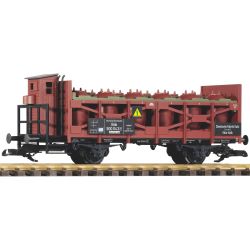
G gauge is mainly known from garden railways. For DRG themes, the range is smaller than in H0, N or TT, but individual wagons and historic freight vehicles are very interesting. A good example is the PIKO 37969 G acid pot wagon, DRG, Era II. Such special wagons are suitable for industrial sidings, chemical works, industrial railways or historic freight trains in the garden railway sector.
Garden railways live from robust vehicles, large radii, natural materials and long running times. Anyone wishing to represent DRG motifs in a large scale can take inspiration from branch lines, industrial railways or historic freight trains. Suitable basics can also be found on the garden railway landing page.
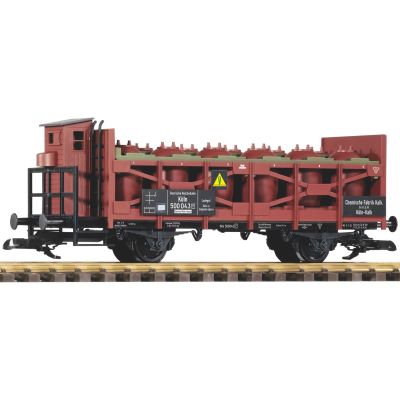
Large-Scale Railway with Historic Freight Traffic
The acid pot wagon shows that DRG themes also have their appeal in large gauges. Such wagons are ideal for industrial railways, chemical sidings and freight trains with an unusual appearance.
Suitable DRG Models at Modellbahnshop
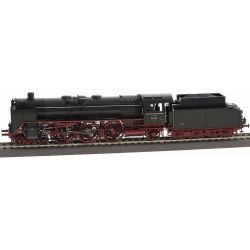
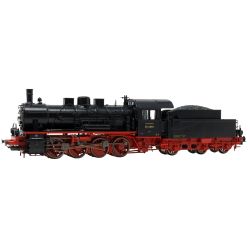
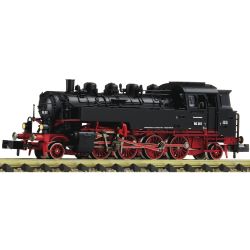
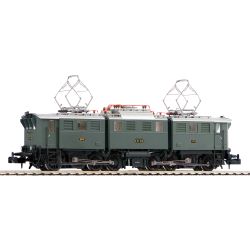
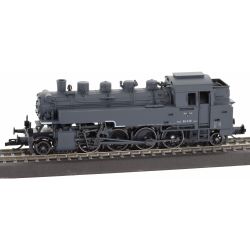
Which DRG Trains Fit Together?
Express Train of Era II
A classic DRG express train consists of a BR 01, BR 02 or another express locomotive and several passenger coaches. Luggage vans, postal coaches, dining cars and high-quality passenger coaches fit well with this. On an H0 or N layout, an express train should ideally be given long platforms and generous radii. Semaphore signals, platform roofs and a large station building strengthen the effect.
Branch Line with Tank Locomotive
BR 86, BR 62, BR 64, BR 89 or older former state railway locomotives are suitable for branch lines. The trains are short: two to three passenger coaches, a luggage van and occasionally a freight wagon are enough. A small station with goods shed, loading road, water crane and a siding offers plenty of operation. The locomotive runs around, one wagon is placed at the ramp, another is collected, and the passenger train continues to the next town.
Freight Train with Industrial Siding
Freight traffic was indispensable for the Reichsbahn. Coal, ore, timber, livestock, general cargo, machinery, oil, chemicals and building materials had to be transported reliably. A DRG freight train can consist of covered wagons, open wagons, stake wagons, tank wagons and special wagons. An industrial siding with a warehouse, coal merchant, factory, sawmill or brickworks is especially coherent. This also fits the thematic connection to the freight train landing page.
Typical Train Formations
- BR 01 with express coaches and luggage van for main lines.
- BR 62 with short semi-fast or suburban coaches.
- BR 86 with two passenger coaches and a covered freight wagon.
- BR 55.25 with a mixed freight train of G10, tank wagons and open wagons.
- E 91 with a heavy freight train on an electrified mountain route.
- Narrow-gauge locomotive with passenger coaches, luggage van and transporter wagons on a rural line.
Designing a DRG Layout
A realistic DRG layout lives from historical details. Typical elements include semaphore signals, mechanical signal boxes, water cranes, coal bunkers, turntables, old platform lamps, goods sheds, loading roads, livestock ramps and covered freight wagons. Road vehicles should fit the interwar period: early lorries, horse-drawn carts, handcarts, bicycles and simple passenger cars. Buildings and advertising boards should also not look too modern.
The station is usually the centre of the layout. A small country station can consist of a station building, goods shed, passing loop, loading track and water crane. A larger town station needs several platform tracks, sidings, a signal bridge, postal and luggage area and a railway depot. Anyone who prefers operation should plan enough shunting possibilities. Anyone who loves scenery should focus on long routes, bridges, tunnels and small halts.
DRG Railway Depot
A railway depot is especially attractive for DRG layouts. Steam locomotives need coal, water, sand, ash disposal and regular maintenance. A turntable with roundhouse, coal bunker, water cranes, inspection pits and workshop buildings make believable operating sequences possible. Various locomotive classes can be visibly stabled and used here.
DRG Goods Yard
The goods yard brings a lot of movement to the layout. Wagons are sorted, placed at ramps, distributed by a shunting locomotive and later collected again. A covered wagon can bring general cargo, a tank wagon delivers liquids, an open wagon transports coal or scrap, and a stake wagon carries timber. These operating sequences make even small layouts lively.
Electrified DRG Main Line
The DRG was not only a steam railway. On certain routes, electric traction already played an important role. Models such as E 91 or E 94 show this technical side. An electrified main line needs overhead wiring, masts, suitable signals and longer freight or passenger trains. Mountain routes, gradients and heavy freight trains are especially appealing.
Gauge Comparison for DRG Models
| Gauge | Scale | Strength for DRG Layouts | Typical Themes |
|---|---|---|---|
| Z | 1:220 | Very space-saving | Compact main lines, display cases, scenic layouts |
| N | 1:160 | Long trains in limited space | BR 86, E 91, freight trains, express trains |
| TT | 1:120 | Good middle ground | Branch line, BR 86, BR 42, freight wagons |
| H0 | 1:87 | Largest selection | BR 01, BR 02, BR 55.25, BR 62, goods yard, railway depot |
| H0e / H0m | 1:87 | Narrow gauge and light railway | Rural lines, transporter wagons, small stations |
| 0 | 1:45 | Strong detail impact | Shunting modules, terminus, short trains |
| 1 | 1:32 | Premium scale | Collector models, sound locomotives, high-quality individual pieces |
| G | approx. 1:22.5 to 1:29 | Large-scale and garden railway | Historic freight wagons, industrial sidings, special wagons |
Frequently Asked Questions about DRG in Model Form
What Does DRG Mean in Model Railways?
DRG stands for Deutsche Reichsbahn-Gesellschaft. In the model railway sector, it usually refers to vehicles of Era II. Typical features include steam locomotives with black boilers and red running gear, classic freight wagons, compartment coaches, early standard locomotives and the first large electric locomotives.
Which Gauge Is Best for DRG?
H0 offers the largest selection and is especially suitable for detailed layouts. N gauge is ideal for long trains in limited space. TT offers a good middle ground. 0 gauge and Gauge 1 are interesting for large details and collector models. G gauge is suitable for robust large-scale and garden railway themes.
Which Era Belongs to the DRG?
The DRG is primarily assigned to Era II. This period lies between the state railway era and the post-war period. For a coherent layout, vehicles, lettering, buildings, signals and road vehicles should match Era II.
Which Locomotives Are Typical of the DRG?
Typical locomotives include steam locomotives such as BR 01, BR 02, BR 38.10, BR 55.25, BR 62 and BR 86 as well as electric locomotives such as E 91 and E 94. Many former state railway vehicles that continued to be used during the DRG period are also suitable.
Which Coaches and Wagons Fit a DRG Layout?
Compartment coaches, express coaches, luggage vans, postal coaches, covered freight wagons, open wagons, tank wagons, ballast wagons, acid pot wagons and Leig units fit a DRG layout. The selection should match the chosen region and type of operation.
How Do I Design a Believable DRG Layout?
A believable DRG layout needs suitable vehicles, semaphore signals, historic buildings, goods sheds, water cranes, coal bunkers, mechanical signal boxes and period road vehicles. A clear layout theme is especially important: branch line, main line, goods yard, railway depot or industrial siding.
Conclusion: DRG – Historic Railway Variety for Model Railway Enthusiasts
The Deutsche Reichsbahn-Gesellschaft is an especially versatile theme for model railways. It combines the tradition of the state railways with the standardisation of the Reichsbahn period and shows elegant express steam locomotives, powerful freight engines, versatile tank locomotives, early electric locomotives and a varied wagon fleet. This makes the DRG equally suitable for collectors, operators and layout builders.
In H0, the selection is particularly large; N enables long trains in limited space; TT offers an excellent compromise; H0e and H0m open up narrow-gauge light railway themes; 0 gauge and Gauge 1 impress with strong detail impact; and G brings historic freight wagons into the garden railway sector. Anyone planning a DRG layout should first define gauge, era, region and type of operation. Locomotives, wagons, tracks, buildings and accessories can then be selected in a targeted way.
Whether an express train with BR 01, a branch line with BR 86, a freight train with BR 55.25, an electric mountain route with E 91 or a historic special wagon in G gauge – the DRG brings an impressive piece of railway history to every model railway layout.