
EBS Erfurter Bahnservice – Model Railway in All Gauges
EBS as a Modern Private Railway Prototype for Model Railways
EBS Erfurter Bahnservice GmbH is an exciting prototype for modern Era VI model railway layouts. Anyone who wants to represent today’s private railway scenes, heavy freight trains, special services, locomotive leasing, charter trips or historic vehicles in current operation will find EBS a particularly distinctive theme. The vehicles stand out through their modern appearance, black or red-and-black design, powerful locomotives and the use of former DR and DB classes. EBS therefore combines historic locomotive technology with current railway operation.
Freight traffic is at the centre of the theme. This is exactly what makes EBS so interesting for the model railway. Modern layouts live from realistic operating sequences: freight trains are taken over, prepared in transfer yards, moved to industrial sidings or hauled as block trains along the main line. EBS locomotives therefore fit especially well with freight train layouts, railway depots, transfer stations, industrial sidings, tank trains, timber trains, construction train scenes and modern private railway themes.
At Modellbahnshop, you will find EBS models mainly in H0, TT, N and G. Modern Era VI locomotives are particularly well represented: BR 232 “Ludmilla”, BR 241, BR 202, BR 312, BR 140, BR 143, BR 155, BR 243 and the modern EuroDual BR 159. Manufacturers such as Roco, PIKO, Fleischmann, Tillig and Sudexpress reproduce these prototypes in different scales.
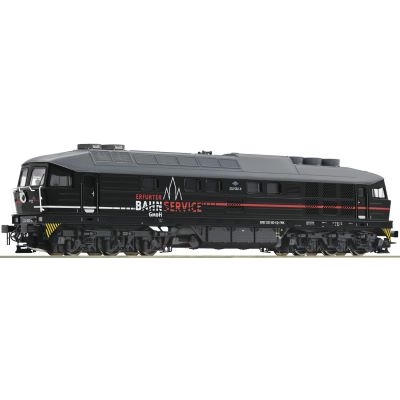
EBS in Model Form: Heavy Tractive Power for Era VI
The BR 232 in EBS design is an ideal model for modern freight trains. The famous “Ludmilla” looks especially impressive on an H0 layout when hauling tank wagons, bulk goods wagons, timber wagons or mixed freight trains. With sound, lighting functions and a powerful appearance, it quickly becomes the centrepiece of a modern private railway scene.
What Does EBS Mean on a Model Railway?
In the model railway sector, EBS stands for Erfurter Bahnservice GmbH. It is important to distinguish it from Erfurter Bahn GmbH, which is active in regional passenger transport. EBS, by contrast, is especially associated with private railway freight traffic, locomotive leasing, special trips and the preservation of older locomotive technology in modern use. On model railway products, EBS usually appears as an Era VI railway company. The vehicles carry modern UIC lettering, current running numbers and often a striking black, red or red-and-black livery.
EBS is especially attractive for model railway enthusiasts because many prototypes originate from the former Deutsche Reichsbahn. Classes 232, 241, 202, 143, 155 and 243 recall classic DR technology, while in model form they operate in a modern private railway environment. Historic vehicle shapes can therefore be combined with a contemporary layout appearance. An EBS layout can show modern container or tank trains while still preserving the character of robust locomotive classics.
Typical EBS Vehicles in Model Form
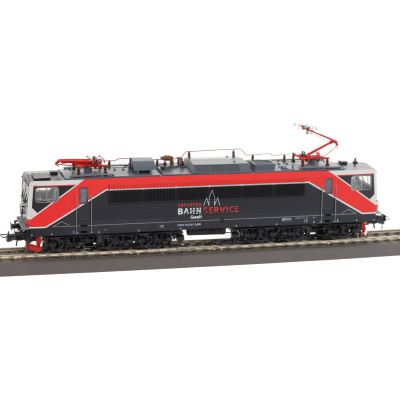
Powerful diesel and electric locomotives are typical of EBS. The heavy six-axle diesel locomotives of classes 232 and 241 are especially popular. They are suitable for heavy freight trains, timber transport, construction trains and special trains. Smaller diesel locomotives such as BR 202 or BR 312 fit shunting duties, transfer services and light freight trains. Among electric locomotives, BR 140, BR 143, BR 155, BR 243 and modern hybrid or dual-mode locomotives such as BR 159 are especially interesting.
Typical Areas of Use on the Model Railway
- Heavy freight trains: BR 232, BR 241, BR 155 or BR 159 with tank wagons, timber wagons, Eaos wagons or container wagons.
- Shunting and transfer service: BR 202 or BR 312 with short freight wagons, construction train wagons or transfer trains.
- Electric freight traffic: BR 140, BR 143, BR 155 or BR 243 under overhead lines.
- Special trips: historic vehicles, special locomotive movements or individual passenger coaches as charter trains.
- Railway depot: parked private railway locomotives, workshop tracks, fuelling point, inspection pit and locomotive changes.
Important Tip for Layout Design
EBS looks especially believable on Era VI layouts. Modern signals, current overhead line equipment, concrete sleepers, industrial sidings, tank wagons, modern freight wagons and digital sound locomotives fit very well. At the same time, the surroundings may still show former DR atmosphere: an East German station, an old signal box or a former railway depot creates an exciting contrast with modern private railway vehicles.
EBS in All Major Gauges
N Gauge – EBS in Limited Space at 1:160 Scale
N gauge is ideal when long freight trains and modern main lines need to be represented in limited space. EBS fits N gauge especially well because private railway freight trains often consist of longer wagon sets. In N gauge, tank trains, steel trains, timber trains or container trains can be represented much more generously than in larger scales. A small hidden yard, a double-track main line and an industrial siding are enough to create a lot of operation.
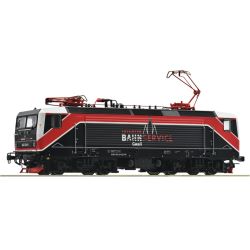
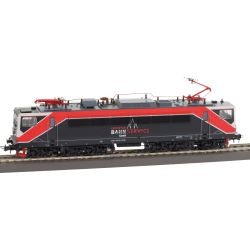
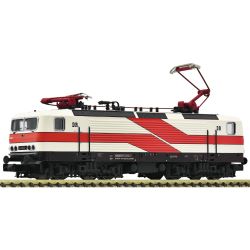
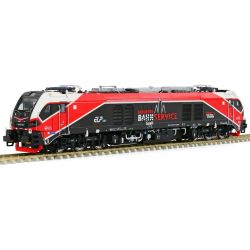
A strong example is the Fleischmann 7560075 N electric locomotive BR 243, EBS, Era VI. The locomotive is suitable for modern private railway freight trains as well as passenger or special train themes. The sound version Fleischmann 7570075 N electric locomotive BR 243, EBS, Era VI, DC sound is also interesting. For particularly modern freight traffic themes, the Sudexpress N1592271 N Stadler Dual-Mode locomotive 159 227-8, EBS, Era VI is a good match.
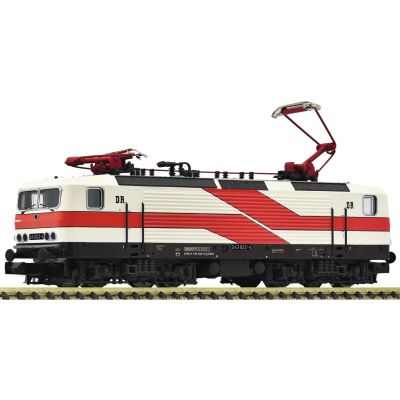
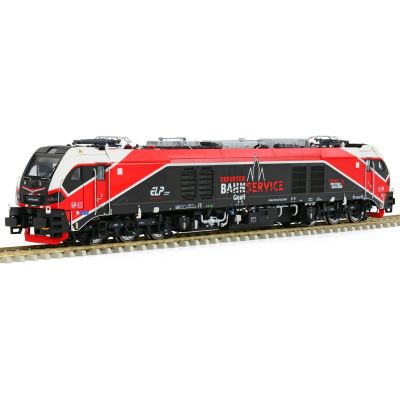
Why N Gauge Makes Sense for EBS
EBS is strongly defined by freight traffic. In N gauge, these trains can look long without requiring a huge layout. Modern tank wagon trains, flat wagons with timber loads, container wagons, bulk goods wagons and mixed private railway freight trains are especially suitable. The smaller scale allows longer tracks, more realistic station lengths and more generous route planning.
TT Gauge – EBS in 1:120 Scale
TT gauge is especially interesting for EBS because many prototypes have roots in East German railway history. The 1:120 scale combines good visible detail with lower space requirements than H0. This makes it possible to represent modern EBS themes with DR roots in a particularly coherent way. A TT layout can show a freight yard, an industrial siding, a double-track main line or a former DR station where private railway locomotives operate today.
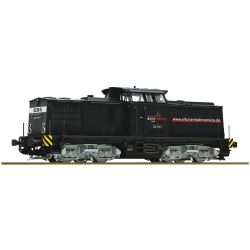
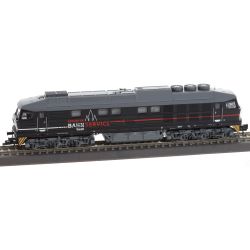
Suitable models include the Roco 7390010 TT diesel locomotive 202 597-1, EBS, Era VI, DC sound, the Roco 7390005 TT diesel locomotive BR 232, EBS, Era VI, incl. sound and the Tillig 05773 TT diesel locomotive 241 353-2, EBS, Era VI. This makes it possible to create light shunting work, heavy diesel services and modern freight train themes in a compact gauge.
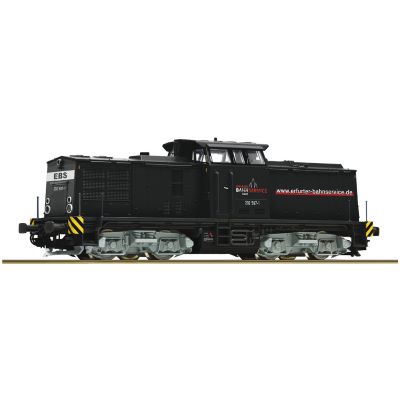
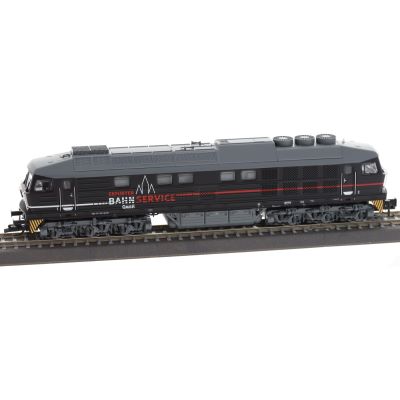
TT Train Formations with EBS
A BR 202 is suitable for transfer trains, construction train wagons and short freight trains. The BR 232 or BR 241 takes over heavy trains with tank wagons, Eaos wagons or timber wagons. Anyone building a modern freight yard can combine EBS locomotives with wagons from various private railway companies. This is close to the prototype, as today’s freight trains often consist of wagons from different owners and operators.
H0 Gauge – the Largest Selection for EBS Models
H0 in 1:87 scale is the most important gauge for EBS fans. It offers the largest selection of EBS locomotives, suitable freight wagons, digital technology, sound models, buildings, overhead line equipment and accessories. H0 is large enough to make the distinctive lettering, handrails, vents, pantographs and running gear details clearly visible. At the same time, the scale remains practical for home layouts.
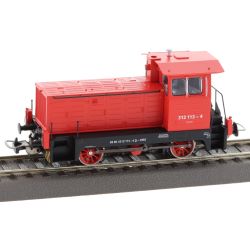
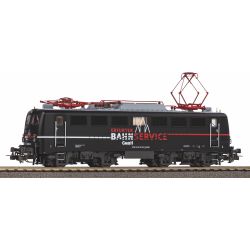
For heavy diesel traction, the Roco 7310103 H0 diesel locomotive BR 232, EBS, Era VI, DC sound is suitable. For shunting and transfer service, the PIKO 52637 H0 diesel locomotive BR 312, EBS, Era VI is a good match. Electric freight train themes can be created with the PIKO 51758 H0 electric locomotive 140 815-2, EBS, Era VI, incl. sound, the Roco 70482 H0 electric locomotive 143 124-6, EBS, Era VI, incl. sound or the Roco 7510059 H0 electric locomotive 155 239-7, EBS, Era VI, DC sound.
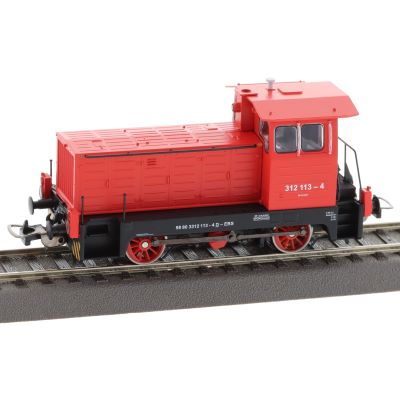
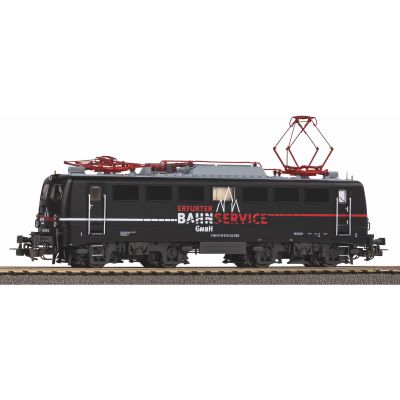
H0 Layout Ideas with EBS
An H0 layout with EBS can look very modern. A small freight yard with storage tracks, fuelling point and workshop is enough to use several EBS locomotives meaningfully. Under overhead lines, BR 140, 143 or 155 can take over heavy trains. On non-electrified routes, BR 232, 241 or 312 handle the traffic. This mix creates a believable private railway world with varied operation.
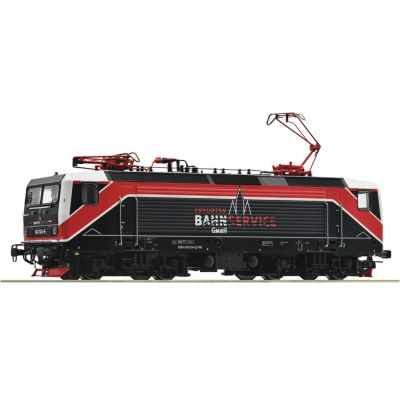
H0e and H0m – Narrow Gauge as an Addition, Not the Core of EBS
In the prototype, EBS is a standard-gauge railway undertaking. H0e and H0m are therefore not classic EBS gauges. Nevertheless, narrow-gauge themes can be sensibly integrated into an EBS layout, for example as a historic museum railway, as an industrial railway in the background or as a separate branch line, while EBS handles freight traffic on standard gauge. Anyone interested in narrow gauge will find suitable foundations under narrow-gauge railways.
G Gauge – EBS as a Large Garden Railway Theme
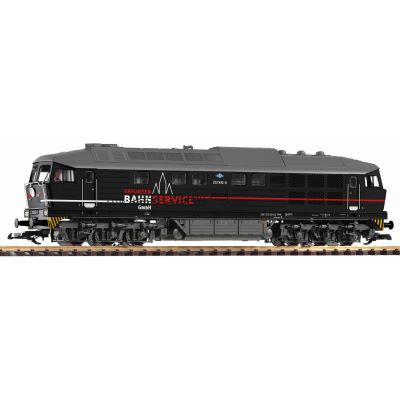
G gauge is ideal when EBS is to be represented in a large scale with strong visual impact. The BR 232 “Ludmilla” is especially suitable for garden railways. The locomotive is large, heavy and visually very present. On long garden railway routes, it can haul freight wagons, shunt at an industrial siding or stand as an eye-catcher in a railway depot.
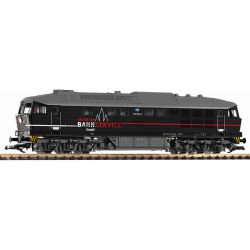
A suitable model is the PIKO 37584 G diesel locomotive BR 232, EBS, Era VI. The model shows the EBS Ludmilla in a large scale and is especially suitable for robust layouts, long radii and impressive outdoor operation. Further basics for the large scale can be found under garden railway.
Strong Impact for the Garden
The EBS BR 232 in G gauge is suitable for garden railway enthusiasts who want to combine modern private railway motifs with robust technology and strong visual presence. Thanks to the large scale, the front, vents, side walls and lettering are shown particularly well.
Z Gauge, 0 Gauge and Gauge 1 – EBS as a Specialist and Collector Theme
In Z gauge, EBS models are much rarer than in H0, TT or N. Nevertheless, a modern private railway atmosphere can be created in the smallest scale with suitable freight trains, current vehicles and industrial sidings. Z gauge is especially suitable for long routes in limited space, but for EBS it remains more of a specialist theme.
0 gauge and Gauge 1 are also specialist areas for EBS. Here, large details, weight, sound and collector appeal are the main focus. A single private railway model in 0 gauge or Gauge 1 can already be a strong display piece. For operating layouts, short shunting modules, locomotive stations, transfer tracks and industrial sidings are suitable. The current EBS range in these scales is significantly narrower, but the theme is generally very suitable for large, detailed private railway scenes.
Suitable EBS Models at Modellbahnshop
Which EBS Trains Fit Together?
Heavy Freight Train with BR 232 or BR 241
The classic EBS train formation is a heavy freight train with a powerful diesel locomotive. A BR 232 or BR 241 fits tank wagons, open freight wagons, timber transport wagons, construction train wagons or mixed freight wagons. Such trains look especially good on a main line with passing loop, overtaking track and industrial siding. In H0, the models are especially detailed, while in TT a long train can be represented in a more space-saving way.
Electric Freight Train with BR 140, BR 143 or BR 155
Under overhead lines, EBS electric locomotives are an excellent choice. The BR 140 stands for classic freight locomotive technology that has found a second life with private railways. The BR 143 brings East German locomotive history into the present. With its six axles and distinctive box-shaped body, the BR 155 is especially suitable for heavy trains. Tank wagons, container wagons, sliding-wall wagons or block trains fit well with these locomotives.
Shunting and Transfer Service with BR 202 or BR 312
Smaller EBS locomotives are ideal for shunting duties and short transfer trains. A BR 202 or BR 312 can bring two to six freight wagons to a siding, sort wagons in a small freight yard or be used as a works locomotive in an industrial area. Such scenes do not require much space and are excellent for compact H0 or TT layouts.
Typical EBS Train Formations
- BR 232 with a tank wagon train on a non-electrified main line.
- BR 241 with heavy freight wagons on a modern TT layout.
- BR 140 with a mixed freight train under overhead lines.
- BR 143 or 243 with short special or freight trains.
- BR 202 with construction train wagons or transfer freight train.
- BR 312 with short wagons in an industrial siding.
- EuroDual BR 159 with modern freight train service in N gauge.
Designing an EBS Layout
An EBS layout should look modern, but it may also show traces of older railway technology. That is exactly where its appeal lies. The locomotives often come from earlier railway periods, but today they operate in modern private railway liveries. An old signal box, a former DR station building, modern colour-light signals, newly ballasted sections and private freight wagons fit very well together. For layouts with an East German character, the BGHWE DR reconditioned coach topic can also serve as a thematic complement.
Industrial sidings, tank wagon loading points, timber loading, building material works, ballast works, tank farms, container areas and small railway depots are very suitable. In contrast to pure passenger traffic, EBS offers a lot of shunting activity. Wagons are collected, delivered, regrouped and prepared for the next train service. This creates lively operation even when the layout is not huge.
EBS Railway Depot
A small private railway depot is an ideal theme. Several EBS locomotives can stand on storage tracks. A fuelling point supplies diesel locomotives, a workshop hall is used for maintenance, and a short locomotive movement brings vehicles to their next duty. With sound models, lighting and slow shunting operation, a lot of atmosphere is created.
EBS Industrial Siding
An industrial siding makes an EBS layout especially interesting in operation. A BR 312 shunts short wagons while a BR 232 takes over the train on the main line. Tank wagons, open wagons, sliding-wall wagons or flat wagons with loads add variety. The siding can represent a tank farm, a building material dealer, a sawmill or a recycling facility.
EBS Main Line
A main line with overhead lines or diesel operation is suitable for long trains. In N and TT, longer trains can be represented especially well. In H0, locomotives and wagons look more detailed. A double-track line with an overtaking track, signals and modern freight traffic forms a believable stage for EBS.
Gauge Comparison for EBS Models
| Gauge | Scale | Strength for EBS Layouts | Typical EBS Themes |
|---|---|---|---|
| Z | 1:220 | Very space-saving, but EBS special models are rare | Modern freight routes, private railway atmosphere, long landscapes |
| N | 1:160 | Long freight trains in limited space | BR 243, EuroDual 159, tank trains, container trains |
| TT | 1:120 | Very coherent for EBS vehicles with DR roots | BR 202, BR 232, BR 241, modern freight trains |
| H0 | 1:87 | Largest selection and best detail effect | BR 232, 312, 140, 143, 155, depot, freight yard |
| H0e / H0m | 1:87 narrow gauge | Not a classic EBS gauge | Additional narrow-gauge railway beside standard gauge possible |
| 0 | 1:45 | Strong detail effect, EBS as a specialist theme | Shunting modules, private railway depot, short transfer trains |
| 1 | 1:32 | Premium and collector scale | Large individual models, sound, display case, modular layout |
| G | approx. 1:22.5 to 1:29 | Strong impact and garden railway use | BR 232 “Ludmilla”, garden railway freight traffic, large private railway scenes |
Frequently Asked Questions about EBS Models
What does EBS mean in model railways?
EBS stands for Erfurter Bahnservice GmbH. In the model railway sector, EBS usually refers to modern private railway vehicles of Era VI. EBS locomotives are especially known for freight traffic, special trips and the use of former DR and DB classes.
Which gauge is best for EBS?
H0 offers the largest selection and the strongest detail effect. TT is especially coherent for vehicles with East German history. N is suitable for long modern freight trains in limited space. G is ideal when the EBS BR 232 is intended to run large and impressively in the garden railway sector.
Which EBS locomotives are available in model form?
Models include BR 232, BR 241, BR 202, BR 312, BR 140, BR 143, BR 155, BR 243 and BR 159. The selection differs depending on gauge and manufacturer.
Which era fits EBS?
EBS belongs mainly to Era VI. The vehicles carry modern lettering, current private railway liveries and fit today’s freight train and special train themes.
Which wagons fit EBS locomotives?
Tank wagons, container wagons, timber wagons, open freight wagons, sliding-wall wagons, construction train wagons and mixed freight wagons fit EBS. Modern freight wagons from different owners are especially believable, because today’s freight trains are often formed from mixed wagon fleets.
Can EBS also be represented on small layouts?
Yes. Shunting and transfer scenes with BR 202 or BR 312 need little space. A small industrial siding, two or three storage tracks and a few freight wagons are already enough for realistic operation.
Is EBS more of a diesel or electric railway theme?
Both are possible. Diesel themes with BR 232, BR 241, BR 202 or BR 312 fit non-electrified routes and industrial sidings. Electric locomotives such as BR 140, 143, 155 or 243 are suitable for overhead line routes and heavy freight trains.
Which manufacturers offer EBS models?
EBS models are available from manufacturers including Roco, PIKO, Fleischmann, Tillig and Sudexpress. Depending on manufacturer and gauge, different classes, features, sound versions and digital functions are available.
Conclusion: EBS Brings Modern Private Railway Freight Traffic to the Layout
EBS is an ideal theme for model railway enthusiasts who like modern private railway vehicles, freight traffic and distinctive locomotives. Erfurter Bahnservice GmbH combines historic locomotive classics with current railway operation. This creates especially exciting model railway scenes: a BR 232 with a heavy tank train, a BR 312 in an industrial siding, a BR 155 under overhead lines, a BR 243 in N gauge or a large EBS Ludmilla on the garden railway.
H0 offers the largest selection. TT fits perfectly with East German vehicle roots and compact freight yards. N makes long trains possible in limited space. G makes EBS large, robust and impressive. Z gauge, 0 gauge and Gauge 1 remain specialist areas, but also offer attractive possibilities for collectors and modular railway enthusiasts. Anyone planning an EBS layout should first define the gauge, type of operation and layout motif. Locomotives, wagons, tracks, overhead lines, buildings and accessories can then be selected in a targeted way.
Whether freight train, shunting service, railway depot, industrial siding or modern main line – EBS brings powerful private railway atmosphere into the model railway world and is an expressive choice, especially for Era VI fans.