H0 · Workshop
Maintenance and Repair
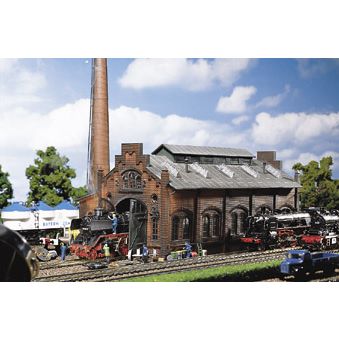
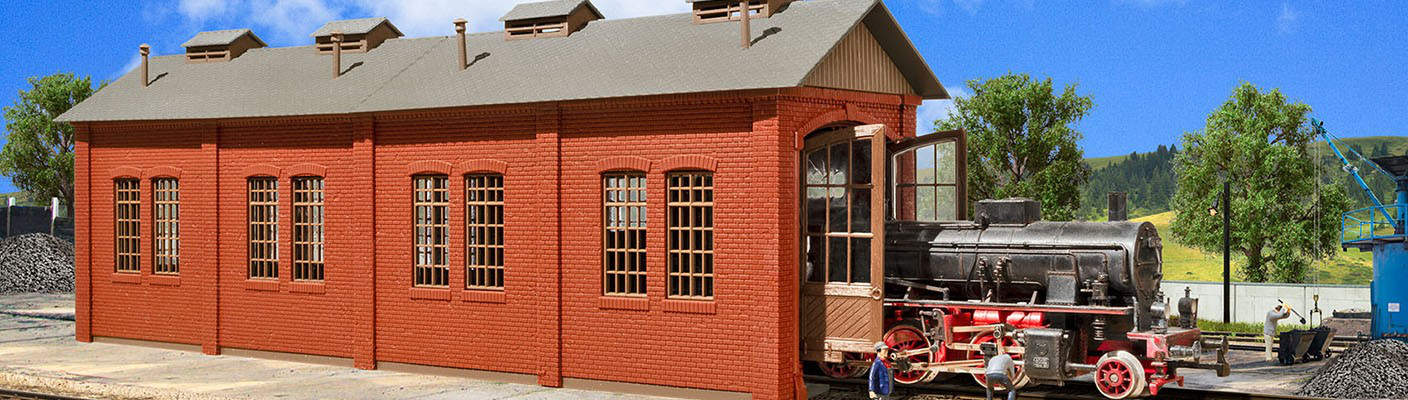
Open doors, staff, workbenches and tools make the workshop activity clearly visible.

A locomotive shed turns a simple siding into a credible operating location. Compare rectangular sheds, roundhouses, small-locomotive sheds and transfer-table workshops, together with turntables, inspection pits, coaling facilities, diesel fuelling points and models from Z gauge to garden railways.
Locomotive sheds protect locomotives and provide a workplace for cleaning, inspection, minor repairs and preparatory maintenance. On the prototype railway, they were often part of a small locomotive station or a larger motive-power depot.
Steam locomotives were supplied with water, coal and sand. Diesel locomotives were refuelled, while all types of traction were inspected before their next duty.
On a model railway, the shed is simultaneously a building, a visual focal point and an operational destination. Locomotives can enter and leave the shed, be turned on a turntable, receive supplies or be displayed on a workshop track.
This creates purposeful shunting operation that remains interesting even on a small layout. A locomotive can arrive, undergo servicing, move into the shed and later return to its train.
The correct type depends on the available area, the number of vehicles and the chosen prototype. A single-road rectangular shed suits a branch line, while a roundhouse and turntable require more area but provide several locomotive stands.
Before purchasing a kit, check the internal length, clear door height, door width, track-centre spacing and track angle. Long steam locomotives, electric locomotives with pantographs and roadbed track require particular attention.
Historic brick buildings, timber-framed sheds, modern locomotive halls and large garden-railway buildings each create a different atmosphere.
Open doors, staff, workbenches and tools make the workshop activity clearly visible.

Aged masonry, real-wood framing and movable doors suit a substantial historical depot.
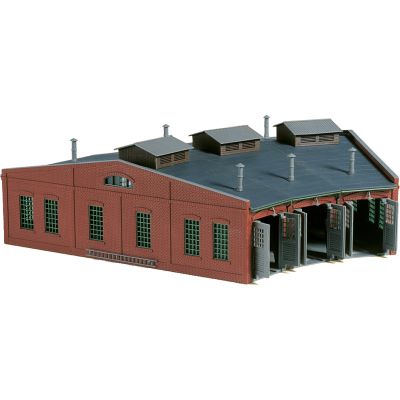
Three fan-shaped roads provide compact access to several locomotive stands.
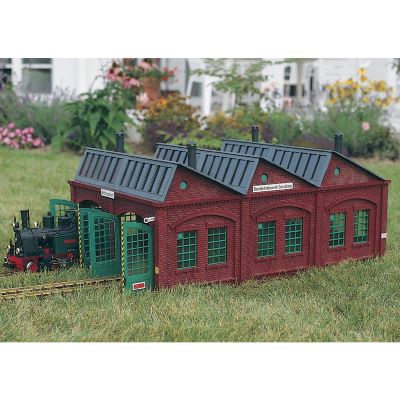
Long locomotive stands and modular extensions suit large garden-railway vehicles.
Rectangular sheds, roundhouses, small-locomotive sheds and transfer-table workshops create different operating procedures and require different track geometry.
One or more parallel tracks enter the building directly. This form suits branch-line stations, small depots, diesel facilities and railcar sheds.
Advantage: straightforward connection through a turnout or short turnout ladder.Several locomotive stands are arranged in a fan around a turntable. The arrangement avoids a large turnout ladder and permits steam locomotives to be turned.
Advantage: several roads are reached through one central track distributor.A compact stand for a Köf, small shunting locomotive, draisine, industrial locomotive or narrow-gauge engine.
Advantage: a short siding already creates a recognisable locomotive station.A transfer table moves vehicles sideways onto parallel workshop roads. The arrangement is typical of repair works and large maintenance halls.
Advantage: multiple parallel roads without a long turnout ladder.The largest intended vehicle determines the door, stand length and approach road. Select the kit, turntable and interior equipment only after this measurement is known.
Include the complete body, tender, couplings, chimney, pantograph and side components.
Choose a branch-line shed, roundhouse, diesel hall or small-locomotive station to suit the layout theme.
Check track centres, roadbed height, door positions and the approach angle.
The bridge length, exits and angular spacing must suit the locomotives and roundhouse.
Plan pits, workbenches, lifting equipment and machines before permanently fixing the building.
Prepare interior lights, workshop lamps, door drives and cable routes at an early stage.
Run all intended locomotives through the doors, roads and approach curves before applying adhesive.
Add staff, tools, barrels, servicing equipment and carefully positioned weathering.
Smaller gauges permit an extensive depot within a restricted area. In 0, Gauge 1 and G, compact locomotive stations, low-relief halls or individual workshop stands are often more practical.
Very compact roundhouses and rectangular sheds for miniature layouts and small motive-power depots.
Discover Z Gauge →Branch-line sheds, modern locomotive halls and extensive depots within a comparatively small area.
Discover N Gauge →A broad selection of historic sheds for DR, branch-line and motive-power-depot scenes.
Discover TT Gauge →A particularly wide range from compact Köf sheds to modular roundhouses and workshop buildings.
Discover H0 Gauge →Narrow buildings for field, industrial, mountain and narrow-gauge railways.
Discover H0e Gauge →Large small-locomotive and workshop sheds for shunting layouts, operating dioramas and modules.
Discover 0 Gauge →High space requirements frequently favour custom buildings, low-relief halls or individual workshop roads.
Discover Gauge 1 →Large robust buildings with long stands for garden-railway locomotives and protected servicing areas.
Discover G Gauge →| Measurement | Why It Matters | Typical Mistake | Recommendation |
|---|---|---|---|
| Internal length | The locomotive and tender must fit completely within the stand. | The door cannot close behind a long steam locomotive. | Measure the longest locomotive and include a safety allowance. |
| Door height | Pantographs, chimneys and roof equipment need sufficient room. | An electric locomotive touches the door or roof. | Include the track, roadbed and baseboard height. |
| Door width | Wide locomotives, cylinders and valve gear need side clearance. | Steps, cylinders or rods touch the door opening. | Test the widest vehicle slowly through the entrance. |
| Track angle | The roundhouse and turntable must use matching geometry. | The approach tracks do not meet the doors centrally. | Compare the angular spacing before purchasing either item. |
The surrounding facilities explain why locomotives stop at this location. Their selection and order depend on whether the depot handles steam, diesel or electric traction.
Distributes locomotives to the shed roads and permits vehicles to be turned.
Match the bridge length, exits and angle to the longest locomotive.Coal, ash, slag and sanding equipment make steam-locomotive servicing visible.
Arrange the stations in a logical order along a servicing road.Steam locomotives require large quantities of water between duties.
Position the water crane beside the servicing track.Suits a diesel depot, branch-line base or modern traction servicing facility.
Add a canopy, pump, pipes, barrels and restrained oil stains.Lifting equipment, workbenches, machines and pits explain maintenance and minor repairs.
Fit the interior and wiring before closing the walls and roof.Drivers, fitters, tool trolleys, barrels and lamps bring the technical scene to life.
Position figures according to recognisable working procedures.Filter compact branch-line sheds, roundhouses, workshops, extensions, turntables, servicing facilities and staff by gauge and product type. Product cards do not indicate current availability.
25 products displayed
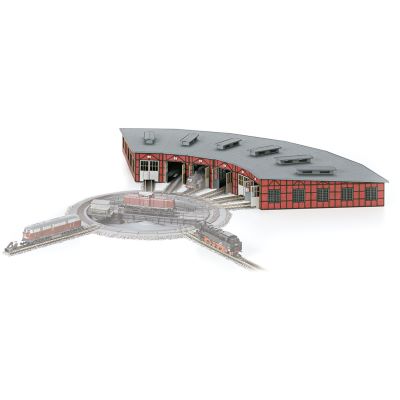

Modular laser-cut architectural-card kit for a compact Z-gauge motive-power depot.
View Product →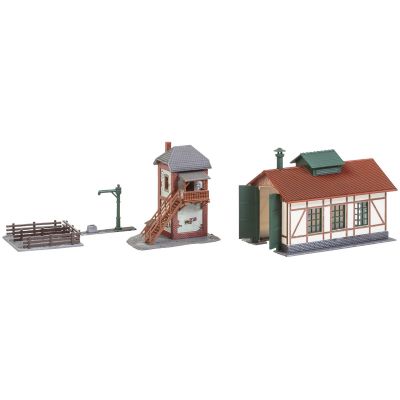

Timber-framed shed with additional railway buildings and steam-locomotive servicing details.
View Product →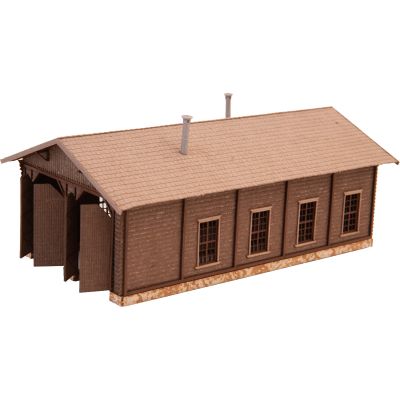
Two-road laser-cut shed for an Alpine or Rhaetian Railway theme.
View Product →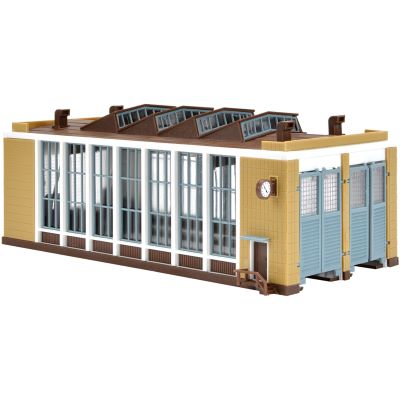
Modern two-road hall with a mechanical door-closing mechanism for electric and diesel locomotives.
View Product →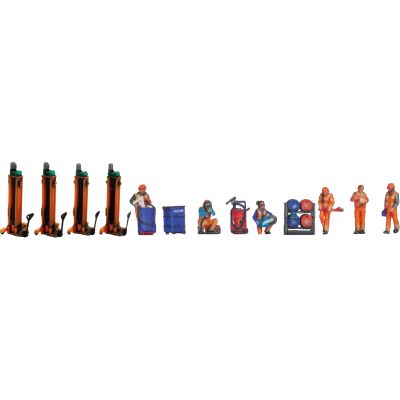
Staff, lifting stands, barrels and tools for an active workshop scene.
View Product →

Expandable TT roundhouse with a fifteen-degree track angle.
View Product →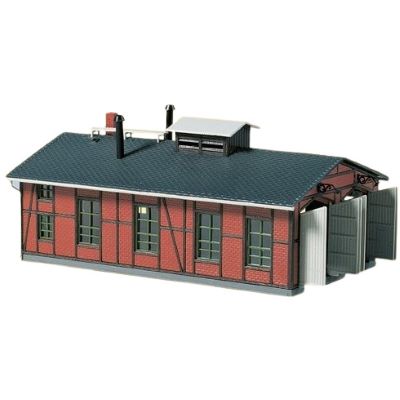
Two-road brick and timber-framed building with movable doors.
View Product →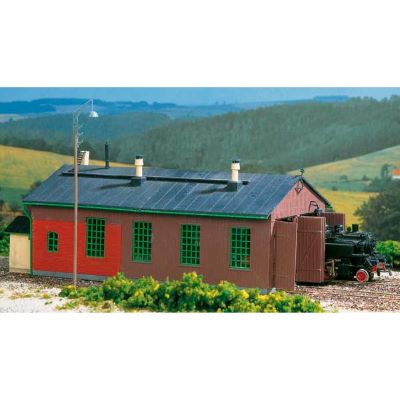
Two-road locomotive shed based on a well-known Saxon branch-line prototype.
View Product →
Movable doors and an extension option for longer locomotives and railcars.
View Product →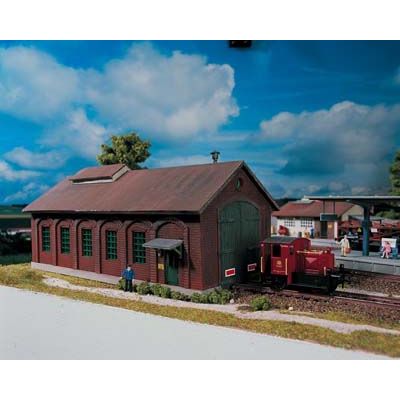

Space-saving building for a small branch-line or station locomotive facility.
View Product →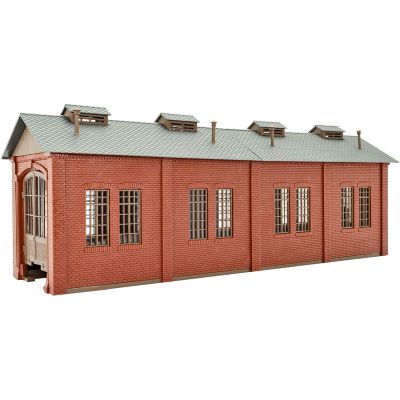
Narrow single-road shed for small stations, branch lines and individual locomotives.
View Product →

Aged masonry, real-wood timber framing and movable wooden doors.
View Product →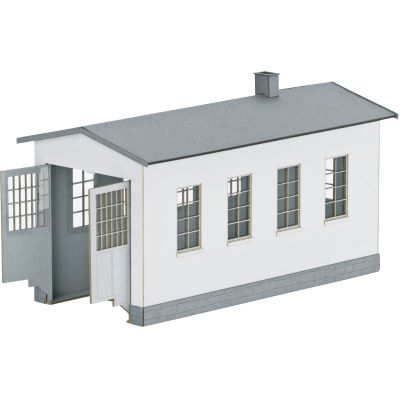
Laser-cut kit for compact shunting-yard and goods-station scenes.
View Product →
Flexible historic workshop for maintenance, museum railways and locomotive repairs.
View Product →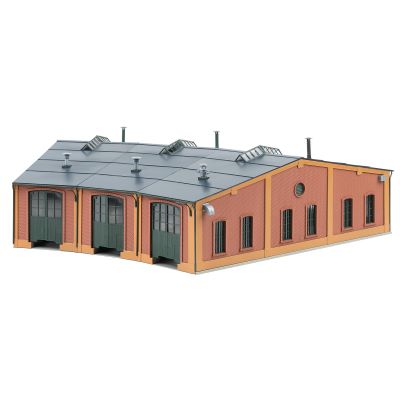
Three-road brick roundhouse with an expansion option and movable doors.
View Product →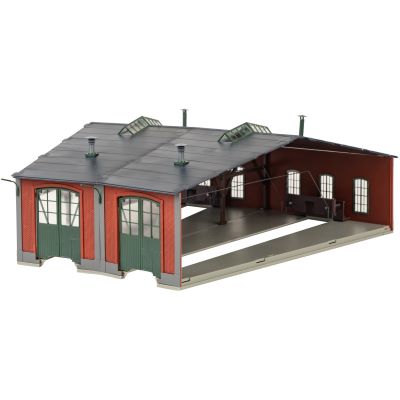
Twelve-degree two-road extension for the matching Märklin roundhouse.
View Product →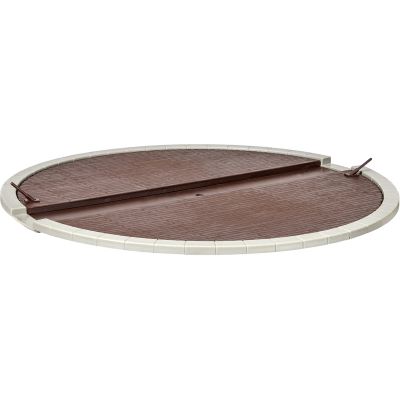

Turntable kit for completing a roundhouse and motive-power-depot scene.
View Product →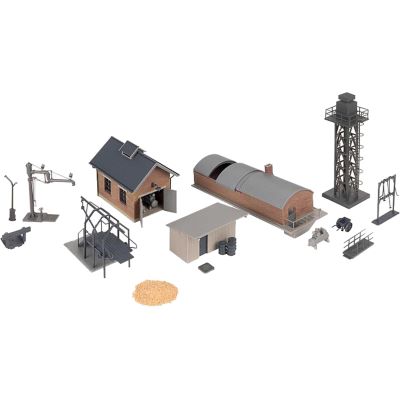
Ash disposal, sand house, water crane and workshop details for steam-locomotive operation.
View Product →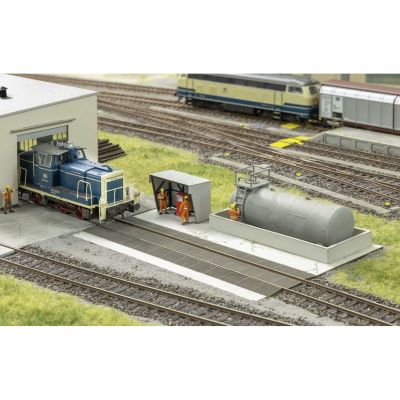
Compact laser-cut facility with a pump, fuel tank and protective canopy.
View Product →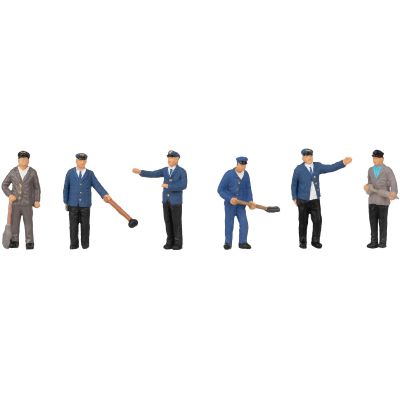
Figures for maintenance, inspection, locomotive servicing and workshop operation.
View Product →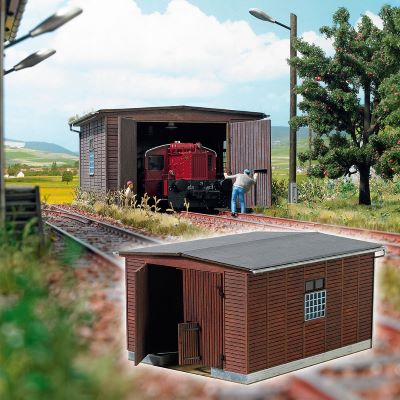
Large shed for a Köf, draisine or compact 0-gauge shunting locomotive.
View Product →
Large modular shed with workshop space for long garden-railway locomotives.
View Product →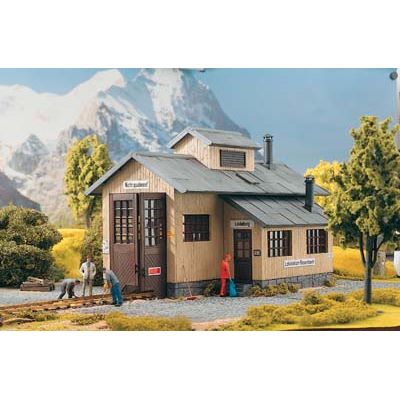
Large building with movable doors, a smoke vent and a side service room.
View Product →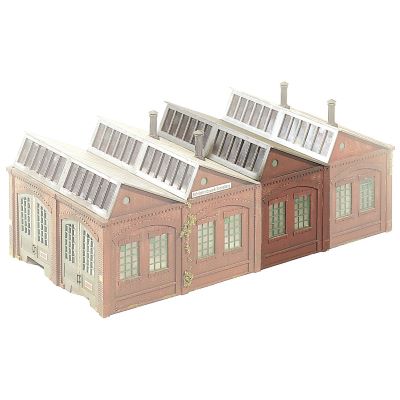
Length extension for the Sonneberg shed and especially long garden-railway locomotives.
View Product →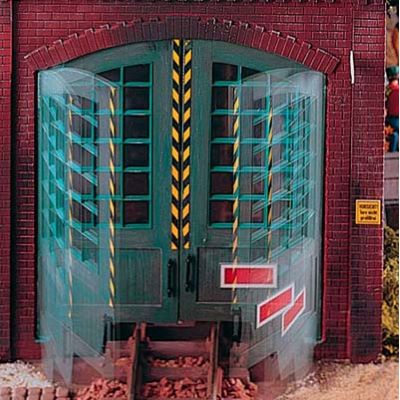
Functional extension for automatically opening and closing the Sonneberg shed doors.
View Product →The original manufacturer logos link directly to the corresponding English brand pages with locomotive sheds, railway buildings, structures and depot accessories.
Roundhouses, workshops, branch-line buildings, depot equipment and staff.
Explore FALLER →
Historic H0 and TT sheds, roundhouses and railway-depot structures.
Explore Auhagen →
Compact locomotive sheds and modern halls for H0 and N.
Explore Vollmer →
Turntables, industrial structures and railway-depot building kits.
Explore Kibri →
Laser-cut sheds, fuelling facilities, staff and scenery accessories.
Explore NOCH →
Real-wood kits, aged buildings and compact locomotive sheds in several scales.
Explore Busch →
Compact H0 buildings and large modular G gauge locomotive sheds.
Explore PIKO →
Z-gauge roundhouses, H0 small-locomotive sheds and modular depot buildings.
Explore Märklin →Track planning, railway construction, eras, digital control and maintenance turn the locomotive shed into a complete operating location.
Plan routes, stations, operating locations, bridges and technical railway structures.
Open Railway Construction →Compare track systems, radii, turnouts and compatible geometries.
Open TrackAtlas 29 →Coordinate architecture, locomotives and servicing facilities with the selected period.
Compare Railway Eras →Select DB, DR, SBB, ÖBB, RhB or another railway world as the layout theme.
Open Railway Companies →Clean and inspect locomotives and prepare them for reliable operation.
Open Repair Guidance →Control turntables, doors, locomotive functions and lighting digitally.
Open the Digital Guide →Understand gauges, systems, vehicles, manufacturers and layout construction.
Open the Model Railway Overview →Explore all knowledge worlds from planning and track building to digital control and maintenance.
Open the Main Guide →It protects locomotives and provides a location for inspection, cleaning, stabling and minor maintenance work.
A conventional roundhouse contains several fan-shaped locomotive stands around a turntable. A full circular shed would surround most or all of the turntable.
For prototypical operation, yes. The turntable distributes locomotives to the fan-shaped shed roads.
Check the internal length, door height, door width, track-centre spacing, stand length, angular spacing and the height of the selected track system.
Yes, when the building height and entrance are adapted. The building base may need to be raised or the track area recessed.
A single-road small-locomotive or branch-line shed uses little space while still creating a credible operating area.
Typical elements include a turntable, locomotive shed, coaling plant, water crane, water tower, sanding equipment, ash disposal and a workshop.
A diesel fuelling point, workshop, stabling roads, staff building and possibly a washing facility create a credible scene.
Many kits can be fitted with LEDs. Prepare the cable routes and light positions before assembling the walls and roof.
Soot above the doors, oil marks, rust, dirty windows and differently weathered roof sections appear more convincing than uniform heavy dirt.
Many brick buildings originated during the early railway eras but remained in service into Eras IV and V or survived as museum buildings.
Only after the vehicles, doors, track, turntable, lighting and any inspection pits have been tested reliably.
Combine the correct locomotive shed with a turntable, servicing equipment, staff, lighting and credible maintenance scenes.
Editorially and technically reviewed on 31 July 2026. Product dimensions, internal length, door openings, track angle, track compatibility and extension options must be checked on the individual product page and in the assembly instructions.