



Short Managed Meadow
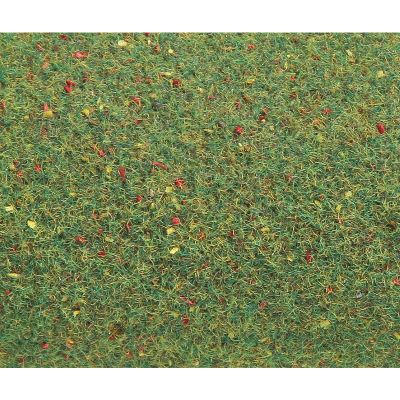
More uniform short fibres work well for mown areas, roadsides and intensively managed meadows. Small beige sections and visible patches of soil help prevent the surface from looking like an artificial lawn.

From freshly mown meadows and flowering field margins to pastures and cultivated fields with visible wheel tracks: different ground colours, grass lengths and plants create a believable agricultural landscape.
Designing fields and meadows on a model railway is primarily about avoiding uniformity. Natural and agricultural areas contain different colours, vegetation heights, bare patches, field margins and transitions. Even a carefully maintained pasture rarely looks like one completely uniform green carpet.
Begin with the ground underneath. Brown, ochre and muted earth tones provide a useful base beneath grass and field plants. Small gaps in the vegetation then look natural. A white or untreated layout surface, by contrast, immediately becomes visible between the fibres. This applies both to electrostatically grassed meadows and to grass mats and meadow mats .
Different types of cultivated landscape should remain clearly distinguishable. A pasture usually contains short to medium-length grasses, trampled patches and perhaps animals. An unmown wild meadow can include longer fibres, flowers and individual tufts. A cultivated field, on the other hand, is characterised by visible soil structure, planting rows and wheel or tramline tracks.
Transitions are especially important. Field margins, drainage ditches, bushes, fences or earthy edge strips can separate two fields. Farm tracks connect them to barns and farmyards. This creates a logical cultural landscape instead of a collection of differently coloured areas.
More uniform short fibres work well for mown areas, roadsides and intensively managed meadows. Small beige sections and visible patches of soil help prevent the surface from looking like an artificial lawn.
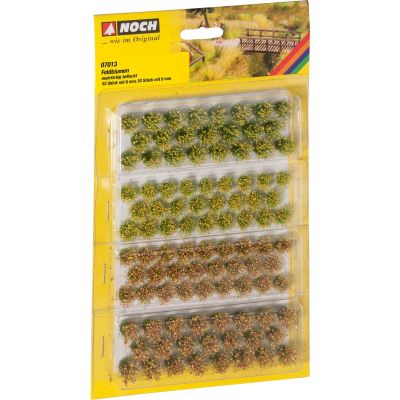
Add a few red, yellow or white flower accents to a green base. Flowers look more natural when placed in irregular groups rather than distributed evenly over the complete area.
Several grass colours and heights create a less maintained appearance. Longer fibres are particularly suitable around field margins, slopes, fences and areas with little use.
Uneven grass lengths, worn areas, fences and individual animals make the use of the land visible. In alpine scenes, exposed stones and lower vegetation can break up larger grassy areas.
Manufacturers such as NOCH and FALLER offer different fibre heights and colour mixtures for meadows and wild vegetation. A layered approach is particularly convincing: begin with a short base layer, then add selected longer fibres, grass tufts and field flowers. This keeps the scene visually calm while still creating noticeable depth.
A cultivated field differs from a meadow because its agricultural use is clearly visible. Furrows, seed rows, crop rows and tramlines follow a logical direction. On smaller layouts, even a subtle soil texture can be enough to turn a plain brown surface into a convincingly cultivated field.
Several dark and medium brown shades work well for freshly ploughed soil. The surface can be rough, but its texture must suit the model scale. Coarse stones can quickly look oversized in N or Z. A fine ground mixture can be shaped with a brush, palette knife or simple grooved tool in the direction in which the field has been worked.
Grain fields can be represented using beige, golden-yellow and straw-coloured vegetation materials. For maize, vegetables and other row crops, clearly defined planting rows look more convincing than randomly scattered plants. Along the edge of the field, however, the regular pattern can deliberately break down: weeds, grass, field flowers and occasional bushes create a natural transition.
Colour and surface appearance change significantly after the harvest. Stubble, isolated areas of straw, wheel tracks and visible soil create a late-summer or autumn appearance. These scenes can be combined with barns, farmhouses and agricultural buildings that give the cultivated landscape a logical purpose.
Dark soil, parallel ground structure and very little vegetation.
Gold and beige tones, dense crops and visible tramlines.
Distinct planting rows with visible soil between them.
Lighter soil, short crop remains and individual areas of straw.
Grass mats make it possible to cover large areas quickly. Loose fibres provide much greater control over colour, vegetation height and transitions.
Grass mats are particularly fast and clean for larger areas. Cut the mat to shape, glue it into position and then blend the edges into the landscape with loose material, grass tufts and visible soil.
Grass fibres allow individual shapes and different vegetation densities. Short fibres form the basic greenery, while longer fibres can later be added only in selected areas.
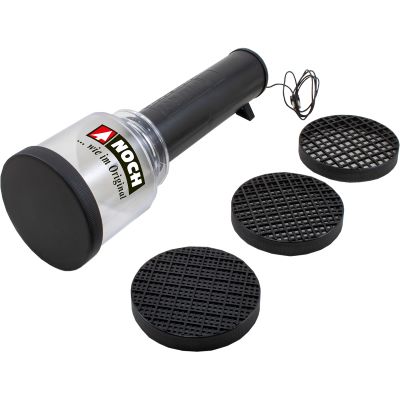
During electrostatic application, the fibres stand upright in the adhesive. This produces a three-dimensional meadow texture. Depending on the model, applicators such as the Gras-Master can also process longer grass fibres.
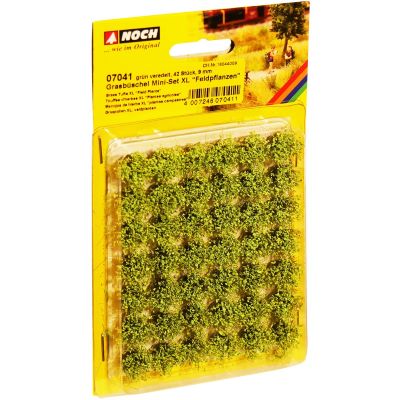
Ready-made tufts are especially useful for refining field edges, fences, paths and small bare patches. Use them as accents rather than placing them in a regular grid.
Fine ground and spreading material closes gaps between fibres and creates visible earth. A prepared soil layer particularly improves visual depth beneath wild meadows and field margins.
A meadow mat can form the basic area and then be customised with static grass fibres, wild grass, field flowers and individual areas of visible soil. This combination is also efficient for larger model railway layouts.
Decide whether the scene will be a flower meadow, pasture, wild meadow, alpine meadow or mown area. Include paths, fences and neighbouring fields in the plan.
The meadow should have a logical purpose within the surrounding landscape.
Apply brown, ochre or muted green. Any areas that later remain visible between the fibres will then look natural.
Do not leave bright unfinished baseboard areas visible beneath the later vegetation.
Apply fine spreading material selectively. Include field paths, molehills, dry patches and small areas of visible earth at this stage.
Do not completely cover every patch of soil with grass.
Work on manageable areas only. This leaves enough time to apply grass fibres cleanly and blend several colour zones.
Follow the processing instructions supplied with the selected adhesive.
Begin with a relatively calm basic layer of short fibres. Remove excess material after the specified drying time.
Depending on the material, clean loose fibres can be collected and reused.
Use wild grass and longer fibres primarily around field edges, slopes, fences and less carefully maintained areas.
Blend the transitions softly and avoid creating continuous walls of tall grass.
Place field flowers, weeds and individual grass tufts in small groups. Use colourful accents sparingly across the area.
Deliberately leave some quieter meadow sections without colourful details.
Add farm tracks, fences, animals, trees or agricultural buildings and connect the meadow naturally with the surrounding scenery.
Group figures and vehicles while preserving larger open landscape areas.
A field looks more believable when it is clear where it is cultivated from. A farmhouse, stable or barn creates a logical centre for the scene. Farm tracks connect the farmyard, pasture and cultivated field and can be narrower and more irregular than public roads.
Paddocks and pastures need fences or other clearly visible boundaries. Animals should not be distributed completely evenly across the area. Small groups near feeding areas, shelters or watering points look more natural. Grass can be shorter and more soil can remain visible in front of gates and along heavily used paths.
The season should also be consistent throughout the scene. Lush spring meadows, golden grain fields, freshly harvested fields and dry late-summer areas all create different visual impressions. Buildings, trees and surrounding vegetation should support the selected season.
Barns, stables and farm tracks give surrounding fields a visible relationship.
Areas with different amounts of vegetation show use and movement.
Grass in the centre and earthy wheel tracks work well for lightly surfaced rural paths.
Wild grass, flowers and bushes create a natural transition between two cultivated areas.
Many grass mats, spreading materials and fibres are offered as scale-independent products. Their visual effect nevertheless depends strongly on fibre length, grain size and the visible size of individual plants. Longer fibres can quickly appear as tall wild grass in smaller scales.
| Gauge | Scale | Typical Scenery | Pay Particular Attention To |
|---|---|---|---|
| Z | 1:220 | Fine meadows and large cultivated fields | Use very fine ground textures and predominantly short fibres |
| N / Nm | 1:160 | Expansive agricultural landscapes and long field boundaries | Use tall tufts sparingly |
| TT / TTe / TTm | 1:120 | Fields and meadows with good visual depth | Check universal materials visually against the scale |
| H0 / H0e / H0m / H0f | 1:87 | Wide selection of fibres, plants and agricultural accessories | Several fibre heights can be combined particularly effectively |
| 0 / 0e | approx. 1:45 | Detailed plants and stronger ground textures | Individual plants and crop rows become clearly visible |
| 1 | 1:32 | Highly detailed meadow and agricultural scenes | Material requirements increase considerably on large areas |
| G / IIm / II | often approx. 1:22.5 | Large meadows, pastures and garden railway scenes | Outdoor layouts require suitable weather-resistant materials |
Meadow mats, scatter grass, wild grass, grass tufts and grassing accessories.
Soil, field materials, field margins, sand and other materials for natural ground surfaces.
Delicate plants for field margins, gardens and special landscape details.
Farmhouses, barns, stables and farm buildings as focal points for rural scenery.
Structure pastures, paddocks and property boundaries logically.
Secure grass fibres, spreading materials, mats and plants permanently.
Animals, tools and small scenes for rural landscapes and agricultural settings.
Combine all materials for terrain, ground, vegetation and farm tracks.
Select a manufacturer logo to open the corresponding English brand world at Modellbahnshop and discover further grass fibres, mats, plants and scenery products.





The product finder loads suitable items from several current Modellbahnshop categories. Search for flower meadows, wild grass, field margins, cultivated fields, farmhouses or electrostatic grassing tools. Archived products and items explicitly marked as no longer offered are excluded. Stock and delivery status are not displayed on the cards.
Matching field and meadow products will be loaded …
Several green, beige and brown tones create considerably more depth.
A short base layer and taller edge areas distinguish maintained vegetation from wild growth.
Furrows, planting rows and tramlines should run logically across the area.
Flowers and wild plants look more natural when arranged in loose groups.
Blend the transition into the terrain with fibres, ground material and grass tufts.
Connect fields functionally with farm tracks, gates and farm entrances.
First prepare the base in earth colours. Add a basic layer of short grass fibres followed by selected areas with longer fibres. Grass tufts, field flowers and small bare patches complete the meadow.
Grass mats are particularly useful for covering large areas quickly. Loose fibres offer more variation in colour, height and density. Both techniques can also be combined.
The electrical charge causes loose grass fibres to stand upright in the adhesive. This creates a three-dimensional growth direction that looks particularly natural on meadows, field margins and slopes.
This depends on the model scale and the type of vegetation being represented. Short fibres work well for the basic greenery, while longer fibres are better suited to wild grass and field margins. Test the selected product on a small sample area first.
Do not distribute flowers evenly. Small groups of flowers, several grass colours, different vegetation heights and occasional open areas create a more natural appearance.
Paint the base brown and add fine ground material. Plough furrows, crop rows or tramlines should follow one logical working direction across the field.
Beige, golden-yellow and straw-coloured plant or fibre materials form the main crop area. Tramlines and a less orderly field margin help make the agricultural use clearly visible.
Field margins can include taller grass, wild flowers, individual bushes, fences, small drainage areas and visible soil. The vegetation should grow irregularly.
Shorter grass areas, grazed patches, visible soil, fences and groups of animals create a believable pasture scene. Vegetation can be more heavily worn around gates and watering points.
Yes. H0, H0e and H0m all use the same 1:87 scale. The designations refer to different model track gauges, not different sizes for scenery, buildings, plants or figures.
Medium and light green shades can be combined with small beige or yellowish areas. A completely uniform rich-green surface often looks less natural.
A field does not have to remain completely visible. Allow it to disappear behind trees, buildings or into the layout background. Even a small visible section can then suggest a much larger agricultural landscape.
Discover further guides covering terrain forms, water scenery, roads, rocks, buildings, gauges, track and technology in the central Modellbahnshop guide section.