Centre Pickup Shoe
Located underneath a centre-contact locomotive or coach. It collects current from the centre studs between the rails and is particularly typical of H0 AC or 3-rail vehicles.

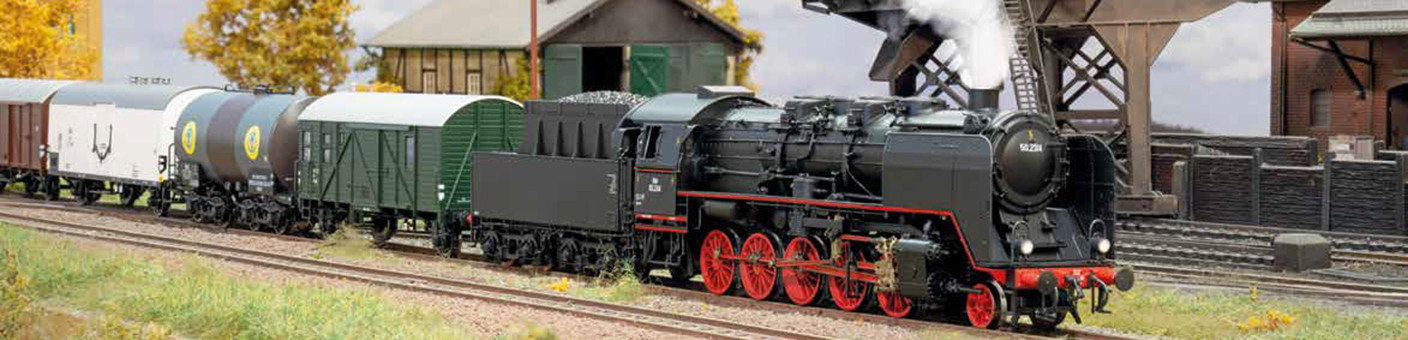
A worn or incorrectly fitted pickup shoe can cause interruptions on turnouts, flickering lights and unreliable sound or digital functions. Learn how to identify the correct replacement, distinguish centre pickup shoes from wheel contacts and install the new component safely.
Reliable electrical pickup is essential for smooth model railway operation. Depending on the vehicle and electrical system, current can be collected through a centre pickup shoe, wheel contacts or other sliding contacts.
A traditional centre pickup shoe is especially familiar from H0 centre-contact or 3-rail systems. It runs across the centre studs between the running rails and transfers electrical power into the vehicle.
Wheel pickups work differently. Fine spring contacts rest against wheels or axles and conduct current from the wheels into the locomotive or coach electronics.
If a centre pickup shoe is visibly bent, badly worn or damaged, replacement may improve current pickup. Repeated interruptions on turnouts, restarting sound functions or flickering lights can also indicate a pickup problem.
However, these symptoms do not automatically mean that the centre pickup shoe is defective. Dirty rails, dirty wheels, damaged wheel contacts, loose cables or an electronic fault can cause similar problems.
The exact vehicle construction is always decisive. A replacement pickup shoe with approximately the same length is not automatically compatible. Mounting method, overall height, spring travel, electrical connection and the available space beneath the bogie must all match.
Several components can be described as current collectors. Their location and purpose differ considerably.
Located underneath a centre-contact locomotive or coach. It collects current from the centre studs between the rails and is particularly typical of H0 AC or 3-rail vehicles.
Spring-loaded contact strips transfer electrical current from the wheel to the vehicle electronics. Shape and mounting are usually highly model-specific.
Larger vehicles may use separate contact components on wheels or running gear. The exact spare-part number remains important here as well.
A cleaning slider is primarily intended for track maintenance, not for supplying traction current to the locomotive. It should therefore not be confused with the electrical centre pickup shoe during fault diagnosis.
Check the track, wheel surfaces and visible current collectors before replacing parts. This avoids unnecessary dismantling and helps identify the actual electrical fault.
| Observation | Possible Cause | First Check |
|---|---|---|
| Locomotive stalls on several turnouts | Pickup shoe, dirty centre studs or dirty wheels | Clean the track and pickup shoe and inspect the contact position |
| Lights or sound repeatedly restart | Brief interruptions in current pickup | Inspect centre pickup shoe, wheel contacts and wheel treads |
| Pickup shoe rattles or catches | Deformation, incorrect type or incorrect mounting | Check spring movement and correct installation |
| Locomotive only runs reliably in certain positions | Wheel pickup, cable or contact strip | Inspect contact routing and connections |
| New pickup shoe does not solve the problem | Wheels, wiring, decoder or track | Continue tracing the current path systematically |
Remove the locomotive from the track before loosening a pickup shoe, contact plate or cable. An incorrect connection between pickup shoe, wheelsets and vehicle electronics can create a short circuit. If electrical connections have been changed, check insulation and cable routing particularly carefully before the first powered test.
The mounting method differs from one vehicle to another. Pickup shoes may be screwed, clipped or fitted together with a separate holder. The spare-parts drawing for the exact vehicle determines the correct procedure.
Note the manufacturer and locomotive item number and check the spare-parts list. Pickup shoes differ in length, mounting style and overall height.
Roco, for example, offers AC pickup shoes with lengths of 42 mm and 56 mm. This already demonstrates why simply searching for “H0 AC pickup shoe” is not precise enough.
Remove the locomotive from the track and place it on a soft locomotive cradle or foam surface.
Do not place weight on pantographs or delicate roof details. A photograph of the underside before dismantling can be useful during reassembly.
Use the correct screwdriver for the fixing screw or release the designated retaining clip according to the manufacturer's instructions.
Do not lever the pickup shoe away from the bogie with force. Small insulating washers, contact plates or retaining components must not be lost.
Before installing the replacement part, inspect the holder for cracks, deformation and dirt.
The electrical contact plate or connecting cable must also be correctly positioned. On some models, a damaged holder clip can be replaced separately.
Fit the replacement in the same orientation as the original. Tighten a fixing screw evenly but without excessive force.
Clip-mounted parts must engage fully. Afterwards, the pickup shoe must still be able to move within its intended range.
The pickup shoe must be able to move vertically beneath the vehicle without touching wheels, gear components or bogie sideframes.
Strongly bending the pickup shoe by hand can negatively affect contact pressure, noise and running behaviour.
If cables or contact plates were removed, check that no wire has been trapped and that no unintended electrical connection has been created between the pickup shoe, wheelsets or chassis.
Do not experiment with unclear wiring.
Begin with a slow test on straight track. Then run the locomotive over turnouts, crossings and transitions where interruptions previously occurred.
Lighting, sound and running behaviour should remain stable and the new pickup shoe must not catch.
Current collector type depends more strongly on the electrical system and vehicle construction than on the nominal gauge alone.
| Gauge / System | Typical Current Pickup | Related Guide |
|---|---|---|
| H0 AC / Centre-Contact | Centre pickup shoe beneath locomotive or coach; return current through both outer running rails. | H0 Centre-Contact |
| H0 DC / Two-Rail | Normally through electrically separated running rails and vehicle wheels; no traditional centre pickup shoe required. | H0 Two-Rail |
| TT | Mainly wheel contacts; model-specific TT wheel pickups are available as spare parts. | TT Gauge |
| N | Usually through wheels and fine spring contact strips; spare parts are highly vehicle-specific. | N Gauge |
| H0e / H0m | Narrow-gauge vehicles use wheel pickups and contact strips according to their individual construction. | H0m Gauge |
| G Gauge | Large-scale vehicles can use additional sliding contacts on wheels or running gear. | G Gauge |
An H0 centre-contact vehicle normally requires a centre pickup shoe, while an H0 two-rail locomotive collects power through electrically separated rails and wheels. A wheel-contact strip and a centre pickup shoe are therefore not interchangeable spare parts.
Use manufacturer, gauge and collector type to narrow the selection. The exact vehicle assignment, mounting method and spare-part number remain decisive.
Short 42-mm centre-contact replacement pickup shoe for compatible Roco H0 AC vehicles.
View Product →Longer 56-mm centre-contact pickup shoe for vehicles designed for this specific Roco replacement part.
View Product →Compact replacement centre pickup shoe for compatible H0 centre-contact applications.
View Product →Classic replacement pickup shoe for compatible Märklin H0 centre-contact models.
View Product →Short 5-cm replacement pickup shoe for compatible H0 centre-contact vehicles.
View Product →Original PIKO replacement centre pickup shoe supplied with the corresponding fixing screw.
View Product →Two model-specific TT wheel pickup contacts with clip and cable for compatible PIKO vehicles.
View Product →Two replacement sliding contacts for compatible large-scale LGB vehicles.
View Product →The complete category includes centre pickup shoes, wheel pickups, sliding contacts, contact plates, holders and pantographs for several gauges.
Current collectors are often highly model-specific. Identify the vehicle first and then search for the intended replacement part.





Pickup shoes, wheelsets, motors, traction tyres and further original replacement parts.
AC pickup shoes and further vehicle maintenance parts for compatible Roco models.
Traction tyres, wheelsets, motors, couplings, carbon brushes, pickup shoes and electrical contacts.
Precision tools for maintenance, controlled dismantling and model railway repairs.
Incorrect geometry, excessive bending or incorrectly installed insulating components can create new contact problems or even electrical faults.
Length is only one characteristic. Mounting method, overall height, spring travel and electrical connection must also match the locomotive or coach.
Excessive contact pressure can increase noise and running resistance. Too little pressure can cause interruptions. Preserve the intended geometry whenever possible.
Washers, insulating pieces and contact plates can have an electrical function. Incorrect positioning can create unwanted electrical connections or short circuits.
Wheel contacts touch the wheels. A centre pickup shoe runs across the centre studs. The components are not interchangeable.
Current pickup is a complete system. Wheel treads and track must also remain clean if electrical contact is to be reliable.
If cables must be soldered or circuit boards removed and the wiring is unclear, continue only with the correct circuit documentation or professional technical assistance.
Wheels, wheel contacts, wiring, decoder electronics, track or other electrical components may be responsible. Professional diagnosis can trace the complete current path systematically.
The most important answers about centre pickup shoes, wheel contacts, replacement-part selection and troubleshooting.
Replacement is appropriate when the pickup shoe is mechanically damaged, heavily deformed or clearly worn and this impairs electrical contact. Clean the track and contact surface and exclude other possible causes first.
The manufacturer and locomotive item number are the best starting points. Then check the spare-parts drawing or operating instructions for the intended pickup-shoe number. Length alone is not sufficient.
A centre pickup shoe collects power from the centre studs of a centre-contact track system. A wheel pickup is a contact strip that rests against a wheel and transfers the electrical current collected there into the vehicle.
No. H0 centre-contact vehicles normally use a centre pickup shoe. H0 two-rail vehicles instead collect traction current through the electrically separated running rails and wheels.
Possible causes include dirty track, dirty wheels, faulty wheel contacts, damaged wiring, incorrect pickup-shoe installation or problems with the decoder and electronics.
Strongly bending the pickup shoe by trial and error is not recommended. Contact pressure is part of the component design. First check that the correct pickup shoe is fitted properly and can move freely over turnouts and centre studs.
Incorrect installation, damaged insulation or an unwanted electrical connection between pickup shoe and wheelsets can cause electrical problems. Always work with the vehicle disconnected from power and reproduce the original arrangement accurately.
Yes, if the coach, wheelsets, mounting arrangement and electrical consumers are suitable. Centre pickup shoes are used, for example, to supply interior lighting. Retrofitting is nevertheless different from simply replacing an existing pickup shoe.
Yes. In addition to H0 centre pickup shoes, model-specific TT wheel pickups and sliding contacts for large-scale and garden railway vehicles are available. The required design depends on the exact vehicle.
Professional diagnosis is advisable when cables or circuit boards must be disconnected, the pickup-shoe holder is damaged, a short circuit is suspected or the locomotive still suffers interruptions after the replacement.
Continue with locomotive cleaning, lubrication, traction tyres, carbon brushes, digital technology, spare parts and layout planning in the central Modellbahnshop guide.