Lightweight
Use a hollow mountain body instead of building the complete volume from solid plaster.

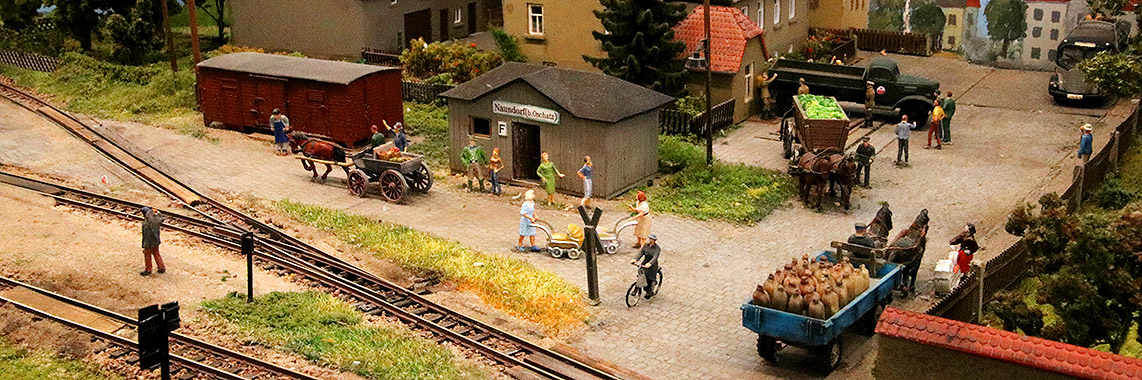
Build lightweight, accessible and realistic model railway mountains with stable track bases, foam, terrain frameworks, mesh, plaster cloth, rock moulds, tunnel portals and natural vegetation. Plan railway operation first and close the mountain only after every hidden section has been tested.
Building a model railway mountain does not begin with plaster or vegetation. The first question is what purpose the mountain has on the layout.
A mountain can hide a railway line inside a tunnel, visually separate two scenes, conceal a tight curve or provide the correct landscape setting for a mountain railway.
A convincing model railway mountain is usually hollow inside. Load-bearing track bases, station areas and building foundations are constructed separately and remain stable.
The actual mountain volume can be formed from lightweight ribs, struts, honeycomb panels, rigid foam or flexible mesh. A comparatively thin terrain skin made from terrain crepe, plaster cloth, modelling compound or filler then closes the basic form.
Railway operation must function reliably before the mountain is closed. Tunnel access, vehicle overhang in curves, overhead line, tall vehicles and hidden turnouts are particularly important.
A mountain section should therefore remain removable, accessible from the rear or reachable through sufficiently large maintenance openings.
Natural-looking mountains use irregular silhouettes. Real mountains are rarely uniformly cone-shaped. Different slope angles, small cuttings, exposed rock, vegetation and calmer terrain transitions create much more depth than an elevation with the same steepness on every side.
Use a hollow mountain body instead of building the complete volume from solid plaster.
Tunnel sections, wiring and hidden turnouts must remain permanently reachable.
Alternate gentle slopes, steep rock areas, cuttings and quieter surfaces.
Framework, terrain skin, rock structure, colour and vegetation follow one another.
| Construction Layer | Function |
|---|---|
| Load-Bearing Base | Layout frame, track base and flat building foundations |
| Mountain Framework | Ribs, TERRA-FORM, honeycomb panels or rigid foam |
| Terrain Skin | Mesh, terrain crepe, plaster cloth or modelling paste |
| Rock Structure | Cast rocks, rock filler, rock foil and retaining walls |
| Visible Surface | Base colour, scree, grass, bushes and trees |
Build freely shaped mountain bodies with a lightweight and adjustable framework.
Cut hills, plateaus and compact tunnel mountains directly from lightweight foam.
Reproduce matching individual rocks for larger rock formations.
Cover large mountain areas with a lightweight photorealistic rock surface.
Shape, construction and surface treatment depend on the landscape being represented. A wooded low mountain range needs different proportions from a rugged Alpine rock face or a compact tunnel hill at the edge of the layout.
A compact mountain can conceal a curve or return loop without dominating the complete layout.
Tunnel portal, wing walls and mountain body should be planned together and preferably constructed as a removable unit.
Gentle slopes, occasional exposed rock, paths and irregular groups of trees are typical.
Large uninterrupted rock faces usually appear less appropriate than individual cuttings and outcrops.
Steep walls, scree fields, avalanche protection, galleries and sparse vegetation in the upper areas create a high-mountain impression.
The geological direction of the rock should remain consistent across larger surfaces.
A cutting does not require an entire mountain. Two differently shaped rock walls and a slightly curved railway line already create considerable depth on a narrow layout.
A low elongated ridge can separate a station, hidden section or return loop from another scene.
It should taper towards the backdrop instead of ending like a vertical wall directly in front of it.
Determine the lowest point first. Rock walls, stream, bridge abutments and railway route then follow this topography.
Water and bridge structures must not block access to hidden railway sections.
Most model railway mountains use a mixed construction. A solid track base carries the train while lightweight materials form the mountain volume. Plaster and filler are primarily used for the visible skin and selected surface structures.
| Construction Method | Strengths | Suitable For | Important Note |
|---|---|---|---|
| Wooden Ribs & Track Board | Precise heights, stable track support and defined profiles | Large layouts, tunnel routes and long mountain ridges | Plan cable routes, access openings and removable sections. |
| TERRA-FORM or Plug-In Framework | Lightweight, adjustable and suitable for free silhouettes | Tunnel mountains, low mountain ranges and individual transitions | Inspect the rough form from every later viewing direction. |
| Layered Rigid Foam | Directly cuttable, lightweight and easy to shape | Small hills, plateaus, cuttings and dioramas | Use only adhesives and paints suitable for the foam. |
| Aluminium or Wire Mesh | Large curved surfaces with very little weight | Rib structures, slopes, gorges and tunnel bodies | Secure sharp cut edges and completely cover the mesh. |
| Plaster Cloth & Modelling Compound | Closed strong shell and clean transitions | Terrain skin, mountain foot, portal transitions and rock areas | Work in thin overlapping layers and allow them to dry completely. |
| Rock Casting & Rock Filler | Three-dimensional fractures and repeatable stone structures | Rock walls, cuttings, quarries and high mountains | Align individual sections in a common geological direction. |
| Crinkle Rock & Rock Foil | Fast large-area surface treatment with little weight | Background walls, Alpine slopes and narrow layout sections | Hide edges with filler, scree and vegetation. |
Mesh, plaster cloth and rock foil are used to create the landscape shape. Track, buildings and heavy structures require their own stable supporting base.
This keeps the railway level and allows the mountain to be opened, repaired or replaced when necessary.
Foam, construction panels, terrain frameworks, walls and lightweight surface materials.
Plaster cloth, mortar, modelling compounds, rock filler and casting moulds.
Select glue according to wood, foam, paper, plaster and scenery materials.
Structural materials are often universal. Visible rock structures, tunnel portals, retaining walls, paths, vegetation and maintenance openings must nevertheless suit the respective model size.
| Gauge | Scale | Typical Mountain Effect | Pay Particular Attention To |
|---|---|---|---|
| Z | 1:220 | Wide calm silhouettes and very fine rock structures | Even small tunnels need safe maintenance access. |
| N | 1:160 | Long mountain routes and generous valleys in a small area | Avoid excessively coarse rock structures and oversized trees. |
| TT | 1:120 | Good balance between route length, height and visible detail | Judge H0/TT products by their actual dimensions. |
| H0 , H0e, H0m & H0f | 1:87 | Detailed rocks, portals, protective structures and vegetation | All H0 narrow-gauge variants use the same scenery scale. |
| 0 & 0e | Usually around 1:45 | Large individual rocks and strong surface structures | Divide mountains into sections and provide wide access openings. |
| 1 | 1:32 | Highly visible rock detail and substantial structures | Consider the weight and transport of large landscape sections. |
| G / IIm | Prototype-dependent, often around 1:22.5 | Large tunnels, bridges and robust garden landscapes | Outdoor layouts require weather-resistant materials. |
For tunnel openings, track spacing and clearance profiles, the specifications of the relevant track and vehicle manufacturers remain decisive.
Vehicle dimensions, curve radii and landscape scale determine the required size of tunnel portals, rock structures and maintenance openings.
Frameworks, rigid foam, plaster, rock moulds, tunnel portals and retaining walls can be combined across manufacturers when the material, adhesive and visible model scale are compatible.





The following checked selection covers the complete material chain from the lightweight mountain framework to the visible rock surface and tunnel entrance. Prices and delivery status remain on the individual product pages.
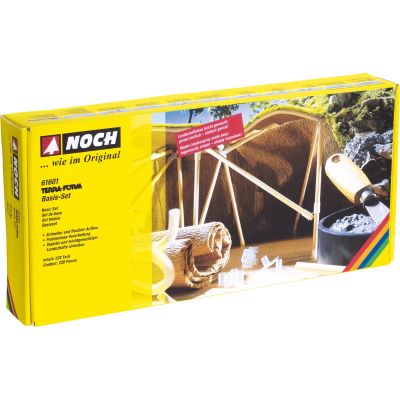
Modular strut and connector system for lightweight, adjustable mountain and landscape frameworks.
View Product →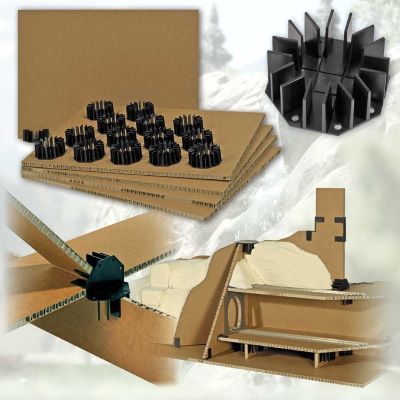
Lightweight structural system for mountains, horizontal levels, ramps and tunnel bodies.
View Product →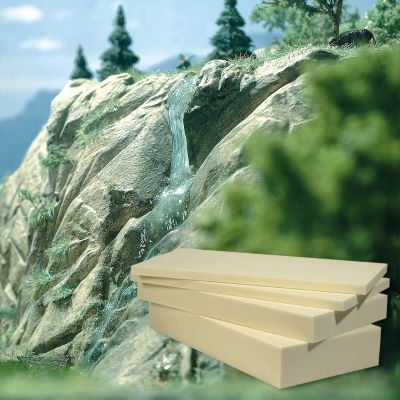
Easily cut foam panels in several thicknesses for compact hills, plateaus and mountain structures.
View Product →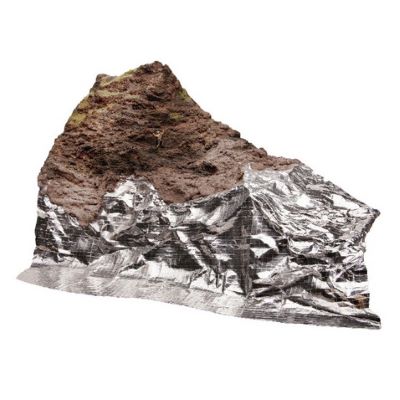
Large flexible mesh for creating mountain, slope and tunnel substructures.
View Product →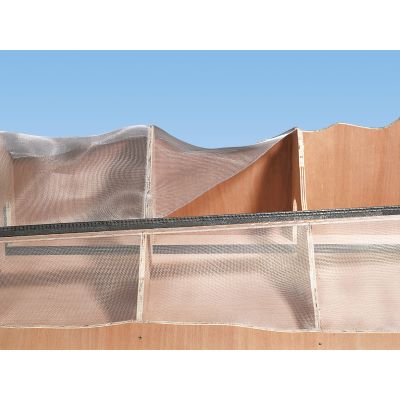
Fine-meshed flexible base for self-supporting terrain and lightweight rib constructions.
View Product →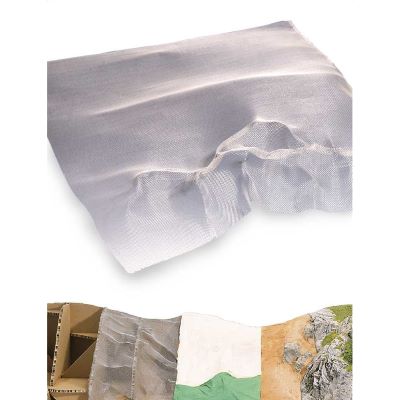
Flexible 75 × 60 cm foundation for slopes, tunnel mountains and rock formations.
View Product →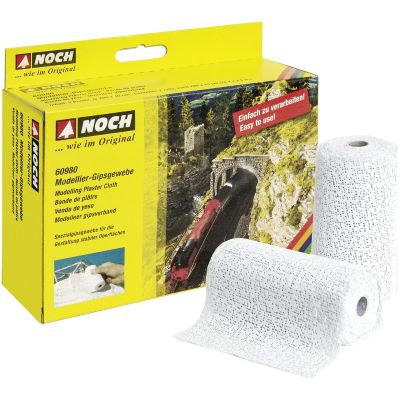
Overlapping plaster strips create a stable terrain skin over mesh, terrain crepe and other lightweight supports.
View Product →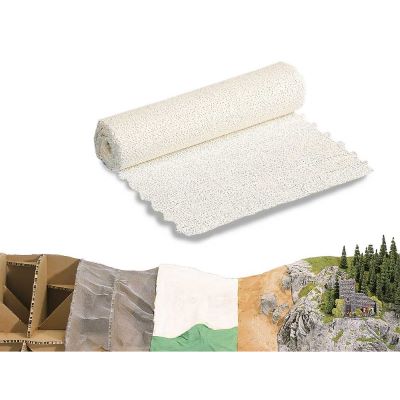
Wide plaster cloth for turning wire mesh or terrain crepe into a stable self-supporting landscape shell.
View Product →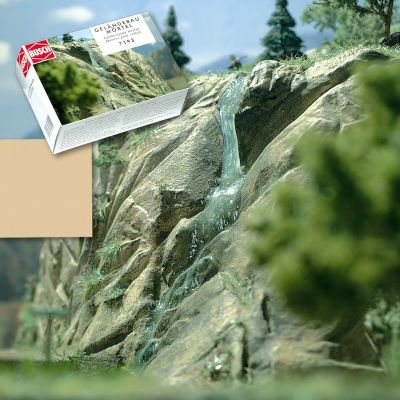
Sand-brown modelling material for larger areas, stable transitions and detailed terrain structures.
View Product →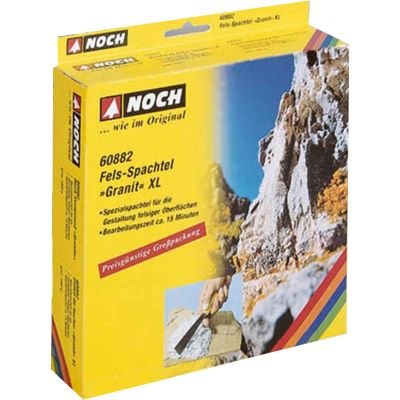
Grey structural material for rock walls, mountain sections and railway cuttings.
View Product →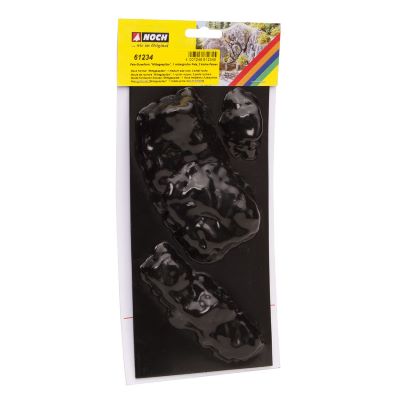
Reusable mould for producing several detailed individual rocks and combining them into larger formations.
View Product →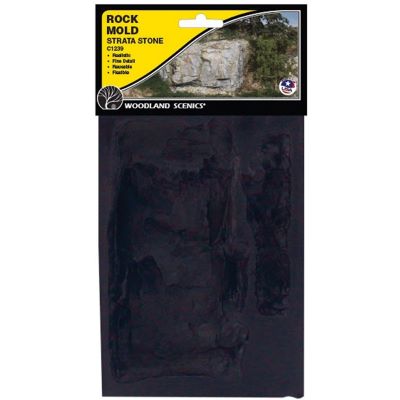
Casting mould for stratified rock faces and long geological bands.
View Product →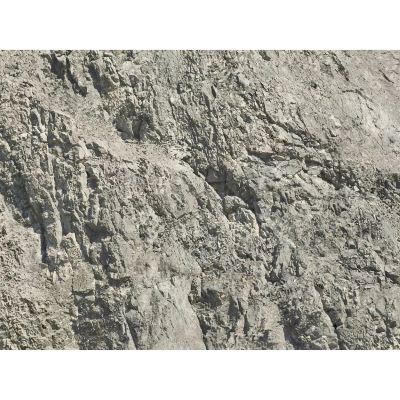
Large lightweight photorealistic surface for Alpine slopes and narrow mountain scenes.
View Product →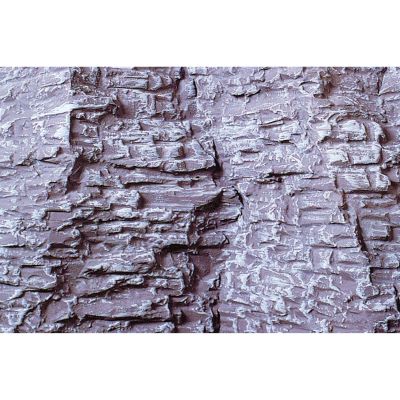
Current rock-foil solution for large walls, slopes and cuttings with visible layered stone.
View Product →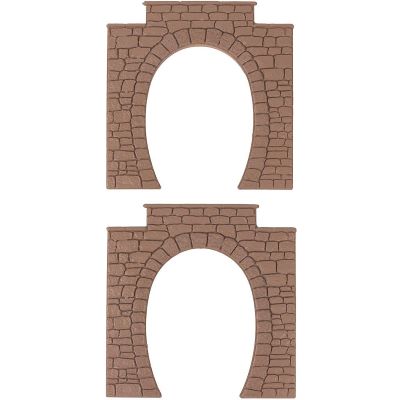
Two H0 portals for integrating a single railway track cleanly into a tunnel mountain.
View Product →
Flexible modelling paste for closing, blending and shaping visible terrain surfaces.
View Product →Choose the framework or rigid foam first, then the terrain skin and rock method. Tunnel portals, walls, colour, scree and vegetation are added to match the selected geological character.
Rigid foam, construction boards, walls and lightweight terrain surfaces.
Plaster cloth, mortar, filler, modelling compound and casting moulds.
Single- and double-track portals, tunnel walls and complete tunnel structures.
Structures for valleys, gorges and mountain railway routes.
Glues for wood, rigid foam, paper, plaster and scenery materials.
Stones, earth, sand and rubble for mountain feet and rock bands.
Conifers, bushes, undergrowth and low vegetation for mountain slopes.
Framework systems, rock casting, terrain surfaces and landscaping products.
The sequence separates railway technology, load-bearing construction and visible scenery. Corrections therefore remain possible and the mountain does not become unnecessarily heavy.
Draw the tunnel portal, summit, mountain foot and future maintenance opening into the layout plan.
Run through curves, gradients and hidden sections in both directions before any mountain framework is built.
Track, tunnel portal, roads and later buildings receive solid boards or sufficiently rigid supports.
Begin with generous forms and repeatedly inspect the contour from the normal viewing position.
The portal, walls and cast rocks determine the later structure and should be aligned before they are permanently fixed.
Join the framework with the terrain skin without closing maintenance openings or removable-section joints.
Filler, scree and smaller rock fragments hide edges and create a believable transition at the mountain foot.
Base colours, washes, dry brushing, scree, grass, bushes and trees are added progressively from coarse to fine.
Coordinate track, heights, tunnels, bridges and the complete scenery concept.
Build in manageable and testable stages.
Prevent inaccessible tunnels, excessive gradients and premature scenery work.
Use tunnel hills and scenic dividers to create greater visual depth in limited space.
A model railway mountain only becomes convincing when rock structure, colour and vegetation tell the same landscape story. A rock wall should not look like a separate decoration placed on top of a green surface.
Grey angular structures work well for granite and Alpine landscapes.
Brown or ochre layers suggest sandstone, while limestone can be lighter and more strongly divided.
Cast rocks and rock foils should not be rotated randomly.
Continuous fracture lines and similar angles make several individual pieces appear to belong to one geological formation.
A thin dark wash emphasises depressions and cracks.
A lighter almost-dry colour can then highlight exposed edges. Several thin layers generally look calmer than one completely opaque coat.
Scree, earth, grass tufts and low shrubs connect a rock wall to the surrounding terrain.
Trees usually grow on flatter ledges and should not be placed at identical intervals along every rock edge.
A few distinctive rock sections usually have more impact than a completely structured mountain surface.
Quieter earth and forest slopes give the eye a rest and make tunnel portals, bridges and rock walls stand out.
A solid plaster mountain is heavy, dries slowly and is difficult to open. For most indoor layouts, a lightweight hollow construction with a thin terrain skin is more practical.
Permanent mountains above turnouts or difficult curves also cause problems later. Hidden tracks require a clearly defined access route.
Removable sections should return to exactly the same position using stops, locating pins or hidden magnets.
The mountain form itself can also look artificial. Uniform cones, parallel slopes and identical vegetation around every side resemble scenery props rather than landscape.
Test track and vehicles completely before installing the permanent terrain skin.
Keep maintenance-intensive sections open or beneath easily removable mountain components.
Check curve overhang, overhead line and lateral access using complete vehicles.
Place rock walls deliberately and balance them with woodland, soil and quieter slopes.
Cutting tools, hot-wire equipment, adhesives, plaster and modelling compounds require a suitable work surface, ventilation and the safety measures specified for the individual product.
Cover tracks, turnout mechanisms and other moving parts during dusty or wet construction work.
These answers cover material selection, accessibility, terrain structure, rock colouring and scale-appropriate planning.
Lightweight large forms can be built using ribs, TERRA-FORM, honeycomb panels or mesh. Rigid foam is particularly practical for compact mountains. Plaster and filler are then used for the visible surface.
Build a framework or rigid-foam structure around the fully tested tunnel route and cover it with a thin terrain skin. Keep the mountain removable or accessible from the rear.
Rigid foam can be cut directly and is well suited to compact shapes. Wire or aluminium mesh is particularly flexible for large freely curved slopes over a supporting framework.
It is technically possible, but the result quickly becomes very heavy. A lightweight hollow structure with a thin plaster skin and selected filler is usually more practical.
It must allow the longest vehicle to be gripped safely and provide access to track, wiring and turnouts. A small inspection slot is usually not sufficient.
Yes, but only when it remains completely accessible. It is generally better to position turnouts outside permanent mountains or beneath clearly removable sections.
Rock moulds, rock filler, crinkle rock or rock foil create the basic structure. Dark washes emphasise recesses and light dry brushing highlights exposed edges.
Align the rocks in a similar geological direction. Fill the spaces between them with plaster, rock filler, small fragments and scree to create one continuous wall.
Only after the terrain skin, filler and paint are completely dry and the railway line has once again been tested reliably.
This depends on the region and altitude. Low mountain ranges can support dense mixed or coniferous forest. High Alpine rock areas become increasingly sparse and low-growing towards the summit.
Many structural materials are universal. Visible tunnel portals, retaining walls, plants and rock details must nevertheless suit the selected model scale.
A small rigid-foam mountain or a simple framework with terrain mesh and plaster cloth can be learned easily on a test board before applying the method to the complete layout.
Test the track and maintenance access first, choose the framework, terrain skin and rock method next, and finish the mountain foot with colour, scree and vegetation only afterwards.
Combine mountain construction with track planning, scenery, railway technology and reliable operation.
Content, English product pages, image paths and current product status checked: 16 August 2026.