Limited available space
A complete layout can fit on a small table, inside a shelving unit or within a specially designed model railway suitcase.

Z gauge combines a scale of 1:220 with a model track gauge of only 6.5 millimetres. Complete stations, landscapes and long railway routes can therefore be built within areas where larger scales would permit little more than a simple track circuit.
A full-size vehicle measuring 22 metres in length is only ten centimetres long in Z gauge. One kilometre of prototype railway is reduced to approximately 4.55 metres. This makes it possible to represent long train formations and extensive scenery within a comparatively small layout.
The scale became particularly well known through Märklin mini-club. The range is supplemented by manufacturers such as NOCH, Rokuhan, Faller and other suppliers of track, buildings, preformed layouts, scenery materials and maintenance accessories.
The small model size requires careful workmanship. Vehicles are more sensitive to dirty track, poor rail connections and abrupt changes in gradient. A cleanly constructed and regularly maintained layout can nevertheless operate reliably.
Long express coaches and large steam locomotives look more natural on wider curves. Always check the manufacturer's recommended minimum radius for each vehicle.
A complete layout can fit on a small table, inside a shelving unit or within a specially designed model railway suitcase.
Express and freight trains already look complete and prototypically proportioned on moderate layout lengths.
Mountains, valleys, bridges and long open routes can take a more prominent role than they can in larger scales.
Suitcase and compact layouts can be stored safely and transported easily to exhibitions or club meetings.
The small scale rewards steady workmanship, fine tools and a well-lit working area.
Locomotives and rolling stock require little display space and can be assembled into extensive themed collections.
Before buying track, decide whether the layout should contain a simple continuous circuit, a through station, a double-track main line or a compact shunting layout.
Allow space for operation, wiring, the backdrop and a protective cover.
Use radii of 195 or 220 millimetres for long vehicles wherever possible.
Gentle ramps improve the tractive performance of small, lightweight locomotives.
Build tunnels and hidden sections so they remain accessible for cleaning and recovery.
| Planning area | Recommendation | Why is it important? |
|---|---|---|
| Curves | Vehicle-dependent and as generous as possible | Long vehicles run more smoothly and look more natural. |
| Gradients | Gentle ramps and long transitions | The low vehicle weight limits the available tractive effort. |
| Station | Test the usable length before constructing the scenery | Complete trains should fit between the turnouts. |
| Tunnels | Provide removable scenery sections | Derailments and track cleaning remain accessible. |
| Baseboard | Level and resistant to twisting | Small irregularities can have a noticeable effect on operation. |
To obtain the model dimension, divide the prototype measurement by 220. A platform measuring 110 metres in real life therefore requires 50 centimetres in Z gauge.
The calculator also compares the model length with N, TT and H0. This makes the reduction in space achieved by Z gauge immediately visible.
Enter the prototype length in metres.
Voltage and polarity determine the speed and direction. Starter sets provide a straightforward introduction.
Each locomotive receives an address. Several vehicles can be controlled independently on the same section of track.
Installation requires a suitable micro decoder, adequate space, motor isolation and careful wiring.
A decoder must not be selected from its external dimensions alone. Its current capacity, heat dissipation and connection type must suit the locomotive.
Select a primary system as early as possible. The track geometry, rail joiners, turnout drives and power connections must all be compatible.
| Feature | Märklin mini-club | Rokuhan |
|---|---|---|
| Construction | Conventional track without fixed roadbed | Track with an integrated roadbed appearance |
| Planning | Straight sections, curves, turnouts and flexible track | Clip-together geometry using fixed track sections |
| Scenery | The ballast bed can be constructed individually | Track can be laid quickly with a finished appearance |
| Combining systems | Transitions require careful technical checking | The construction height and rail joiners differ |
| Gauge | Typical scale | Particular strength | Space requirement |
|---|---|---|---|
| Z | 1:220 | Long routes and compact layouts | Very low |
| N | 1:160 | Wide product range with low space requirements | Low |
| TT | 1:120 | A balance between model size and route length | Medium |
| H0 | 1:87 | Very large selection of vehicles and accessories | Higher |
| 0, 1 and G | Approximately 1:45 to 1:22.5 | Large models with a strong visual impact | Very high |
Check the recommended minimum radius for every vehicle. Track manufacturer, geometry and rail joiners must match the existing system.
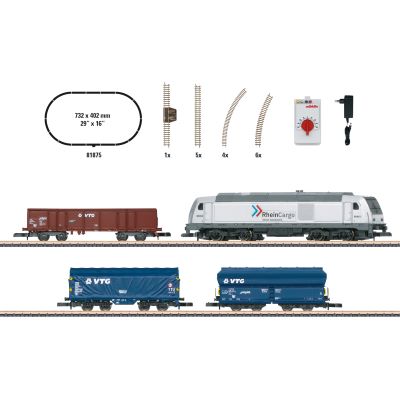
Modern freight train with a diesel locomotive and track layout.
View product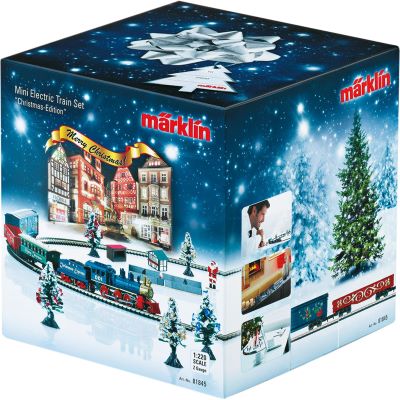
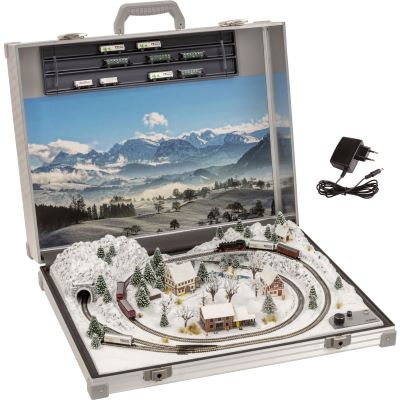
Festively decorated steam freight train with a track oval.
View product
Compact introduction with a locomotive, wagons and track circuit.
View product
Class 24 steam locomotive with passenger and luggage coaches.
View product
Fully decorated portable winter layout in an aluminium-profile case.
View product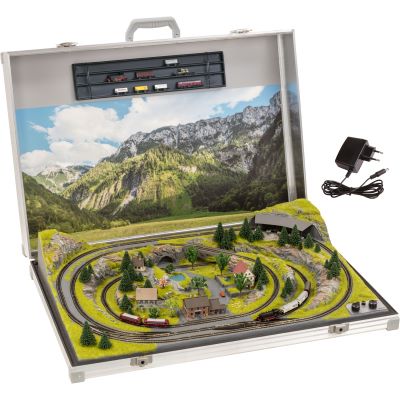
Ready-to-run compact model railway layout with completed scenery.
View product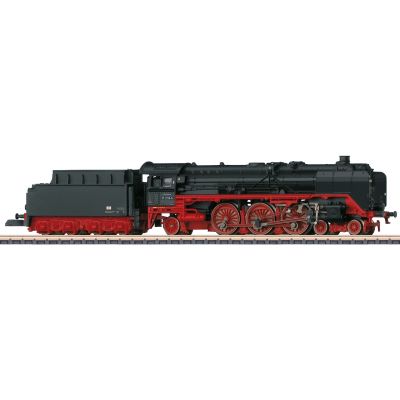
Large express steam locomotive for historic passenger trains.
View product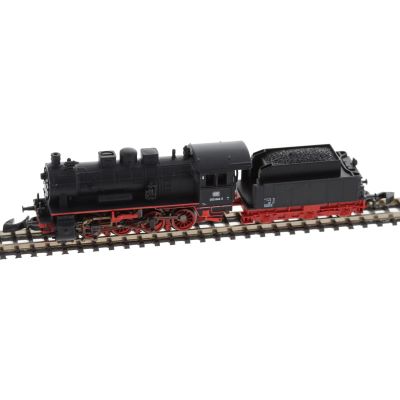
Classic Deutsche Bundesbahn freight steam locomotive.
View product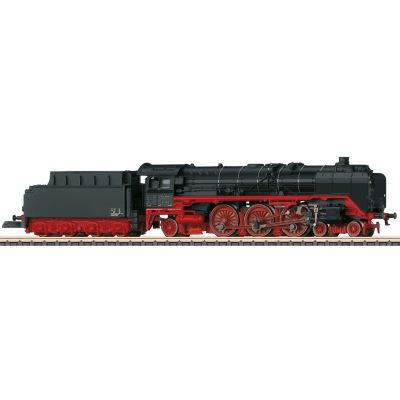
Deutsche Bundesbahn express steam locomotive.
View product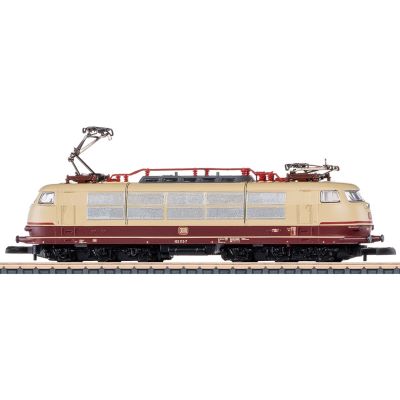
Museum express locomotive in its classic colour scheme.
View product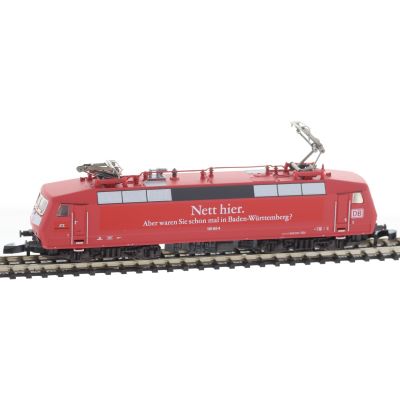
Versatile DB AG electric locomotive.
View product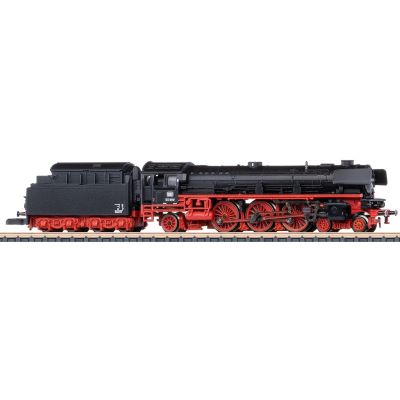
Streamlined express locomotive suited to generous curve radii.
View product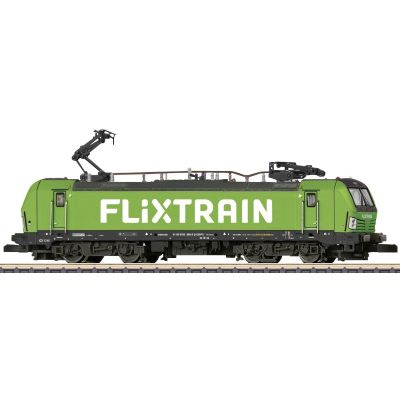
Modern electric locomotive for the green long-distance train.
View product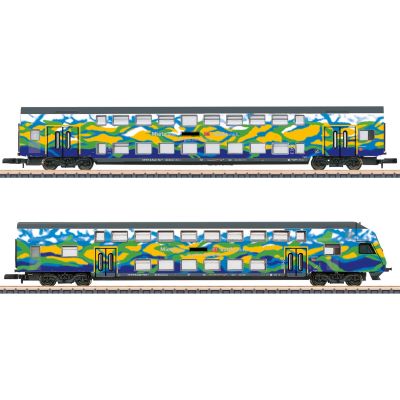
Double-deck coaches for a distinctive passenger train.
View product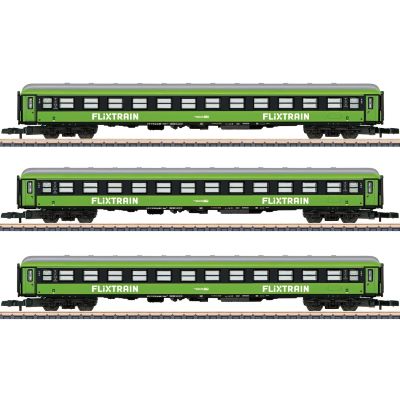
Three-part passenger coach set for modern long-distance trains.
View product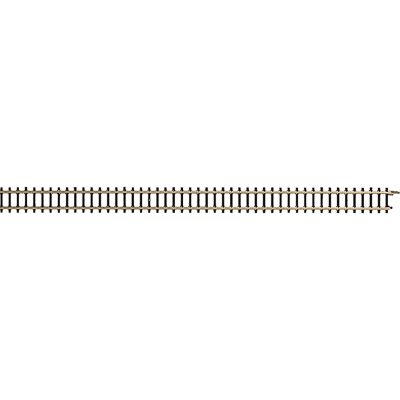
Suitable for individual straight sections and gentle alignments.
View product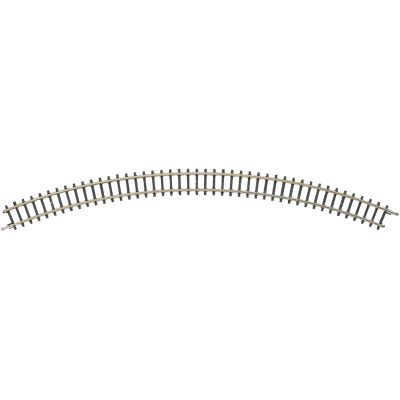
A more generous curve for longer Z-gauge vehicles.
View product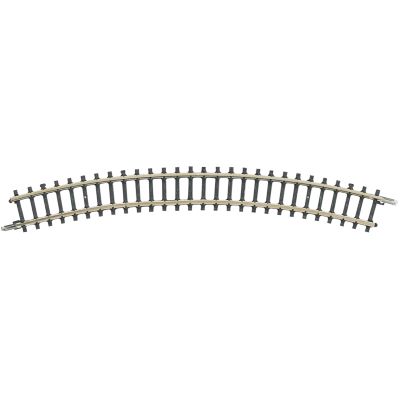
Commonly used radius for compact track plans.
View product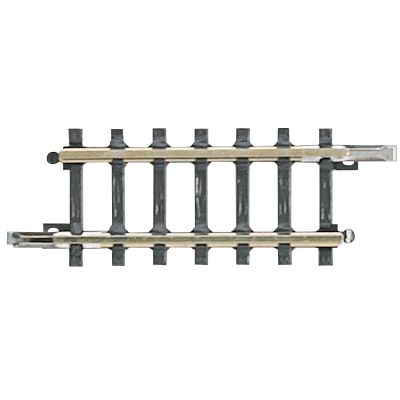
Short track section for precise length compensation.
View product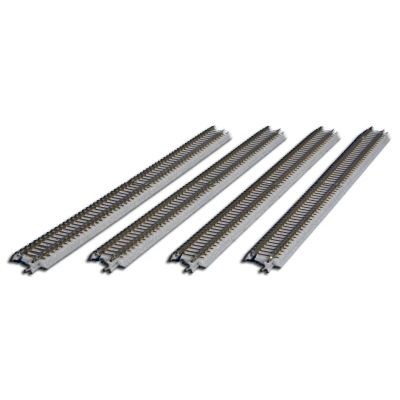
Four straight track sections for the Rokuhan track system.
View product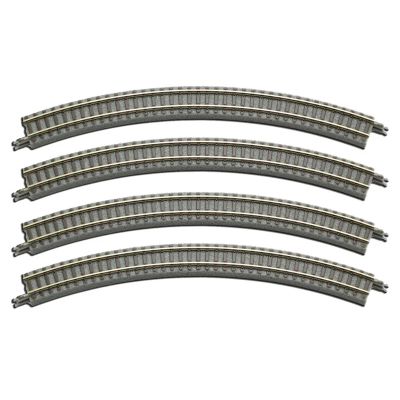
Curved track sections for compact Rokuhan layouts.
View product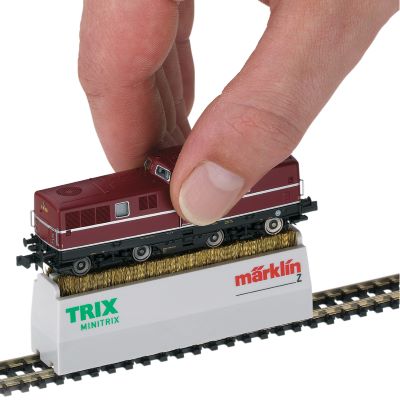
Cleans powered locomotive wheels while they are turning.
View product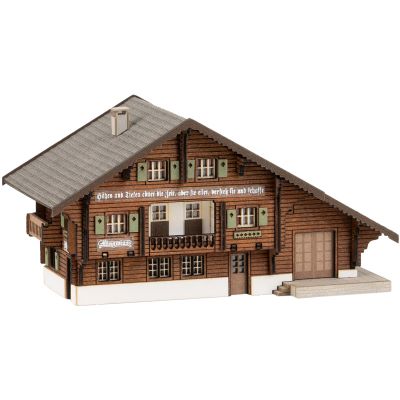
Compact station building for Alpine Z-gauge scenes.
View productZ gauge is produced at a scale of 1:220. The model track gauge between the rails is 6.5 millimetres.
A complete track circuit can fit on a small table or shelf. Suitcase layouts demonstrate how compact a fully decorated model railway can be.
Yes, especially with a starter set or completed layout. The small vehicles nevertheless require careful handling and regular maintenance.
Yes. It requires a very small decoder suited to the motor current and track voltage, together with clean and careful wiring.
This depends on the vehicle. Radii of 195 or 220 millimetres frequently provide greater operational reliability and a better appearance.
The small contact areas are sensitive to dirt. Clean the track and wheels and inspect the rail joiners and wheel contacts.
Only by using a technically sound transition. The construction height, rail joiners and track geometry differ.
Gradients should remain as gentle as possible. Small locomotives have little weight and quickly lose tractive effort with long trains.
No. The small scale makes it possible to operate comparatively long passenger and freight trains within a limited base area.
Protective covers, display cases and suitcase solutions reduce contamination. The track and vehicles should nevertheless be inspected regularly.
Further gauges, planning tools, manufacturer guides and step-by-step instructions are available in the central model railway guide.