Deutsche Bundesbahn (DB) – Model Railway in All Gauges
The Deutsche Bundesbahn as a Major Prototype for Model Railways
The Deutsche Bundesbahn, or DB for short, is one of the most popular and versatile themes in model railways. Hardly any other railway company offers so many possibilities for recreating historic trains, typical stations, varied operating sequences and believable everyday scenes on a layout. The DB was founded in 1949 in the Federal Republic of Germany and shaped the railway image in West Germany until the railway reform of 1994. During this period, the railway developed from a steam-dominated post-war system into a modern state railway with diesel traction, electrified long-distance services, an Intercity network, local services with Silberlinge coaches and extensive freight traffic.
At Modellbahnshop, you will find numerous vehicles, coaches, wagons, tracks, buildings and accessories with which a believable Bundesbahn world can be built. The right gauges are especially important. The Deutsche Bundesbahn is represented in almost all common model railway sizes: from tiny Z gauge through N, TT and H0 to the larger scales 0, 1 and G. This makes the theme suitable both for compact shelf layouts and for large home layouts, modular meetings or garden railways.
What Does Deutsche Bundesbahn (DB) Mean on a Model Railway?
When a model is described as “DB” or “Deutsche Bundesbahn”, it represents vehicles of the West German state railway between 1949 and 1993. What matters is not only the DB logo, but also the era, running number, livery and technical condition of the prototype. A DB model from Era III usually represents the time of reconstruction, steam locomotives, green passenger coaches, rebuilt coaches and the first new diesel and electric locomotives. A DB model from Era IV, on the other hand, stands more for computer numbers, Intercity trains, pop colours, Silberlinge coaches, ocean-blue/ivory vehicles and the final years of regular steam operation.
The Most Important DB Eras for Model Railway Enthusiasts
Era III is the classic Bundesbahn period for many model railway enthusiasts. It covers the years of reconstruction, the transition from Länderbahn and Reichsbahn vehicles to new Bundesbahn classes, and intensive mixed operation with steam, diesel and electric traction. Typical steam locomotives include classes 01, 03, 38, 44, 50, 64, 78, 86 and 89. Diesel locomotives include V 60, V 100 and V 200, while electric locomotives include E 10, E 40, E 41, E 44 and E 94. Passenger coaches were often green, freight wagons brown or grey, and many stations still had semaphore signals, manually operated points and classic platform equipment.
Era IV shows the Deutsche Bundesbahn in a more modernised form. Computer numbers replaced older designations, liveries became more varied, and the DB developed a new visual appearance. Especially popular are ocean-blue/ivory diesel and electric locomotives, red/beige TEE and Intercity vehicles, Silberlinge coaches in local traffic and modern freight wagons for container, tank and bulk goods traffic. At the same time, many older vehicles continued to run, which keeps Era IV very varied.
Typical DB Vehicles of Era III
- Steam locomotives such as BR 01, BR 03.10, BR 38.10, BR 42, BR 50, BR 64, BR 86 and BR 89
- Diesel locomotives such as V 60, V 80, V 100, V 160 and V 200
- Electric locomotives such as E 10, E 40, E 41, E 44, E 94 and early versions of the E 03
- Railcars such as the VT 98 rail bus, battery railcars and early local railcars
- Rebuilt coaches, Donnerbüchsen, semi-fast coaches, express coaches and classic freight wagons
Typical DB Vehicles of Era IV
- Electric locomotives such as BR 103, 110, 111, 140, 141, 150, 151 and 194
- Diesel locomotives such as BR 211, 212, 215, 216, 218, 220, 221 and 260
- Silberlinge coaches, driving trailers, Intercity coaches, express coaches and local passenger coaches
- Container wagons, tank wagons, sliding-wall wagons, open wagons and refrigerator wagons
- Railway service vehicles, shunting vehicles and wagons for general cargo and express goods traffic
Important Tip on Era Consistency
A layout does not have to be built strictly according to a textbook, but it should have a recognisable period atmosphere. Anyone building a DB layout of the 1960s is best advised to combine steam locomotives, green passenger coaches, V 100, V 200 and classic freight wagons. For the late 1970s, Silberlinge coaches, BR 218, BR 103, IC coaches, container traffic and ocean-blue/ivory vehicles are especially suitable.
Deutsche Bundesbahn in All Major Gauges
Z Gauge – Deutsche Bundesbahn in 1:220 Scale
Z gauge is especially small and is ideal for compact layouts, display cases, dioramas and long routes in limited space. Despite its small size, impressive Bundesbahn trains can be represented in Z gauge. Express trains, small electric locomotives, freight trains, railway service vehicles and complete train sets are especially appealing. Z gauge is aimed mainly at model railway enthusiasts who have little space but still want long train runs and a generous landscape effect.
For DB themes, Z gauge is ideal when main lines, bridges, stations or mountain routes are to be created on a small surface. A long express train with an electric locomotive, a short local train or a freight train with several wagons already looks believable on a compact Z gauge layout. Suitable Märklin Z Gauge topics can also be found in the Märklin section.
N Gauge – a Lot of Bundesbahn in Little Space
N gauge in 1:160 scale is very popular among model railway enthusiasts who want realistic track layouts and longer trains. It is larger than Z gauge, but considerably more space-saving than H0. For DB layouts, N gauge offers a wide selection of steam locomotives, diesel locomotives, electric locomotives, passenger coaches and freight wagons. Long express trains, Intercity formations, freight trains with many wagons or branch line trains with rail buses and short freight wagons look especially convincing.
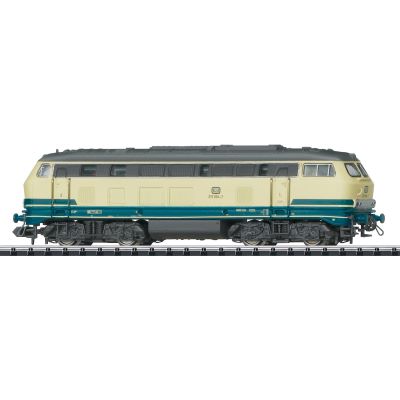
One example in N gauge is the Minitrix 16254 N diesel locomotive 215 064-7, DB, Era IV, DC-MFX sound. The class 215 fits perfectly with Bundesbahn diesel scenes of Era IV. It is suitable for local passenger trains, semi-fast trains, freight trains and mixed operating scenes on non-electrified main and branch lines.
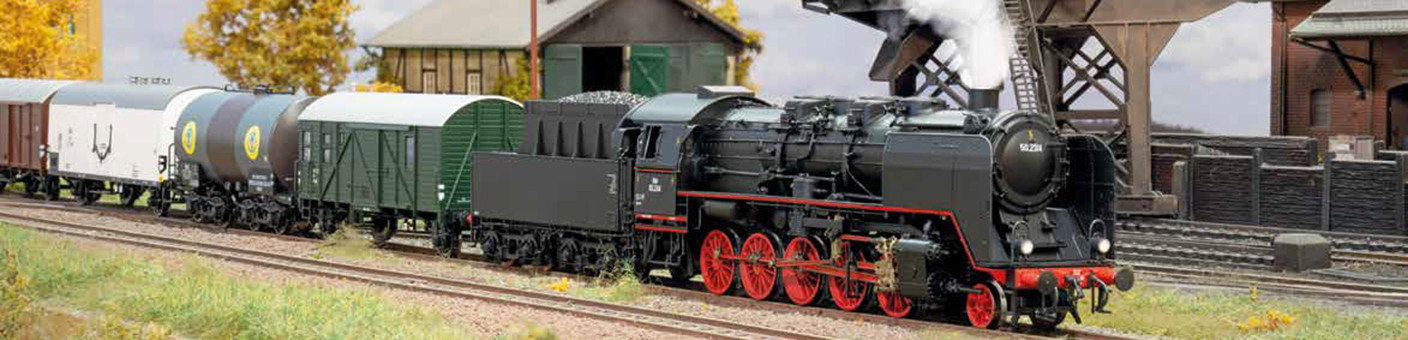
Steam locomotive fans also get their money’s worth in N gauge. Models such as DB steam locomotives of classes 001, 043, 055, 065 or 086 allow believable scenes from the late steam era. Rebuilt coaches, short passenger coaches, covered freight wagons, tank wagons and small railway depots with coal bunkers, water cranes and engine sheds fit well with this.
TT Gauge – the Balanced Middle Ground
TT gauge in 1:120 scale sits between N and H0. It offers more visible detail than N gauge, but requires less space than H0. This makes it very suitable for model railway enthusiasts who want longer trains while still enjoying good model presence. Although TT is traditionally strongly associated with East German railway themes, there are also interesting DB models. Freight trains, steam locomotives, luggage vans and passenger coaches of Era III are especially appealing.
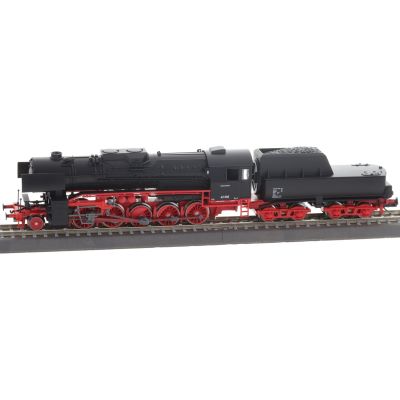
A suitable example is the Tillig 02061 TT steam locomotive BR 42, DB, Era III. This heavy freight steam locomotive fits perfectly with coal trains, mixed freight trains and railway depot scenes. Combined with TT freight wagons, luggage vans and branch line buildings, it creates a believable Bundesbahn world in a compact scale.
TT gauge is especially interesting for layouts that seek a compromise between space requirement and detail. A small station with a goods track, engine shed, loading road and passing loop can be implemented well in TT without requiring too much room. At the same time, locomotives and wagons are large enough for lettering, running gear and typical construction features to be recognised clearly.
H0 Gauge – the Classic for DB Model Railways
H0 in 1:87 scale is the most widely used model railway size and is especially strong for Deutsche Bundesbahn themes. The range is very large: steam locomotives, diesel locomotives, electric locomotives, railcars, passenger coaches, freight wagons, starter sets, digital models, sound models, buildings, signals, figures, cars, platforms and accessories are available in great variety. Anyone who wants to build a DB layout will find the largest selection in H0 and can represent almost any era and operating style.
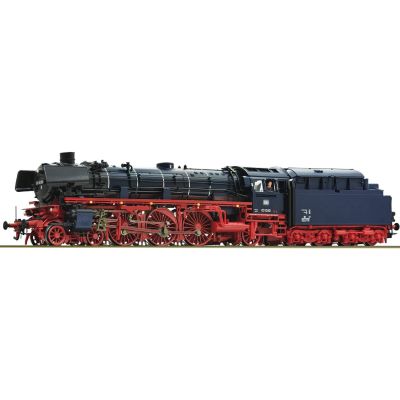
For Era III, steam locomotives, green passenger coaches, rebuilt coaches, freight wagons and early diesel and electric locomotives are suitable. One example is the Roco 70030 H0 steam locomotive BR 03.10, DB, Era III. This express steam locomotive is suitable for high-quality passenger trains and brings the elegant Bundesbahn period of the 1950s to the layout.
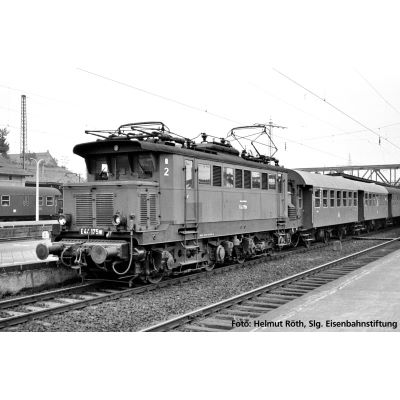
H0 electric locomotives such as the PIKO 51190 H0 electric locomotive BR E44 W, DB, Era III are equally typical. Such models fit electrified main and branch lines, semi-fast trains, short passenger trains and freight trains. For Era IV, BR 103, BR 110, BR 140, BR 141, BR 151, BR 218, Silberlinge coaches and Intercity coaches are especially important.
Why H0 Is So Popular for DB Layouts
H0 combines good detail with a still manageable space requirement. Vehicles are large enough for pipes, vents, handrails, bogies and lettering to be clearly visible. At the same time, stations, hidden yards, shunting areas and landscapes can still be planned sensibly in H0. For beginners, H0 is particularly attractive because many manufacturers offer suitable starter sets, track systems and extensions.
H0e and H0m – Narrow Gauge with a Bundesbahn Connection
The Deutsche Bundesbahn was mainly a standard-gauge railway, but narrow-gauge themes can also be represented with a DB connection. One especially well-known example is the Wangerooge Island Railway, which belonged to the Bundesbahn and was operated on metre gauge. Such motifs are interesting for H0m. Narrow-gauge railways can also be integrated into a DB layout as connecting railways, museum lines or private railways. This creates varied transitions between standard gauge and narrow gauge, for example with a transshipment hall, luggage traffic, a small workshop and ferry connection.
Anyone who wants to combine narrow-gauge themes with the Bundesbahn will find suitable basics under narrow-gauge railways. Small terminus stations, island railways, holiday traffic, luggage vans and short passenger trains are especially appealing.
0 Gauge – Large Bundesbahn Models with Strong Impact
0 gauge in 1:45 scale is significantly larger than H0 and is suitable for model railway enthusiasts who value detail, weight, sound and intensive shunting operation. Even a few vehicles create a strong effect in 0 gauge. A small terminus with a run-around loop, goods shed and engine shed is enough to represent realistic Bundesbahn operation. Köf, V 60, V 100, rail buses, Silberlinge coaches, short freight wagons and branch line locomotives are especially popular.
An example from DB local traffic is the Lenz 41193-03 0 gauge driving trailer BDnf 740, 2nd class with luggage compartment, DB, Era IV. Silberlinge are among the best-known Bundesbahn coaches of all. In 0 gauge, they look especially realistic thanks to their size, typical stainless-steel appearance and distinctive door arrangement.
Gauge 1 – Premium Scale for Collectors and Operators
Gauge 1 in 1:32 scale is a large, high-quality scale for demanding collectors and operating enthusiasts. DB locomotives in Gauge 1 often have metal bodies, extensive digital functions, sound, switchable lighting and many separately applied details. A single locomotive can already be the centrepiece of a collection. At the same time, Gauge 1 is suitable for modular layouts, exhibitions and spacious home layouts.
One example of a large DB model is the Märklin 55604 Gauge 1 electric locomotive BR 160, DB, Era IV, DC-MFX sound. Such models appeal to model railway enthusiasts who want to combine technical equipment, prototype accuracy and impressive size. In Gauge 1, even short trains have a very strong presence.
G Gauge and Garden Railway – Deutsche Bundesbahn in a Large Outdoor Scale
G gauge is especially popular in the garden railway sector. It uses 45 mm track gauge and is ideal for robust models, outdoor layouts and large radii. DB vehicles in G gauge bring Bundesbahn flair to the garden or to spacious indoor layouts. Steam locomotives, short passenger coaches, freight wagons and shunting motifs fit particularly well. The vehicles are large, highly visible and can also look very impressive in a natural environment with plants, stones, bridges and tunnels.
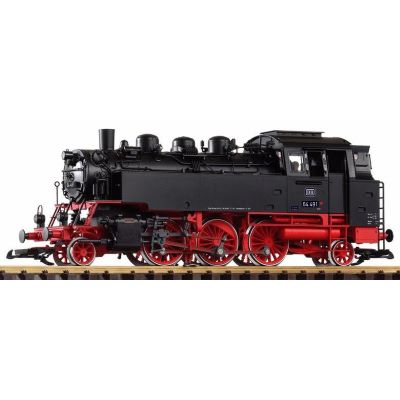
A suitable example is the PIKO 37210 G steam locomotive BR 64, DB, Era III, incl. steam. The BR 64 is a classic tank locomotive for branch lines and short passenger trains. In G gauge, it looks especially lively and is ideal for garden railway scenes with Bundesbahn character. Further suitable themes can be found under garden railway.
Suitable DB Models and Manufacturers at Modellbahnshop
Many manufacturers offer suitable models for the Deutsche Bundesbahn. Particularly important are Roco, PIKO, Märklin, Fleischmann, Minitrix, Tillig and Lenz. Depending on gauge and theme, the ranges, technical equipment and target groups differ. Roco and PIKO are strong in H0, Fleischmann and Minitrix offer many N models, Tillig is especially important for TT, Lenz stands for 0 gauge, and Märklin is strong in H0, Z and Gauge 1.
Which DB Trains Fit Together?
Passenger Trains of Era III
Short passenger trains with steam locomotives are especially typical for a DB layout of Era III. A BR 64, BR 86, BR 38.10 or BR 50 can haul two to four rebuilt coaches, Donnerbüchsen or semi-fast coaches. On branch lines, the rail bus also fits perfectly. It was a symbol of rural passenger transport and is ideal for small stations, halts and single-track lines.
Freight Trains of the Bundesbahn
Freight traffic was a central part of the Deutsche Bundesbahn. Covered wagons, open freight wagons, stake wagons, tank wagons, refrigerator wagons, sliding-wall wagons and container wagons allow many operating sequences. A freight train can transport coal, timber, general cargo, machinery, food, fuel or building materials. Suitable ideas can also be found under freight train. Shunting operation is especially exciting: wagons are delivered, collected, rearranged and distributed to industrial sidings.
Typical Train Formations
- BR 64 with two rebuilt coaches and a luggage van for a branch line
- V 100 with three Silberlinge coaches for Era IV local traffic
- BR 103 with Intercity coaches for an electrified main line
- BR 50 or BR 42 with a mixed freight train for Era III
- BR 218 with semi-fast coaches or local passenger coaches on non-electrified lines
- V 60 or Köf with short freight wagons in a marshalling yard
Designing a DB Layout
A believable Bundesbahn layout lives from many details. These include station buildings, platforms, goods sheds, loading roads, signal technology, overhead lines, road vehicles, figures and typical advertising signs. In Era III, subdued colours, classic railway architecture, semaphore signals and many steam locomotive details often dominate. A railway depot with turntable, engine shed, coal bunker, water crane and sanding facility fits this period perfectly.
DB Branch Line
The branch line is one of the most attractive themes for Bundesbahn fans. It does not require much space and offers varied operation. A small station with a passing loop, goods shed, loading road and level crossing is already enough. In the morning a passenger train runs, later a freight train arrives to serve the siding, at midday a rail bus shuttles back and forth, and in the evening an empty wagon is collected. Such operating sequences make even small layouts lively.
DB Main Line
A main line shows the powerful side of the Bundesbahn. Express trains, Intercity services, long freight trains and local passenger trains run here. Main lines are especially attractive in H0, N and Z because longer train formations can be represented. Overhead lines, block signals, large platforms and a hidden yard increase realism. Long trains can be shown especially well in N or Z gauge, while H0 offers more visible detail.
DB Railway Depot
A railway depot is ideal for anyone who collects and wants to present locomotives. In Era III, steam engine sheds, turntables, coal, water, ash pits and workshops are part of the scene. In Era IV, diesel and electric locomotives may dominate. Fuel points, inspection pits, stabling tracks and workshop buildings then fit very well. A railway depot combines prototype accuracy, collecting passion and varied shunting operation.
Which Gauge Is Right for the Deutsche Bundesbahn?
The suitable gauge depends on space, budget, desired level of detail and layout idea. Anyone with little room can choose Z or N gauge. Anyone looking for a large range and many design possibilities will usually choose H0. TT is worth considering if a good compromise between size and space requirement is desired. Those who love large models and enjoy shunting will find great pleasure in 0 gauge. Collectors and fans of high-quality large models choose Gauge 1. Garden railway enthusiasts choose G gauge.
Gauge Comparison
| Gauge | Scale | Strength for DB Layouts | Typical DB Themes |
|---|---|---|---|
| Z | 1:220 | Very space-saving | Long routes, display cases, compact main lines |
| N | 1:160 | Long trains in limited space | Intercity, freight trains, branch lines, hidden yards |
| TT | 1:120 | Good middle ground | Steam, freight traffic, small and medium-sized layouts |
| H0 | 1:87 | Largest range | Almost all DB themes from Era III to Era IV |
| H0m / H0e | 1:87 | Narrow-gauge special themes | Island railway, connecting railway, branch line, museum operation |
| 0 | 1:45 | Strong detail impact | Shunting, branch line, Silberlinge, short freight trains |
| 1 | 1:32 | Premium size | Collector models, sound locomotives, modular layouts |
| G | approx. 1:22.5 to 1:29 | Robust and suitable for outdoor use | Garden railway, branch line, large steam locomotive motifs |
Frequently Asked Questions about Deutsche Bundesbahn in Model Form
Which gauge is best for DB beginners?
For many beginners, H0 is the best choice because it offers the largest selection of vehicles, tracks, buildings and accessories. Anyone with little space should consider N gauge. TT is interesting when a balanced size is desired. 0 gauge, Gauge 1 and G gauge are ideal when large models and strong detail are more important than low space requirements.
Which DB era is the most popular?
Era III and Era IV are especially popular. Era III shows the classic Bundesbahn with steam locomotives, green coaches, V 100, V 200 and early electric locomotives. Era IV brings computer numbers, Silberlinge coaches, Intercity trains, BR 103, BR 218, container traffic and modern colour concepts.
What is the difference between DB and DB AG?
In model form, DB usually stands for the Deutsche Bundesbahn up to the end of 1993. DB AG refers to Deutsche Bahn AG from 1994 onwards. For a historically coherent layout, lettering, logos, colours and running numbers should match the chosen period.
Which locomotives are typical of the Deutsche Bundesbahn?
Typical DB locomotives include steam locomotives such as BR 01, BR 03.10, BR 38, BR 50, BR 64 and BR 86; diesel locomotives such as V 60, V 100, V 160, BR 215, BR 216, BR 218 and V 200; and electric locomotives such as E 10, E 40, E 41, E 44, E 94, BR 103, BR 110, BR 140 and BR 151.
Which coaches and wagons fit DB branch lines?
Rebuilt coaches, Donnerbüchsen, short semi-fast coaches, Silberlinge, luggage vans, covered freight wagons, open wagons and short tank wagons are suitable for DB branch lines. Depending on the era, steam locomotives, V 100, rail buses or BR 218 fit well with them.
How do you build a believable DB layout?
A believable DB layout is created through a clear era, suitable vehicles and realistic operating locations. A station needs meaningful tracks, a goods shed requires shunting possibilities, and a railway depot should suit the locomotives in use. Details such as signals, platform lamps, figures, vehicles and signage make the scene lively.