Modellbahn Keks
Welcome!
Our cookies offer you a fast, relaxed and full-featured shopping experience. Some are necessary to operate the website and its functions. Others help us to improve our services. If you agree to this, simply consent to the use of cookies for preferences, statistics and marketing by clicking on "OK". Alternatively, you can deactivate individual cookies under "Customise cookies" or all cookies, except those required for the function of our website, under "Reject all".
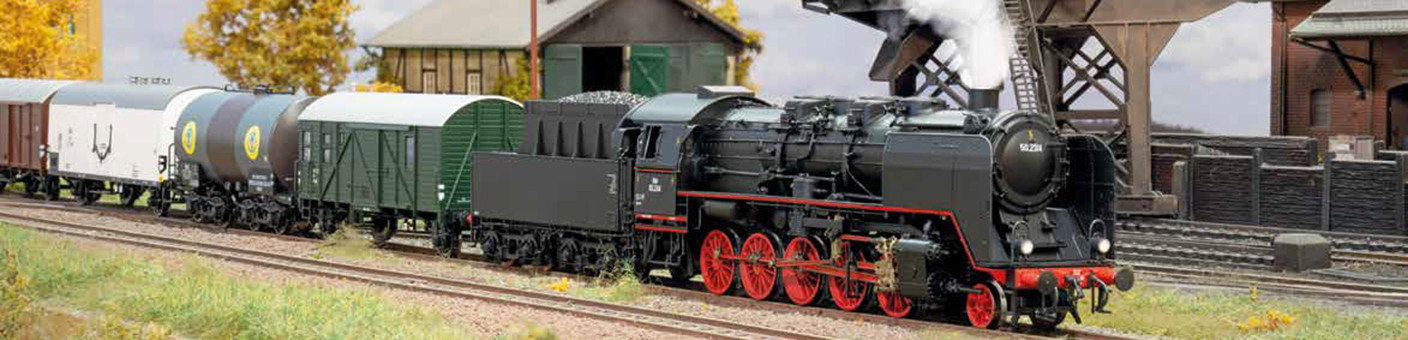
Deutsche Bundesbahn model railway with locomotives, coaches, tracks and scenery
West German railway classics

Deutsche Bundesbahn DB Model Railway

Steam locomotives, V 100 and V 200 diesel power, Class 103, Silberling coaches, TEE and InterCity trains: the Deutsche Bundesbahn offers one of the most varied railway worlds for model layouts covering Era III and Era IV.

West German railway classics

What Does Deutsche Bundesbahn Mean on a Model Railway?

The Deutsche Bundesbahn, usually abbreviated to DB, was the state railway of the Federal Republic of Germany from 1949 until the end of 1993. For model railway enthusiasts, this period mainly covers Era III and Era IV. It begins with a railway still strongly shaped by steam locomotives and pre-war rolling stock and ends with a modern Bundesbahn featuring InterCity services, S-Bahn trains, electrified main lines, container traffic and powerful diesel and electric locomotives.

This transformation makes the Deutsche Bundesbahn particularly versatile as a model railway theme. On a layout representing the 1950s or 1960s, steam locomotives can operate alongside new diesel and electric locomotives. Small stations can still have goods sheds, loading roads, semaphore signals and general cargo traffic. Railbuses serve branch lines while express trains pass on the main line.

The picture changes considerably during the 1970s and 1980s. Computerised running numbers, Silberling coaches, TEE and InterCity trains, ocean-blue and ivory liveries, Class 103 and Class 218 become defining themes. Shunting, freight operation and older vehicle types nevertheless remain part of everyday railway life.

It is important to distinguish the historic Deutsche Bundesbahn from Deutsche Bahn AG. Models carrying classic Bundesbahn markings generally represent the period up to the end of 1993. From 1994 onwards, the DB AG period begins with Era V.

Two particularly versatile model railway worlds

Era III or Era IV of the Deutsche Bundesbahn?

Both eras offer excellent opportunities for model railway layouts. The most important decision is not which era is “better”, but which atmosphere you prefer: the classic post-war railway with extensive steam operation or the more colourful and modernised Bundesbahn of the 1970s and 1980s.

III

Era III · 1949–1970

Reconstruction and Major Changes in Traction

The early Deutsche Bundesbahn inherited numerous steam locomotives and coaches while simultaneously introducing new diesel and electric locomotives. Three forms of traction can therefore appear side by side, making Era III especially varied.

Typical Vehicles

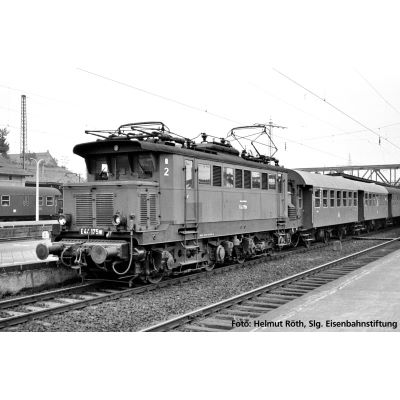
Classes 01, 03, 38, 44, 50, 64 and 86; V 60, V 80, V 100, V 160 and V 200; E 10, E 40, E 41, E 44 and E 94; VT 98 railbuses; conversion coaches, Donnerbüchse coaches and green passenger coaches.

Practical Layout Tip

A small station with a steam locomotive, V 100, two or three passenger coaches, general cargo facilities and an industrial siding already represents a complete Bundesbahn operating scene.

IV

Era IV · Bundesbahn of the 1970s and 1980s

InterCity, Computer Numbers and New Colours

Internationally standardised running numbers changed many class designations. E 10 became Class 110, for example, while V 200 became Class 220. New colour schemes appeared and high-quality clock-face long-distance services became increasingly important.

Typical Vehicles

Classes 103, 110, 111, 140, 141, 150 and 151; Classes 211, 212, 215, 216, 218, 220 and 221; Silberling coaches and push-pull trains; TEE, express and InterCity coaches; container, tank and sliding-wall wagons.

Practical Layout Tip

A Class 103 with an InterCity and a Class 218 with Silberling coaches create two very different train formations that can nevertheless operate convincingly on the same Era IV layout.

DB Does Not Automatically Mean DB AG

When buying a model, check the era, running number, logo and livery together. Deutsche Bundesbahn vehicles belong to the period up to the end of 1993. For railway reform, later ICE services, Interregio trains, traffic-red vehicles and the modern railway world, Era V and Era VI provide the better historical framework.

From steam trains to InterCity

Which Locomotives Belong to the Classic DB?

The Deutsche Bundesbahn is particularly attractive for collectors who want to operate very different forms of traction. Many classes changed their designation, colour scheme or operating role during their service life.

1

Steam Locomotives

Era III and Early Era IV

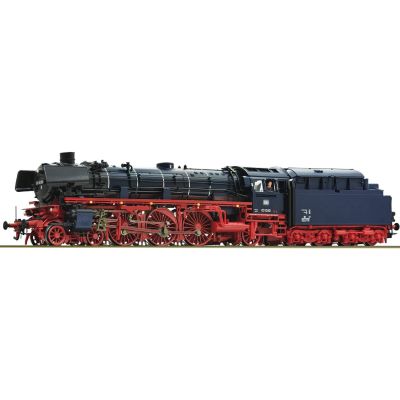
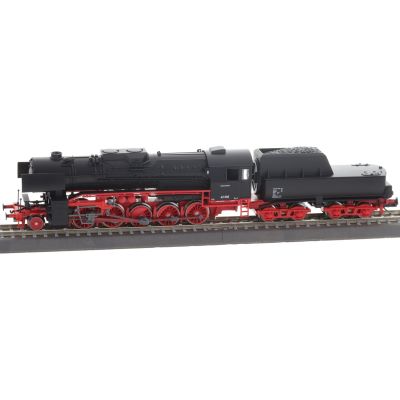
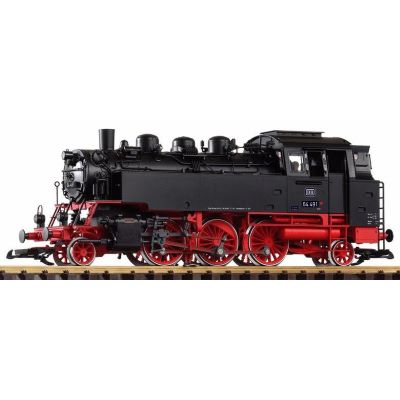
Classes 01 and 03 represent express services, while Classes 44 and 50 are classic freight locomotives. Tank locomotives such as Classes 64 and 86 suit branch lines, local passenger traffic and shunting duties.

2

Diesel Locomotives

From Shunting Duties to Main-Line Operation

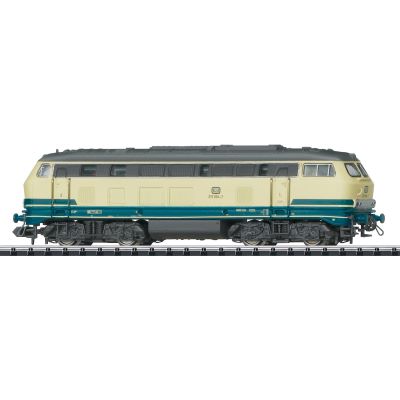
V 60, V 100 and V 200 are among the best-known Bundesbahn diesel locomotives. Later, Classes 211, 212, 215, 216 and especially 218 shaped numerous non-electrified routes.

3

Electric Locomotives

From Standard Electric Designs to Class 103

E 10, E 40 and E 41 represent the early electric Bundesbahn. Following the introduction of computer numbers, Classes 110, 140 and 141 appeared. Class 103 eventually became a symbol of fast TEE and InterCity services.

4

Railcars and Railbuses

Ideal for Compact Layouts

A railbus does not require a long train of coaches and is therefore ideal for compact branch lines. Small halts, rural stations and shuttle services allow convincing operation even where layout space is limited.

Combine locomotives and rolling stock correctly

Typical Bundesbahn Trains for a Model Railway

A convincing train does not consist of a famous locomotive alone. Coach type, era, operating region and train length should suit the chosen layout theme. Even short formations can look highly prototypical.

1960s DB Branch Line

Class 64, Class 86 or V 100 with two to four conversion or local passenger coaches. A short freight train and a railbus add further operating variety.

Silberling Push-Pull Train

V 100, Class 211 or Class 212, alternatively a suitable electric locomotive, with n-coaches and a driving trailer. Suitable for both branch lines and larger main lines.

Class 103 with InterCity

The classic formation for fast Era IV Bundesbahn services. Red-and-beige or later passenger coaches, long platforms and overhead catenary create a typical main-line scene.

Class 218 on a Diesel Route

Class 218 with Silberling, semi-fast or express coaches is ideal for larger branch lines and non-electrified main routes.

Mixed DB Freight Train

Class 50, V 100, V 200 or later diesel and electric locomotives with covered wagons, open wagons, stake wagons, tank wagons and refrigerated vehicles.

Shunting at the Goods Shed

Köf or V 60 with a few short wagons requires little space and creates intensive operation. A loading road, ramp, goods shed and industrial siding add realistic shunting tasks.

DB models from Z to G

Which Gauge Is Suitable for a Bundesbahn Layout?

Deutsche Bundesbahn models are available in many popular scales. The ideal gauge depends primarily on available space, desired train length, level of detail and preferred type of operation.

Gauge Scale Strength Suitable DB Themes
Z 1:220 Extremely low space requirements Main line, express trains and extensive scenery
N 1:160 Long trains in a small area InterCity, Class 218, freight traffic and main lines
TT 1:120 Good compromise between size and space Steam, Silberling coaches, branch lines and freight trains
H0 1:87 Particularly large product range Almost every Deutsche Bundesbahn theme
H0m 1:87 Metre-gauge specialist themes Island railways and specialist branch-line themes
0 approx. 1:45 Detail and intensive shunting V 100, Köf, Silberling coaches and goods yards
1 1:32 Large collector and operating models Locomotives, sound and modular layouts
G model-dependent Large, robust models Steam and branch-line themes
Brands with classic DB models

Manufacturers for Deutsche Bundesbahn

Manufacturers complement one another depending on the gauge. H0 provides an especially broad range, Fleischmann and Minitrix cover many N-gauge themes, Tillig offers TT models and Lenz specialises in large 0-gauge Bundesbahn models.

Plan according to the prototype

Which Bundesbahn Layout Suits the Available Space?

Not every DB layout requires a large main station. The Bundesbahn period is particularly suitable for compact operating concepts. A single-track branch line requires comparatively little track but still offers passenger, freight and shunting operation.

1

Small DB Branch Line

A station with passing loop, goods shed and industrial siding. V 100, railbus or Class 64 provide varied operation while keeping the track plan manageable.

2

Bundesbahn Main Line

Double-track line with overhead catenary, express trains, Class 103, local traffic and passing freight trains.

3

Era IV Diesel Railway

Class 218, Silberling coaches, a small town station and a goods siding create a clear theme without the complexity of overhead catenary.

4

Shunting and Goods Yard

Köf or V 60, loading road, ramp and several industrial sidings provide intensive operation on a comparatively small area.

Long Express and InterCity Trains Need Usable Length

Anyone who wants to operate long express and InterCity formations needs sufficient platform and storage length. N or Z gauge offers a clear space advantage. In H0, a section of a main line can be modelled while trains disappear into a hidden yard before reappearing later.

Bundesbahn knowledge in brief

Frequently Asked Questions About the Deutsche Bundesbahn in Model Form

Important answers about eras, gauges, vehicle selection, train formations and the distinction between DB and DB AG.

What Does DB Mean on a Classic Model Railway?

On historic models, DB generally refers to the Deutsche Bundesbahn of the Federal Republic of Germany from 1949 until the end of 1993. Era III and Era IV are particularly important for model railway layouts.

What Is the Difference Between DB and DB AG?

The Deutsche Bundesbahn existed until the end of 1993. Deutsche Bahn AG was established on 1 January 1994. DB AG markings, later ICE generations and traffic-red vehicles therefore mainly belong to Era V or Era VI.

Which Era Is Typical of the Deutsche Bundesbahn?

Era III and Era IV are particularly typical. Era III represents reconstruction and the transition from steam to diesel and electric traction. Era IV represents computerised running numbers, Silberling coaches, InterCity services, Class 103, Class 218 and modernised freight traffic.

Which Locomotives Are Typical DB Classics?

Typical classes include 01, 03, 44, 50 and 64 steam locomotives; V 60, V 100 and V 200 diesel locomotives; E 10, E 40 and E 44 electric locomotives; and later Classes 103, 110, 140, 151 and 218.

Which Coaches Suit a V 100?

Depending on the period, conversion coaches, Silberling coaches, semi-fast coaches and short local passenger coaches are suitable. In freight traffic, a V 100 can also work transfer trains with covered, open, stake or tank wagons.

Which Locomotive Suits Silberling Coaches?

Particularly well-known combinations use V 100, Classes 211 and 212 or Class 218. Suitable electric locomotives can also be used on electrified lines. The year represented and the precise coach design remain important.

Which Gauge Offers the Largest DB Selection?

H0 offers a particularly large range of Bundesbahn vehicles and accessories. N is ideal for long express and freight trains, TT offers a good compromise between model size and space requirements, while 0 and Gauge 1 focus more strongly on detail.

Which Bundesbahn Layout Requires Little Space?

A branch line with a short station, railbus or V 100 works particularly well. A shunting module with Köf or V 60, goods shed and industrial siding also provides extensive operation on a small area.

Can Era III and Era IV Be Operated Together?

Yes, if the layout represents a specific transition period. Many older vehicles remained in service after the introduction of new numbering systems and colour schemes. For a believable appearance, lettering and vehicle condition should still match the year represented.

What Belongs on a Believable DB Layout Besides Trains?

Stations, platforms, goods sheds, loading roads, signals, level crossings, overhead catenary, locomotive servicing facilities, road vehicles, figures and period-appropriate signage are just as important as locomotives and rolling stock.

From the Bundesbahn to a Complete Model Railway Project

Explore gauges, railway eras, prototypical train formations, track planning, digital technology and layout construction in the central Modellbahnshop guide.

Open the Model Railway Guide