
Diesel locos H0


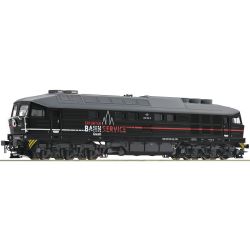


Are you looking for an H0 diesel locomotive that brings strong traction, modern railway variety and realistic operating power to your model railway layout?
Then this category is exactly the right place: with suitable diesel locos H0, H0 diesel locomotives, digital diesel locomotives, sound diesel locos, AC diesel locomotives, DC diesel locomotives, DB diesel engines, DR diesel locomotives, private railway diesel locos, main line diesel locomotives, shunting locomotives and US diesel locomotives, you can create powerful and flexible railway operation in 1:87 scale.
Why are Diesel locos H0 so versatile?
Diesel locos H0 can be used for passenger trains, freight trains, shunting, construction trains and modern private railway traffic. They fit small branch lines, large stations, industrial sidings and contemporary main line scenes.
What belongs to the Diesel locos H0 category?
This category includes shunting diesel locomotives, main line diesel locomotives, diesel-hydraulic locomotives, diesel-electric locomotives, construction train locomotives, private railway locomotives, AC models, DC models, digital versions and sound-equipped diesel locos.
Why start with a shunting diesel locomotive?
A shunting diesel locomotive is perfect for yards, industrial tracks, depots and wagon sorting. Compact models such as Köf-style, V 60-style or small works locomotives create realistic operation even on smaller layouts.
When should you choose a main line diesel locomotive?
A main line diesel locomotive is ideal for longer passenger trains, heavy freight trains and regional services. It is a strong choice when your layout includes through traffic, larger stations or long freight consists.
Why are freight diesel locomotives useful?
Freight diesel locomotives are ideal for container trains, tank wagons, coal trains, construction trains and mixed goods service. They add operating purpose to sidings, loading tracks and industrial areas.
Why choose a passenger diesel locomotive?
A passenger diesel locomotive fits regional trains, express services on non-electrified routes and push-pull traffic. Models such as BR 218, V 160 or similar diesel classes are especially useful for station scenes.
What makes construction train diesel locos interesting?
Construction train diesel locos bring modern railway maintenance and work-train operation to the layout. They look convincing with ballast wagons, crane wagons, flat wagons and yellow maintenance vehicles.
Why are private railway diesel locomotives popular?
Private railway diesel locomotives add colourful liveries, modern freight traffic and regional variety. They are ideal for Era V and Era VI layouts with logistics, leasing companies and industrial operators.
Which railway administrations are important?
Important themes include DB, DB AG, DR, CSD, CD, DSB, FS, MAV, NS, ÖBB/BBÖ, PKP, SNCF, SBB, SNCB, US-Rail and many private railways. This variety makes H0 diesel locomotives suitable for German, European and international layouts.
Why choose a DB H0 diesel locomotive?
A DB H0 diesel locomotive fits West German diesel operation, regional trains, freight yards and classic Era III to Era IV layouts. It combines well with passenger coaches, Silberlinge, freight wagons and depot scenes.
Why choose a DR H0 diesel locomotive?
A DR H0 diesel locomotive is ideal for East German layouts with heavy freight, branch line service and strong diesel classes such as BR 118, BR 119, BR 120 or BR 132. It fits Era III and Era IV railway operation especially well.
Why are DB AG diesel locomotives useful?
DB AG diesel locomotives are suitable for modern regional trains, infrastructure trains, freight operation and red traffic-era themes. They work well in Era V and Era VI settings with contemporary stations and road vehicles.
Why are US diesel locomotives H0 attractive?
US diesel locomotives H0 bring long trains, powerful road engines and impressive modern freight traffic to the layout. They are especially interesting for fans of ES44AC-style locomotives, heritage liveries and American railroad themes.
Which eras are important for H0 diesel locos?
H0 diesel locomotives are especially strong from Era III to Era VI. Early diesel prototypes can appear in Era II, while modern private railway and international diesel locomotives dominate Era V and Era VI.
Typical H0 diesel locomotive types at a glance
What is the difference between AC and DC diesel locos?
DC diesel locomotives are normally used on two-rail layouts, while AC diesel locomotives are used on three-rail systems. The locomotive must match your track system, digital central and power supply.
When should you choose an analogue H0 diesel locomotive?
An analogue H0 diesel locomotive is suitable for classic transformer-controlled layouts. It is a good choice when simple operation and robust running are more important than sound or digital functions.
Why choose a digital H0 diesel locomotive?
A digital H0 diesel locomotive allows individual control of speed, direction, lights and additional functions. It is ideal for layouts with several trains, routes, hidden yards or computer-supported operation.
What does a sound H0 diesel locomotive add?
A sound H0 diesel locomotive adds engine start, idle, acceleration, horn, compressor, brake squeal and shunting sounds. Diesel sound makes station departures, freight work and slow-speed operation much more immersive.
Why is load-controlled sound useful?
Load-controlled sound makes the engine noise react more naturally to acceleration, braking and train load. This is especially effective with heavy freight trains and long passenger sets.
Why is mfx important for some diesel locos?
mfx is useful for compatible Märklin digital systems because it can simplify locomotive registration and function handling. It is especially relevant for AC digital locomotives and Märklin or Trix models with advanced sound features.
Why is DCC important?
DCC is one of the most widely used digital standards for two-rail model railways. A DCC diesel locomotive is a flexible choice for many H0 digital layouts.
Why is motor control important?
Good motor control allows smooth starting, steady low-speed shunting and realistic braking. This is especially important for diesel locomotives that work in yards, stations and industrial areas.
Why is pulling power important?
Pulling power decides how many coaches or wagons the locomotive can haul reliably. Heavy freight trains, gradients and long consists need strong motors, good traction and suitable weight.
Why is minimum radius important?
The minimum radius tells you whether the locomotive can run safely through your layout curves. Long six-axle diesel locomotives usually need more generous curves than compact shunters.
Why are lighting functions important?
Lighting functions such as headlights, tail lights, cab lights, shunting lights and destination displays make diesel locomotives more realistic. Digital versions often offer more flexible light control than analogue models.
Why are digital couplings useful?
Digital couplings allow hands-free uncoupling during shunting. They are especially practical in freight yards, depots and industrial sidings where wagons are moved frequently.
How do H0 diesel locos improve freight yards?
H0 diesel locos make freight yards more operational because they can switch wagons, build trains and serve loading tracks. Shunting locomotives and medium main line diesels are perfect for this task.
How do H0 diesel locos improve passenger operation?
Diesel locomotives can pull regional trains, local passenger coaches, express trains on non-electrified routes and special trains. They are ideal for layouts without overhead line equipment.
How do H0 diesel locos improve industrial scenes?
Industrial areas become more believable with diesel locomotives serving factories, ports, warehouses and construction sites. Private railway and works locomotives are especially suitable for these scenes.
How do H0 diesel locos improve modern layouts?
Modern layouts benefit from diesel locomotives in DB AG, private railway, logistics and infrastructure liveries. These models fit container terminals, construction trains, maintenance trains and regional traffic.
Can H0 diesel locomotives be used on small layouts?
Yes, compact shunting locomotives, small branch line diesels and short industrial locomotives are excellent for smaller layouts. Large six-axle locomotives need more track length and wider curves to look realistic.
Can H0 diesel locos be used with steam and electric locos?
Yes, diesel locomotives combine well with steam locomotives in transition-era layouts and with electric locomotives in modern mixed-traction layouts. They are very flexible for realistic railway operation.
Which passenger coaches match H0 diesel locomotives?
Regional coaches, Silberlinge, express coaches, double-deck coaches, push-pull sets and museum train coaches can all match diesel locomotives. The right choice depends on railway company, era and locomotive class.
Which freight wagons match H0 diesel locos?
Container wagons, tank wagons, open wagons, box wagons, flat wagons, ballast wagons and car transporters are suitable partners. Private railway diesels look especially convincing with modern freight and logistics wagons.
Which accessories match Diesel locos H0?
Useful accessories include diesel fuel stations, engine sheds, maintenance platforms, signals, buffer stops, freight loading details, railway staff and industrial buildings. These elements make the locomotive part of a complete operating scene.
Which brands are important for Diesel locos H0?
Important brands include Piko, Roco, Brawa, ESU, Märklin, Trix, Rivarossi, Jouef, Liliput, pmt, Tillig and Mehano. These brands offer analogue models, digital versions, sound locomotives, AC and DC variants, collector editions and international diesel themes.
Why are Piko H0 diesel locomotives popular?
Piko H0 diesel locomotives cover many DB, DR, DB AG, CSD, MAV, NS, FS and private railway themes. They are suitable for everyday layout operation, digital sound projects and modern freight scenes.
What makes Roco H0 diesel locomotives practical?
Roco H0 diesel locomotives are practical for detailed European prototypes, digital versions, AC and DC variants and realistic running characteristics. They are a strong choice for both passenger and freight operation.
Why choose Brawa H0 diesel locomotives?
Brawa H0 diesel locomotives are attractive for fine detailing, precise printing and collector-quality models. They are especially interesting for DR, DB and special railway themes with high visual standards.
What do Märklin and Trix diesel locos add?
Märklin diesel locomotives are important for AC and mfx operation, while Trix diesel locomotives serve many DC digital users. Both brands are useful for sound-equipped models, collector editions and system-based digital control.
Why are ESU diesel locomotives interesting?
ESU diesel locomotives are known for strong digital function concepts, sound, lighting and interactive operating features. They are ideal when a locomotive should feel especially lively and technically advanced.
What should beginners consider before buying?
Beginners should first check AC or DC system, analogue or digital operation, minimum radius and matching wagons or coaches. A medium-sized diesel or compact shunting locomotive is often the easiest start.
What should collectors consider?
Collectors should pay attention to railway company, era, locomotive number, livery, sound version, edition and detail level. A matching train set can make the locomotive more attractive as a display theme.
What should digital modellers consider?
Digital modellers should check DCC, mfx, sound functions, lighting options, digital couplings and central compatibility. The locomotive should match both the operating system and the desired function depth.
What should layout builders consider?
Layout builders should check length over buffers, curve radius, pulling power, platform length and train purpose. The best diesel locomotive is one that fits the track plan and the layout story.
What should you check before buying Diesel locos H0?
Before buying, check railway company, era, AC or DC system, analogue or digital version, sound, minimum radius, couplings, lighting, pulling power and matching rolling stock. Also consider whether the locomotive should handle shunting, passenger trains, heavy freight, construction trains, private railway traffic or collector display.
Strong category terms such as Diesel locos H0, H0 diesel locomotives, model railway diesel locomotive H0, model train diesel loco H0, digital H0 diesel locomotive, sound diesel locomotive, AC diesel locomotive, DC diesel locomotive, DB diesel locomotive H0, DR diesel locomotive H0, private railway diesel locomotive, Piko H0 diesel locomotive, Roco H0 diesel locomotive, Brawa diesel locomotive and Märklin diesel loco are naturally relevant to this category.
Additional related terms such as BR 218, BR 216, V 160, V 100, BR 232, BR 132, BR 118, Vossloh G6, Class 66, ES44AC, diesel shunter, main line diesel, freight locomotive, regional diesel, diesel depot, fuel station, digital sound, mfx, DCC, Era III, Era IV, Era V and Era VI support a clear and search-friendly product context.
Selection guide for H0 diesel locomotives
Buy Diesel locos H0 for powerful and flexible railway operation
Whether you need a Piko H0 diesel locomotive, Roco diesel loco, Brawa diesel locomotive, Märklin diesel engine, Trix sound diesel loco, DB diesel locomotive, DR diesel locomotive, private railway diesel loco, AC diesel locomotive, DC diesel locomotive or detailed collector model: the right H0 diesel locomotive gives your layout strong operational variety.
With carefully selected H0 diesel locos, you can create realistic shunting scenes, regional passenger trains, heavy freight traffic, diesel depots, construction trains, private railway services, international freight corridors and modern logistics layouts. This makes Diesel locos H0 one of the most flexible locomotive categories for turning a model railway into a lively, powerful and believable miniature railway world.