
Freight cars TT


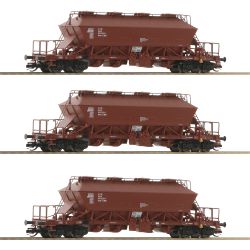


Are you looking for TT freight cars that make your goods trains more realistic, varied and operationally exciting?
Then this category is exactly the right place: with suitable Freight cars TT, TT freight wagons, covered goods wagons TT, open goods wagons TT, tank wagons TT, container wagons TT, flat wagons TT, stake wagons TT, sliding wall wagons TT, refrigerated wagons TT, silo wagons TT, heavy-duty wagons TT, self-unloading wagons TT, DR freight wagons, DB freight cars, DB AG freight wagons, Tillig TT freight cars, Piko TT freight wagons, Roco TT freight cars and igra TT tank wagons, you can create convincing freight traffic in 1:120 scale.
Why are Freight cars TT so important?
Freight cars TT give your railway layout real operating purpose. They make stations, sidings, factories, loading tracks, yards and main lines feel active and believable.
What belongs to the Freight cars TT category?
This category includes covered goods wagons, open wagons, tank wagons, container wagons, flat wagons, stake wagons, silo wagons, sliding wall wagons, refrigerated wagons, heavy-duty wagons, self-loading wagons and complete freight wagon sets.
Why start with a covered goods wagon TT?
A covered goods wagon TT is one of the most universal freight cars. It fits parcels, agricultural goods, packaged freight, general cargo and classic mixed goods trains.
When should you choose an open goods wagon TT?
An open goods wagon TT is ideal for coal, scrap, stone, machinery parts, timber or weather-resistant cargo. It is especially useful for DR, DB, industrial and construction scenes.
Why are tank wagons TT popular?
Tank wagons TT create realistic chemical, fuel, oil and industrial transport. They fit GATX, VTG, Wascosa, Nacco, refinery, fuel depot and Era V or Era VI freight themes.
Why choose a container wagon TT?
A container wagon TT is perfect for modern intermodal freight traffic. It fits logistics terminals, industrial areas, international freight corridors and contemporary DB AG or private railway layouts.
What makes flat wagons TT useful?
Flat wagons TT can carry vehicles, machinery, containers, steel, timber or construction loads. They are flexible freight wagons for both classic and modern railway themes.
Why are stake wagons TT attractive?
Stake wagons TT are ideal for timber, pipes, steel profiles and long loads. They add visible cargo variety and make freight trains look more purposeful.
Why are sliding wall wagons TT practical?
Sliding wall wagons TT are typical for protected modern freight transport. They fit pallet goods, paper transport, retail logistics and international goods traffic.
Why are sliding roof wagons useful?
Sliding roof wagons are useful when freight must be loaded from above but still protected from weather. They fit steel, coils, industrial goods and modern freight yards.
Why choose a refrigerated wagon TT?
A refrigerated wagon TT is ideal for food, beer, meat, dairy and temperature-sensitive cargo. It works well in classic freight trains, brewery scenes and regional industrial traffic.
Why are silo wagons TT important?
Silo wagons TT transport cement, grain, powder, lime, chemicals and bulk materials. They are perfect for cement works, agriculture, chemical plants and industrial rail connections.
Why are self-unloading wagons TT useful?
Self-unloading wagons TT are ideal for bulk goods such as coal, gravel, ore or ballast. They make block trains and industrial loading scenes more realistic.
Why are heavy-duty wagons TT impressive?
Heavy-duty wagons TT carry machinery, transformers, steel parts, construction loads and special freight. They create strong visual highlights in industrial and DR freight scenes.
Why are car transporter wagons TT interesting?
Car transporter wagons TT bring road vehicles into rail freight operation. They are useful for automobile transport, modern logistics and factory loading scenes.
Which railway administrations are important?
Important themes include DR, DB, DB AG, DRG, CD, CSD, PKP, MAV, ÖBB/BBÖ, SBB, SNCF, GATX, Wascosa, private railways and historic K.Sächs.Sts.E.B. themes. This gives TT modellers many options for German, Czech, Polish, Hungarian, Swiss and modern European freight traffic.
Why choose DR freight wagons TT?
DR freight wagons TT are ideal for East German Era III and Era IV freight operation. Open wagons, silo wagons, refrigerated cars, heavy-duty wagons and covered goods wagons create authentic Reichsbahn atmosphere.
Why choose DB freight cars TT?
DB freight cars TT fit classic West German goods traffic and mixed freight trains. They work well with Era III and Era IV steam, diesel and electric locomotives.
Why are DB AG freight wagons TT useful?
DB AG freight wagons TT suit modern logistics, container traffic, sliding wall wagons, construction trains and intermodal freight. They are especially useful for Era V and Era VI layouts.
Why are CD and CSD freight wagons TT interesting?
CD and CSD freight wagons TT add Central European freight character to a layout. They are useful for Czech industrial scenes, cross-border goods trains and international wagon formations.
Why are private railway freight cars attractive?
Private railway freight cars add colourful liveries, leasing-company markings and modern freight variety. They fit block trains, tank wagon traffic, container routes and industrial operators.
Which eras are important for TT freight cars?
TT freight cars cover eras I to VI. Historic Saxon wagons and DRG cars suit early layouts, while tank wagons, container wagons, sliding wall cars and private railway wagons dominate modern Era V and Era VI scenes.
Typical TT freight car types at a glance
Why is cargo type important?
Cargo type decides which wagon makes sense in a train. Coal needs open wagons, liquid goods need tank wagons, containers need carrier wagons and cement needs silo wagons.
Why is era matching important?
Era matching keeps locomotives, freight cars, road vehicles, buildings and loading scenes consistent. A Saxon O3 wagon, a DR Era IV wagon and a modern GATX tank car each tell a different story.
Why are loads useful?
Loads make freight cars look active and purposeful. Coal, scrap, timber, containers, vehicles, crates, pipes and machinery turn empty wagons into realistic goods movements.
Why are weathered TT freight cars attractive?
Weathered TT freight cars look more realistic because real wagons often show dust, rust, brake marks and cargo traces. Weathering is especially effective on open wagons, tank cars and industrial freight stock.
Why are wagon sets practical?
Wagon sets help build a coherent train quickly. They are useful for DR open wagon sets, DB goods trains, modern container traffic and collector formations.
Why are short couplings important?
Short couplings reduce the distance between wagons and improve the appearance of TT freight trains. Reliable couplings are especially important for shunting and longer train formations.
Why is minimum radius important?
The minimum radius decides whether freight cars run safely through curves and turnouts. Long container wagons, heavy-duty wagons and car transporters usually need more generous track geometry.
How do TT freight cars improve freight yards?
TT freight cars make freight yards operationally interesting with sorting, loading, unloading and train formation. Different wagon types create realistic tasks for diesel or steam shunting locomotives.
How do TT freight wagons improve industrial scenes?
Industrial scenes become more believable when the right wagons serve the right buildings. Tank wagons fit refineries, silo wagons fit cement works and stake wagons fit timber loading.
How do TT freight cars improve branch lines?
Branch lines look authentic with short mixed goods trains, covered wagons, open wagons, refrigerated cars and agricultural freight. Small goods movements add purpose to rural stations.
How do TT freight cars improve modern layouts?
Modern layouts benefit from container wagons, sliding wall wagons, tank wagons, self-unloading wagons and private railway freight cars. These wagons create realistic logistics and international freight corridors.
Can TT freight cars be used with steam locomotives?
Yes, covered wagons, open wagons, refrigerated cars, early tank wagons and historic goods cars match TT steam locomotives very well. Era I to Era IV freight trains are especially atmospheric with steam traction.
Can TT freight cars be used with diesel locomotives?
Yes, diesel locomotives are perfect for shunting, industrial freight, branch lines and main line goods trains. They work well with mixed freight wagons, tank cars, container wagons and construction trains.
Can TT freight cars be used with electric locomotives?
Yes, electric locomotives are ideal for heavy freight, container traffic, steel trains and long block trains. Modern sliding wall wagons, tank wagons and intermodal cars match electric traction very well.
Which locomotives match Freight cars TT?
Matching locomotives include TT steam locomotives, diesel locomotives and electric locomotives from the same railway company and era. The best freight train combines locomotive class, wagon type, cargo and operating theme.
Which accessories match Freight cars TT?
Useful accessories include loading ramps, warehouses, cranes, container terminals, silos, fuel depots, factories, buffer stops, freight workers, pallets, barrels, crates, coal loads and timber stacks. These details make freight operation complete and believable.
Which brands are important for Freight cars TT?
Important brands include Tillig, igra, Piko, Roco, Busch, Hädl, Arnold, Karsei, NPE, pmt, Quack & Salber and Schirmer. These brands cover classic DR wagons, modern tank cars, container wagons, freight sets, historic Saxon wagons, detailed loads and special freight themes.
Why are Tillig TT freight cars popular?
Tillig TT freight cars are central to many TT layouts because the brand offers a wide range of classic and modern freight wagons. They are useful for DR, DB, DB AG, SBB, MAV, ÖBB, private railway and container traffic.
What makes Piko TT freight wagons practical?
Piko TT freight wagons are practical for DR, DB AG, chemical tank cars, silo wagons and modern freight themes. They are useful for both mixed goods trains and block train operation.
Why choose Roco TT freight cars?
Roco TT freight cars are useful for wagon sets, open goods wagons, sliding tarpaulin wagons and DR or DB AG freight traffic. They help build coherent train formations quickly.
Why are igra TT tank wagons interesting?
igra TT tank wagons are especially interesting for modern chemical and private railway freight. Zacens and Zacns tank wagons fit GATX, Nacco, Ermewa and other contemporary leasing themes.
What do Karsei and NPE add?
Karsei and NPE add heavy-duty wagons, special DR freight themes and distinctive loads. They are useful for industrial layouts, construction scenes and collector-oriented TT freight trains.
What should beginners consider before buying?
Beginners should start with a small mixed freight train that matches one locomotive and one era. A covered wagon, open wagon, tank wagon and flat wagon already create useful operating variety.
What should collectors consider?
Collectors should pay attention to brand, railway company, era, wagon number, load, livery, special edition and set completeness. Historic Saxon wagons, DR sets, tank wagons and special loads can be especially attractive.
What should layout builders consider?
Layout builders should choose freight cars that match the industries on the layout. A sawmill needs timber wagons, a refinery needs tank cars, a goods shed needs covered wagons and a terminal needs container wagons.
What should shunting fans consider?
Shunting fans should focus on shorter wagons, reliable couplings, varied cargo types and several loading points. This creates more realistic wagon exchange and daily freight movement.
What should you check before buying Freight cars TT?
Before buying, check railway company, era, wagon type, cargo, couplings, minimum radius, load, length, colour, weathering and matching locomotive. Also consider whether the cars should form a mixed freight train, block train, industrial train, construction train, container train or collector display.
Strong category terms such as Freight cars TT, TT freight cars, TT freight wagons, model railway freight cars TT, model train freight wagons TT, covered goods wagon TT, open goods wagon TT, tank wagon TT, container wagon TT, flat wagon TT, stake wagon TT, sliding wall wagon TT, refrigerated wagon TT, DR freight wagons TT, DB freight cars TT, Tillig TT freight cars, Piko TT freight wagons and Roco TT freight cars fit naturally into this product group.
Additional related terms such as G02, O3, Hbis-TT, Rs 689, Sgmmns, Lgklps, Zacens, Zacns, Faccs, Zk, Rlmmp, SSys, Sas 4850, Kaliwagen, Schiebeplanenwagen, Chemiekesselwagen, Zementsilowagen, Kühlwagen, Silowagen, Selbstentladewagen, Containertragwagen, GATX, Wascosa, VTG, Nacco, Ermewa, Era III, Era IV, Era V, Era VI and TT freight traffic strengthen the category context.
Selection guide for TT freight cars
Buy Freight cars TT for realistic goods trains
Whether you need Tillig TT freight cars, Piko TT freight wagons, Roco freight car sets, igra tank wagons, Arnold refrigerated wagons, Karsei heavy-duty wagons, NPE special wagons, DR goods wagons, DB freight cars, DB AG container wagons, GATX tank cars, Wascosa wagons, covered goods wagons, open wagons, silo wagons or complete freight wagon sets: the right TT freight cars give your railway realistic goods movement and operational depth.
With carefully selected TT freight cars, you can create mixed goods trains, block trains, container traffic, chemical transport, timber trains, construction trains, refrigerated goods traffic, cement transport, heavy industry scenes and detailed freight yards. This makes Freight cars TT one of the most important rolling-stock categories for turning a compact model railway into a busy and believable miniature freight network.