LokSound
Driving, functions, sound and prototypical operating sequences.

Which functions should the next decoder generation provide? How could a future ECoS be improved? Which compact sound decoders are still missing for TT, N or Z gauge? And which H0 locomotive would be a suitable next Engineering Edition model? This page collects specific ideas while clearly separating wishes from confirmed ESU new products for 2027.
ESU New Products 2027: Wishes, Decoders & Digital Control is not currently a preview of an already published annual programme. As of 30 August 2026, no complete regular ESU new-product programme for model year 2027 has been published. The page therefore makes it clear which subjects are merely wish-list ideas and which products may later become confirmed new releases.
An important ESU development can emerge in very different product worlds. A next LokSound or LokPilot generation could be just as relevant as a smaller SwitchPilot, an enhanced ECoS, new LokProgrammer hardware, an especially compact Nano decoder or a technically sophisticated H0 locomotive from the Engineering Edition.
Useful developments solve a specific problem. Examples include reduced installation space, easier function mapping, better diagnostics, more reliable power buffering, simpler backups, more convenient wireless control and better coordinated combinations of decoder, interface, loudspeaker and energy storage.
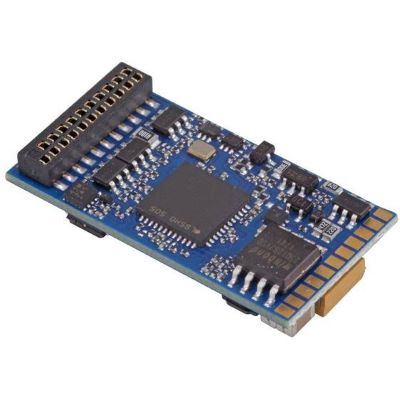
Driving, functions, sound and prototypical operating sequences.
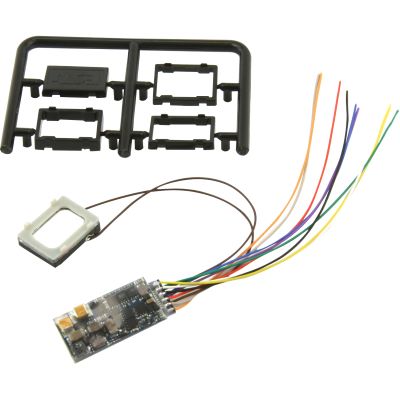
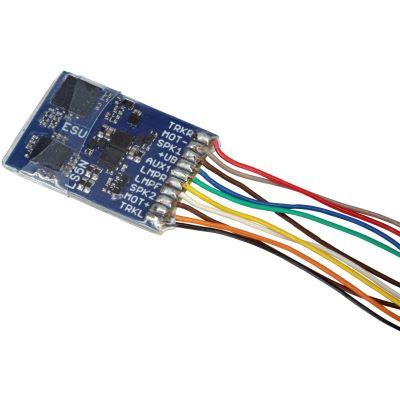
Locomotive decoders without integrated sound for numerous interfaces.
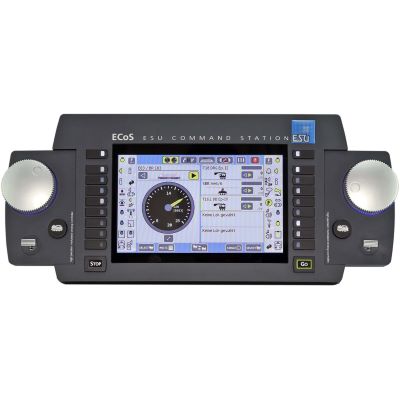
Multiprotocol command station for vehicles, turnouts and feedback.
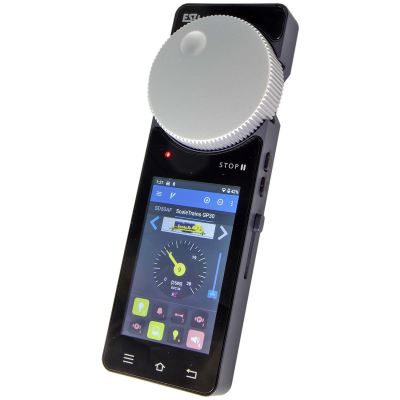
Wireless operation with a display and physical speed controller.
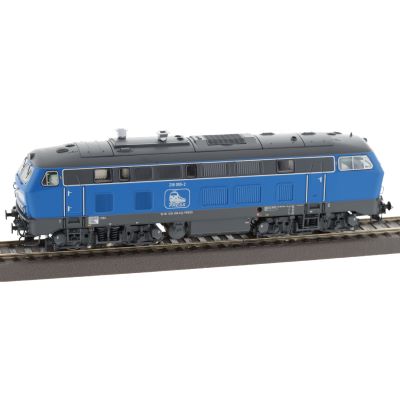
H0 vehicles demonstrating advanced digital functions.
The following suggestions are neither product announcements nor confirmed technical specifications. Interesting ideas can be saved locally in the browser and automatically included later in a personal wish message.
Faster hardware, clearer backups and more flexible network functions could further develop the central layout controller.
USB-C, up-to-date hardware and broader support for modern operating systems would be valuable for digital workshops.
Easier sound mapping, greater project reserves and convenient migration of existing projects would be important objectives.
Motor control, diagnostics, automatic calibration and function mapping could become even easier to understand.
An especially compact decoder with short integrated energy storage could improve reliable operation in small vehicles.
A solution developed for extremely confined vehicles could make additional digital conversions possible in Z gauge.
A compact design, status information and diagnostics would be particularly useful in hard-to-reach areas of a layout.
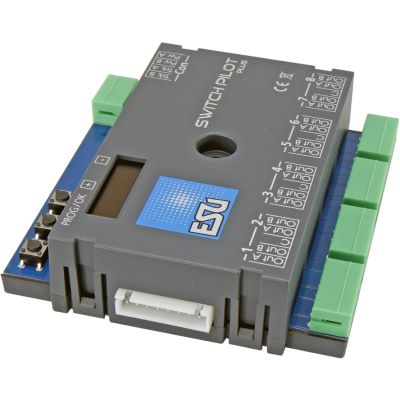
Templates for signal aspects and more direct configuration could simplify the construction of complex signalling systems.
Profiles, backups and locomotive data could be exchanged more conveniently between several control devices.
Common decoder tasks performed directly on the command station would allow smaller adjustments without a separate workstation.
Position, address and vehicle status could be shown more clearly directly within the command station’s track diagram.
Rarer electric locomotives, branch-line railcars and industrial vehicles could receive additional recordings from real prototypes.
Digital couplings, PowerPack, lighting and finely controlled shunting would suit the ESU vehicle concept particularly well.
A modern shunting and transfer locomotive could demonstrate numerous lighting, sound and coupling functions.
A dual-mode locomotive could combine operating-mode changes, fans, sound, shunting functions and different lighting patterns.
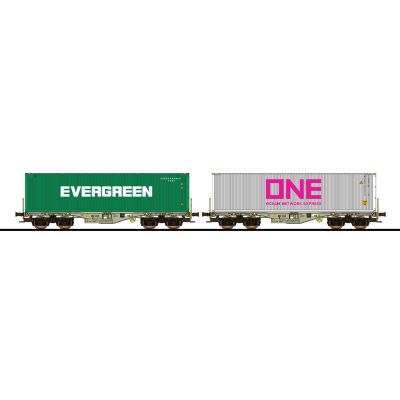
Pocket, building-material and specialist wagons could make complete modern H0 block trains possible using ESU models.
LokSound and LokPilot form a broad family for different vehicle sizes, power requirements, digital protocols and interfaces. A useful development should therefore solve specific installation and operating problems.
Classic H0 vehicles frequently provide 21MTC, PluX22 or eight-pin interfaces. TT and N gauge, by contrast, require compact Micro or Nano solutions with Next18, NEM 651, E24 or directly connected wires. In gauges 0, 1 and G, motor current, robust outputs and powerful audio amplifiers are more important than the smallest possible dimensions.
Miniaturisation is only useful when heat management, motor performance, function outputs, loudspeaker and power buffering continue to work reliably together. A coordinated system consisting of decoder, suitable loudspeaker, adapter and energy storage can therefore be more valuable than an isolated component.
Limited installation space, loudspeaker size and buffering determine whether a sound conversion is practical.
Coordinated Nano systems with clear connection planning.
Numerous interfaces and extensive function outputs require a clear relationship between decoder and vehicle circuit board.
Easier diagnostics and more transparent function mapping.
High motor current, powerful sound and robust connections take priority over the smallest possible dimensions.
Power reserves, buffering and durable large-scale outputs.
Modern model railway control no longer takes place at only one fixed operating position. Touchscreen, physical speed controller, Wi-Fi, network connection, feedback and computer control form one interconnected system.
Performance, backups, network functions and closer integration with decoder programming would be important development areas.
Profiles, locomotive lists and layout information could be synchronised even more easily between handheld controller and command station.
A DCC layout particularly benefits from reliable wireless operation, network functions and clearly structured expansion possibilities.
Sound projects, firmware and function mapping remain central tasks for workshops, conversions and individual vehicle setup.
ESU vehicles are associated with extensive sound, lighting and movement functions. Prototypes are particularly suitable when shunting, couplings, fans, smoke or different operating modes create a visible benefit.
Low-speed control, digital couplings and typical shunting sequences could make meaningful use of the available equipment.
A modern shunting locomotive would suit DB Cargo, private operators, industrial sidings and Era VI transfer trains.
Diesel and electric operation, fans, lighting patterns and shunting mode could enable numerous visible functions.
Vehicle decoders must match the size, current consumption and interface of the specific model. Command stations, handheld controllers, switching modules and many programming devices can be used across several gauges.
| Gauge | Typical ESU Application | Potential Wish for 2027 |
|---|---|---|
| H0 | LokSound, LokPilot, 21MTC, PluX22 and Engineering Edition | easier diagnostics and further high-end vehicles |
| TT | Nano and Micro decoders, Next18, NEM 651 and E24 | even more compact sound and buffer solutions |
| N | LokSound Nano, Micro decoders and small loudspeakers | sound and energy storage in minimal installation space |
| Z | especially demanding miniature digital conversions | an extremely small DCC solution with safe heat management |
| 0 | high-performance decoders and larger loudspeakers | more outputs and convenient fault diagnostics |
| 1 | large functional models with substantial power reserves | robust large-scale control and powerful audio amplifiers |
| G | LokSound XL, powerful sound and robust connections | high output power and reliable buffering |
| All | ECoS, Mobile Control, SwitchPilot and layout control | better networking and easier backups |
 Open the ESU Manufacturer Page →
ESU covers a large part of digital model railway operation. LokSound and LokPilot control vehicles, SwitchPilot and SignalPilot perform stationary tasks, LokProgrammer configures decoders, and ECoS or CabControl provide complete control systems.
This product world is complemented by loudspeakers, PowerPacks, adapters, interior lighting, test equipment, H0 locomotives and freight wagons. Wishes for 2027 may therefore concern individual components or complete coordinated systems.
Describe the decoder, command station, vehicle or accessory as specifically as possible. The form creates a prepared wish message. The email button then opens the email program configured on the visitor’s device.
A product card appears in this area only when an explicit 2027 new-product label is detected on a current product page.
Verification starts when this section approaches the viewport.
The finder combines selected current ESU products with products loaded directly from several English Modellbahnshop categories. Images are normalised to the 400-pixel shop version, availability text and prices are removed, and products identified as archived are excluded.
Current ESU categories will be loaded when this section approaches the viewport.
These answers explain the difference between wish-list ideas, the current range and products that may later be confirmed as official new releases.
As of 30 August 2026, no complete regular ESU new-product programme for model year 2027 has been published.
No corresponding official announcement was identified on the checked ESU pages. A next LokSound generation is presented on this page only as a wish idea. LokSound 5 remains central to the current range.
No corresponding official announcement was identified on the checked ESU pages. A next-generation ECoS is discussed here explicitly as a possible wish.
LokPilot controls the motor, lighting and additional functions without an integrated sound module. LokSound combines locomotive control and sound functions.
The range includes compact Micro and Nano versions. Installation space, interface and loudspeaker are especially important in TT and N gauge.
Larger vehicles frequently require more powerful L or XL solutions. Motor current, output rating and loudspeaker must match the specific model.
Depending on the product, DCC, Motorola, M4 and Selectrix may be supported. RailCom and RailComPlus also play a role in suitable systems.
LokProgrammer is used for convenient decoder configuration, firmware updates, function mapping and transferring suitable LokSound projects.
Suitable prototypes are those on which sound, lighting, digital couplings, fans, smoke or distinctive operating sequences provide a genuine benefit.
The form creates a prepared message to denis@korn.de. It can still be reviewed and edited in the email program that opens.
No. The page does not transmit a message in the background. The actual sending process is initiated only in the visitor’s email program.
Only an explicit label such as “New Product 2027”, “New Item 2027” or “News: 2027” results in inclusion in the official section.
No. When the checker recognises wording such as “archived”, “no longer in our range” or “product removed”, the affected product is rejected.
The current range serves as an inventory check. It shows which decoders, modules, interfaces and vehicles already exist and where a useful addition may still be missing.
A smaller sound decoder, a new command station, enhanced programmer hardware, a distinctive H0 vehicle or a new solution for turnouts and signals: describe your wish as specifically as possible.