Modellbahn Keks
Welcome!
Our cookies offer you a fast, relaxed and full-featured shopping experience. Some are necessary to operate the website and its functions. Others help us to improve our services. If you agree to this, simply consent to the use of cookies for preferences, statistics and marketing by clicking on "OK". Alternatively, you can deactivate individual cookies under "Customise cookies" or all cookies, except those required for the function of our website, under "Reject all".
H0 model railway for comparing H0 AC and H0 DC systems
Centre-contact and two-rail systems explained clearly

H0 AC or H0 DC? Model Railway Systems Compared

Both systems represent standard-gauge railways at a scale of 1:87 and use a model track gauge of 16.5 millimetres. Nevertheless, they differ in current collection, track systems, locomotives, wheelsets and some aspects of digital control. This overview helps with getting started, purchasing vehicles and changing systems.

The same scale with different electrical systems

What Do H0 AC and H0 DC Mean?

H0 initially describes only the model size. Standard-gauge H0 vehicles are produced at a scale of 1:87 and run on track with a model gauge of 16.5 millimetres. These dimensions apply to both H0 AC and H0 DC. H0 AC and H0 DC track therefore look similarly wide, but differ in their electrical construction.

H0 AC is used in model railway retail primarily for the Märklin-compatible centre-contact system. Stud contacts are positioned between the two running rails. A pickup shoe beneath the locomotive collects power from the centre conductor, while both outer rails together form the common return conductor.

H0 DC is used primarily for the two-rail system. One running rail forms one electrical pole and the other rail forms the opposite pole. Locomotives collect power through electrically insulated wheels. This principle is used by Roco, PIKO, Trix, BRAWA, Tillig, ACME, LS Models and numerous other manufacturers.

The terms AC and DC originate from traditional analogue alternating- current and direct-current layouts. On modern digital layouts, they are mainly practical retail classifications. The key purchasing criteria are therefore centre-contact or two-rail operation, compatible wheelsets, pickup shoes, decoders and command stations.

The two H0 system environments

Centre-Contact or Two-Rail: How Do the Systems Work?

Stud contacts, pickup shoes and common outer rails

H0 AC / Centre-Contact

On modern track, the centre conductor consists of a row of small stud contacts positioned between the running rails. A pickup shoe beneath the locomotive slides across these contacts. The two running rails are electrically connected and form the common return conductor.

Typical H0 AC components

  • Märklin C Track and K Track,
  • locomotives equipped with a centre pickup shoe,
  • AC wheelsets or non-insulated wheelsets,
  • digital control supporting mfx, Motorola or DCC,
  • contact-track feedback using an insulated outer rail.

In addition to Märklin, Roco, PIKO, BRAWA, ESU and other manufacturers offer selected locomotives in AC or centre-contact versions.

Discover the Märklin H0 System →
Electrically separated rails and insulated wheelsets

H0 DC / Two-Rail

In the two-rail system, the two running rails provide both guidance and electrical power. The wheels on each axle must therefore be electrically insulated from one another. DCC is the particularly widespread digital control format used on digital two-rail layouts.

Typical H0 DC components

  • PIKO A Track, Roco Line, Trix C Track and Tillig Elite,
  • locomotives without centre pickup shoes,
  • electrically insulated two-rail wheelsets,
  • DCC and, in some cases, multi-protocol decoders,
  • current-sensing track-occupancy detection.

The two-rail system offers a very large international selection of manufacturers and vehicles. Electrical polarity must, however, be considered when planning reversing loops and triangular junctions.

Discover the Trix H0 Two-Rail Range →
Technology and compatibility

H0 AC and H0 DC Compared Directly

Feature H0 AC / Centre-Contact H0 DC / Two-Rail What to Check Before Buying
Scale 1:87 1:87 Buildings, figures and road vehicles match both systems in terms of scale.
Model Track Gauge 16.5 mm 16.5 mm The same track width does not mean the same electrical system.
Current Collection Pickup shoe from the centre conductor and wheels from the outer rails. Wheels collect power separately from the left and right running rails. Locomotives must be purchased in the correct system version.
Track Stud-contact track such as Märklin C Track and K Track. Two-rail track such as Roco Line, PIKO A Track, Trix C Track or Tillig Elite. Do not select a track system solely by its rail profile height.
Wheelsets Often non-insulated and manufactured with adapted geometry. The wheels on each axle are electrically insulated. Replace coach or wagon wheelsets when required for reliable running or feedback.
Digital Protocols Commonly mfx, Motorola and DCC. Primarily DCC, with some support for mfx, Selectrix or multi-protocol operation. The command station and decoder must support at least one common protocol.
Reversing Loops Usually electrically simpler because both outer rails have the same electrical potential. Requires automatic or manual polarity switching. Include feedback and booster sections in the planning.
Occupancy Detection Contact track using an insulated outer rail or current-sensing detection. Frequently uses current sensing within the monitored section. Wheelsets and interior lighting affect occupancy detection.
Manufacturer Selection Focus on Märklin, supplemented by AC versions from other manufacturers. Very large international selection from numerous manufacturers. Not every model is produced in both versions.
Changing Systems The pickup shoe, wiring, wheelsets and decoder may all be affected. Motor connections, current collection and wheelsets must be adapted. Calculate the conversion effort before purchasing an existing collection.
A decision guide for beginners

Which H0 System Is Right for Your Layout?

Choose H0 AC

The centre-contact system is an obvious choice when Märklin locomotives, C Track, a Mobile Station or a Central Station are already available. Existing vehicles inherited from family members may also determine the decision.

Typical strength

A coordinated system environment, automatic mfx registration for compatible vehicles and electrically straightforward reversing loops.

Choose H0 DC

The two-rail system is suitable for modellers who prefer an especially large international vehicle selection, several track systems or prototypical track without visible centre studs.

Typical strength

A broad manufacturer selection, widespread DCC compatibility and numerous finely detailed track and vehicle ranges.

Test Before Deciding

Examine both types of track in person. Compare pickup-shoe noise, turnouts, the availability of favourite locomotives, digital command stations and future expansion costs.

Most important principle

Select the system according to the complete planned railway, not merely because one particular locomotive is inexpensive.

Locomotives, rolling stock and digital equipment

What Can Be Combined Between H0 AC and H0 DC?

Locomotives and Multiple Units

Powered vehicles are normally system-specific. An AC locomotive has a centre pickup shoe and often non-insulated wheelsets. A DC locomotive collects power separately through both sides of the vehicle. Neither should be operated on the other system without a suitable technical conversion.

Passenger Coaches and Freight Wagons

Many unlit coaches and wagons can mechanically roll on both track systems. Different wheelset dimensions may nevertheless cause problems on sensitive turnouts. Suitable AC or DC wheelsets are often advisable for reliable feedback or interior lighting.

Decoders and Digital Protocols

A decoder may understand several protocols, but it does not automatically resolve the mechanical differences in current collection. PluX22, 21MTC, Next18 and eight-pin interfaces describe only the connection between the vehicle circuit board and the decoder.

Buildings and Scenery

Stations, houses, figures, cars, trees, bridges and most scenery products at a scale of 1:87 can be used independently of the electrical system. Only powered accessories must match the intended voltage and control method.

Before converting a model: Check the wheel profile, axle insulation, pickup-shoe mounting, motor connections, circuit board, decoder, lighting and available installation space. A professional conversion may be safer than a complete do-it-yourself conversion for valuable or older collector models.
20 models from both H0 system environments

H0 AC and H0 DC Models at a Glance

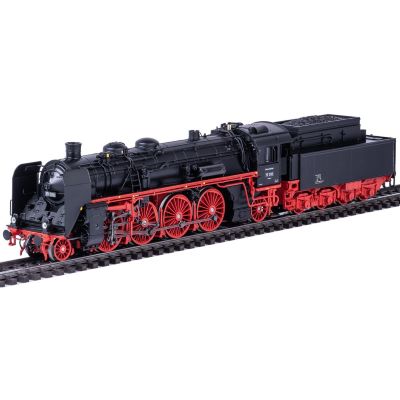
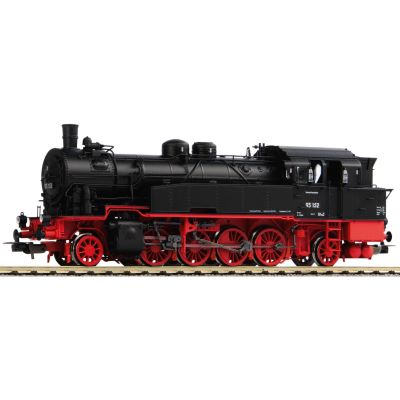
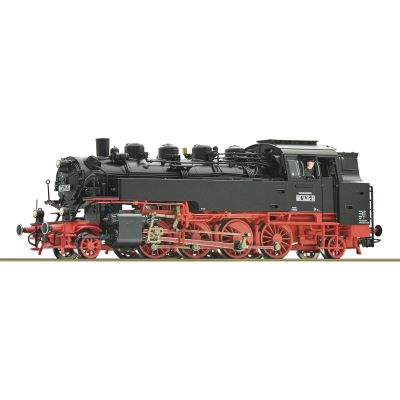
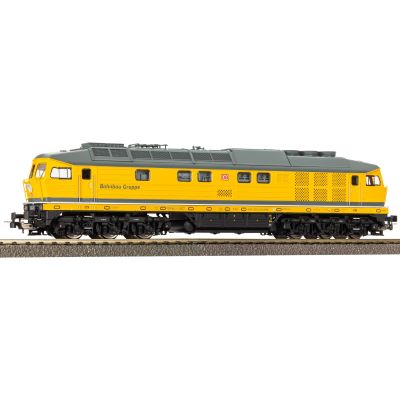
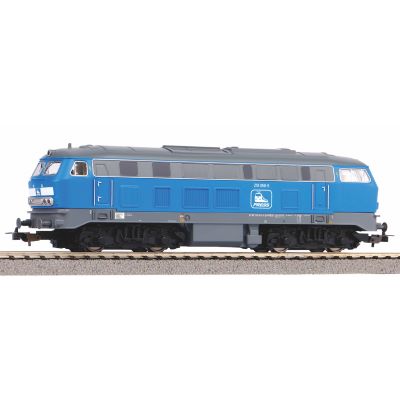
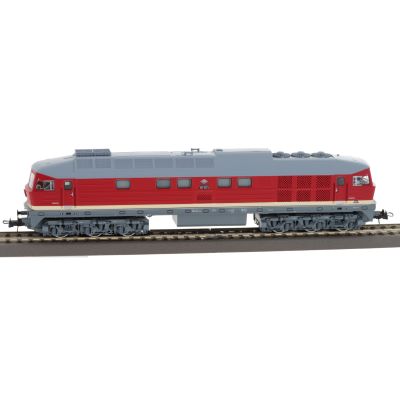
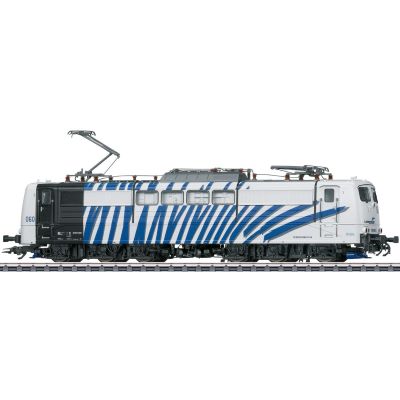
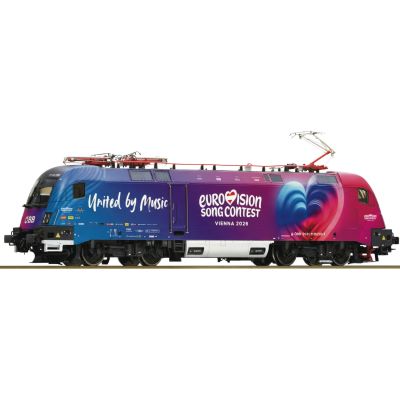
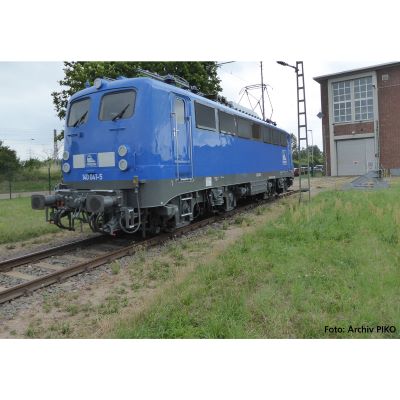
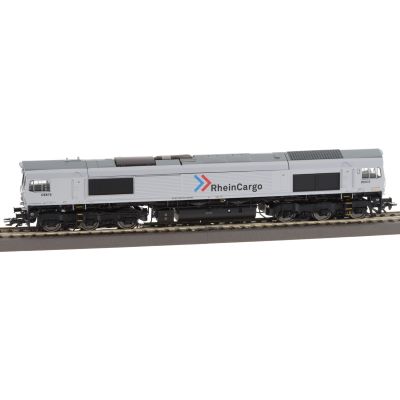
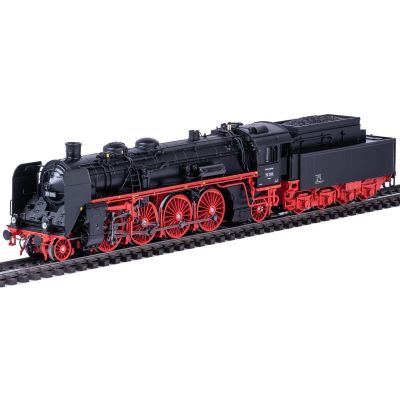
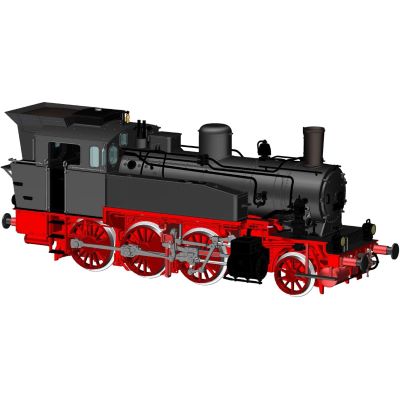
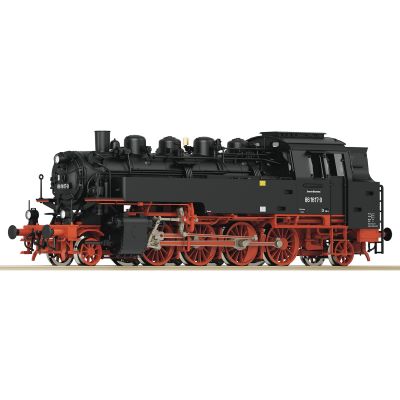
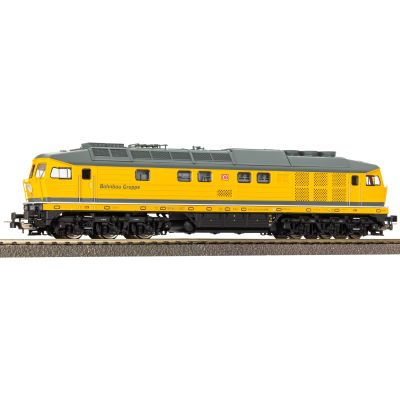
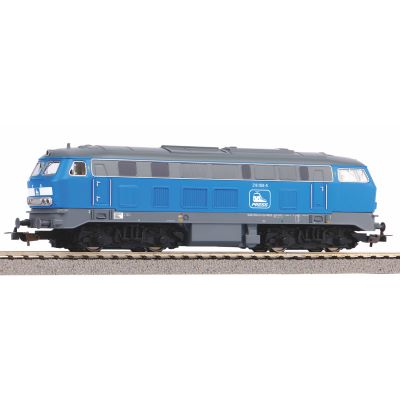
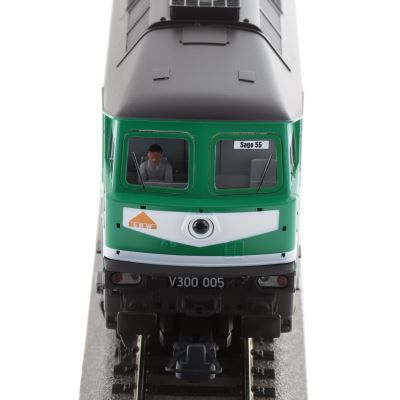
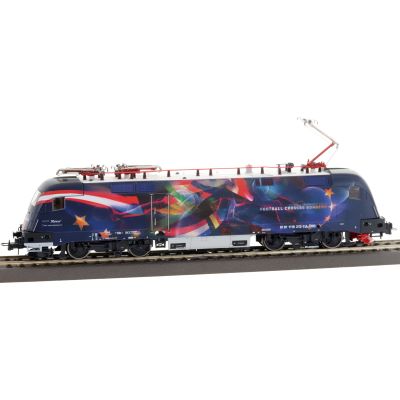
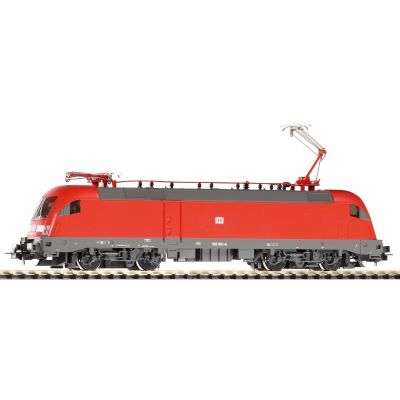
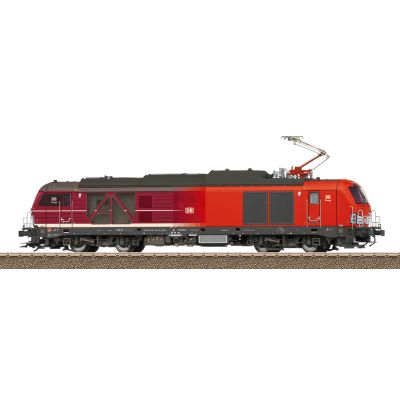
The selection includes steam locomotives, diesel locomotives, electric locomotives and multiple units from several railway eras. Each product page provides further information about the digital decoder, sound, minimum radius and lighting functions.

Questions and easy-to-understand answers

Frequently Asked Questions About H0 AC and H0 DC

Is H0 AC the Same as Märklin?

In model railway retail, H0 AC normally refers to the Märklin-compatible centre-contact system. Suitable AC models are also offered by Roco, PIKO, BRAWA, ESU and other manufacturers.

Is H0 DC Always Analogue?

No. H0 DC primarily describes the two-rail system. It can be operated using analogue direct voltage or digitally, normally with DCC. Numerous H0 DC locomotives are supplied with digital or sound decoders already installed.

Can an H0 DC Locomotive Run on Märklin Track?

Normally not without conversion. The locomotive lacks the centre pickup shoe and the required internal wiring. Wheelsets, the decoder and electrical connections may also require modification.

Can a Märklin Locomotive Run on H0 DC Track?

Not without extensive conversion. A Märklin locomotive collects power through the centre pickup shoe and both outer rails. Two-rail operation would require insulated wheelsets and modified current collection.

Can H0 Coaches and Wagons Run on Both Systems?

Many unlit vehicles can generally roll on both systems. For optimum running through turnouts, reliable occupancy detection or interior lighting, replacing the wheelsets may nevertheless be necessary.

Which Is Better: H0 AC or H0 DC?

Both systems are capable. H0 AC offers a coordinated Märklin system environment and straightforward reversing loops. H0 DC provides an especially large international manufacturer selection and numerous prototypical track systems.

Which System Is Better for Beginners?

A complete starter set provides a good introduction to either system. Existing vehicles within the family, preferred manufacturers, the desired digital command station and future expansion plans should determine the decision.

Can DCC Be Used on an H0 AC Layout?

Yes, provided the command station and vehicle decoder support DCC. The digital protocol must be considered separately from the mechanical method of current collection. A centre-contact locomotive still requires a pickup shoe.

Can mfx Be Used on a Two-Rail Layout?

Certain Trix and multi-protocol models support mfx in addition to DCC. Whether all functions and automatic registration are available depends on the decoder and command station being used.

Is It Worth Changing from H0 AC to H0 DC or Vice Versa?

A complete change is normally worthwhile only when relatively few vehicles are already available or when a clearly defined new layout concept is planned. With large collections, converting individual vehicles or operating separate layout areas may be more economical.

From the Electrical System to a Complete H0 Layout

Discover further information about starter sets, analogue and digital control, track systems, decoders, model railway gauges, railway eras, layout planning and scenery construction.

Open the Main Guide