The H0 Nominal Size Emerges
The smaller scale makes complete home layouts possible while retaining clearly visible railway models and operating detail.

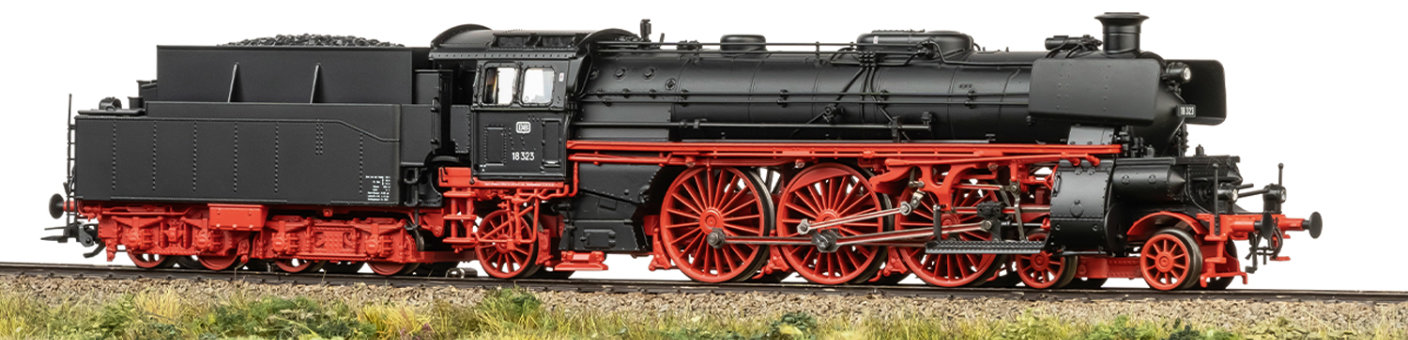
Märklin H0 combines robust metal models, the established centre-contact system, modular C Track and K Track, automatic mfx locomotive registration and an extensive range of steam, diesel and electric locomotives, coaches, wagons, starter sets and layout technology.
Märklin H0 has been one of the best-known model railway systems for generations. The nominal size H0 reproduces the prototype railway at a scale of 1:87 and uses a model track gauge of 16.5 millimetres.
The defining technical feature is the centre-contact system. Small stud contacts in the centre of the track supply power to a pickup shoe below the locomotive. The two running rails form the common return conductor.
This electrical principle is used by Märklin C Track, K Track and the historic M Track. Vehicles must be suitable for the centre-contact system and equipped with the correct current pickup and compatible wheelsets.
Modern digital models generally use mfx or mfx+ decoders. Compatible command stations can register mfx locomotives automatically and control speed, lighting, sound and numerous special functions.
The Märklin H0 range includes locomotives and multiple units , passenger coaches , freight wagons , digital starter sets, track, turnouts, signals, overhead-line equipment and layout accessories.
H0 was introduced in the 1930s as approximately half the size of Gauge 0. Märklin recognised the potential of the more compact scale and presented an early H0 model in 1935.
The smaller scale makes complete home layouts possible while retaining clearly visible railway models and operating detail.
Märklin enters the new nominal size and becomes closely associated with the development of H0 model railways.
Durable models, metal construction and the independent centre-contact system establish Märklin H0 in many households.
mfx decoders, sound, lighting, digital turnouts, feedback and graphical command stations expand the traditional system.
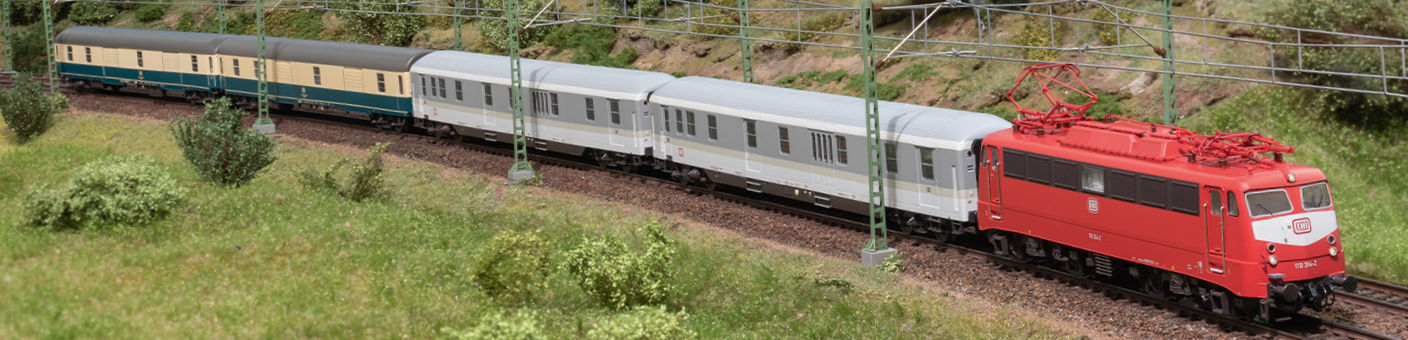
Märklin H0 combines a mechanically robust track concept with centre-contact current collection and digital control designed for independent locomotive operation.
Standard-gauge prototypes use 16.5 mm model track and provide a balance between detail and manageable space requirements.
Stud contacts supply the locomotive through a pickup shoe; both outer rails form the common return conductor.
Compatible locomotives register automatically and provide individually controllable driving, light and sound functions.
Many locomotives use substantial metal components alongside finely detailed plastic and separately fitted parts.
The centre studs are connected to one electrical pole. A pickup shoe below the locomotive collects this current. The wheelsets return the current through both running rails.
mfx supports automatic registration with compatible Märklin digital command stations. Locomotive names and available functions can be transferred directly to the controller.
All three systems use the Märklin H0 centre conductor, but their roadbed, connections, geometry and preferred layout applications differ.
Dimensionally stable track with an integrated plastic roadbed and concealed mechanical and electrical click connections.
Centre-contact track without a fixed roadbed. Flexible track and separate ballasting support more individual route design.
Classic metal track with a sheet-metal roadbed. It remains important for historic layouts and existing collections but is no longer the current main system.
| Track System | Construction | Typical Use | Planning Priority |
|---|---|---|---|
| C Track | Integrated plastic roadbed with concealed click connections | Starter sets, temporary railways and permanent layouts | Select radii, turnout geometry and later expansion sets |
| K Track | Track without fixed roadbed, including flexible track | Individually ballasted and detailed permanent layouts | Plan the track base, ballast and transition geometry |
| M Track | Historic metal track with sheet-metal roadbed | Classic layouts, collections and existing installations | Inspect condition and use appropriate transition sections |
Historical and modern vehicles can be combined with track, digital control, railway structures and technical accessories to create an expandable system layout.
Steam, diesel and electric locomotives, railcars and modern multiple units represent German and international prototypes.
Explore Locomotives →Passenger coaches, freight wagons and complete train packs allow prototypical formations from different railway eras.
Explore Passenger Coaches →Coordinated sets combine a locomotive, rolling stock, C Track, a power supply and beginner-friendly digital control.
Explore Digital Starter Sets →Mobile Station and Central Station systems can control locomotives, functions, turnouts, signals and routes.
Explore Digital Command Stations →Turnouts, track extensions, turntables and connection equipment expand the initial circuit into stations and depots.
Explore Track Construction →Spare parts, cleaning products, lighting and technical accessories support reliable long-term operation.
Open Maintenance Guidance →Search or filter the ten source-page examples. Some products may be historic, limited or no longer offered. The individual English product page provides the decisive current status.
10 product examples displayed
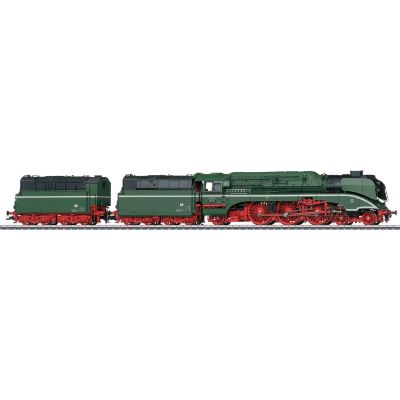
mfx+ sound locomotive with substantial metal construction, lighting and dynamic steam functions.
View Product →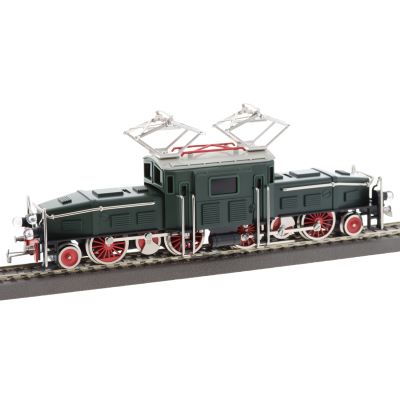
Limited replica of the historic 1936 prototype with an mfx decoder and certificate of authenticity.
View Product →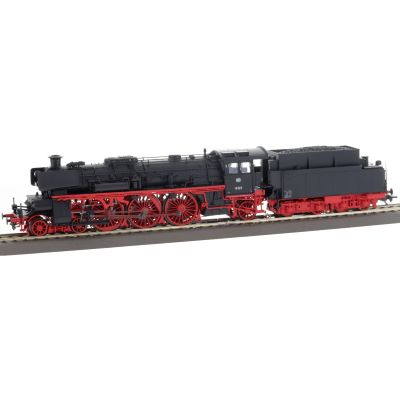
Express steam locomotive with mfx+ sound and detailed Deutsche Bundesbahn Era III appearance.
View Product →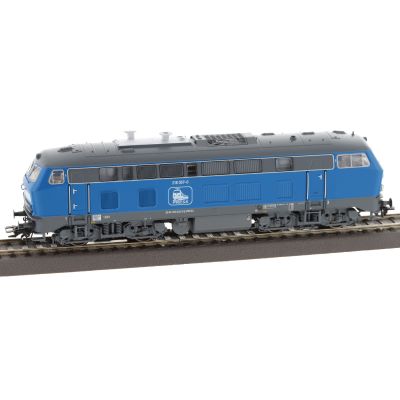
Modern PRESS diesel locomotive with mfx sound, high beam, cab lighting and engine-room lighting.
View Product →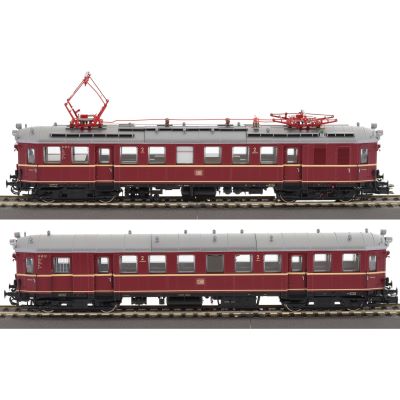
Historic electric multiple-unit set with mfx+ decoder, sound and detailed passenger-transport equipment.
View Product →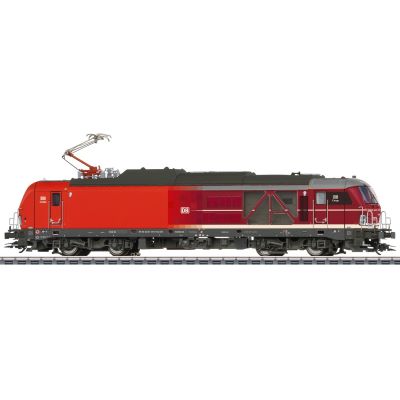
Modern Class 249 dual-mode locomotive with mfx+ sound, cab lighting and engine-room lighting.
View Product →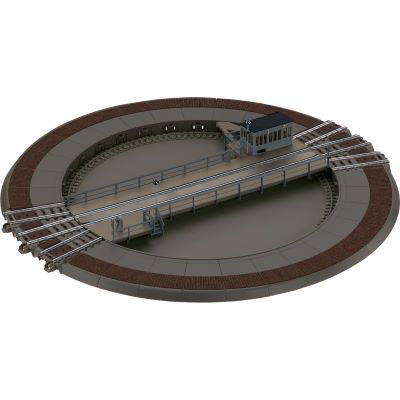
Motorised digital turntable for locomotive depots, roundhouses and realistic engine servicing.
View Product →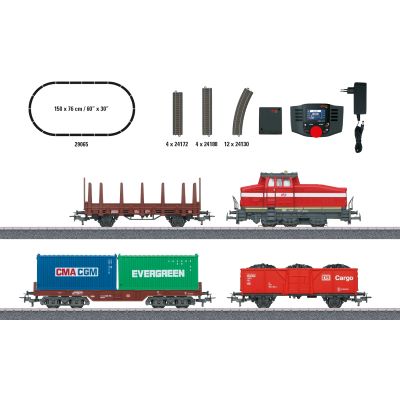
DHG 500 locomotive, three freight wagons, C Track, power supply and digital control equipment.
View Product →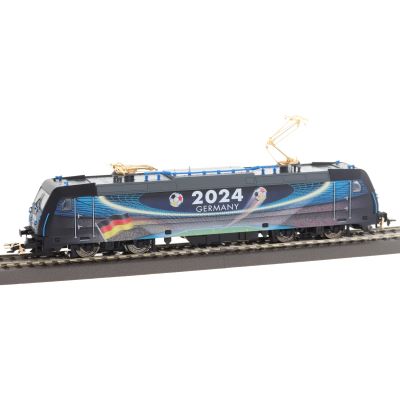
Class 185.2 electric locomotive with mfx sound, special decoration and a gold-coloured pantograph.
View Product →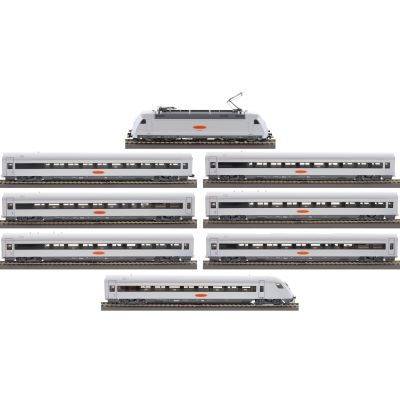
Limited train pack with a Class 101 locomotive and the distinctive silver Metropolitan passenger coaches.
View Product →
Märklin combines locomotives, rolling stock, C Track, K Track, starter sets, digital controllers and technical accessories within one coordinated centre-contact railway world.
The system is suitable for beginners who want a coordinated starter set, experienced operators building digital layouts and collectors interested in historical reproductions, special editions and detailed prototype models.
Limited editions and historic designs are popular with collectors. Their future availability or resale value cannot be guaranteed and should not be treated as an investment promise.
Steam, diesel and electric locomotives cover historic, contemporary and international railway themes.
Starter sets can be expanded with matching C Track, turnouts, rolling stock and digital equipment.
mfx and mfx+ support automatic registration, sound, lighting and individually controlled locomotive functions.
Spare parts, servicing information, clubs and established model railway communities support long-term use.
Märklin H0 uses a scale of 1:87. Standard-gauge models run on track with a model gauge of 16.5 millimetres.
Stud contacts in the centre of the track supply power through a pickup shoe below the locomotive. The two running rails form the common return conductor.
Märklin H0 is commonly associated with the H0 centre-contact or H0 AC system. Modern digital track signals are not simple sinusoidal AC, but the traditional H0 AC designation remains widely used.
Not automatically. The vehicle requires a centre pickup shoe, compatible wheelsets, appropriate internal wiring and a decoder or control system suitable for the intended operation.
C Track has an integrated plastic roadbed and concealed click connections. K Track has no fixed roadbed and includes flexible track for more individual permanent layout construction.
Yes, with the appropriate transition section and careful electrical and geometric planning. The condition of older M Track should be checked first.
mfx is a Märklin digital protocol that allows compatible locomotives to register automatically with a suitable command station and report their available functions.
mfx+ adds extended operating functions to selected models, including simulated locomotive-driver tasks and operating resources on compatible control systems.
Yes. Its integrated roadbed and concealed click connection make it straightforward to assemble, dismantle and expand.
Yes. Matching C Track, turnouts, rolling stock and digital components can be added when they are compatible with the existing system and controller.
Selected multiprotocol command stations and decoders support DCC. The locomotive must still have a suitable centre pickup, compatible wheelsets and the correct electrical configuration.
The product page of the longest or most demanding vehicle is decisive. Larger visible radii generally improve appearance and reduce vehicle overhang.
Age recommendations and safety information differ between products. Many detailed collector models are recommended from the age of 14, while separate Märklin product worlds are aimed at younger users.
Only after every intended locomotive, coach and wagon has passed reliably through turnouts, curves, transitions and hidden areas in both directions.
Begin with the centre-contact system and a clearly defined track range, then add digital control, rolling stock, stations, depots and scenery step by step.
Editorially reviewed and updated on 31 July 2026. Current availability, technical specifications, minimum radii, digital functions and safety information on each individual product page remain decisive.