
The most important answer first
How much does a model railway cost?
How much money should be planned for starting?
A current analogue H0 starter set can cost less than EUR 100. Depending on the gauge, train, sound and control system, digital starter sets frequently cost approximately EUR 150 to EUR 500.
Ready to run is not the same as fully designed
A starter set normally contains a locomotive, coaches or wagons, track, an analogue controller or digital control system and the required power supply. This is sufficient for the first train operation. A complete layout additionally requires a safe baseboard, further track, at least one turnout, cables, buildings, scenery materials and suitable tools.
A budget of approximately EUR 100 to EUR 500 may be sufficient for a portable circuit or a small shunting project. A compact permanent layout with initial scenery frequently requires approximately EUR 600 to EUR 2,000. Several trains, a hidden station, digitally controlled turnouts and complete scenery can quickly increase the planning range to EUR 2,000 to EUR 8,000.
Large room layouts and garden railways have no fixed upper limit. They do not, however, have to be paid for all at once. Building in clearly defined stages spreads expenditure over months or years and reveals which extensions are genuinely required.
Ready to run immediately
Starter set on a table or board
Approx. EUR 100–500The train, track and control system are included. Scenery and a larger station have not yet been budgeted.
Compact project
Oval, turnout and initial scenery
Approx. EUR 600–2,000Suitable for small H0, TT or N layouts with a baseboard, station, buildings and a manageable vehicle fleet.
Ambitious home layout
Several trains and complete scenery
Approx. EUR 2,000–8,000Frequently includes an additional station, hidden area, digital technology, lighting and several groups of vehicles.
Long-term large project
Room layout or garden railway
From approx. EUR 5,000Extensive track, many turnouts, powerful control equipment and a large vehicle fleet make expansion particularly cost-intensive.
Interactive cost planning
Estimate the budget for the desired model railway
Select the starting point, level of expansion and technology. The planner adds transparent cost corridors and can include a reserve for cables, wastage and additional small parts.
More than a train and track oval
Which components determine the total cost?
The largest differences generally arise not from the first set, but from later additions such as turnouts, vehicles, the baseboard, scenery and control equipment.
Foundation
Starter set or first train
A starter set is normally less expensive than buying a locomotive, rolling stock, track and control system separately.
Route
Track, turnouts and connectors
Turnouts cost considerably more than simple straight track. Stations and hidden areas quickly increase the amount of track required.
Vehicle fleet
Locomotives, coaches and wagons
Analogue hobby locomotives start comparatively inexpensively. Digital sound models and highly detailed vehicles can cost several hundred euros.
Control
Decoders and digital command station
A basic locomotive decoder costs considerably less than a sound decoder, large command station, feedback system and automatic routes.
Substructure
Timber, frames and trackbeds
A portable board remains inexpensive. Open-frame construction, hidden stations and helixes require more material and working time.
Miniature world
Buildings and scenery
Stations, houses, trees, roads, figures and lighting often become a major cost block through many small purchases.
Workshop
Tools and consumable materials
Side cutters, tweezers, knives, adhesive, paint, cables, measuring equipment and soldering tools form part of the long-term equipment.
Operation
Care, repair and storage
Cleaning products, traction tyres, pickup shoes, spare parts and dust-protected storage create recurring costs.
A small gauge does not automatically mean a low price
Compare costs by gauge and model size
Precision engineering can also make small gauges expensive. Large gauges require more material, larger vehicles and substantially more area.
| Model size and variants | Scale | Current starting-point examples | Important cost driver | Typical application |
|---|---|---|---|---|
| Z and Zm | 1:220 | Current starter-set examples approximately EUR 159–290 | Precision miniature engineering and specialist models | Very small layouts, display cases and long routes in a limited area |
| N, Nm, Ne and Nf | 1:160 | Digital examples approximately EUR 262–395 | Compact decoders, extensive track and long trains | Small rooms, main lines and large stations |
| TT, TTm, TTe and TTf | 1:120 | Digital examples approximately EUR 413–500 | Set contents and digital equipment | Medium-sized layouts and balanced space requirements |
| H0, H0m, H0e and H0f | 1:87 | Analogue approximately EUR 88–177; digital approximately EUR 150–500 | Broad selection, sound, turnouts and number of vehicles | Beginners, collectors and extensive layouts |
| 00 and S | Approximately 1:76 and 1:64 | Strongly dependent on manufacturer and import | Specialist range and smaller production series | British subjects and specialist collections |
| 0, 0m, 0e and 0f | Usually 1:45 | Gauge 0 starter example from approximately EUR 566 | Large vehicles, wide track and large radii | Shunting modules, segments and detailed operation |
| 1, 1m, 1e and 1f | 1:32 | Predominantly high-quality individual models | Vehicle size, metal construction and range of functions | Collections, large rooms and exhibition layouts |
| II, IIm/G, IIe and IIf | 1:22.5 | Current G Gauge starter sets approximately EUR 250–700 | Large amounts of track, outdoor construction and electrical output | Garden railways and generous indoor layouts |
| III, V, VII, X and special sizes | Depends on the system | Project and small-manufacturer prices | Custom manufacture, safety and area required | Park railways, large models and specialist projects |
Complete package or free selection
Is a starter set cheaper than buying individual components?
For the first train operation, a starter set is generally the more economical and safer route. Buying individual components provides greater freedom but requires a precise system check.
Starter set: economical and ready to operate
The locomotive, rolling stock, track and control system are coordinated. This eliminates many separate purchases.
- Less coordination required
- An early opportunity to operate trains
- Clearly identifiable track system
- Suitable for beginners and test layouts
Individual purchase: more flexible but usually more expensive
Vehicles, track and the command station can be selected precisely. Missing components and incompatible systems can, however, increase the budget.
- Free choice of train
- Track plan without the restrictions of a starter set
- Digital technology according to personal needs
- Compatibility must be checked independently
| Criterion | Starter Set | Individual Purchase | Budget Effect |
|---|---|---|---|
| First train operation | Components included | Several individual purchases required | Starter set usually less expensive |
| Vehicle selection | Determined by the set | Completely free | Special requirements increase the price |
| Control system | Simple matching solution | From a handheld controller to a professional command station | Large command stations form a separate cost block |
| Later expansion | Straightforward within the system | More flexible but requires more planning | Avoid changing systems |
Price status: 30 July 2026
Current product examples by product group
The prices are snapshots and may change. The cards do not make a statement about availability. The price currently displayed on the respective product page applies.
Analogue and digital starter sets
Starter sets demonstrate particularly clearly how gauge, control equipment, sound and set contents affect the initial price.
 PIKO 57113 H0 analogue freight train starter set
Economical H0 analogue introduction
PIKO 57113 Freight Train
EUR 87.99Steam locomotive, three freight wagons, track with roadbed, controller and power supply for immediate operation.
Open Product Details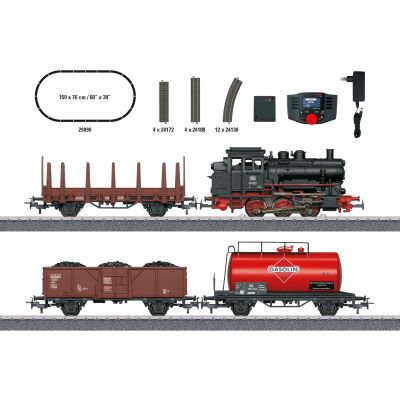 Märklin 29890 H0 digital freight train starter set
H0 centre-conductor digital system
Märklin 29890 Freight Train
EUR 222.00mfx locomotive, three wagons, C Track, Mobile Station, connection box and power supply.
Open Product Details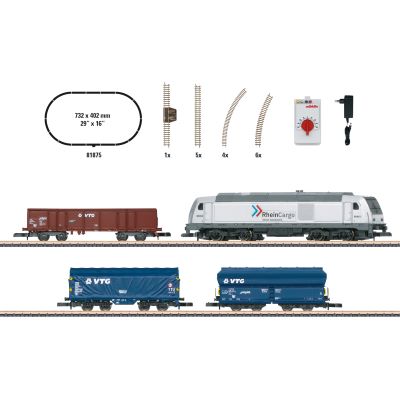 Märklin 81875 Z Gauge modern freight traffic
starter set
Märklin 81875 Z Gauge modern freight traffic
starter set
Compact Z Gauge
Märklin 81875 Modern Freight Traffic
EUR 289.99Diesel locomotive, three freight wagons, track oval, controller, power supply and rerailer.
Open Product Details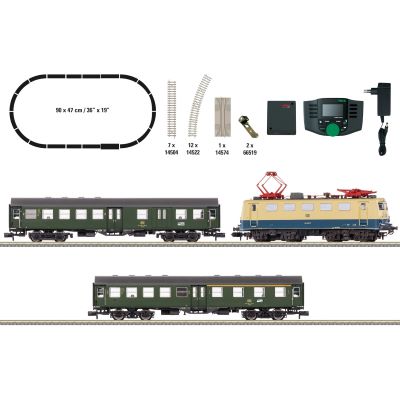 Minitrix 11132 N digital passenger train starter
set
Minitrix 11132 N digital passenger train starter
set
Digital and space-saving
Minitrix 11132 Passenger Train
EUR 385.99Sound locomotive, two coaches, Mobile Station, connection box, power supply and track oval on a compact area.
Open Product Details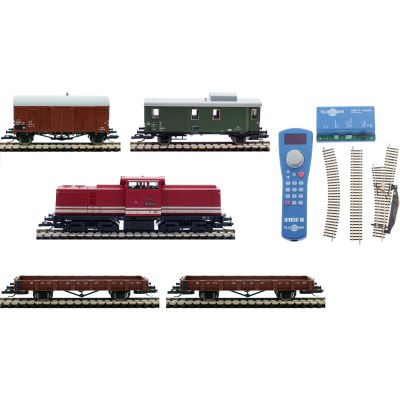 Tillig 01208 TT digital freight train starter set
Extensive TT introduction
Tillig 01208 Freight Train
EUR 499.99Digital diesel locomotive, four wagons, track oval, turnout, turnout drive and basic digital equipment.
Open Product Details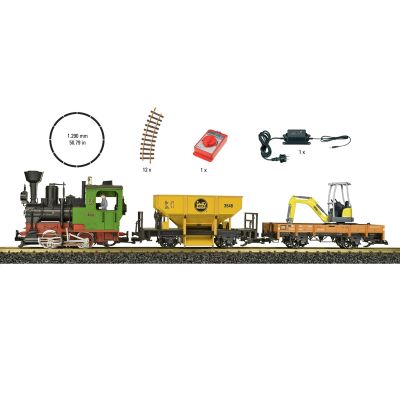 LGB 70403 G Gauge freight train starter set
Large-scale and garden railway
LGB 70403 Freight Train
EUR 375.90Steam locomotive with steam and sound, two wagons, track circle, controller and power supply.
Open Product Details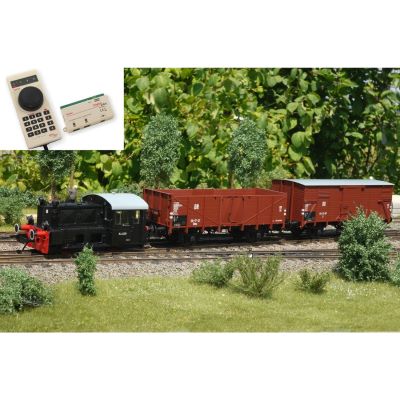 Lenz 43202-01 Gauge 0 Köf starter set
Large vehicles in Gauge 0
Lenz 43202-01 Köf Starter Set
EUR 565.90Digital Köf locomotive, two freight wagons, large-format track and connections for starting in 1:45 scale.
Open Product DetailsTrack construction, baseboard and digital technology
After the starter set, these product groups frequently account for the largest part of the additional budget.
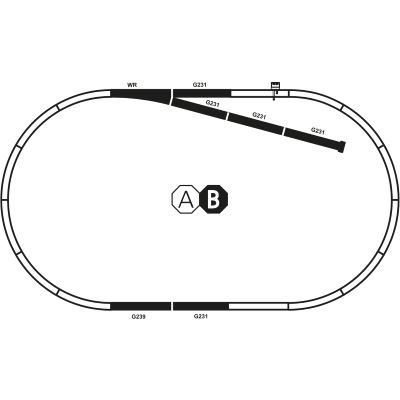 PIKO 55310 H0 A-Track Set B
First track extension
PIKO 55310 A-Track Set B
EUR 29.99A turnout, several straight tracks and a buffer stop create an initial siding or shunting track.
Open Product Details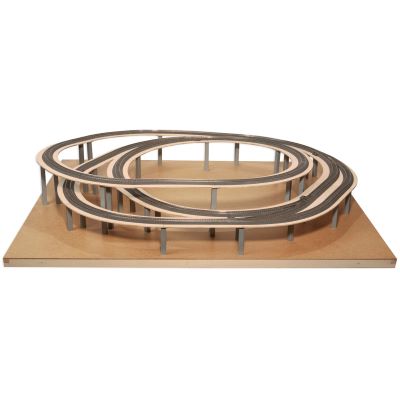 NOCH 53615 Easy-Track Theisensee
Compact layout substructure
NOCH 53615 Theisensee
EUR 172.90Pre-planned H0 trackbed with a branch and siding for a compact model railway layout.
Open Product Details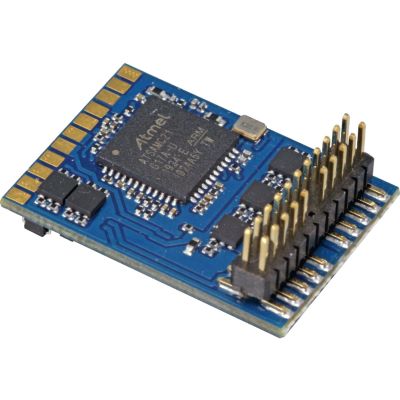 ESU 59622 LokPilot 5 DCC PluX22 decoder
Digitisation without sound
ESU 59622 LokPilot 5 DCC
EUR 35.99DCC locomotive decoder with a PluX22 interface for suitable H0 and Gauge 0 vehicles.
Open Product Details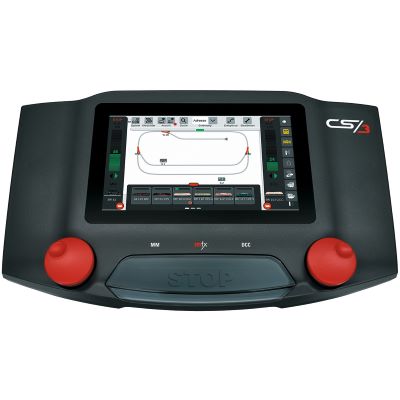 Märklin 60226 Central Station 3
Command station for large digital projects
Märklin 60226 Central Station 3
EUR 629.00Multiprotocol command station with touchscreen, track diagram, routes and extensive expansion options.
Open Product DetailsAll Starter Sets
Compare complete packages by gauge and control system.
Analogue Starter Sets
Begin inexpensively without extensive programming.
Digital Starter Sets
Use multi-train operation and switchable functions.
Track Sets
Calculate extensions and complete track plans.
Locomotives
Compare analogue, digital and sound-equipped models.
Passenger Coaches
Add passenger trains according to length, era and budget.
Freight Wagons
Discover economical individual wagons and larger sets.
Digital Command Stations
Compare beginner controllers and powerful systems.
Locomotive Decoders
Check the interface, protocol and installation space.
Sound Decoders
Budget for sound, a speaker and vehicle conversion.
Layout Design
Budget for terrain, buildings, plants and roads.
Cleaning and Care
Preserve running quality and vehicle condition.
More train operation for the available budget
How can money be saved sensibly when building a model railway?
Building economically does not mean buying the cheapest unchecked product. Changing systems, incorrect purchases and oversized track plans are particularly expensive.
Begin with a coordinated starter set
A train, track and control system normally cost less as a package than comparable individual components.
Buy a turnout instead of a second locomotive
A siding creates new shunting tasks and increases the value of the existing train.
Draw the track plan before purchasing
A parts list prevents duplicate track, incorrect radii and unnecessary transition connectors.
Build the layout in operational stages
Complete the station and operating circuit first, then add scenery, lighting and further levels.
Expand digital technology as required
A large command station becomes worthwhile only when many turnouts, feedback modules or routes are actually planned.
Check compatibility before every order
Gauge, conductor system, decoder, coupling and minimum radius must suit the existing equipment.
Use scenery materials selectively
A small completely designed section looks better than a large half-finished collection of materials.
Include a fixed reserve
Ten to fifteen per cent protects the project from stopping because cables, connectors, adhesive or material are missing.
Separate the vehicle and layout budgets
A separate vehicle budget prevents track, baseboard and electrical equipment from being left without funds.
Brand worlds and different price levels
Manufacturers of starter sets, vehicles, technology and layout products
Compare not only price, but also gauge, track system, digital protocol, spare-part support and the intended route for later expansion.








Answers for budget planning
Frequently asked questions about model railway costs
These answers put the entry price, digital technology, gauge, recurring costs and useful expansion stages into context.
How much does a model railway for beginners cost?
A complete analogue starter set can currently begin below EUR 100. Depending on gauge, control equipment and sound, approximately EUR 150 to EUR 500 should be planned for a digital set.
How much does a small complete model railway layout cost?
A planning range of approximately EUR 600 to EUR 2,000 is realistic for a compact board with a starter set, additional track, a baseboard, station and initial scenery.
Why does a layout quickly become more expensive than the starter set?
Additional turnouts, vehicles, buildings, cables, lighting, scenery materials and tools consist of many individual purchases that accumulate during construction.
Is an analogue model railway less expensive?
The initial purchase is frequently less expensive. When several trains must operate independently, an analogue layout requires separate electrical circuits, switches and additional wiring.
How much does it cost to digitise a locomotive?
A basic locomotive decoder begins in the range of a few dozen euros. Sound decoders, speakers, conversion work and difficult installation conditions increase the total cost considerably.
Which gauge is the least expensive?
There is no gauge that is always the least expensive. H0 has particularly many price levels because of its broad selection. Small gauges need precise technology, while large gauges need more material and area.
How expensive is a garden railway?
A G Gauge starter set currently frequently costs a mid-three-figure amount. The substructure, outdoor wiring, additional track, turnouts and weather-resistant scenery can increase the project cost to several thousand euros.
Which recurring costs arise?
Recurring expenditure primarily includes cleaning, lubricants, wear parts, repairs and new vehicles. A traditional model railway has no fixed monthly subscription fee.
Is an expensive digital command station worthwhile immediately?
The controller supplied with a starter set is normally sufficient for a small circuit. A large command station becomes worthwhile when many locomotives, turnouts, feedback modules, routes or later automation are planned.
How can the budget be prevented from getting out of control?
Work with construction stages, a shopping list and a spending limit. Buy only components required for the next operational stage and reserve ten to fifteen per cent for small parts.
A clear budget creates a model railway that remains useful over the long term
Turn a realistic budget into an expandable model railway project
Explore gauges, track systems, digital technology, layout planning, scenery construction, vehicles and maintenance in greater detail on the central English model railway guide page.
Go to the Model Railway GuidePrice status for the named product examples: 30 July 2026. Prices can change; the respective product page is authoritative.