Modellbahn Keks
Welcome!
Our cookies offer you a fast, relaxed and full-featured shopping experience. Some are necessary to operate the website and its functions. Others help us to improve our services. If you agree to this, simply consent to the use of cookies for preferences, statistics and marketing by clicking on "OK". Alternatively, you can deactivate individual cookies under "Customise cookies" or all cookies, except those required for the function of our website, under "Reject all".
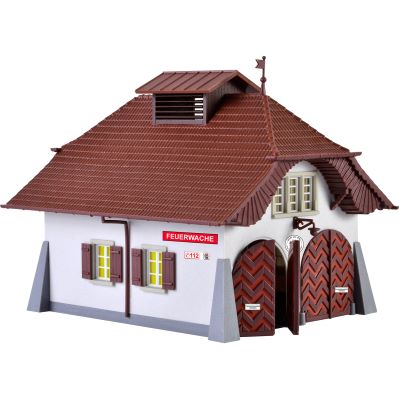
FALLER Historic Fire Station 1 Nuremberg as a large H0 fire station on a model railway
Fire Station · Fire Engine · Turntable Ladder · Emergency Scene

Model Railway Fire Brigade | Fire Stations & Emergency Vehicles

From a small volunteer fire brigade building to a modern metropolitan fire station: vehicle bays, fire engines, turntable ladders and firefighters create instantly recognisable and varied model railway scenes.

Public-Safety Infrastructure with an Immediately Recognisable Purpose

Why Is the Fire Brigade Such a Strong Model Railway Theme?

Designing a fire brigade scene on a model railway combines buildings, road vehicles, figures and small action scenes. Even a quiet fire station with closed vehicle-bay doors immediately explains the function of that part of the layout. Add vehicles leaving the station and the same area becomes a particularly dynamic town scene.

The theme works equally well in villages, small towns, large cities and industrial districts. In a rural setting, a historic volunteer fire brigade building with one or two vehicles may be enough. A professional urban fire service is more likely to require several vehicle bays, a larger forecourt and a broader range of emergency vehicles.

The railway itself can also be included. A fire station can stand near a station or other railway facilities , a works fire brigade can protect an industrial site, and an emergency can be staged beside a road, level crossing, factory or residential building. This creates a direct visual connection between the railway and road-traffic worlds.

A clear period is important. Fire brigade vehicles have changed considerably over the decades. A historic fire house with an older fire engine creates a very different impression from a modern station with an HLF rescue fire engine, turntable ladder and command vehicle.

Different Organisations Create Different Layout Scenes

Volunteer Fire Brigades, Professional Fire Services and Works Fire Brigades

Volunteer Fire Brigade

Volunteer fire brigades are based primarily on volunteer firefighters. On a model railway they fit particularly well in villages, rural communities and small towns. A compact station does not need to suggest a permanently staffed professional facility.

Professional Fire Service

Professional fire services use full-time personnel and permanently staffed stations. Larger vehicle halls, administration and crew areas together with several emergency vehicles therefore suit urban layouts particularly well.

Works Fire Brigade

Works fire brigades are associated with industrial or commercial sites and are equipped for the particular risks of those facilities. Factories, tank farms, airports and large industrial complexes therefore provide ideal surroundings.

Model railway tip: the organisation does not need to be explained by a large sign. The building type, location and vehicle fleet already tell the story. A compact fire station with a hose-drying tower looks very different from a modern multi-bay emergency-services base.

From a Historic Fire House to a Modern Emergency Base

Which Types of Fire Station Suit a Model Railway?

Historic Fire House

A small historic building with one or only a few vehicle doors. Ideal for Eras I to III, village roads and compact branch-line layouts.

Volunteer Fire Station

A typical volunteer fire brigade base. A vehicle hall, crew room and occasionally a hose-drying tower are enough to create a complete scene.

Small-Town Fire Brigade Base

Several vehicle bays, a larger forecourt and additional crew or administration rooms fit small towns and suburban districts.

Modern Fire Station

Large glazed vehicle doors, functional architecture and several operational areas characterise modern stations of the later eras.

Historic City Fire Station

Multi-storey buildings with substantial vehicle halls work as architectural focal points in urban scenes and provide space for a larger fire brigade fleet.

Industrial Works Fire Brigade

A compact station within an industrial area can be combined with works fire brigade vehicles, factories, tank facilities and other technical installations.

Plan the Vehicle Door, Fire Engine and Road Together

Position a Fire Station Functionally on the Layout

A fire station should not simply fill an empty building plot. The vehicle hall, forecourt and public road together form the actual functional scene.

Alarm
Vehicle Hall
Station Exit
Road
Incident
Return
1

Choose the Vehicles Before Fixing the Building

Door Dimensions
Turntable ladders and modern fire engines require substantial space

Position the longest and tallest intended vehicles in front of the loose building kit. This makes it easy to check whether the doors and forecourt genuinely suit the chosen fleet.

2

Connect the Exit Directly to the Road

Road Access
Avoid unnecessarily tight bends directly in front of the doors

A clearly defined access route makes the scene easy to understand. The Build Model Railway Roads guide provides further help with roads and transitions.

3

Keep the Forecourt Clear

Manoeuvring Space
A vehicle should be able to drive straight out of every active bay

Emergency vehicles need clear movement areas. Figures, containers and parked cars should therefore be positioned mainly along the sides of the forecourt rather than directly in front of vehicle doors.

4

Plan the Lighting Before Building the Station

Night Operation
Vehicle halls make excellent illuminated focal points

Light behind open doors, individual exterior lamps and illuminated emergency vehicles can create a particularly strong effect during evening operation.

Choose the Fleet by Function, Not Simply by Colour

Which Fire Brigade Vehicles Belong on a Model Railway?

The Modellbahnshop Fire Brigade vehicle category includes fire engines, rescue fire engines, turntable ladders, command vehicles, works fire brigade models and many specialised emergency vehicles.

Vehicle Type Role in the Scene Suitable Setting
Fire Engine / HLF Main emergency-response vehicle Fire station, building fire or technical rescue.
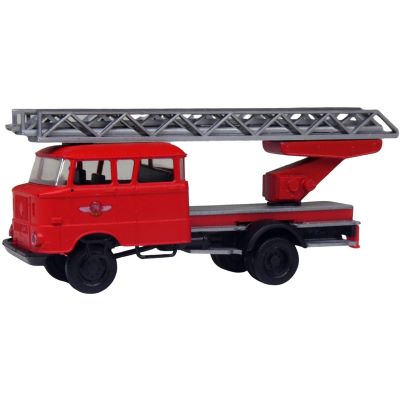
Turntable Ladder Distinctive high-reach rescue vehicle Town house, hotel, factory or fire station.
Command Vehicle Incident coordination At the edge of larger emergency scenes.
Tanker Fire Engine Carries its own water supply Rural, industrial and woodland surroundings.
Crew Vehicle Personnel transport Fire station, training exercise or assembly point.
Works Fire Brigade Vehicle Specialised industrial fire protection Factory, tank farm and industrial site.
One Clear Story Works Better Than an Overcrowded Major Incident

Create a Believable Fire Brigade Emergency Scene

Two vehicles and a small number of firefighters are often enough for a convincing emergency scene. A fire engine can stand close to the incident, a turntable ladder needs more space beside the building, and several firefighters can form one clearly understandable working group. Empty working space is just as important as figures.

Residential buildings, town houses, factories, road accidents and technical-rescue situations all work well. An incident at a level crossing or near a railway station can connect the emergency scene directly with the railway itself.

Hoses, ladders, hydrants, barriers and individual pieces of equipment should always relate to a visible task. The current NOCH 16259 Fire Brigade Emergency Scene provides a useful example of combining figures and equipment into one coherent incident scene.

Functional blue-light vehicles add movement and visual interest. When several illuminated models are used, distribute them across the scene rather than placing every flashing vehicle in exactly the same position.

Fire Brigade Technology Is an Excellent Period Indicator

Represent the Fire Brigade from Era I to Era VI

Era Typical Scene Suitable Design
I–II Historic fire house and early motorisation Narrow doors, hose-drying tower and historic vehicles.
III Classic volunteer fire brigade Period Magirus, Mercedes and Ford vehicles with compact fire stations.
IV Larger fire engines and functional emergency bases More vehicle bays, command vehicles and East German IFA W50 scenes.
V Modern stations and a growing range of specialised vehicles Larger vehicle halls, newer protective clothing and contemporary road design.
VI HLF rescue fire engines, modern turntable ladders and works fire brigade vehicles Contemporary protective clothing, warning markings, LED lighting and modern stations.
Emergency Scenes from Z Gauge to Garden Railways

Fire Brigade Models for the Major Model Railway Gauges

Gauge Scale Current Possibilities Recommendation
Z 1:220 Fire brigade figures and selected emergency-scene accessories Create a compact incident scene or scratch-build a small fire station.
N 1:160 Fire stations, fire engines, figures and functional models Very suitable for complete town and village emergency scenes.
TT / TTe / TTm 1:120 Fire stations, East German vehicles and figures Particularly strong for DR and East German themes.
H0 / H0m / H0e 1:87 Broadest current range Everything from a village fire house to a large urban station can be represented in detail.
0 / 0e approx. 1:45 Selected vehicles, accessories and scratch-building Use a partial fire-station facade or a focused diorama.
1 / Im 1:32 Specialist models and individual model building Use individual vehicles or building sections as the main scene.
G / IIm often approx. 1:22.5 Firefighter figures and large-scale emergency scenes Allow generous working areas and use materials suitable for the intended installation location.
From the Vehicle Hall to a Complete Emergency Scene

Design a Model Railway Fire Brigade Scene in Eight Steps

Step 1 · Fire Station

Choose a Building Type That Suits the Location

Villages, small towns, large cities and industrial sites require fire stations of different sizes.

Step 2 · Vehicle Fleet

Combine Vehicles According to Their Tasks

A fire engine provides a useful basis. Add a turntable ladder, command vehicle and specialised vehicles only where the scene requires them.

Step 3 · Forecourt

Keep Manoeuvring Areas Clear

Do not block the area immediately in front of the vehicle doors with parked cars, figures or unnecessary scenery.

Step 4 · Road

Create a Direct Exit onto the Road Network

Connect the pavement, station entrance and roadway cleanly and logically.

Step 5 · Interior

Add Visible Details Inside the Vehicle Hall

Emergency vehicles, shelving and a few equipment details behind open doors create convincing visual depth.

Step 6 · Lighting

Light the Hall and Exterior Separately

Interior lights, yard lamps and blue lights create several distinct light sources instead of one uniformly illuminated area.

Step 7 · Firefighters

Position Figures in Small Working Groups

Firefighters beside a vehicle, hose or incident look more believable than figures distributed evenly across the scene.

Step 8 · Story

Tell One Clear Story

Choose an emergency departure, training exercise, vehicle maintenance or incident as the main moment and coordinate the remaining details with that story.

Combine the Station, Vehicles and Firefighters

Product Categories for Model Railway Fire Brigade Scenes

H0 · Historic & Rural Fire Stations

From Half-Timbered Fire Houses to a Historic Nuremberg City Station

H0 · Large & Modern Fire Brigade Bases

Multi-Bay Fire Stations for Towns and Suburbs

TT & N

Fire Stations for More Compact Model Railway Scales

Fire Engines & Turntable Ladders

Emergency Vehicles for H0, TT and N

Firefighters from Z to H0

Figures and Crews for Lively Emergency Scenes

Current Products from Several English Shop Categories

Filter Fire Stations, Vehicles and Firefighters Live

When this section approaches the viewport, the finder loads current English products from fire brigade buildings, fire brigade vehicles, fire brigade figures and lighting. Small preview images and recognised archive, B-stock and clearance products are excluded. Prices, delivery times and availability are deliberately not shown.

Current fire brigade products will be loaded when this section approaches the viewport …

Manufacturer Worlds at Modellbahnshop

Manufacturers for Fire Stations and Emergency Vehicles

The station and vehicle fleet do not need to come from the same manufacturer. A FALLER fire station can be combined with vehicles from Herpa, Rietze, Busch or Viessmann when scale and represented era fit together.

Build the Fire Brigade Scene Across Several Manufacturers

The greatest variety is achieved when the station, vehicles, figures and lighting are selected independently. This makes it possible to assemble a fleet that suits the era, municipality and specific emergency role.

Open Manufacturer Overview
Frequently Asked Questions About Fire Brigade Scenes

Questions About Fire Stations, Vehicles and Emergency Scenes

Which Fire Station Suits a Village?

A small volunteer fire station or historic fire house with one or only a few vehicle bays works particularly well. Half-timbered architecture, a hose-drying tower and a compact forecourt strengthen the rural character.

Which Fire Station Suits a Town or City?

Multi-bay fire brigade bases or modern fire stations with administration and crew areas are particularly suitable for larger towns, cities and suburbs.

What Is the Difference Between a Volunteer and Professional Fire Service?

Volunteer fire brigades rely primarily on volunteer personnel, while professional fire services use full-time firefighters and permanently staffed stations.

What Is a Works Fire Brigade?

A works fire brigade belongs to an industrial or commercial organisation and is equipped for the particular risks and facilities of that site.

Which Fire Brigade Vehicle Should I Start With?

A fire engine provides a useful basis. A turntable ladder, command vehicle and specialised emergency vehicles can then be added for larger scenes.

How Much Space Does an H0 Fire Station Need?

This depends strongly on the building. In addition to the actual footprint, allow clear space in front of the vehicle doors and a believable connection to the road.

Which Fire Brigade Models Suit an East German Layout?

Models based on IFA W50, Barkas or Robur vehicles together with suitable emergency personnel work particularly well in East German Era III and Era IV scenes.

Can a Historic Fire Station Be Used on a Modern Layout?

Yes. Older fire brigade buildings can remain in operational use, be modernised or be represented as secondary stations, museums or association buildings.

How Do You Build a Believable Fire Brigade Emergency Scene?

Two or three vehicles, a small number of sensibly positioned firefighters and one clearly recognisable task usually look more convincing than an overcrowded incident.

How Should Functional Blue-Light Models Be Used?

Illuminated vehicles are particularly effective during evening operation. Several light sources should be distributed through the scene rather than concentrated in a single point.

Which Gauges Offer Fire Brigade Models?

H0 currently offers the broadest choice. Buildings and vehicles are also available in N and TT, while figures and selected models are additionally represented in Z and G.

Can a Fire Station Stand Directly Beside the Railway?

Yes. A fire station can be located near a railway station, main road or industrial district as long as the connection to the public road network remains believable.

Content, English category structure and fixed product links checked on . Please additionally verify individual building dimensions, vehicle dimensions and technical functions on the respective product pages.

From a Fire Station to a Complete Model Railway Town

Further detailed guides covering roads, vehicles, buildings, industry, railway facilities, scenery, gauges and layout planning can be found in the central Model Railway Guide.

Open the Model Railway Guide