Gauge and scale
H0 vehicles belong on H0 track and TT vehicles on TT track. Narrow-gauge systems such as H0e and H0m use a narrower model track gauge than standard-gauge H0 despite sharing the 1:87 scale.

Do the locomotive, coaches, track, wheelsets, couplings, decoder and digital command station really work together? This guide separates the different levels of compatibility and shows which specifications you should check before purchasing.
Two model railway products are not automatically compatible merely because H0, TT or N appears on both packages. The gauge initially describes the scale and model track gauge. For reliable operation, the track system, current collection, wheelsets, digital protocol, decoder interface and coupling must also be compatible.
The terms alternating current and direct current are a particularly frequent source of misunderstanding. In H0, “AC” usually refers to rolling stock for a centre-conductor system with a pickup shoe. “DC” usually refers to a two-rail system in which current is collected from electrically separate rails. On digital layouts, the protocol used is an additional and separate characteristic.
A centre-conductor locomotive can, for example, understand DCC if its decoder and the command station both support DCC. It still requires a form of current collection that matches the track. Similarly, a coach may run mechanically on both H0 systems, while wheelset insulation, interior lighting or occupancy detection may require modification.
A reliable selection cannot be based on a single abbreviation. Check the following six levels one after another. Only the overall result shows whether a product can be used directly, whether a small replacement is sufficient or whether extensive conversion would be required.
H0 vehicles belong on H0 track and TT vehicles on TT track. Narrow-gauge systems such as H0e and H0m use a narrower model track gauge than standard-gauge H0 despite sharing the 1:87 scale.
Two-rail and centre-conductor systems are both common in H0. This affects the track, turnouts, current collection and technical construction of the locomotives.
Two-rail vehicles require the two sides of each wheelset to be electrically insulated. Centre-conductor coaches may use non-insulated axles for occupancy detection through a ground contact.
Analogue or digital operation is a separate decision. In digital operation, the command station and decoder require at least one common format, such as DCC, mfx or Motorola.
NEM 651, NEM 652, PluX22, 21MTC and Next18 cannot be exchanged at will. The available installation space, outputs and loudspeaker connection must also be considered.
A standard coupling pocket makes it easier to replace a coupling. Nevertheless, the coupling head, height, close-coupling mechanism, distance between vehicles and minimum radius must work together.
The table shows typical starting situations. It does not replace the technical specifications of the individual model, but it highlights the areas that require particularly careful checking.
| Starting situation | Track system | Required vehicle technology | Assessment | What must be checked? |
|---|---|---|---|---|
| Analogue H0 two-rail locomotive | H0 two-rail | Separate current collection from both rails | compatible | Track voltage, radius and rail profile |
| H0 DCC locomotive | Digital H0 two-rail | DCC decoder | compatible | Decoder address and supported speed steps |
| H0 centre-conductor locomotive with mfx | Digital centre-conductor | Pickup shoe and mfx-capable decoder | compatible | Support from the digital command station |
| H0 DC locomotive on Märklin track | Centre-conductor | No pickup shoe and separate current paths | not directly compatible | Pickup shoe, wiring, wheelsets and decoder |
| Unlit H0 coach | Two-rail or centre-conductor | Suitable axle dimensions and flange profile | often possible | Wheelset insulation, turnouts and occupancy detection |
| Coach with lighting | System-dependent | Suitable current collection | check carefully | Pickup shoe, wheel contacts and decoder |
| TT vehicles from different manufacturers | TT two-rail | Suitable wheelsets and couplings | usually combinable | Older couplings, wheel flanges and tight turnouts |
| Decoder with PluX22 | Independent of the track manufacturer | PluX22 interface and sufficient space | with matching socket | Protocol, functions and current capacity |
| H0 coupling for a NEM pocket | Independent of the conductor system | Matching coupling mount | mechanically compatible | Coupling height and mixed use of coupling heads |
| LGB and PIKO G-gauge track | 45 mm large-scale track | G gauge or IIm | generally connectable | Joiners, profile, radii and electrical connections |
A track system consists of more than straight and curved sections. Long-term planning also includes turnouts, crossings, flexible track, feeder tracks, transition pieces, drives and, where applicable, integrated roadbed. A layout should therefore use a system with sufficient geometry and extensions that will remain available.
A centre-conductor system uses stud contacts or a centre conductor between the running rails. Locomotives collect current through a pickup shoe and the electrically connected outer rails.
Robust plug-together track with an integrated roadbed. It is suitable for starter layouts, temporary arrangements and permanently installed layouts.
Track without a finished roadbed. It can therefore be ballasted individually and integrated into more realistic scenery.
Metal track from earlier Märklin ranges. Transition tracks can connect older stocks of M-Track to C-Track.
The two rails are electrically isolated from one another. The locomotive collects current through the wheels on the left and right sides of the vehicle. This principle is used by many manufacturers.
Available as track without roadbed and as A-Track with roadbed. Both versions offer clearly structured geometry for beginner and permanent-layout projects.
H0 two-rail track with different radii, turnouts and flexible track. Depending on the product, it is available with or without roadbed.
Tillig Elite is aimed particularly at realistic track construction. Trix C-Track has an integrated roadbed but, unlike the similarly styled Märklin C-Track, operates as a two-rail system.
TT normally uses the two-rail principle. Tillig offers model track, roadbed track and flexible track. Roco also supplies TT track and extension components.
Older Zeuke, BTTB or Pilz track may differ in rail height, joiners and geometry. Special transition tracks make the connection easier.
Smaller gauges predominantly use two-rail systems. Fleischmann piccolo has an integrated roadbed, while Fleischmann track without roadbed, Minitrix, Kato and other systems use different joiners and geometries.
With small gauges, height differences, uneven rail joints and dirty contacts have a particularly rapid effect on reliable operation.
H0e and H0m use the H0 scale of 1:87 but have narrower track. H0e runs on 9 mm model track and H0m on 12 mm track. Standard-gauge H0 vehicles therefore cannot be used on either system.
An H0e vehicle and an N-gauge vehicle both use 9 mm track, but represent different prototype gauges and scales.
Larger scales require robust track, generous radii and powerful electrical supplies. G gauge or IIm often uses 45 mm track from LGB or PIKO.
On garden railways, joiners, power feeds, drainage, thermal expansion and regular cleaning must be included in the system decision.
Roadbed track can generally be connected quickly and securely. It is suitable for starter layouts, floor layouts and construction in separate stages.
The roadbed width, connection system, embankment height and geometry are specific to each manufacturer. A direct transition to another system often requires adjustment.
Track without a finished embankment provides greater freedom when designing the route, ballast colour, station areas and realistic track spacing.
The base, sound insulation, fastening and ballasting must be planned separately. Rail height and rail joiners are decisive when changing systems.
Flexible track allows flowing curves and individual route designs. It is not, however, an independent compatibility standard.
The rail profile, sleeper height, joiners, electrical isolation and minimum bending radius must match the adjoining track system.
The digital protocol describes communication between the command station and decoder. The interface describes how the decoder is connected mechanically and electrically inside the locomotive. A PluX22 decoder can therefore support DCC or several protocols; the term PluX22 alone says nothing about this.
DCC is widely used on two-rail layouts and is also supported by various multi-protocol command stations. mfx and Motorola are particularly closely associated with the Märklin system.
Multi-protocol decoders understand several formats. This makes mixed fleets easier to operate, but does not replace checking the current collection or interface.
NEM 651 is a six-pin interface often found in smaller models. NEM 652 is an eight-pin interface that was widely used in H0 for many years.
With older interfaces, the plug position, pin 1, cable routing and available installation space must be checked carefully.
Modern interfaces provide more contacts for lighting, sound and additional functions. They have different physical designs and must not be confused with one another.
With Next18 and Next18S, as well as vehicle-specific circuit boards, check which version and loudspeaker connection are intended.
Follow the checking steps in this order. If one of the first levels is already incompatible, clarify the required conversion costs before purchasing.
Do the nominal size, model track gauge and, where applicable, the narrow-gauge designation match?
Does the layout use two-rail or centre-conductor track? Does the locomotive have the appropriate pickup shoe or wheel contacts?
Are the wheel sides insulated? Do the axle length, wheel diameter, flanges and back-to-back measurement match?
Is the vehicle analogue, prepared for digital operation or already equipped with a decoder?
Do the command station and decoder support at least one common format, such as DCC, mfx or Motorola?
Do NEM 651, NEM 652, PluX22, 21MTC or Next18 and the available installation space match?
Do the vehicles have compatible coupling heads, standard pockets and a suitable coupling height?
Can the model negotiate the turnouts, radii, gradients and clearances on the layout?
The H0 marking on the packaging does not indicate whether the vehicle was built for a centre-conductor or two-rail system.
An H0 two-rail vehicle can be operated in analogue or digital mode. In retail descriptions, DC often refers to the system version.
A suitable pocket allows a coupling head to be installed, but does not guarantee that different coupling heads will couple together.
In addition to insulation, the axle length, bearing arrangement, wheel diameter, flange and back-to-back measurement must match.
A 21MTC or PluX22 connection does not automatically indicate which digital protocol the decoder understands.
Different rail and roadbed heights can cause derailments. Transitions must be aligned cleanly and precisely.





This selection includes track and compatibility accessories for H0, TT, N and G. Before purchasing, check the product number, gauge, system, rail height, roadbed, interface, wheelset dimensions and intended application.
Track with stud contacts for vehicles with a centre pickup shoe, together with transitions between different generations of Märklin track.
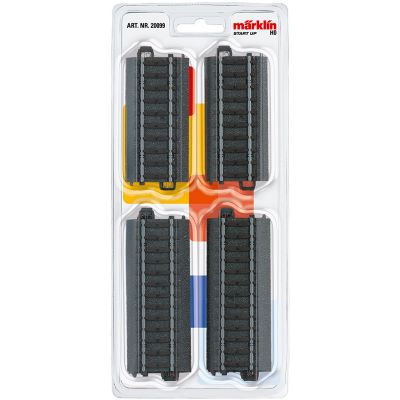
Straight extension tracks for the H0 centre-conductor system.
View product →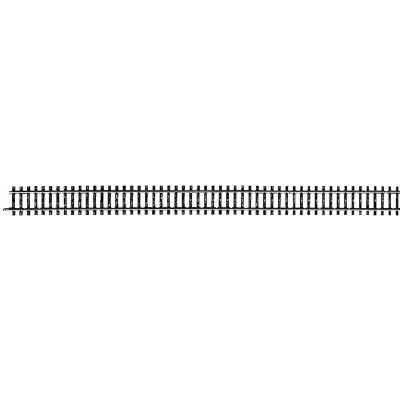
Flexible centre-conductor track for individually designed curves.
View product →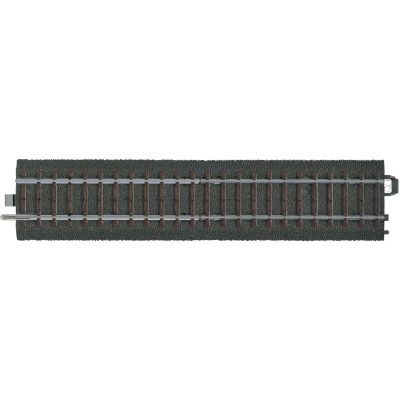
Connects modern C-Track to existing stocks of M-Track.
View product →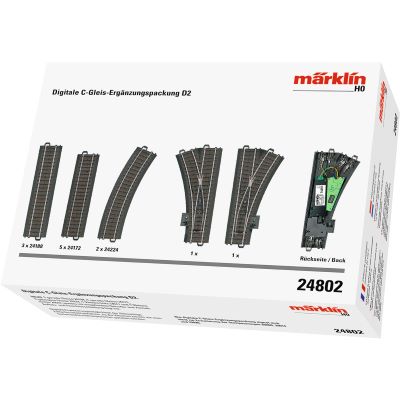
C-Track extension for digitally controlled track connections.
View product →Track systems with and without roadbed for analogue or digital two-rail layouts.
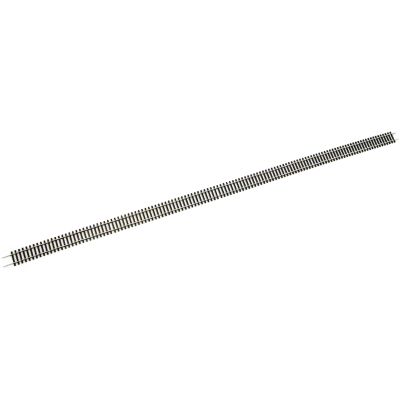
Long two-rail flexible track for freely designed routes.
View product →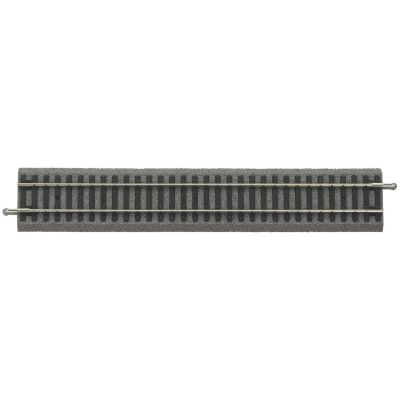
Straight two-rail track with an integrated roadbed.
View product →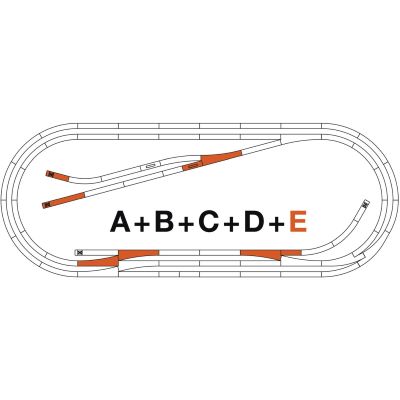
Extension for station, storage and shunting operations.
View product →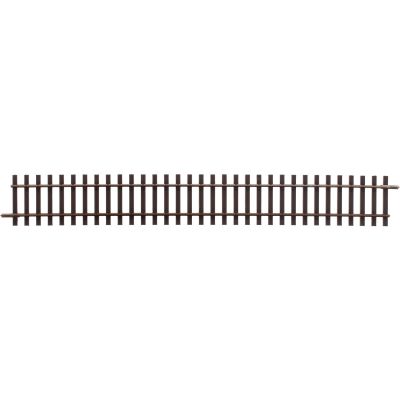
Straight track for finely detailed H0 two-rail layouts.
View product →Components for flexible routes, older track stocks and additional shunting options.
Flexible model track for individual radii and transitions.
View product →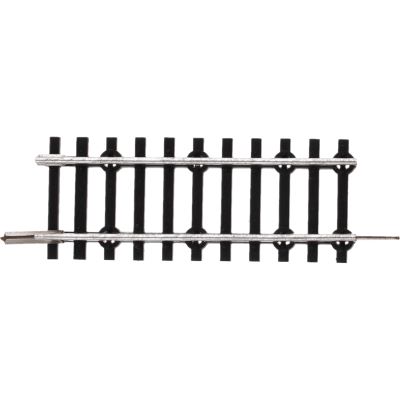
Connects different generations of TT track.
View product →
Flexible two-rail track for freely planned TT routes.
View product →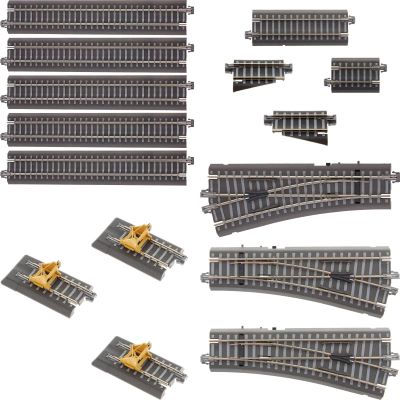
Extension with turnouts and sidings for TT gauge.
View product →Roadbed track and variable extensions for small indoor layouts and robust garden railways.
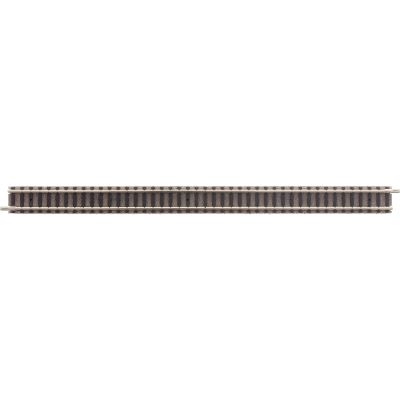
Straight piccolo track with an integrated roadbed.
View product →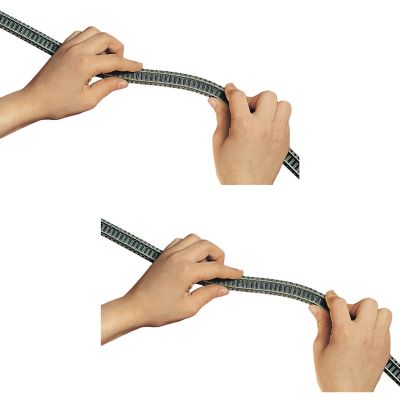
Flexible track for individual N-gauge route designs.
View product →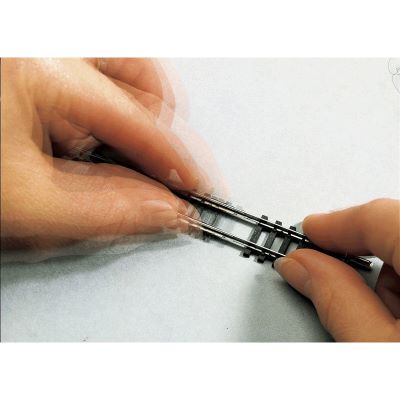
Adjustable track for closing small gaps in a track plan.
View product →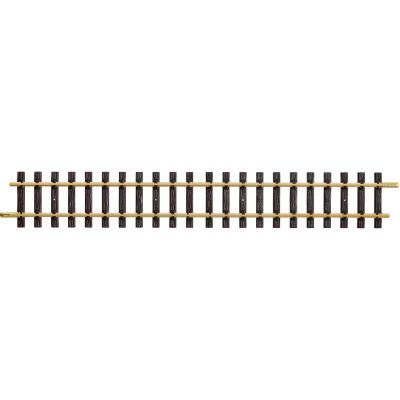
Robust 45 mm track for garden and indoor layouts.
View product →
Length-adjustable track for compensating for gaps.
View product →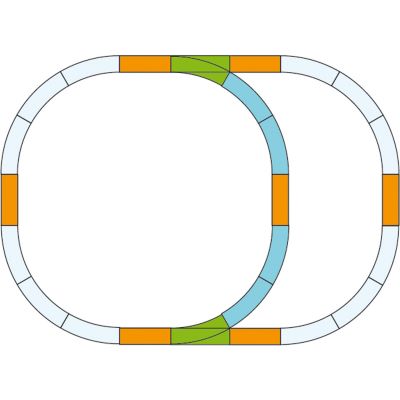
Large-scale extension for train crossings and station operation.
View product →Accessories for the mechanical and electrical adaptation of existing rolling stock.
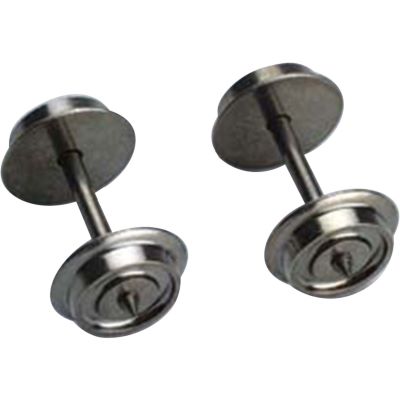
Non-insulated wheelsets for suitable H0 coach versions.
View product →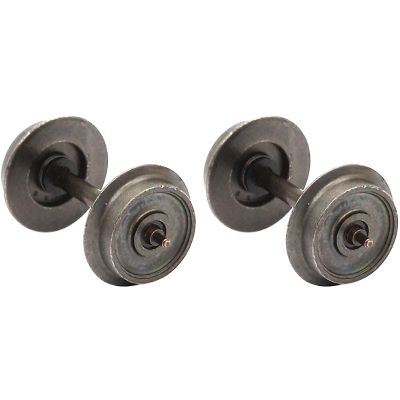
Insulated wheelsets for suitable H0 two-rail coaches.
View product →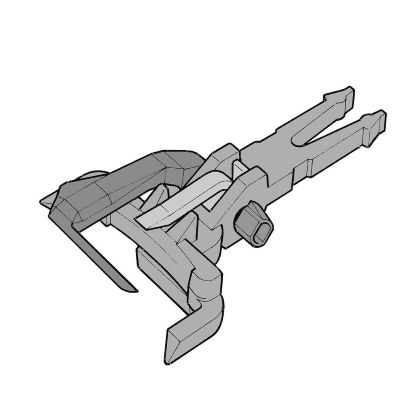
Coupling heads for suitable H0 standard coupling pockets.
View product →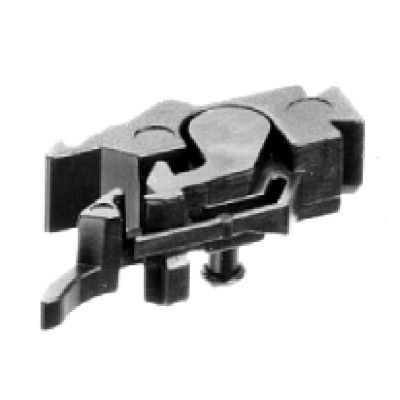
Coupling head for suitable mounts and adapters.
View product →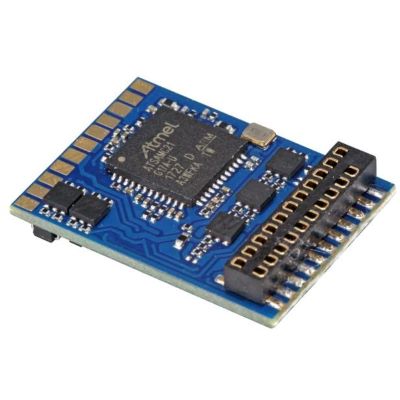
DCC decoder for vehicles with a matching 21MTC interface.
View product →
DCC decoder for suitably prepared PluX22 vehicles.
View product →Compare centre-conductor and two-rail systems, current collection, wheelsets and vehicle conversions in detail.
Open the H0 system guide →Compare control methods, multi-train operation, decoders and expandability in an easy-to-understand format.
Compare control systems →Understand protocols, interfaces, sound, function outputs and decoder designs.
Open the decoder guide →Compare Z, N, TT, H0, narrow gauge, 0, 1 and G by scale and space requirements.
Compare gauges →Select straight, curved and flexible track, turnouts and track sets from different manufacturers.
Open the track category →Discover brands, available gauges, track systems and technical product specialisations.
Compare manufacturers →Older rolling stock and track may have technical differences. The specifications of the individual product therefore always remain decisive.
Yes, provided the gauge, conductor system, current collection and, in digital operation, at least one protocol match. The manufacturer and prototype railway company are not decisive.
No. In H0, a distinction must be made between two-rail and centre-conductor vehicles. Wheelsets, flanges and minimum radii may also differ.
No. H0 DC often refers to the two-rail version. The vehicle can be operated in analogue mode or digitally with a suitable decoder.
Yes, provided the digital command station and vehicle decoder support DCC. The locomotive still requires suitable centre-conductor current collection.
Many coaches can run mechanically on both types of track. Wheelset insulation, flanges, turnouts and occupancy detection must nevertheless be checked.
A transition is possible with suitable rail joiners and careful levelling of the rail heights and profiles. The different track geometries must still be considered when planning.
They have a related appearance but use different conductor systems. Märklin C-Track is a centre-conductor system, while Trix C-Track is a two-rail system.
A standardised coupling mount makes it easier to replace the coupling head. It does not guarantee that arbitrary coupling systems will couple with one another.
PluX22 describes the electrical and mechanical decoder interface. DCC describes the digital protocol that the decoder can understand.
No. The connections have different physical designs and pin assignments. The interface specified for the vehicle must be used.
Both generally use 45 mm track. The rail joiners, profile, electrical connections and track geometry must nevertheless be checked.
A change is particularly sensible when only a small number of vehicles already exist or when planning a fundamentally new layout. With large collections, vehicle and wheelset conversions can involve considerable work.
The gauge, conductor system, wheelsets, digital protocol, interface, coupling and minimum radius together determine the actual compatibility.