
Steep Hillside Vineyard
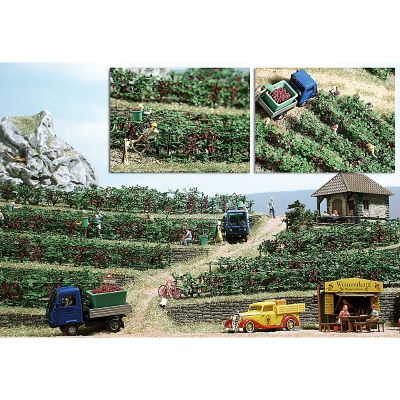
Particularly distinctive in river valleys and upland landscapes. Vine rows follow the slope and are divided by narrow paths, scree and individual retaining walls.


Straight vine rows, steep terraces, natural-stone walls and narrow farm tracks make vineyards an instantly recognisable landscape feature. With suitable vines, soil colours and scenic details, you can create everything from a steep river-valley vineyard to a characteristic wine-growing village.
Designing vineyards on a model railway means combining two apparent opposites: vines usually grow in clearly arranged rows, while slopes, rocks, walls, field margins and paths can remain much more irregular. It is precisely this contrast that creates the characteristic appearance of a vineyard.
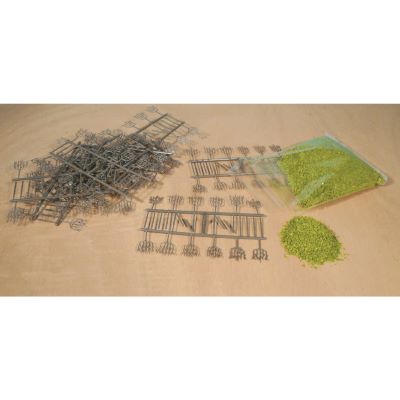
Modellbahnshop offers specialist products such as NOCH vines , the HEKI vine kit and Busch vines . These can be used for individual small plots as well as larger continuous vineyards.
Wine growing is closely associated with sloping terrain. Classic steep vineyards and terraced vineyards therefore create a particularly distinctive scene on a model railway. Dry-stone and rubble-stone walls divide a slope into smaller levels and can simultaneously disguise larger differences in terrain height. Narrow stairways and vineyard paths connect the individual terraces.
The direction of the vine rows is important. A modern vineyard can have straighter rows designed for machinery, while historic or narrow terraced vineyards may look much more compact. The vines do not need to stand like soldiers in a perfect millimetre grid: slight variations beside terrain edges, walls and paths make the scene look more natural.
Particularly distinctive in river valleys and upland landscapes. Vine rows follow the slope and are divided by narrow paths, scree and individual retaining walls.
Several small levels are separated by natural-stone or dry-stone walls. This layout is particularly useful for making a high model railway slope visually interesting.
Long vine rows and wider working lanes look more modern and require fewer retaining walls. The regular rows create a strong graphic pattern in the landscape.
Even a few rows beside a winery, farm or village immediately create a wine-growing atmosphere and work particularly well on compact layouts.
Wine-growing landscapes are often characterised by slopes, dry-stone walls, terraces and narrow working paths. On a model railway these structures can simultaneously divide a difficult hillside into believable sections and create natural transitions between railway line, village and higher terrain.
Mark the vine rows before permanently gluing the plants. Use a ruler, flexible strip or thread to create several parallel guide lines across the area. On curved terraces, the rows can follow the shape of the terrain.
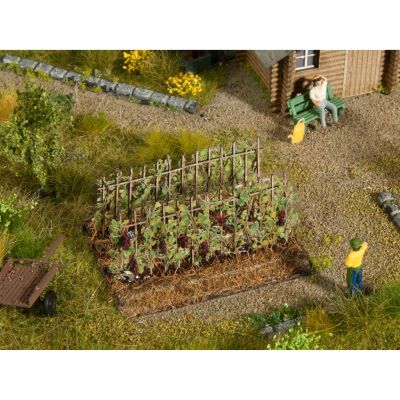
The HEKI vine kit includes vines, foliage and posts and is therefore particularly suitable for larger continuous rows. NOCH offers both vines for H0 and TT and versions with visible grapes for detailed H0 scenes.
The ground remains visible between the rows. Depending on the vineyard being represented, working lanes can be earthy, partly grassed or more heavily vegetated. These gaps prevent the vineyard from looking like one continuous hedge.
Mark the alignment and number of rows on the finished terrain first.
A vehicle or figure can help check the visual scale.
View several complete rows before permanently fixing them.
Earth, short vegetation and wheel tracks connect the rows visually.
Terraces are particularly useful for dividing steep model railway slopes while simultaneously providing space for small areas of vines.
Rigid foam, extruded foam or a ribbed substructure can be shaped in steps. Each level should be wide enough for at least one recognisable vine row and a narrow working area.
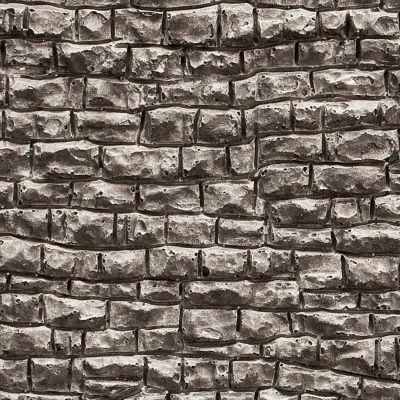
wall panels and textured foam walls can be cut and adapted to the slope. Different wall heights look more natural than identical walls on every terrace.
Narrow steps between terraces make it clear how vineyard workers reach the individual levels. A single stairway can visually connect several terraces.
Small grass tufts, moss and occasional shrubs can grow from selected joints. Most of the stone texture should nevertheless remain visible.
Fine sand, gravel and small stones disguise the transition between wall and terrain and prevent the wall from looking like an element glued onto the scenery.
A retaining wall, slope and vineyard can frame a railway line in a particularly dramatic way. Sufficient clearance from the track and necessary maintenance access should nevertheless remain available.
Vineyard areas should not simply become completely green. Soil remains visible directly beneath the vines and on frequently used working areas. With field ground material , brown spreading material and fine sand, you can create a suitable base.
Working lanes can look very different depending on the scene. A modern vineyard can show partly grassed rows, while a dry summer vineyard may contain much more exposed soil and dusty areas. Small colour differences between individual rows make the surface look more varied.
A narrow field or farm track works well for vehicle access. It should connect the winery, public road and vineyard logically. Narrower footpaths and steps can lead directly between terraces.
Decide between a terraced vineyard, steep slope, gentle hillside or small plot beside a village.
Consider the vineyard, railway line, paths and buildings together.
Create the hillside and, if required, several terraces. Break up hard horizontal transitions afterwards with terrain and vegetation.
Terraces must provide enough space for vines and access paths.
Cut rubble-stone or dry-stone walls to size and connect the individual levels. Include stairways and openings from the beginning.
Avoid making every wall exactly the same height.
Apply several shades of brown, ochre and grey. Bright unfinished surfaces should not remain visible between the vines later.
Give the slope, working lanes and wall edges slightly different tones.
Use a ruler or thread to mark the rows on the prepared areas. On terraces, the lines may follow the shape of the hillside.
Keep enough visible ground between the rows.
Test-position the vines first and then secure them section by section. Slight irregularities at the ends of rows are desirable.
Do not let the vines become an undefined mass of bushes: the row structure must remain visible.
Add farm tracks, grass, wild flowers, scree and occasional bushes primarily around the outer boundaries of the vineyard.
Do not hide cultivated areas completely beneath wild vegetation.
Add buildings, figures, crates and vehicles selectively so that the vineyard clearly reads as an actively cultivated landscape.
The vines remain the main feature; use scenic accessories only as accents.
A vineyard gains even more character when it is visibly connected to the surrounding village or farm. The NOCH Winery “Hauser-Bühler” can form the centre of an H0 scene. A farm track or small road connects the building with the vineyard.
The Preiser Grape Harvest figure set is suitable for an active harvest scene. Arrange figures in small working groups between selected rows. Crates and agricultural details can be added nearby.
A grape harvest looks particularly convincing when the vines themselves visibly carry grapes. Special vines with visible fruit can be used for this purpose. The complete layout does not need to be filled with harvest workers: one concentrated working scene is usually enough.
A central building explains processing, storage and access.
Small groups between the rows create a lively and logical scene.
Details beside the path or winery support the harvest scene.
An access road connects the vines, winery and wider model landscape.
Fresh light-green tones and relatively open vine structures suit the beginning of the growing season.
Denser green foliage, dry tracks and sunny slopes create the classic vineyard appearance.
Grapes, harvest scenes and foliage changing from yellow to reddish tones create an especially distinctive seasonal scene.
Bare vines, visible posts and large areas of exposed soil completely change the appearance and work well on winter layouts.
| Gauge | Scale | Recommended Approach | Special Consideration |
|---|---|---|---|
| Z | 1:220 | Fine scratch-built vine rows and suggested terraces | Use very restrained plant and wall textures |
| N / Nm | 1:160 | Large vineyard areas expressed mainly through repeating row patterns | Small plants or scratch-building make larger vineyards possible |
| TT | 1:120 | Vine rows and terraces on compact model railway areas | NOCH 21540 vines are explicitly offered for H0 and TT |
| H0 / H0e / H0m | 1:87 | Largest selection of vines, walls, figures and buildings | Highly detailed harvest and wine-growing village scenes are possible |
| 0 | approx. 1:45 | Scratch-build and strongly detail individual vines | Posts, wires and ground structure become clearly visible |
| 1 / G | large scales | Large scratch-built vines and individual terraces | Consider material durability on outdoor layouts |
Vines and additional plants for vineyards and rural scenes.
Vine kits, shrubs and vegetation for vineyard edges and terraces.
Terraces, hillside walls and boundaries for classic wine-growing landscapes.
Field soil, earth, sand, gravel and natural materials for vine rows and paths.
Create access routes between the hillside, winery and village.
Wineries, farms and rural buildings as focal points for the scene.
Winegrowers, rural figures and working scenes around the vineyard.
Add vegetation to slopes, working lanes and the outer vineyard edge.
Secure vines, walls, ground materials and vegetation cleanly.
Combine slopes, vines, walls, paths and vegetation into one coherent landscape.
The manufacturer pages provide further vines, scenery materials, walls, buildings and accessories for vineyard scenes.





The product finder loads products from several suitable webshop categories. It searches for vines, vine kits, dry-stone walls, vineyard ground, farm tracks, wineries and grape-harvest figures. Archived products and items explicitly marked as no longer offered are excluded. Stock and delivery status are not displayed on the cards.
Current vineyard products will be loaded …
Spaces and visible soil must keep the individual vine rows recognisable.
Terrain, walls and paths can shorten or slightly offset individual rows.
Soil, gravel, walls and dry areas should remain clearly visible between the vegetation.
Steps and paths explain how individual vineyard plots are reached.
A farm track creates the functional relationship between the building and the vineyard.
A small grape-harvest group is enough. The ordered vine-row structure should remain the main feature.
First shape the hillside. Add terraces and walls where required, followed by ground colours, vine rows, vines, paths and vegetation. Buildings and figures are added last.
Modellbahnshop offers H0 vineyard products from manufacturers including NOCH and Busch as well as the comprehensive HEKI vine kit. Vines with visible grapes are also available for detailed harvest scenes.
Yes. NOCH 21540 vines are specified for H0 and TT and are therefore suitable for vineyard scenes in 1:120 scale.
A universal spacing is not appropriate because historic terraced vineyards and modern machine-worked vineyards use different layouts. Check the spacing visually with suitable figures or agricultural vehicles.
Shape the slope in steps. Cover the visible fronts with rubble-stone or dry-stone walls. Small stairways and paths connect the individual levels.
Irregular rubble-stone, natural-stone and dry-stone textures are particularly suitable for historic terraces. Their colour and stone size should match the surrounding landscape and model scale.
Brown, ochre and grey tones provide the base. Field spreading material, fine sand, small stones and short vegetation can be combined depending on the condition of the vineyard.
A narrow field path made from earth, sand or fine gravel is often enough. On steep terraced vineyards, additional footpaths and steps connect the individual plots.
Vines with visible grapes, a few winegrower figures, crates and a nearby winery create a compact harvest scene. Arrange the figures in small working groups.
Allow vine rows to disappear behind a hill, building or the layout background. Rows running diagonally towards the edge of the layout also create greater visual depth.
Yes. Vineyards beside hillside railway routes are a particularly effective scene. Slopes, retaining walls and the necessary clearance from the track should be represented logically.
Summer offers dense green foliage, while autumn provides especially strong scenery opportunities with grapes, harvest workers and changing leaf colours. Bare winter vines can also create a distinctive scene.
Discover further guides covering meadows, forests, slopes, retaining walls, roads, water scenery, buildings, gauges and layout planning on the central guide page.