
Two hobby routes with different strengths
Collect model railways or build a layout?
The right decision depends on your hobby objective
Collecting models and building a layout are not mutually exclusive. They place different emphasis on space, time, selection, presentation and regular operation.
Display individual models or operate a railway world?
A collection focuses on individual locomotives, coaches, wagons, classes, manufacturers, eras or railway companies. The models are documented, stored securely and often displayed in showcases. A large permanent baseboard is not essential. Organised storage, a clear overview and a well-defined collecting theme are more important.
When building a layout, the vehicles become part of a complete operating system. Track, points, power supply, stations, scenery and buildings must be planned together. A layout requires more continuous space and longer construction phases, but it provides train operation, shunting tasks and a miniature world of your own.
Many model railway enthusiasts choose a middle route. Favourite pieces remain protected in a display case, while a selected operating fleet runs on a small layout, test circuit or shunting module. Valuable models remain secure without removing the active side of the hobby.
Interactive orientation
Does a collection, a layout or the combined route suit you?
The finder compares available space, time, interests, desired operation and any existing stock. All selections remain in the browser.
Collection, operating layout and hybrid project
The three routes compared directly
Use the comparison to plan the required space, divide the budget and decide on the first purchases.
| Criterion | Collect Models | Build a Layout | Combine Both |
|---|---|---|---|
| Required space | Display case, shelving and protected storage. | A continuous and easily accessible baseboard. | A small layout plus organised presentation. |
| Typical focus | Variants, details, history and completeness. | Operation, track planning, scenery and technology. | A selected operating fleet and protected display pieces. |
| Time commitment | Easy to continue in short periods of time. | Longer planning and construction phases. | Flexible stages with train operation available early. |
| Purchasing strategy | Buy according to a collecting theme and a documented gap. | Buy according to an operating task and technical compatibility. | Only part of the collection has to be suitable for the layout. |
| Maintenance | Dust protection, packaging and condition checks. | Track, wheels, points, electrics and vehicles. | Display-case care and a small operational fleet. |
| Particularly suitable for | Detail enthusiasts, historians and variant specialists. | Operators, designers, planners and technical hobbyists. | Model railway enthusiasts whose interests change over time. |
Structure instead of random individual purchases
Build a model railway collection systematically
A clearly defined collecting theme makes selection, documentation, presentation and long-term organisation considerably easier.
Prototype-orientated
Collect by era or railway company
DB, DR, DRG, SBB, ÖBB or a private railway creates a clear historical and geographical framework.
Vehicle-orientated
Document a class or wagon type completely
Running numbers, colour variants, manufacturers, catalogue numbers and production years can be compared in an inventory.
Brand-orientated
Focus on manufacturers and special models
Catalogue wagons, dealer editions and limited series are attractive additions when they remain within a clearly defined theme.
Presentation
Plan the display case and packaging together
Models benefit from dust protection and a calm presentation. Original packaging, instructions and detail parts should be stored separately and labelled.
Condition
Photograph and describe every new acquisition
Useful records include photographs, purchase date, catalogue number, running number, gauge, era, condition and included accessories.
Operational capability
Do not run delicate pieces without checking them
Before a test run, inspect the axles, couplings, current pickup, decoder and stated minimum radius.
From the available area to the first operating day
Build a model railway layout that can be planned and operated reliably
Layout construction becomes easier when decisions follow a fixed sequence and all technical sections are tested before scenery is added.
Measure the area and access
The layout edge, operating aisle, comfortable reach and hidden track must remain accessible.
Select the gauge
Consider model size, train length, radius and safe handling together.
Define the electrical system
Decide between analogue and digital control and, particularly in H0, between two rails and centre contact before buying vehicles.
Define the operating task
A station, siding, branch line or main line gives the track plan a clear purpose.
Check radii and usable lengths
The longest vehicles and complete trains determine curves, platforms and storage tracks.
Test the track before fixing it
Run through points, transitions and reverse curves in both directions at low and higher speeds.
Document the wiring
Label power feeds, cables, feedback detectors and isolated sections clearly.
Add scenery in sections
Fix, ballast and embed the track only after reliable test operation has been established.
Combine protected presentation with train operation
The combined route provides protection and movement
A small operating layout can work alongside a larger collection without every model having to remain on the track.
Rotating operating fleet
Place only suitable vehicles on the layout
Change the operating fleet by era, railway company or operating day. The remaining models stay protected.
Test and presentation track
Demonstrate collection models without a large layout
A straight programming and test track is sufficient for function checks, digitisation and short presentation runs.
Modular principle
Extend a small route in controlled stages
A station, industrial siding or diorama can be completed individually and connected to a larger layout later.
Model size, available space and presentation effect
Which gauge is suitable for collecting or layout building?
Small model sizes save display and baseboard space. Larger models show more visible detail but require wider display cases, larger radii and stronger baseboards.
| Model size and variants | Scale | Model track gauges | Strength for collecting | Strength for layout building |
|---|---|---|---|---|
| Z and Zm | 1:220 | 6.5 and 4.5 mm | Many models within a small amount of shelf space. | Long routes within the smallest base area. |
| N, Nm and Ne | 1:160 | 9, 6.5 and 4.5 mm | Space-saving locomotive and train series. | Long trains and generous stations. |
| TT, TTm, TTe and TTi/TTf | 1:120 | 12, 9, 6.5 and 4.5 mm | Clearly visible models with moderate space requirements. | A balanced compromise for medium-sized areas. |
| H0, H0m, H0e, H0i/H0f and H0p | 1:87 | 16.5 to 4.5 mm | A very broad range of variants and manufacturers. | Extensive accessories for standard, narrow and field railways. |
| 00 | Approximately 1:76 | Usually 16.5 mm | A strong selection of British prototypes. | Suitable for British railway and scenery subjects. |
| S, Sm, Se, Si/Sf and Sp | 1:64 | 22.5 to 6.5 mm | Large individual models with a strong visual effect. | A specialist area with greater space requirements. |
| 0, 0m, 0e, 0i/0f and 0p | Usually 1:45 | 32 to 9 mm | Highly visible detail and high-quality individual models. | Shunting modules and narrow segmented layouts. |
| I/1, Im, Ie, Ii/If and Ip | 1:32 | 45 to 12 mm | Impressive display pieces and technology. | Large rooms, modules and exhibition layouts. |
| II, IIm/G, IIe, IIi/IIf and IIp | 1:22.5 | 64 to 16.5 mm | Large models requiring substantial display space. | Garden railways and generous indoor projects. |
| III, V, VII, X and special dimensions | 1:16 to 1:5.5 | 89 to 260 mm and specialist dimensions | Hand-built models and large-scale pieces. | Garden, park and specialist railways. |
Suitable products for both hobby routes
Present, document, plan and build
The examples show useful products for maintaining a well-organised collection and developing a structured model railway layout.
Display cases, collector models and catalogues
Protection, a clear overview and consistent documentation are the foundation of a collection that remains well maintained.
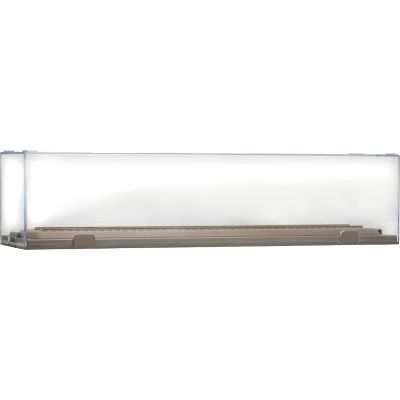 Roco 40026 transparent presentation box
Protected individual presentation
Roco 40026 Presentation Box
A transparent protective box for H0 locomotives and rolling stock with a model length of up to 290 millimetres.
Open Product Details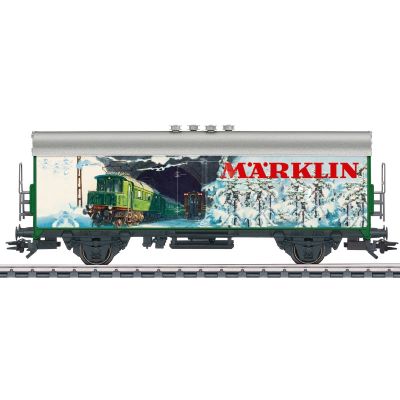 Märklin 45908 historic catalogue wagon
Collector piece with brand history
Märklin 45908 Catalogue Wagon
A printed H0 wagon with a historical catalogue motif and matching catalogue reproduction for a collection or special train.
Open Product Details Märklin 15834 H0 Catalogue 2026/2027
Research and documentation
Märklin H0 Catalogue 2026/2027
A product overview for comparing models, planning a collection and preparing further train formations.
Open Product DetailsTrackbed construction, compact layouts and practical knowledge
Pre-planned trackbeds and detailed construction guides help to turn the first sketch into a stable and operational layout.
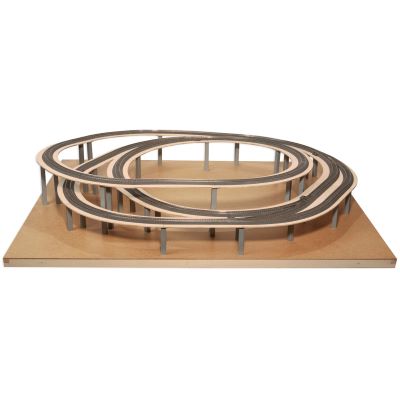 NOCH 53615 Easy-Track Theisensee
Compact H0 layout foundation
NOCH 53615 Theisensee
A pre-planned trackbed with a siding and shunting opportunity for a compact H0 model railway.
Open Product Details NOCH 53605 Easy-Track Andreastal
Pre-planned layout substructure
NOCH 53605 Andreastal
Trackbed sections, supports and track-planning documents create a stable basis for a larger H0 project.
Open Product Details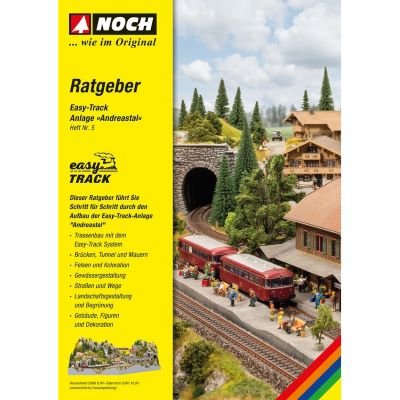 NOCH 71902 Easy-Track Andreastal Guide
Planning and construction guide
NOCH 71902 Andreastal Guide
A step-by-step guide to the trackbed, track, scenery and design, including planning and material information.
Open Product DetailsShowcases
Present models so that they remain protected and visible.
Catalogues
Compare ranges, variants and new product announcements.
Specialist Books
Expand prototype knowledge and construction skills.
Freight Wagons
Build collecting series and operational freight trains.
Starter Sets
Begin operating with coordinated basic equipment.
Track Planning
Prepare radii, stations and operating locations.
Layout Design
Develop terrain, vegetation and detailed scenes.
Cleaning and Care
Preserve reliable operation and collection condition.
Brands for collections and operating layouts
Select manufacturers according to their range and your hobby objective
Some brands provide extensive vehicle ranges and variations, while others focus on track, scenery, buildings or presentation products.







Answers before choosing the first route
Frequently asked questions about collecting and layout building
These answers cover space, selection, value, operation, documentation and changing from one hobby route to the other.
Collect model railways or build a layout – which is better?
Neither route is universally better. Collecting suits an interest in detail and requires little continuous floor area. Layout building suits train operation, scenery and technical projects.
Can I collect models and still operate trains regularly?
Yes. Divide the stock into display models and operating models. Delicate pieces remain protected, while robust vehicles are used regularly.
Which collecting theme is suitable for a first collection?
Choose a locomotive class, railway company, era, wagon type or manufacturer. A limited theme helps prevent an unstructured series of random purchases.
Are model railways a safe investment?
No guaranteed value development exists. Individual models may become desirable, but the main reason to collect should remain an interest in the model and its prototype.
How much space does a collection require?
This depends on the gauge and presentation method. In addition to display space, allow storage for packaging, instructions, detail parts and shipping cartons.
How small can an operational layout be?
A shunting board, a diorama with an operating track or a compact segment can already provide useful train operation. A closed circuit is not essential.
Which gauge is especially suitable for collectors?
H0 provides a particularly broad variety. N and Z require less display space. Gauge 0 and Gauge 1 present individual models with a particularly strong visual effect.
Which gauge is suitable for a small layout?
N and TT provide more route length within a small area. H0 works well for compact branch-line, shunting and segmented layouts.
Must every collector model be ready to run?
No. Static and display models can be valid parts of a collection. For layout operation, the drive, wheelsets, coupling and electrical system must be suitable.
What should I buy first?
Collectors should begin with an inventory and suitable presentation. Layout builders should begin with a track plan, test circuit or coordinated starter set instead of many unrelated individual models.
Your hobby route can continue to grow
Collect model railways or build a layout? Your route may change over time
Explore gauges, track systems, digital technology, layout planning, railway companies, eras, vehicles, maintenance and scenery in greater detail on the central English model railway guide page.
Go to the Model Railway GuideContent reviewed and updated: 30 July 2026. The technical specifications for each individual product remain authoritative.