Modellbahn Keks
Welcome!
Our cookies offer you a fast, relaxed and full-featured shopping experience. Some are necessary to operate the website and its functions. Others help us to improve our services. If you agree to this, simply consent to the use of cookies for preferences, statistics and marketing by clicking on "OK". Alternatively, you can deactivate individual cookies under "Customise cookies" or all cookies, except those required for the function of our website, under "Reject all".
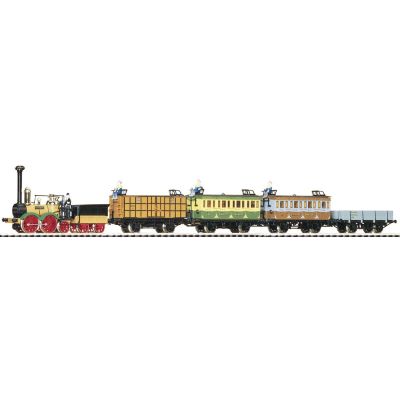
Model railway with a steam locomotive and freight train representing railway eras I to VI
From state railways to the modern railway

Model Railway Eras I–VI | Overview & Recommendations

Discover all six German railway eras, including their periods, railway companies, typical locomotives, coaches, train formations, gauges and direct recommendations for the detailed era guides.

Historical classification for your model railway

What Do Eras Mean in Model Railways?

Model railway eras divide railway history into periods that can be distinguished by their technology and appearance. They help you combine locomotives, coaches, railway companies, lettering, signals, buildings and road vehicles in a historically consistent way. An era describes the prototype being represented rather than the age of the model or the control system being used.

A historic steam locomotive may therefore be equipped with a modern digital decoder. The important visual features are the running number, railway administration, colour scheme and lettering shown on the model. At the transition between two eras, older vehicles frequently remained in use but were gradually renumbered, repainted or technically modified.

Eras I to VI extend from the regional state railways of the nineteenth century through the DRG, Deutsche Bundesbahn and Deutsche Reichsbahn to today’s railway world with ICE, Vectron, Railjet, private operators and internationally operated freight trains.

Direct links to the detailed guides

All Model Railway Eras from I to VI

Choose the railway world that best matches your favourite vehicles, available space and planned operation. Each detailed page contains further information about vehicles, train formations, scenery, infrastructure and suitable gauges.

Era I 1835–1920 · State railway period

The Beginnings of the Railway

Prussia, Bavaria, Saxony, Württemberg, Baden and other German states operated their own railway administrations. Locomotives and coaches carried characteristic regional colours, emblems and designs. Short passenger trains, local railways, small goods stations and early express trains create particularly individual layout themes.

Recommendation

Ideal for enthusiasts of decorative steam locomotives, historic stations, Saxon narrow gauge and regionally consistent train formations.

H0 · TT · N · H0e · H0m · 0 · 1 · G
Explore Era I in Detail
Era II 1920–1950 · DRG and Reichsbahn

Standardisation and the Great Steam Era

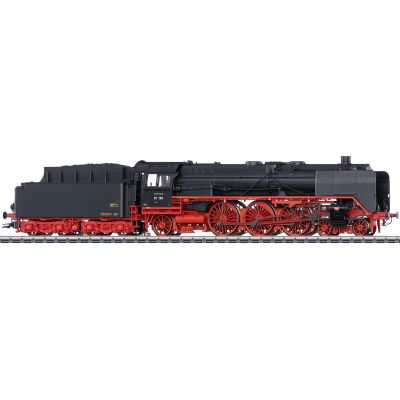
The former state railways were incorporated into a common Reichsbahn. Locomotives inherited from the state railways operated alongside new standard classes. Large express locomotives, heavy freight trains, compartment coaches, semaphore signals, locomotive depots and extensive local freight facilities are especially typical.

Recommendation

A good choice for classic DRG trains, steam locomotive depots, mixed freight trains and stations representing the 1920s and 1930s.

Z · N · TT · H0 · H0e · 0 · 1 · G · II
Explore Era II in Detail
Era III 1949–1970 · DB and DR

Reconstruction and Changing Traction

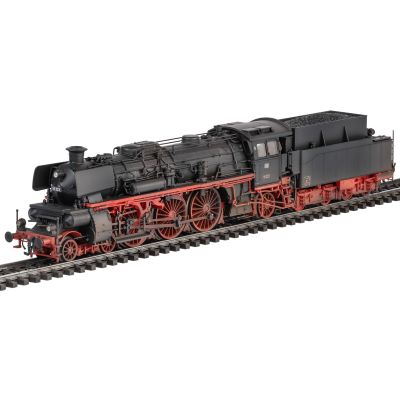
The Deutsche Bundesbahn and Deutsche Reichsbahn developed separately. Steam locomotives initially dominated operations but were increasingly supplemented by diesel and electric locomotives. Conversion coaches, Reko coaches, railbuses, semi-fast trains and short branch-line trains provide a particularly wide selection.

Recommendation

Highly versatile for steam, diesel and electric operation and for West German Bundesbahn, East German Reichsbahn and narrow-gauge themes.

Z · N · TT · H0 · H0e · H0m · 0 · 1 · G
Explore Era III in Detail
Era IV 1965–1990 · Computerised numbers

Diesel, Electric and Modern Express Traffic

Computer-compatible vehicle numbers are among the most important identifying features. The DB introduced InterCity, Silberling coaches, ocean blue and beige vehicles and later product colours. The DR used Städteexpress, double-deck trains, Ludmilla locomotives, Classes 118 and 243 and continued to rely on significant steam operation.

Recommendation

Suitable for modellers who prefer the railways of the 1970s and 1980s, East German traffic, classic InterCity services or colourful freight trains.

Z · N · TT · H0 · H0m · H0e · 0 · 1 · G
Explore Era IV in Detail
Era V 1990–2006 · DB AG and ICE

Reunification and Railway Reform

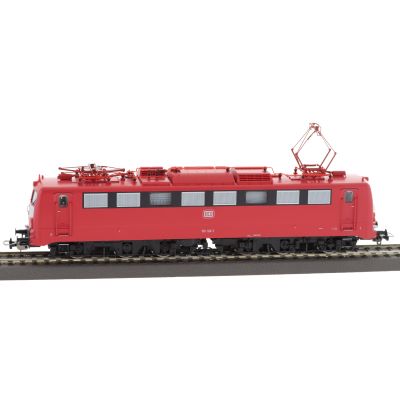
DB and DR vehicles initially operated alongside one another. From 1994, Deutsche Bahn AG increasingly shaped the railway scene. Orient red, traffic red, Interregio, ICE, regionalisation, Railion and new private operators made the era highly varied. Older and newer colour schemes can appear together in scenes representing clearly defined years.

Recommendation

Ideal for the post-reunification period, ICE main lines, Interregio services, traffic-red regional trains and structural changes in freight traffic.

Z · N · TT · H0 · H0m · H0e · 0 · 1 · G
Explore Era V in Detail
Era VI Since 2007 · Present-day railways

International, Varied and Modern

Twelve-digit vehicle numbers, ICE, Railjet, Nightjet, Vectron, Taurus, TRAXX, modern regional multiple units, leasing locomotives and private operators define the scene. Container, tank, car, steel, timber and bulk trains dominate international freight corridors.

Recommendation

The right era for modern stations, current long-distance services, colourful private operators, digital functions and international trains.

Z · N · TT · H0 · H0m · H0e · 0 · 1 · G
Explore Era VI in Detail
Periods and typical features

Model Railway Eras in a Direct Comparison

The boundaries may vary depending on the country and specific prototype. For a historically accurate selection, the year represented should therefore be checked in addition to the general era classification.

Era German period Defining railway world Typical vehicles Suitable layout themes
I 1835–1920 State railways and regional administrations Early steam locomotives, local coaches and compartment coaches Light railway, state-railway station and early main line
II 1920–1950 DRG and Deutsche Reichsbahn Classes 01, 44, 50, 64, 86, E 18 and E 44 Locomotive depot, express train and local freight facility
III 1949–1970 Deutsche Bundesbahn and Deutsche Reichsbahn Steam locomotives, V 100, V 200, E 10 and Reko coaches Branch line, reconstruction and changing traction
IV 1965–1990 DB and DR with computerised numbers Classes 103, 118, 132, 218, 243 and InterCity Städteexpress, InterCity, S-Bahn and freight yard
V 1990–2006 Reunification, DB AG and private operators ICE, Interregio and Classes 101, 145, 152 and 182 High-speed traffic, regional railways and Railion
VI Since 2007 International and liberalised railway traffic Vectron, Taurus, TRAXX, ICE 4 and modern multiple units Intermodal traffic, private operators, Nightjet and modern regional traffic
Guidance for layout builders and collectors

Which Model Railway Era Is Right for Me?

Choose According to Your Favourite Vehicles

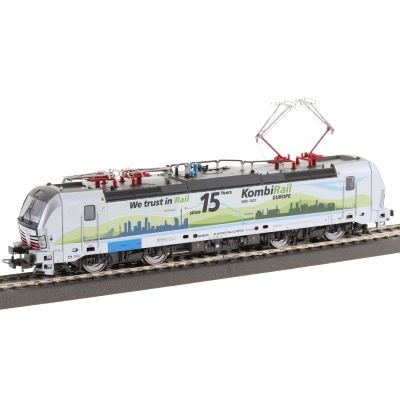
Large state-railway steam locomotives point towards Era I, while classic Reichsbahn standard locomotives suit Era II. Era III offers particularly varied possibilities for combining steam, diesel and electric traction. InterCity, Ludmilla and bold colour schemes lead towards Era IV. ICE and DB AG suit Era V, while Vectron, Railjet and private operators belong primarily to Era VI.

Practical starting point

Select a favourite locomotive first and then plan a complete, matching train.

Decide According to the Layout Theme

Small state-railway and branch-line stations usually require less space than modern ICE routes. Eras II and III are ideal for shunting, goods sheds and locomotive depots. Era IV offers classic main and branch-line operation. In Eras V and VI, modern halts, container terminals, regional traffic and international main lines are especially convincing.

Practical rule

A clearly defined year makes it easier to select buildings, vehicles, advertising and road traffic.

Consider the Gauge and Available Space

H0 offers the largest selection across all eras. TT is particularly strong for DR, DB and Central European prototypes. N and Z allow long main-line trains to operate in a small area. H0e and H0m suit historic and modern narrow gauge. Gauges 0 and 1 provide an impressive level of detail, while G gauge offers large vehicles for indoor and garden railways.

Check before purchasing

Check the gauge, power system, digital interface, minimum radius, coupling and available platform length.

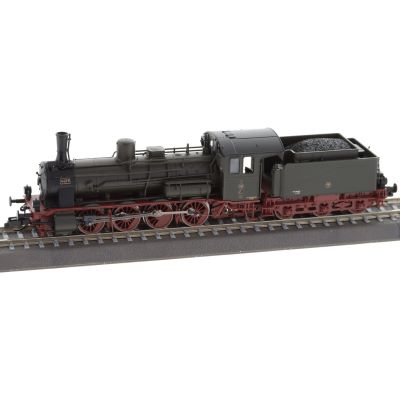
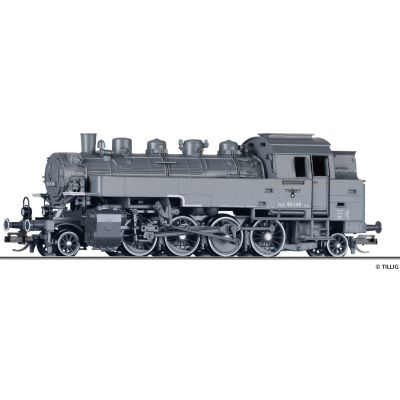
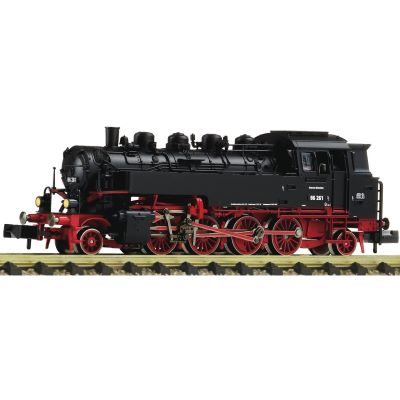
24 examples from six railway eras

Suitable Model Railway Products by Era and Gauge

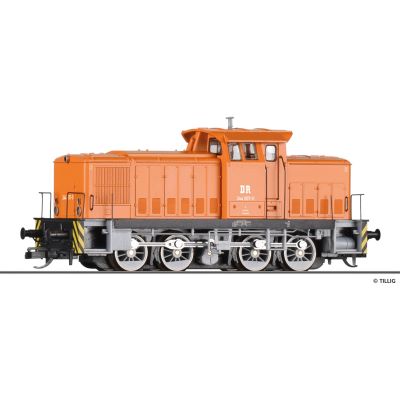
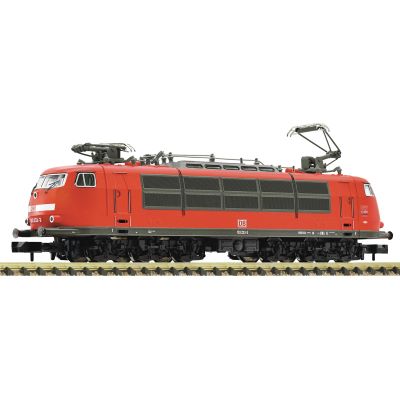
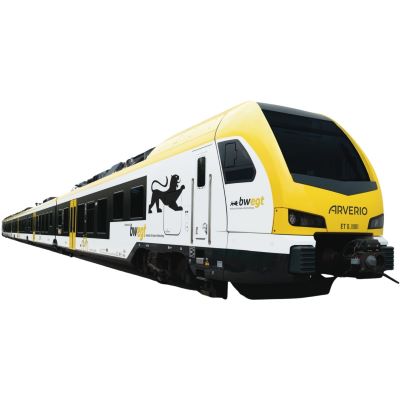
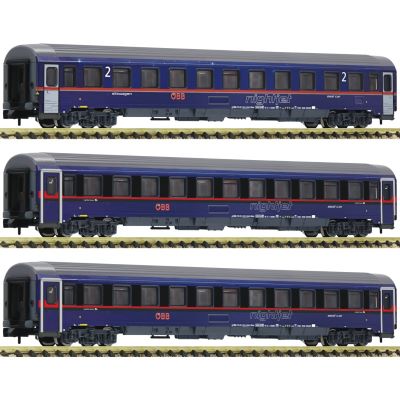
The selection shows characteristic locomotives, multiple units, coaches, wagons and train packs. For a complete railway scene, the locomotive, rolling stock, railway company, lettering and year represented should match.

Questions and answers

Frequently Asked Questions About Model Railway Eras

Which Model Railway Era Is Suitable for Beginners?

Every era can be suitable for beginners. Starting is especially straightforward when a favourite locomotive or railway company has already been selected. Eras III and IV offer a particularly large vehicle range. Era VI is suitable for enthusiasts who prefer modern trains and stations.

Can Different Eras Be Combined on One Layout?

Transitional situations are possible because older vehicles frequently remained in service. An arbitrary mixture of widely separated eras is rarely prototypical. Check the running number, logo, colour scheme and specific year represented.

Which Era Offers the Most Steam Locomotives?

Era II and early Era III offer especially varied steam themes. Era I is interesting for regional state-railway locomotives. Era IV can represent the final scheduled steam services or heritage vehicles.

Which Era Suits ICE and Modern High-Speed Trains?

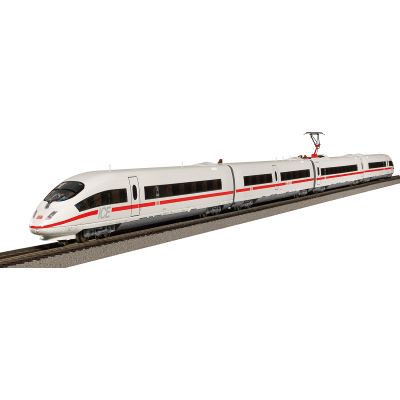
The introduction of the ICE belongs to Era V. ICE 1, ICE 2 and ICE 3 trains suit layouts representing the 1990s and early 2000s. Current ICE classes and modern international high-speed trains belong primarily to Era VI.

Which Era Is Suitable for an East German Railway Layout?

The East German Deutsche Reichsbahn is represented primarily in Eras III and IV. Era III shows reconstruction and intensive steam operation. Era IV includes Städteexpress, double-deck trains, Classes 118, 132 and 243 and typical East German road vehicles.

Which Gauge Is Suitable for Historic Eras?

H0 offers the largest selection. TT is especially strong for German and East German prototypes. N and Z allow longer trains to operate on a small area. H0e and H0m are ideal for historic light and narrow-gauge railways. Gauges 0, 1 and G provide an impressive level of visible detail.

Can a Historic Layout Be Controlled Digitally?

Yes. The era describes the prototype represented rather than the layout’s control technology. Historic locomotives can use decoders, sound, digitally controlled lighting or energy storage without changing their era-appropriate appearance.

How Can I Identify the Era of a Model?

Important indicators include the railway company, running number, logo, colour scheme, class designation and technical inscriptions. The product description normally states an era. For transitional periods, the precise operating year represented by the model should also be checked.