1930s
Wismar Rail Bus
Lightweight rail buses offer financially constrained private and secondary railways an economical alternative to steam operation.

VT 95, VT 98, the East German VT 2.09 and the distinctive Wismar rail bus made economical passenger services possible on lightly used branch lines. Discover their history, characteristic types, railway eras and current models from H0 and N to narrow gauge and G scale.
A rail bus is a lightweight powered rail vehicle with an internal-combustion engine that was designed primarily for local passenger services on branch lines with relatively low traffic volumes.
In Germany, rail buses became especially important from the 1950s onwards. They provided a considerably more economical alternative to operating a steam locomotive with several conventional passenger coaches on lightly used rural routes.
Their low vehicle weight, comparatively simple design and modest operating requirements made them well suited to secondary lines with lower axle-load limits and small stations.
The most familiar German examples include the Uerdingen VT 95 and VT 98, the East German VT 2.09 and the earlier Wismar rail buses.
Visually, many German rail buses are immediately recognisable by their compact body, wide front windows and characteristic red railway liveries.
On a model railway they are particularly attractive because their short length allows believable passenger operation on compact branch-line stations where a conventional locomotive-hauled train would require considerably more space.
The roots of the German rail bus can be traced back to the 1930s, when small and private railways were searching for economical alternatives to steam-powered passenger trains.
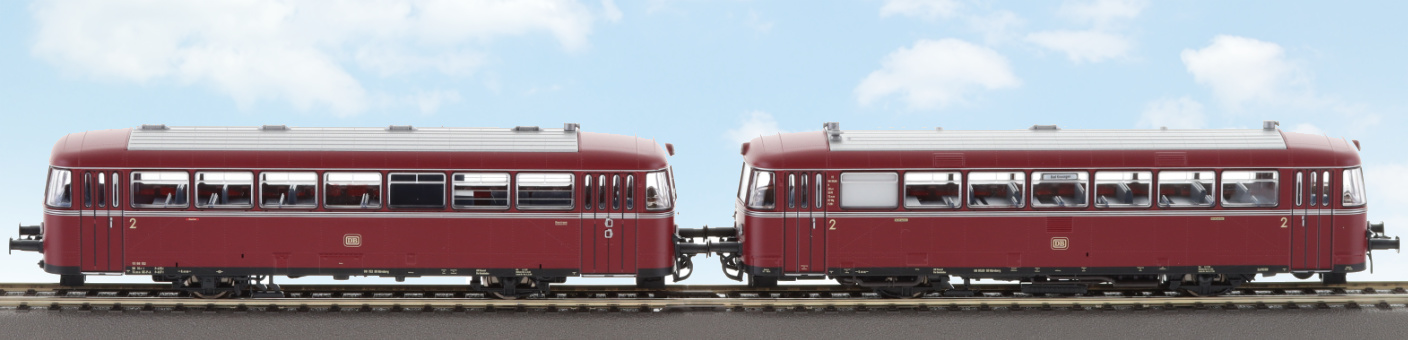
One of the most distinctive early solutions was the Wismar rail bus, developed by Waggonfabrik Wismar for lightly used standard- and narrow-gauge railways. Its characteristic front ends later earned it the nickname Schweineschnäuzchen – “Pig's Snout”.
After the Second World War, the Deutsche Bundesbahn developed the famous Uerdingen rail bus family. The single-engined VT 95, later Class 795, was followed by the more powerful twin-engined VT 98, later Class 798.
The VT 98 could operate with matching trailers and driving trailers and was also capable of handling additional vehicles in appropriate service conditions. Its flexibility helped it become one of the defining vehicles of West German branch-line passenger transport.
In East Germany, development of a corresponding lightweight railcar began at VEB Waggonbau Bautzen during the 1950s. Prototype development started in the second half of the decade, while the VT 2.09 entered series production from 1962.
The vehicles were renumbered as Classes 171 and 172 from 1970 and later became Classes 771 and 772 after the introduction of the Deutsche Bahn numbering system.
The VT 2.09 became especially well known under the nickname “Ferkeltaxe” – literally “Piglet Taxi” – reflecting its close association with rural branch-line traffic.
Lightweight rail buses offer financially constrained private and secondary railways an economical alternative to steam operation.
Deutsche Bundesbahn introduces the Uerdingen rail buses that would become synonymous with West German branch lines.
The Deutsche Reichsbahn introduces series-built lightweight railcars for rural and regional passenger services.
Historic rail buses survive in preservation, excursion traffic and special services long after their original regular duties have ended.
| Type | Later Class | Railway | Common Name / Character |
|---|---|---|---|
| VT 95 | BR 795 | Deutsche Bundesbahn | Uerdingen rail bus · single-engined version |
| VT 98 | BR 798 | Deutsche Bundesbahn | Uerdingen rail bus · “Red Railcar” · classic branch-line vehicle |
| VT 2.09 | BR 171 / 172 · later 771 / 772 | Deutsche Reichsbahn | “Ferkeltaxe” · lightweight East German rail bus |
| Wismar Rail Bus | Various private and state railway designations | Small railways, DB, DR and private operators | “Schweineschnäuzchen” / “Pig's Snout” |
| Esslingen Railcar | Operator-specific | Mainly private and non-federal railways | “Esslinger” |
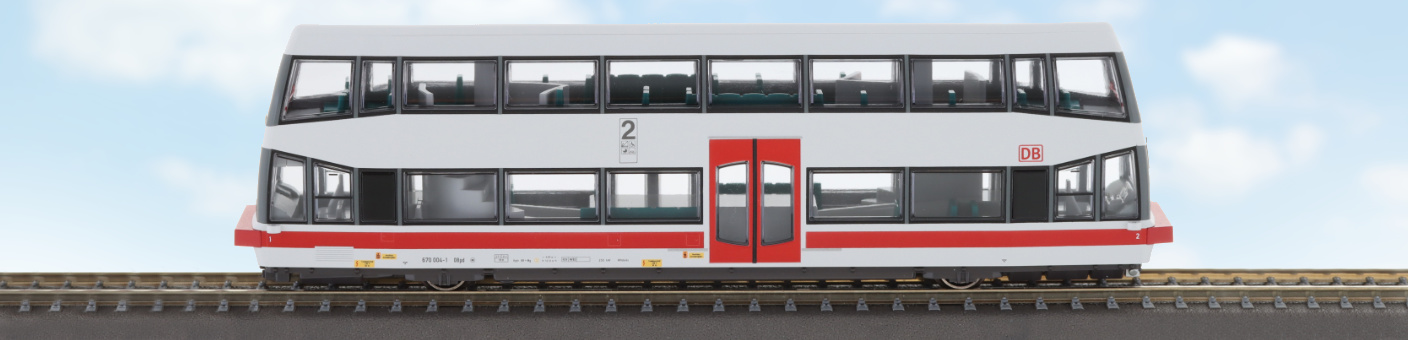
| Class 670 | BR 670 | DB AG and later private operators | Double-decker rail bus |
The nickname is strongly associated with the East German VT 2.09 and its later 171/172 and 771/772 classifications. It should not be used as the standard nickname for the DB VT 95.
Rail buses became strongly associated with rural Germany because they could maintain passenger services on routes where operating conventional locomotive-hauled trains was increasingly uneconomical.
Typical operating environments included the Hunsrückbahn, Teckbahn, branch lines in the Allgäu and numerous routes in Saxony and Thuringia.
Historic and preserved examples have also appeared with museum and heritage railway organisations such as the Hochwaldbahn and DEV, while various private operators have continued to use individual rail buses for excursion or special traffic.
The simplest branch-line service consists of a single powered rail bus travelling between small rural stations.
A matching trailer increases passenger capacity without requiring a conventional locomotive.
A driving trailer allows the train to reverse direction without moving the powered vehicle to the other end.
Suitable rail bus types could also handle additional vehicles or light railway duties beyond a simple two-car passenger set.
Wismar and other early lightweight railcars fit pre-war small-railway and regional railway themes.
The classic period for VT 95, VT 98, early VT 2.09 vehicles and many Wismar rail buses.
Classes 795, 798, 171 and 172 remain important in regional transport while diesel locomotives and newer railcars increasingly take over.
Historic rail buses increasingly appear as museum vehicles, excursion trains or with private railway operators.
Preserved vehicles and unusual later designs such as the Class 670 allow rail bus themes to continue on contemporary layouts.
Railway era becomes especially convincing when the rail bus, platform details, cars, buses, buildings and advertising all belong to the same historical period.
| Gauge | Scale | Typical Rail Bus Models | Layout Strength |
|---|---|---|---|
| H0 | 1:87 | VT 95 / 795, VT 98 / 798, VT 2.09, Wismar rail bus, Class 670 | Largest choice and highly visible detail |
| N | 1:160 | Class 798 with control car and other compact railcars | Long branch lines in a small area |
| TT | 1:120 | DR rail buses and lightweight regional railcars | Excellent compromise between detail and route length |
| H0m | 1:87 | Wismar rail bus T 41 and other metre-gauge railcars | Private, museum and metre-gauge branch railways |
| H0e | 1:87 | Narrow-gauge Wismar rail buses | Compact narrow-gauge branch-line operation |
| G | Often around 1:22.5 | Large PIKO VT 98 rail bus and matching vehicles | Garden railways and highly visible large-scale detail |
The live shop category can be filtered by gauge, manufacturer, railway company, era, power system, analogue or digital operation and sound.
Product availability changes over time. The current shop contains rail bus and lightweight railcar models from several major and specialist manufacturers.

| Manufacturer | Rail Bus / Railcar Focus |
|---|---|
| Märklin / Trix | Wismar-type rail buses and digitally equipped H0 railcars |
| Liliput | Historic branch-line and lightweight railcar themes |
| Roco | Regional railcars and modern lightweight passenger vehicles |
| PIKO | BR 798 / VT 98, DR VT 2.09 and G-scale rail bus models |
| Bemo | Wismar rail buses in H0, H0e and H0m |
| Kres | Class 670 double-decker rail buses and specialist railcars |
Older versions of this guide linked to several products that have since left the range, including PIKO 52735 and LGB 24662. The following selection therefore uses current or currently orderable product pages wherever possible.

Modern Märklin interpretation of the famous Wismar “Pig's Snout” with extensive digital, lighting and sound functions.
View Product →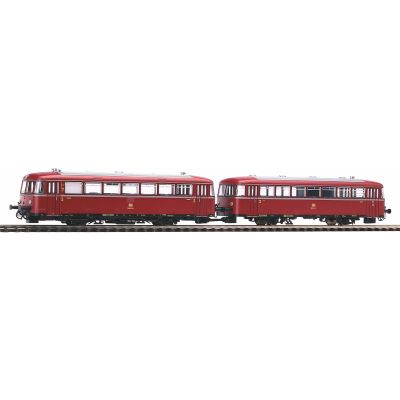
Classic two-car Uerdingen rail bus formation for Deutsche Bundesbahn Era IV branch-line operation.
View Product →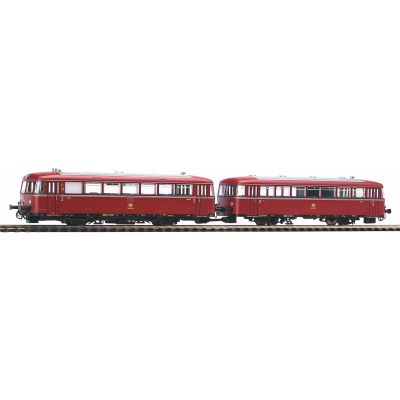
Digital-sound version with switchable interior lighting, illuminated destination displays and current-conducting close coupling.
View Product →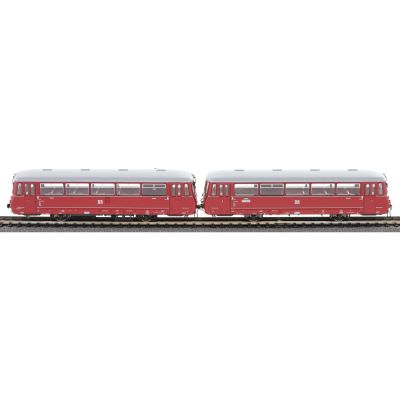
East German branch-line classic with digital sound, switchable interior lighting and characteristic Era III DR appearance.
View Product →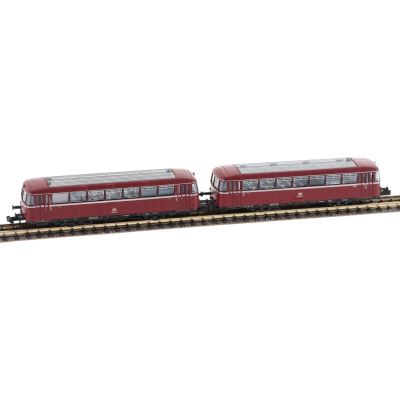
Compact N-scale version of the famous DB rail bus, ideal for long rural routes in limited space.
View Product →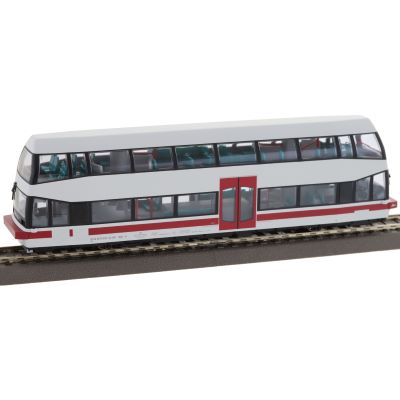
Unusual double-decker rail bus with interior lighting and red/white directional lighting.
View Product →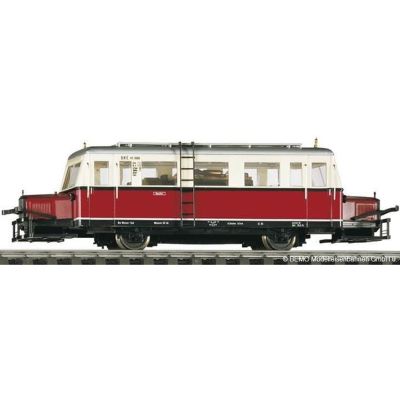
Standard-gauge OHE version of the characteristic Wismar “Hannover” type rail bus with five-pole drive.
View Product →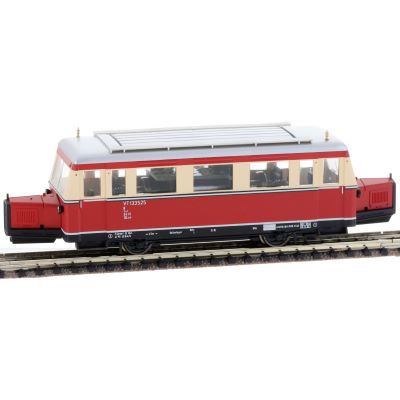
Narrow-gauge Wismar rail bus in 1:87 for compact DR branch-line and heritage railway layouts.
View Product →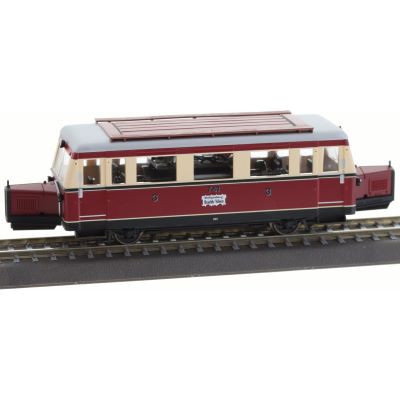
Metre-gauge Wismar rail bus representing the DEV Bruchhausen-Vilsen heritage railway world.
View Product →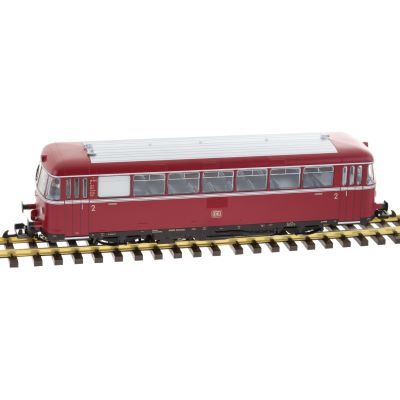
Large-scale version of the famous DB branch-line rail bus with directional lighting and retrofit options.
View Product →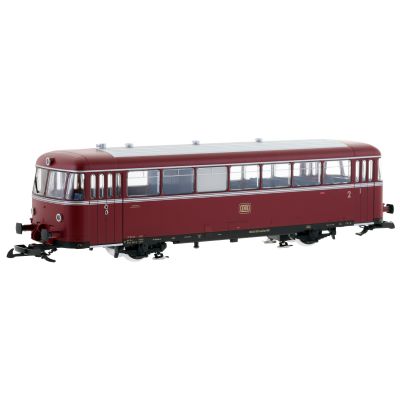
Matching passenger vehicle for expanding the PIKO large-scale rail bus formation.
View Product →Prices and stock levels are deliberately not reproduced on this editorial page. Use the linked product pages and live railcar category for current availability.
Filter the current shop range by gauge, manufacturer, railway company, era, electrical system, analogue or digital operation and sound.
Rail buses are ideal for model railway users who want believable passenger operation without building a large main-line station.
Era III works particularly well for classic VT 95, VT 98 and early VT 2.09 scenes. Era IV adds later classifications and changing railway colours.
One platform track, a goods siding and a small station building are already sufficient for convincing branch-line operation.
A rail bus with driving trailer can shuttle between two termini without requiring a continuous circuit.
Two rail buses can cross at a rural station and create timetable-based operation with only a few turnouts.
Small villages, road crossings, farms and modest station facilities reinforce the typical branch-line atmosphere.
A preserved Wismar or Uerdingen rail bus can also appear on a modern Era V or VI layout as an excursion or heritage train.
Rail bus shuttle operation is ideal for shelf and compact room layouts.
Coordinate track plan, space, stations and operating concept before construction.
Small stations, platforms, goods sheds and engine facilities for branch-line scenes.
Match cars, buses and commercial vehicles to the selected railway era.
Compact railcars frequently depend on a relatively short wheelbase for electrical pickup. Clean wheels and rails are therefore especially important for reliable slow-speed operation.
Remove dirt and oxidation using methods suitable for the exact model and track system.
Follow the manufacturer instructions and avoid excessive oil on gears, wheels or electrical contacts.
Current-conducting couplings and close-coupling mechanisms must move freely through the layout's smallest curves.
Check direction-dependent lighting, interior lighting, sound and decoder response before returning the train to regular operation.
The Modellbahnshop maintenance guide covers cleaning, lubrication, wheel care, storage and regular inspection for locomotives and powered models.
Whether as a Uerdingen rail bus, East German “Ferkeltaxe”, Wismar “Pig's Snout” or unusual double-decker Class 670, the rail bus represents a distinctive chapter of German railway history.
Its compact dimensions, unmistakable appearance and association with lightly used rural routes make it particularly suitable for small and medium-sized model railways.
A single railcar can provide believable passenger operation, while a trailer or driving trailer expands the train without requiring the platform length of a conventional locomotive-hauled set.
This makes rail buses ideal for rural scenes, museum railways, heritage operation and realistic branch-line passenger traffic in the model.
A rail bus is a lightweight powered rail vehicle, usually with a diesel engine, designed primarily for economical regional and branch-line passenger services.
Both belong to the Uerdingen rail bus family. The VT 95 was the lighter single-engined version, while the more powerful VT 98 used two engines and was designed for more demanding train formations.
VT 98 railcars were redesignated as Class 798 under the Deutsche Bundesbahn computer-numbering system. Matching driving and trailer vehicles received Class 998 numbers.
The nickname is particularly associated with the Deutsche Reichsbahn VT 2.09, later Classes 171/172 and subsequently 771/772.
The Wismar rail bus was developed in the 1930s as an economical rail vehicle for small and private railways. Its characteristic engine hoods gave it the nickname “Schweineschnäuzchen” or “Pig's Snout”.
Eras III and IV are particularly suitable for regular branch-line service. Older Wismar vehicles can also fit Era II, while preserved vehicles and Class 670 models can appear in Eras V and VI.
Yes. Their short length and ability to operate as solo vehicles or short two-car formations make them excellent for compact stations, shelf layouts and point-to-point routes.
Yes. Current models include factory-digital versions with sound, switchable interior lighting and additional lighting functions. Equipment varies by catalogue number.
Current and historical Modellbahnshop products include rail buses and related railcars in H0, N, TT, H0e, H0m and G, among other gauges.
Yes. Several prototypes were specifically designed for operation with matching trailers or driving trailers. On the model railway, use the vehicles intended for the exact rail bus family and manufacturer.
Yes, when it represents a preserved vehicle, excursion service or private railway operation. The unusual Class 670 is also directly suitable for later-era themes.
Check gauge, electrical system, analogue or digital control, sound equipment, minimum radius, railway company, railway era and whether matching trailers or driving trailers are required.
From the Wismar rail bus to the VT 98 and East German Ferkeltaxe, compact powered railcars create convincing passenger operation even when layout space is limited.
English links, current product pages and historical corrections checked: 16 August 2026.