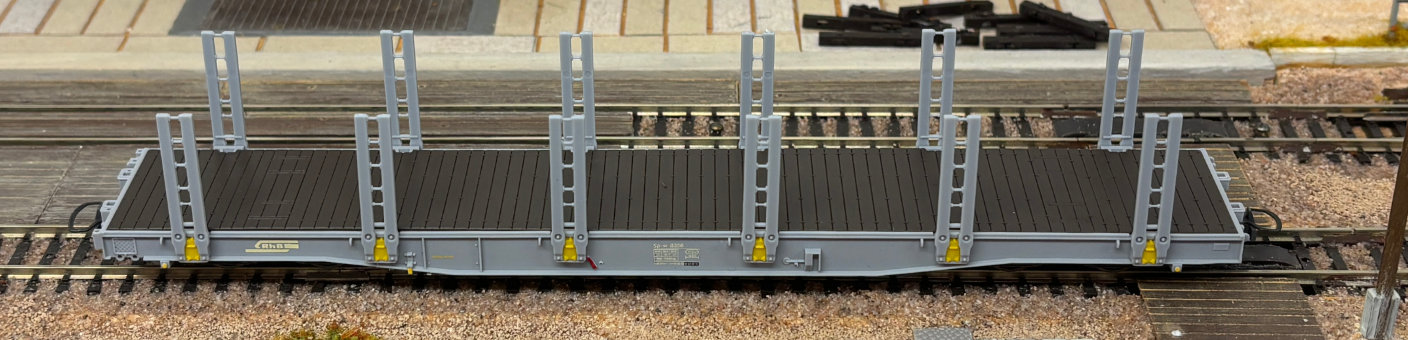
1:87 Scale
The same model scale as conventional H0.

H0m combines the detailed 1:87 scale of H0 with a narrow 12 mm model track gauge. Recreate the Rhaetian Railway, Matterhorn Gotthard Bahn, MOB, Harz narrow-gauge railways and other metre-gauge systems with realistic mountain routes, passenger trains, freight traffic and digital operation.
H0m Gauge Model Railway: Metre Gauge in 1:87 combines the familiar H0 scale with a narrower model track. Locomotives, multiple units and rolling stock are built at 1:87 scale, but they do not run on conventional 16.5 mm H0 standard-gauge track.
H0m uses a model track gauge of 12 mm. The letter “m” stands for metre gauge. The corresponding prototype group covers gauges from approximately 850 mm to below 1,250 mm, with the 1,000 mm metre gauge being the most important example.
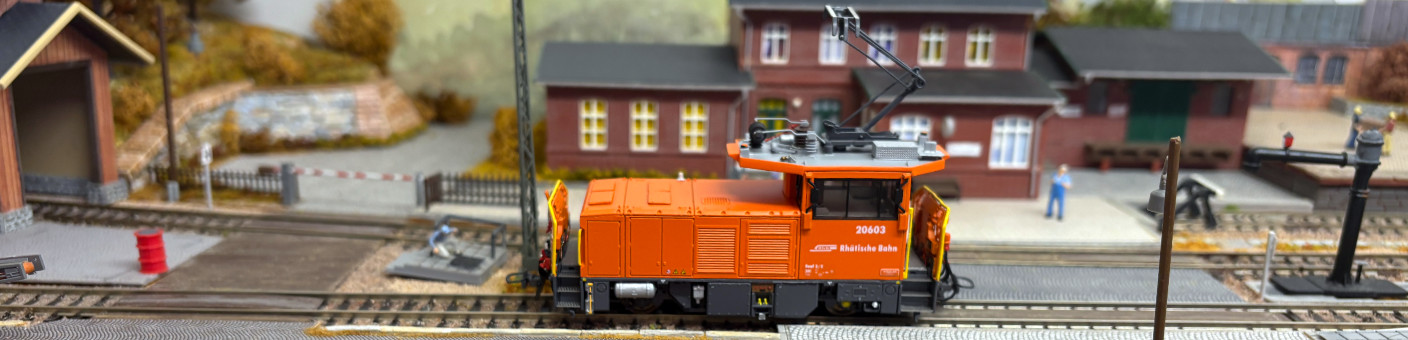
This makes H0m particularly suitable for well-known metre-gauge railway systems such as the Rhaetian Railway, Matterhorn Gotthard Bahn, Montreux–Berner Oberland-Bahn and Harz narrow-gauge railways.
H0m vehicles retain the same overall scale as conventional H0 models. Fine lettering, grab rails, interiors, lighting and digital functions therefore remain clearly visible.
At the same time, the narrower track allows comparatively compact stations, tight valleys, street-running sections, small depots and landscape-focused mountain routes.
H0 and H0m can share the same buildings, figures, road vehicles and scenery materials. A standard-gauge H0 station can therefore be positioned convincingly beside a metre-gauge terminus.
For train operation, however, the two systems require separate track or specially designed dual-gauge track.
The same model scale as conventional H0.
Narrower model track for metre-gauge railway prototypes.
The classic metre-gauge railway is the main H0m application.
Analogue DC or digital operation, commonly using DCC.
Scale, model track gauge and prototype gauge are different specifications. The letters following the basic scale indicate which narrow-gauge prototype group is represented.
| Designation | Scale | Model Track | Prototype Gauge | Typical Use |
|---|---|---|---|---|
| H0 | 1:87 | 16.5 mm | Standard gauge · 1,435 mm | Main lines, branch lines and urban railways |
| H0m | 1:87 | 12 mm | 850 to below 1,250 mm | Metre gauge, RhB, MGB, MOB and HSB |
| H0e | 1:87 | 9 mm | 650 to below 850 mm | 750 and 760 mm narrow-gauge railways |
| H0f | 1:87 | 6.5 mm | 400 to below 650 mm | Field, mine and industrial railways |
| TTm | 1:120 | 9 mm | Metre-gauge group | Compact metre-gauge railway in TT scale |
| Nm | 1:160 | 6.5 mm | Metre-gauge group | Very compact mountain and regional railways |
| Zm | 1:220 | 4.5 mm | Metre-gauge group | Specialist and small-series layouts |
| 0m | Usually around 1:45 | 22.5 mm | Metre-gauge group | Large narrow-gauge and shunting layouts |
| 1m | 1:32 | 32 mm | Metre-gauge group | Large-scale and specialist models |
| IIm / G | Often 1:22.5 | 45 mm | Predominantly metre gauge | Large-scale and garden railways |
The same nominal track gauge does not guarantee full compatibility. Scale, sleeper spacing, rail profile, turnout geometry and wheelset dimensions can differ.
For a visually and technically coherent metre-gauge layout, use track and turnouts specifically intended for H0m whenever possible.
Compare scale, track gauge, space requirements and typical applications before selecting your model railway system.
Selecting a specific railway company and era makes it easier to choose locomotives, rolling stock, buildings, catenary, signals and scenery.
H0m offers everything from modern electric Alpine operation to historic steam, freight and heritage trains.
Red electric locomotives, Capricorn and Allegra multiple units, Glacier Express trains, container wagons and characteristic viaducts create one of the most varied H0m themes.
Passenger and freight traffic can be combined naturally on the same mountain railway.
Rack locomotives, regional coaches, panoramic trains and Alpine stations suit routes around Zermatt, Brig, Andermatt and Disentis.
MGB themes are particularly interesting when conventional adhesion sections and rack railway operation are combined.
Elegant passenger trains, panoramic coaches and modern electric locomotives connect Lake Geneva with mountain scenery and tourist regional services.
Bemo offers locomotives and rolling stock for this distinctive Swiss metre-gauge railway world.
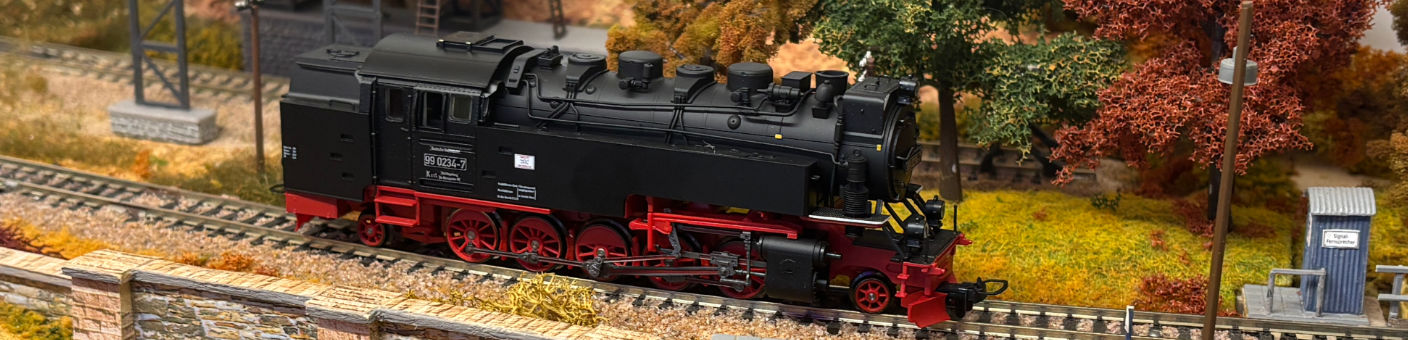
Steam locomotives, railcars, baggage cars, transporter wagons and short passenger trains create convincing operation between crossing stations, locomotive sheds and freight sidings.
An H0 interchange station can combine separate standard-gauge and metre-gauge tracks, a transshipment area, roll-wagon operation or specifically designed dual-gauge track.
Because both systems use the 1:87 scale, buildings, figures and road vehicles remain visually compatible.
Bemo and Tillig form the core vehicle and track worlds. pmt supplies specialist chassis and components, while Lux Modellbau offers cleaning vehicles for regular track maintenance.

RhB, MGB, MOB, multiple units, passenger coaches, freight wagons and extensive H0m track systems.
Harz railway vehicles, rolling stock, track and dual-gauge components.
Specialist H0m chassis and replacement drive components.
Track vacuum cleaners, rail cleaners and maintenance technology for reliable operation.
Narrow gauge saves track width, but long panoramic coaches and large bogie locomotives are not automatically easy to accommodate. Vehicle length, curve radius, turnouts, gradients and accessibility must be considered together.
RhB, MGB, MOB, HSB or a heritage railway determine train formations, colours, buildings, signals, overhead line and landscape.
The most demanding vehicle determines the required curve radius, track spacing, platform length and lateral clearance through curves.
Flexible track allows smooth flowing curves. Fixed and roadbed track make a repeatable layout easier to construct.
A crossing station, goods shed, small locomotive depot and one industrial siding already provide varied passenger and freight operation.
Multiple power feeds, clear cable colours and accessible isolation points simplify operation, maintenance and troubleshooting.
Test every locomotive and coach forwards and backwards over turnouts, reverse curves, gradients and hidden sections before the track is ballasted or tunnels are closed.
Many Bemo H0m vehicles specify a minimum radius of approximately 330 mm, but individual Tillig vehicles and other models can require different values.
Long multiple units, reverse curves and rack railway vehicles may require wider curves or carefully designed transitions. The specification for the exact model always takes priority.
Coordinate space, track plan, gradients and operating concept.
Understand flexible track, roadbed track, turnout geometry and compatibility.
Coordinate vehicles, liveries and scenery by historical period.
Understand addresses, decoders and digital two-rail operation.
The current range covers Swiss mountain railways, Harz narrow-gauge operation, historic private railways, passenger and freight vehicles, transporter wagons, flexible track and operating technology.
The fixed cards below use verified English product pages and direct MBS image paths. Prices and stock status are deliberately not reproduced here.
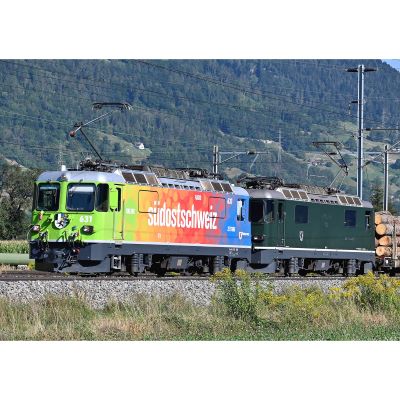
Modern RhB advertising locomotive for passenger and freight operation with a minimum radius of 330 mm.
View Product →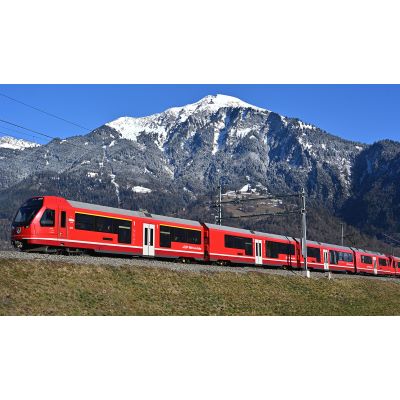
Four-car modern RhB multiple unit with interior lighting and Next18 digital interfaces.
View Product →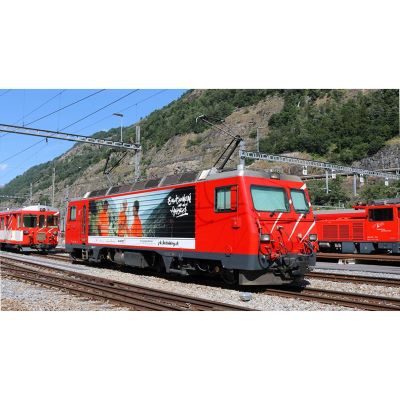
Alpine locomotive with functional rack drive for appropriately equipped MGB-style mountain routes.
View Product →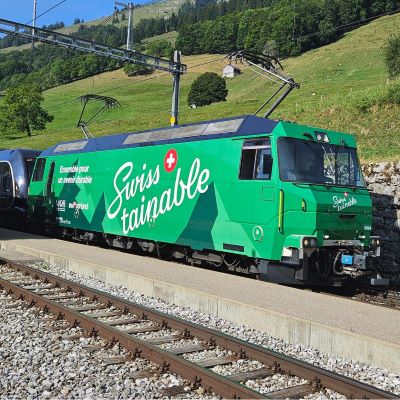
Modern MOB electric locomotive in Swisstainable livery with factory digital sound.
View Product →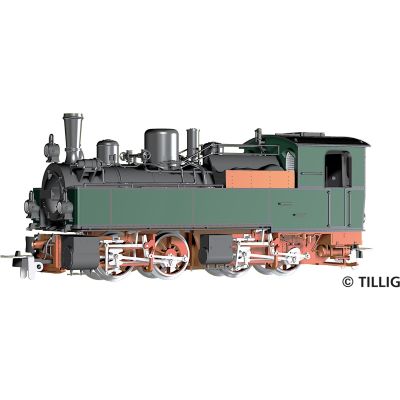
Metre-gauge steam locomotive for Harz and heritage railway scenes.
View Product →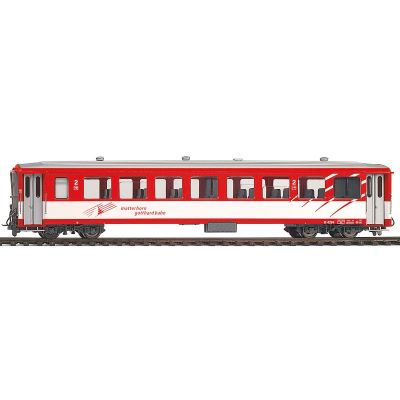
MGB passenger coach for regional and mountain railway services with a 330 mm minimum radius.
View Product →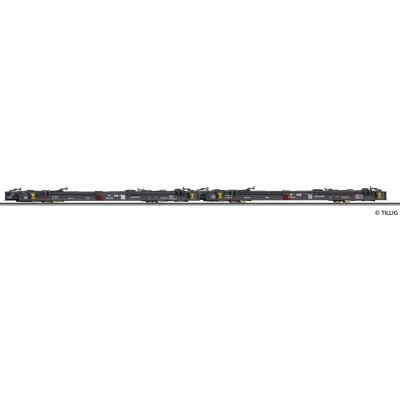
Two specialist vehicles for transporting standard-gauge freight wagons on metre-gauge track.
View Product →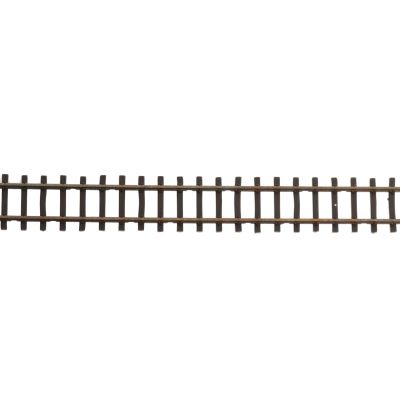
One-metre Code 70 flexible track for flowing, individually designed H0m routes.
View Product →The German source page contains a shop-connected dynamic product finder. This checked English version does not recreate that system with an unverified script.
Instead, the fixed product cards above use verified current product pages, while the live English shop categories below provide the complete current range.
RhB, MGB, MOB, locomotives, multiple units, coaches, freight wagons and track.
Harz vehicles, transporter wagons, track and dual-gauge components.
Mountain and regional locomotives from different metre-gauge railway companies.
Historic metre-gauge and heritage railway locomotives.
Regional, panoramic, baggage and heritage coaches.
Container, sliding-wall, transporter and supply wagons.
Flexible track, fixed curves, turnouts and roadbed track for metre-gauge layouts.
Cleaning vehicles and equipment for regular H0m track care.
Track without roadbed allows an individually ballasted narrow-gauge formation. Roadbed track simplifies a fast, geometrically defined layout. Flexible track is particularly useful for smooth mountain curves and realistic station entrances.
| Product / Type | Dimensions | Typical Use | Planning Note |
|---|---|---|---|
| Bemo 4280000 Flexible Track | 1,000 mm · Code 70 | Free route design | Form curves evenly and fix the track without tension. |
| Bemo 4230000 Curved Track | R330 mm · 30° | Compact curves | Test the longest vehicle completely through the curve. |
| Bemo 4207000 Left Turnout | 162.3 mm · R515 | Stations and industrial sidings | Keep the drive and electrical isolation points accessible. |
| Tillig 85627 Flexible Track | 680 mm | Individual H0m route | Combine it with components from the corresponding Tillig system. |
| Tillig 83712 Roadbed Track | 166 mm | Quick straight track construction | Blend the roadbed colour and transitions into the scenery. |
| Tillig 85194 Dual-Gauge Turnout | H0/H0m to H0m · left | Shared standard- and metre-gauge route | Check wiring, wheel guidance and wheelset compatibility carefully. |
| Lux Modellbau 9725 Track Vacuum Cleaner | H0m | Regular track maintenance | Consider tractive effort and the smallest radius on the layout. |
Traditional H0m layouts generally use two-rail direct-current operation.
DCC is widely used for digital H0m operation. Each locomotive receives its own address and can be controlled independently.
Depending on the model, interfaces can include Next18, NEM 651, MTC21 or other systems. The exact product specification is decisive.
Factory-equipped sound versions can avoid the difficult task of fitting a decoder and loudspeaker into a narrow-gauge model.
Rack locomotive, rack rail, entry and exit sections, curve radius and gradient must all be compatible.
A normal H0m line does not become a reliably operating rack railway simply by adding an arbitrary rack strip.
Before fitting a decoder, check the catalogue number, motor voltage, interface, available installation space and required functions.
A convincing metre-gauge railway does not need an overcrowded track plan. A crossing station, goods shed, locomotive depot and one industrial siding already provide shunting tasks, train crossings and varied operation.
Form complete trains according to railway company and era. Modern RhB locomotives suit regional, panoramic and freight cars. A Harz steam locomotive looks convincing with passenger, baggage and transporter wagons.
Heritage railways can use mixed formations when the combination remains plausible for the chosen prototype.
Rails and wheels should remain clean and dry. Deposits are particularly noticeable during slow shunting and with smaller locomotives.
Hidden routes, tunnels and rack sections must therefore remain permanently accessible for cleaning and vehicle recovery.
Do not test only the locomotive. The longest complete train must pass safely through curves, turnouts, platforms and gradients.
Dry, suitable cleaning methods maintain electrical conductivity and support reliable slow-speed operation.
A clear wiring plan shortens troubleshooting for turnouts, digital sections and electrically isolated track.
Removable scenery sections allow cleaning, maintenance and safe recovery of derailed vehicles.
Special cleaning vehicles such as the Lux Modellbau H0m track vacuum cleaner can supplement careful manual track maintenance.
These answers help with the selection of vehicles, track, digital technology, curve radii and suitable layout concepts.
H0m describes narrow-gauge models at a scale of 1:87 running on 12 mm model track. The “m” stands for metre gauge. The corresponding prototype group covers approximately 850 mm to below 1,250 mm.
Both use a scale of 1:87. H0m uses 12 mm track and mainly represents metre-gauge railways. H0e uses 9 mm track and is commonly used for 750 and 760 mm narrow-gauge railways.
Both systems use a nominal 12 mm track gauge, but rail profile, turnout geometry, wheelset dimensions and sleeper appearance can differ. Mechanical compatibility must be checked individually.
There is no universal minimum radius. Many Bemo H0m models specify approximately 330 mm, while individual Tillig and other vehicles can require different values.
Always use the requirement of the longest and most demanding vehicle on the layout.
Yes. H0m normally uses a two-rail electrical system and can be controlled with DCC. Analogue, digital-ready, factory-digital and factory-sound models are available.
Yes. Both use the same 1:87 scale and can share the same scenery. Separate tracks, transshipment facilities, transporter wagons or specially designed dual-gauge track can create a convincing interchange station.
A suitable rack locomotive, matching rack system, carefully planned transition sections and approved track geometry are required. Curve radius and gradient depend on the selected vehicle and rack system.
Important current Modellbahnshop brands include Bemo, Tillig, pmt and Lux Modellbau. Their focus ranges from locomotives, multiple units, rolling stock and track to chassis and cleaning vehicles.
A small point-to-point railway can work well as a shelf or segment layout. Long panoramic trains, large viaducts and broad visible curves require considerably more length.
Yes, especially when the layout has a clearly defined theme. Carefully laid track, reliable power feeds and extensive test running before ballasting are particularly important.
A rural crossing station, small RhB terminus, Harz heritage railway or compact MGB station can provide varied operation with only a few turnouts.
A suitable locomotive or multiple unit, a few matching coaches or wagons, a complete circuit or point-to-point track concept, the intended controller and suitable cleaning equipment form a sensible starting point.
Choose the prototype railway and era first, test the longest train and then expand your H0m layout step by step with suitable vehicles, track, operating points and scenery.
English links, product pages, H0m track products and image paths checked: 15 August 2026.