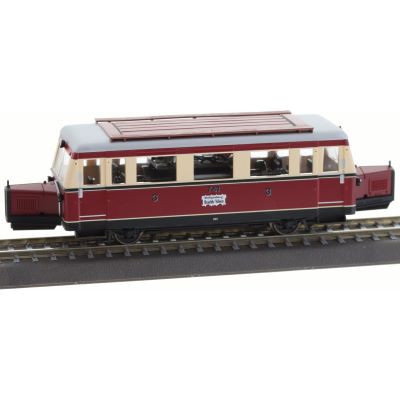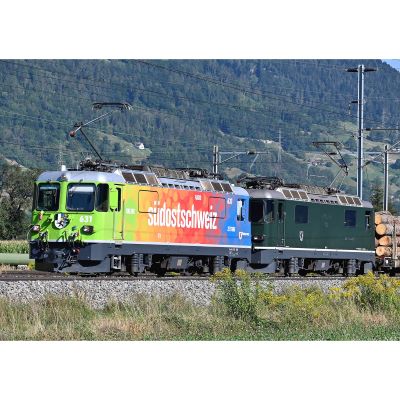
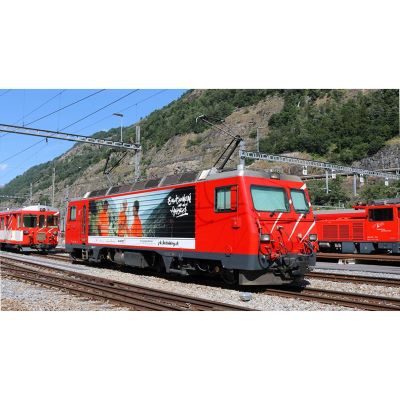
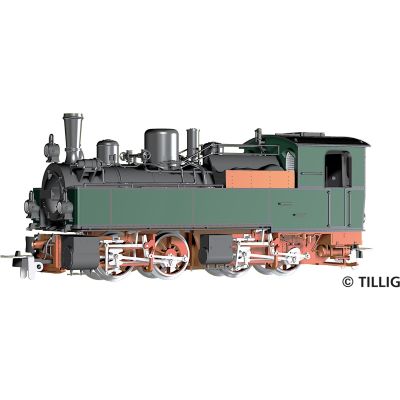
Rhaetian Railway
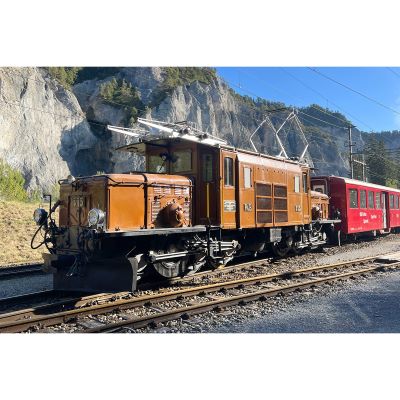
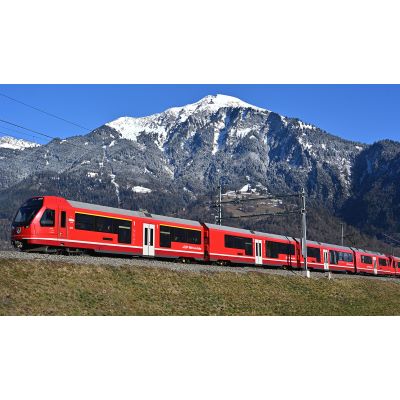
Red electric locomotives, Capricorn multiple units, Allegra, Glacier Express, Bernina Express, freight wagons and distinctive viaducts create an exceptionally extensive H0m model world.
Explore the RhB theme world →
H0m combines the detailed proportions of H0 scale with track measuring only 12 mm between the rails. It is ideal for recreating the Rhaetian Railway, Matterhorn Gotthard Railway, Montreux–Bernese Oberland Railway, Harz Narrow Gauge Railways and many other metre-gauge systems with viaducts, rack sections, panorama trains, regional services and freight operation.
H0m vehicles are produced at a scale of 1:87. Figures, road vehicles, buildings and scenery elements can therefore generally be taken from the extensive H0 range. The vehicles do not run on the 16.5 mm track used for standard-gauge H0, however, but on track measuring only 12 mm between the rails.
Under the European NEM 010 standard, H0m belongs to the prototype track-gauge group from 850 mm to less than 1,250 mm. Its most important application is 1,000 mm metre gauge. Prototypes using the 1,067 mm Cape gauge can also be represented within the H0m group.
The letter “m” stands for metre gauge. This prototype track gauge is particularly widespread among mountain, regional, tramway and light-rail systems. Narrower vehicles, tighter routes and smaller stations allow lines to pass through demanding landscapes where a standard-gauge main line would require considerably more space.
The vehicles remain large enough for fine details, clearly visible lettering and digital functions. At the same time, short stations, narrow valleys, viaducts, tunnels and small depots look credible. H0m is therefore suitable for sectional layouts, shelf layouts, wall-mounted layouts and larger mountain landscapes.
Letters following a model size describe the represented narrow-gauge group. H0m, H0e and H0f all use a scale of 1:87 but require model track with different gauges.
| Model size | Scale | Model track gauge | Typical prototype gauge | Suitable applications |
|---|---|---|---|---|
| H0 Gauge | 1:87 | 16.5 mm | Standard gauge, 1,435 mm | Main lines, branch lines and urban railways |
| H0m Gauge | 1:87 | 12 mm | 850 to less than 1,250 mm | Metre gauge, RhB, MGB, MOB and HSB |
| H0e Gauge | 1:87 | 9 mm | 650 to less than 850 mm | 750 and 760 mm narrow-gauge railways |
| H0f Gauge | 1:87 | 6.5 mm | 400 to less than 650 mm | Field railways, mine railways and industry |
| TTm Gauge | 1:120 | 9 mm | 850 to less than 1,250 mm | Compact metre gauge at TT scale |
| Nm Gauge | 1:160 | 6.5 mm | 850 to less than 1,250 mm | Particularly compact mountain railways |
| 0m Gauge | 1:45 | 22.5 mm | 850 to less than 1,250 mm | Large and finely detailed metre gauge |
| IIm / G Gauge | Frequently 1:22.5 | 45 mm | Primarily metre gauge | Garden railways and large mountain railways |
| HOn3 | Approximately 1:87 | 10.5 mm | Three feet or 914 mm | North American narrow-gauge railways |
| HOn30 | Approximately 1:87 | 9 mm | 30 inches or approximately 762 mm | North American light and logging railways |
H0m and standard TT gauge both use track measuring 12 mm between the rails. Their scales, vehicle sizes, sleeper patterns and layout accessories differ considerably, however. Track and turnouts expressly specified for H0m are recommended for a prototypical metre-gauge railway.
The selection ranges from electric Swiss mountain railways and rack routes to panorama trains and German steam railways. Selecting a clear region and era simplifies the choice of vehicles, buildings, signals and road vehicles.
Red electric locomotives, Capricorn multiple units, Allegra, Glacier Express, Bernina Express, freight wagons and distinctive viaducts create an exceptionally extensive H0m model world.
Explore the RhB theme world →Rack locomotives, regional trains, panorama coaches and Glacier Express connections suit routes around Zermatt, Brig, Andermatt and Disentis.
Explore the MGB theme world →Modern electric locomotives, panorama coaches and elegant passenger trains combine mountain scenery, tourism and contemporary regional transport.
Explore Bemo H0m models →Steam locomotives, railcars, luggage vans, transporter wagons and short passenger trains suit Harz routes, private railways and carefully designed heritage-railway scenes.
Explore narrow-gauge railways →H0m permits more compact scenes than standard-gauge H0. Long panorama coaches, bogie locomotives and rack vehicles nevertheless place clear demands on curve radii, turnouts, gradients, power supplies and accessibility.
RhB, MGB, MOB, HSB or a heritage railway determine the vehicles, colour schemes, buildings, overhead line and scenery.
Panorama coaches and large electric locomotives determine the required radius, track spacing and platform length.
Flexible track permits smooth curves. Ready-made track simplifies construction and provides clearly defined geometry.
Analogue operation remains straightforward. DCC permits independent locomotive control, lighting, sound and additional functions.
A passing station, goods shed, locomotive depot and industrial siding provide varied operating sequences with only a few turnouts.
Many current Bemo H0m vehicles specify a minimum radius of 330 mm. The Tillig steam locomotive 99 5902-4, for example, specifies a minimum radius of 310 mm. These are vehicle-specific values rather than a universal H0m standard. Wider visible radii allow long coaches to run more smoothly and look more prototypical.
The track gauge is identical, but TT track has a different sleeper pattern. Turnouts, rail height and wheelset dimensions should be tested before combining components.
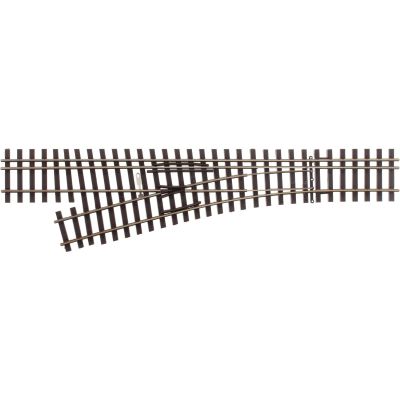
Special three-rail track carries standard and metre gauge along a shared route. It allows interchange stations, workshops and mixed routes to be represented credibly.
The rack locomotive, rack rail, transitions, radius and gradient must suit the selected system. An ordinary H0m route does not become a reliable rack railway merely by inserting an arbitrary rack rail.
The H0m range includes finely detailed Swiss vehicles, German metre-gauge models, track systems, dual-gauge turnouts, specialist chassis and track-cleaning vehicles.
Locomotives, multiple units and coaches from the RhB, MGB, MOB and other European narrow-gauge railways.
Explore Bemo →
HSB and DR vehicles, flexible track, roadbed track and combined H0/H0m dual-gauge track.
Explore Tillig →
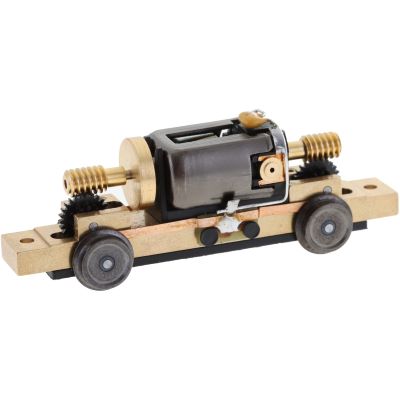
Specialist chassis, drive technology and selected components for repairs, conversions and individual H0m projects.
Explore pmt →
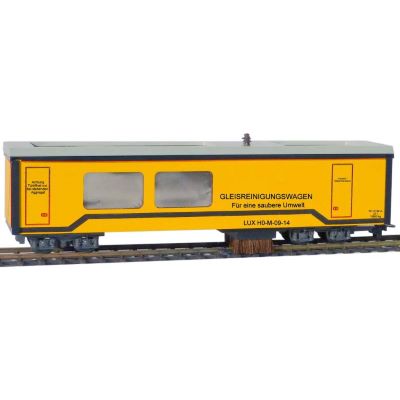
Technical cleaning vehicles for regular maintenance and reliable electrical pickup on H0m layouts.
Explore Lux Modellbau →The following 26 products are arranged into traction units, rolling stock, track and operating technology. Every fixed link leads directly to the corresponding product page. Before purchasing, compare the electrical system, interface, minimum radius, coupling and railway company.
Electric locomotives, rack vehicles, steam locomotives and railcars form the basis for Swiss mountain traffic, Harz narrow-gauge operation and historical private railways.
Panorama, passenger, luggage, container and transporter vehicles allow credible train formations ranging from historical narrow-gauge trains to the modern Glacier Express and RhB freight operation.
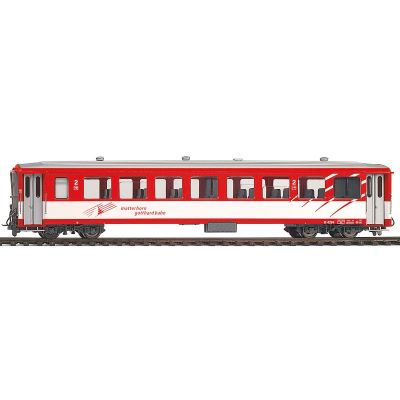
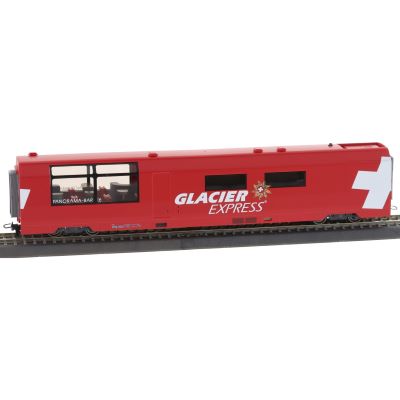
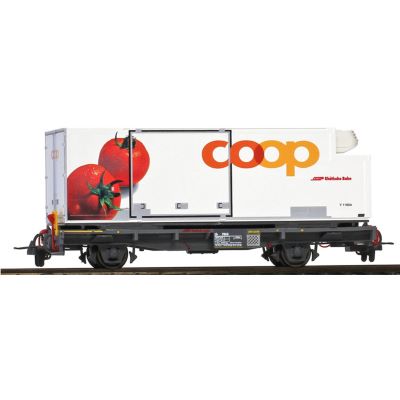
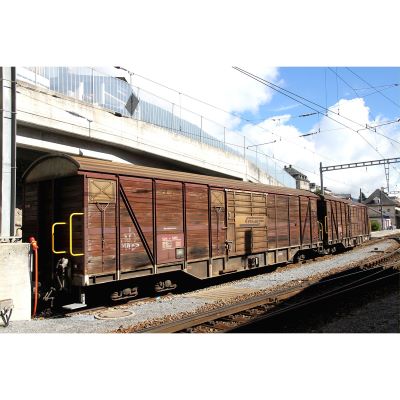
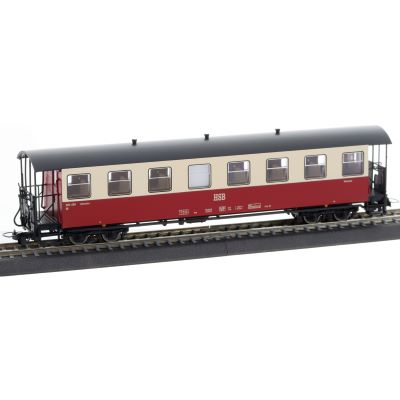
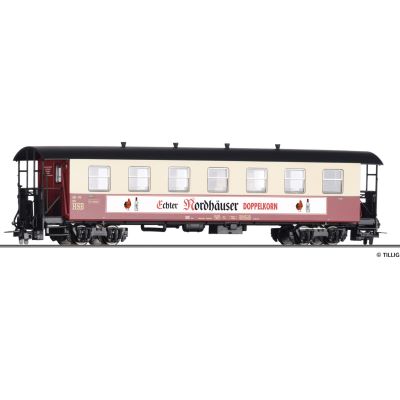
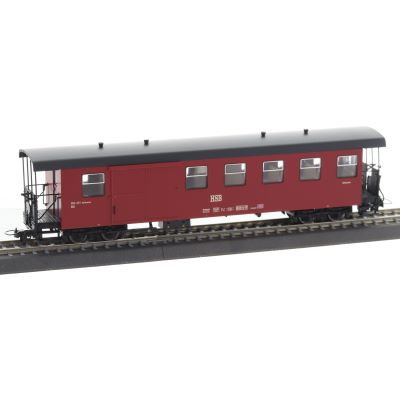
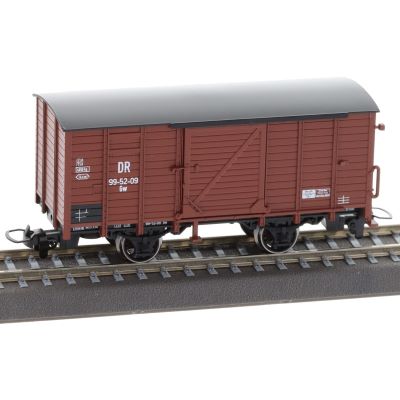
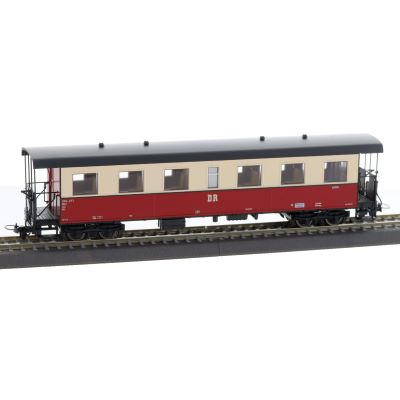
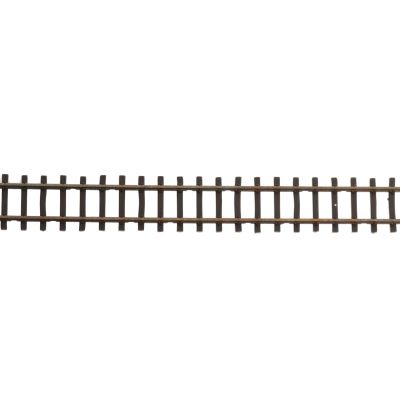
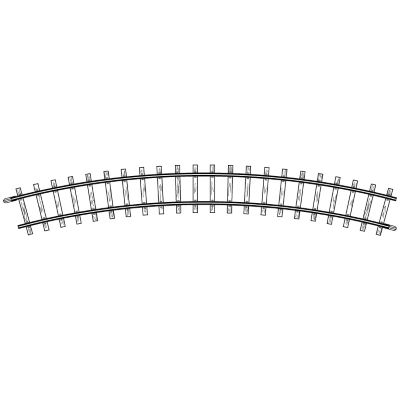
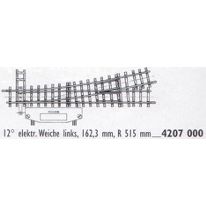
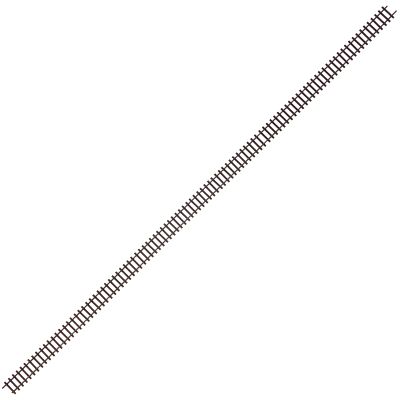
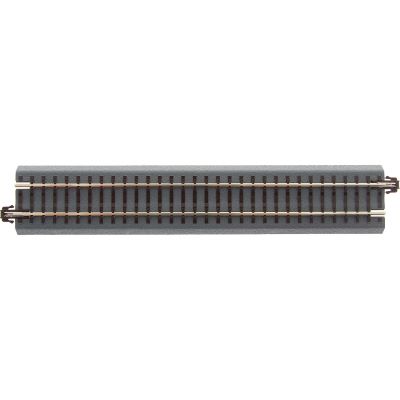
Flexible track, fixed curves, turnouts and dual-gauge track form the technical foundation. Cleaning vehicles and chassis support reliable long-term operation and individual conversion projects.
These overviews help with selecting the model size, layout form, digital control, track system and historically appropriate vehicles.
Compare H0m with H0, H0e, H0f, TT, N and larger model sizes.
Open guide →Explore prototype track gauges, applications and model representations.
Open theme page →Explore RhB locomotives, multiple units, panorama coaches and freight traffic.
Explore the RhB →Combine rack operation, Glacier Express trains and high-Alpine railway traffic.
Explore the MGB →Define the layout form, available space, track plan and operating locations.
Open planning guide →Compare flexible track, roadbed track, turnouts and rail profiles.
Open track guide →Understand locomotive addresses, decoders, functions and digital control.
Open digital guide →Combine vehicles, buildings and scenery in a historically credible manner.
Open era guide →The most important answers about scale, 12 mm track, curve radii, digital operation, rack railways and combining H0m with H0.
H0m describes narrow-gauge models at a scale of 1:87 operating on track measuring 12 mm between the rails. The “m” stands for metre gauge. Under NEM classifications, the associated prototype group covers track gauges from 850 mm to less than 1,250 mm.
Models of the Rhaetian Railway, Matterhorn Gotthard Railway, Montreux–Bernese Oberland Railway and Harz Narrow Gauge Railways are particularly widespread. Other European metre-gauge, private and heritage railways are also suitable.
Both use a scale of 1:87. H0m operates on 12 mm track and primarily represents metre gauge. H0e uses 9 mm track and mainly represents 750 and 760 mm narrow-gauge railways.
H0m and TT both use a track gauge of 12 mm, so mechanical operation may be possible. Sleeper patterns, rail heights, turnouts and wheelset dimensions must nevertheless be compatible. Dedicated H0m track is preferable visually.
There is no universal minimum radius. Many Bemo models specify 330 mm, while individual Tillig vehicles use different values. The product specification of the longest and most demanding vehicle is always decisive.
Yes. H0m normally uses a two-rail electrical system and can be controlled with DCC. Analogue models, vehicles prepared for digital conversion and models already fitted with decoders and sound are available.
Yes. Both use a scale of 1:87 and fit together scenically. Separate track, dual-gauge track, transhipment or transporter wagons allow a prototypical interchange station to be created.
A suitable rack locomotive, matching rack rail, carefully designed entry and exit sections and compatible track geometry are required. Radius and gradient must be planned according to the relevant manufacturer specifications.
Important brands at Modellbahnshop include Bemo, Tillig, pmt and Lux Modellbau. Their specialisms range from complete vehicles and track systems to chassis and track-cleaning vehicles.
A small point-to-point layout can function as a shelf or sectional layout. Considerably more length should be allowed for long panorama trains, large viaducts and wide visible curves.
H0m is suitable for beginners who want a clearly defined narrow-gauge theme. Accurately laid track, reliable electrical feeds and testing the complete vehicle fleet before ballasting are particularly important.
A rural passing station, a small RhB terminus, a Harz heritage railway or an MGB station with a rack section can provide varied passenger and freight operation using only a few turnouts.
From gauges and track systems to digital technology, layout planning, railway companies, vehicles, eras and scenery construction, the main guide provides access to all important model railway topics.