


Operation
Connect Throttles at Several Locations
Connection panels are distributed around the layout. A throttle can be plugged in, unplugged and used again at another location.

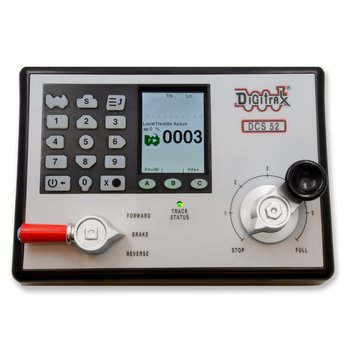
Digitrax is one of the best-known North American DCC systems. This guide explains the Zephyr Express, DCS240+, LocoNet, radio, Wi-Fi, feedback and transponding and compares the technology with NCE, TCS, MRC, DCC-EX and European systems.
Digitrax is a modular control system for DCC model railways. A command station generates driving and switching commands, a booster supplies the track and throttles provide the operating controls. Feedback modules, turnout decoders, radio receivers, computer interfaces and power-management components can be added later.
The DCS52 Zephyr Express is intended for compact layouts. The desktop unit combines a command station, 3 A booster, throttle, programmer and USB interface. It manages up to 20 simultaneously active locomotive addresses and throttles and has two Jump Ports for additional analogue DC controllers.
Large layouts use the DCS210+ or DCS240+. The DCS240+ has a selectable 5/8 A booster, three LocoNet sockets, USB, a separate programming output and a considerably larger locomotive and throttle capacity. Trains are operated using wired or wireless throttles.
Digitrax transmits DCC through the track, so DCC decoders from many manufacturers can be used. This does not mean that throttles and layout modules are freely interchangeable. These components communicate through LocoNet and must be supported by the command station or adapter being used.
In Europe, the power supply, track voltage, mains plug and radio approval must also be considered. Special CE versions are available for duplex radio operation. American radio devices should not be used merely because their connectors fit mechanically.
Connection panels are distributed around the layout. A throttle can be plugged in, unplugged and used again at another location.
The DT602DE and UT6DE communicate bidirectionally through a suitable European radio transceiver.
The LNWI connects compatible apps to LocoNet. The user interface is provided by the relevant Android or Apple application.
The BXP88 and other detectors transmit track occupancy, transponding information and current states through the network.
Stationary decoders such as the DS74 are installed close to the mechanisms and reduce long cable runs to the control panel.
The DCS52, DCS240+ and PR4 provide USB connections for decoder programming, control panels and automation.
| System | Entry Point | System Bus | Mobile Operation | Particular Strength |
|---|---|---|---|---|
| Digitrax | DCS52 Zephyr Express | LocoNet | Cable, duplex radio, infrared and LNWI | Highly modular and expandable for many operators |
| NCE | Power Cab | Cab Bus | Throttles and proprietary radio solutions | Central operating logic directly in the throttle |
| TCS | LT-50 or CS-105 | LCC | Wired and wireless throttles depending on equipment | RailCom and a modern network architecture |
| MRC | Prodigy Express 2 | Prodigy Cab Bus | Cable, radio or Wi-Fi module | Clearly arranged throttle operation |
| DCC-EX | EX-CommandStation | Depends on the hardware and project | USB, Wi-Fi, WebThrottle or apps | Open software and extensive customisation |
| European Alternatives | Intellibox, ECoS, Lenz, PIKO or ZIMO | LocoNet, ECoSlink, XpressNet or manufacturer bus | Wi-Fi, radio or cable | Straightforward availability and European support |
The throttles transmit and receive data. Locomotives can be selected and operated without plugging in the throttle first.
The CE transceiver connects to LocoNet and improves the range and multipath reception in large layout rooms.
One LNWI supports up to four mobile devices simultaneously. Larger layouts can use several interfaces.
Wired throttles require no radio network and are particularly suitable for fixed operating positions and reliable exhibition operation.
IR throttles require suitable receivers and a largely unobstructed line of sight. Duplex radio is generally more flexible.
At exhibitions, the Wi-Fi access, device names and permitted apps should be defined clearly before operation begins.
With its moderate output, the DCS52 is primarily intended for N and H0. Gauge Z requires a lower track voltage or a suitable voltage-reduction device.
DCS52 or a European DCC command station with adjustable voltage.
Digitrax provides its widest range of options for these gauges. The Zephyr Express is sufficient for many home layouts, while the DCS240+, feedback and wireless throttles enable extensive multi-operator operation.
DCS52, DCS240+, LocoNet throttles and BXP88.
Large motors, sound, smoke and lighting require greater current reserves. Systems rated at 8 A require heavy wiring, short-circuit protection and separate power districts.
DCS240+ or a powerful European large-scale command station.
Check whether every vehicle supports DCC and which functions are required.
Do not estimate motors, sound, lighting and accessories solely by the number of vehicles.
Combine a desktop unit, wired throttles, radio and smartphones deliberately.
LocoNet, XpressNet, LCC or the manufacturer bus determines future expansion options.
Define the isolation points before ballasting and completing the permanent track construction.
Consider the power supply, radio approval, warranty and repair arrangements.
Locomotive decoders are more interchangeable than throttles, radio devices and system modules.
Choose the specified CE versions for the European market.
The command station requires a suitable LocoNet throttle or another operating solution.
Separate power districts and protective circuits are safer than one large district.
The range and number of devices must suit the layout room and operating concept.
The power supply, spare parts, returns and firmware maintenance are part of the purchasing decision.
This selection contains current Digitrax system components as well as LocoNet-compatible and European alternatives. Digitrax links lead to the manufacturer’s information, while shop products link directly to Modellbahnshop.
Current components for a complete LocoNet system.
All-in-one command station with throttle, USB and LocoNet.
Manufacturer Page →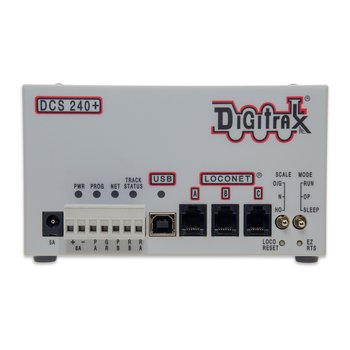
Powerful command station with USB and three LocoNet ports.
Manufacturer Page →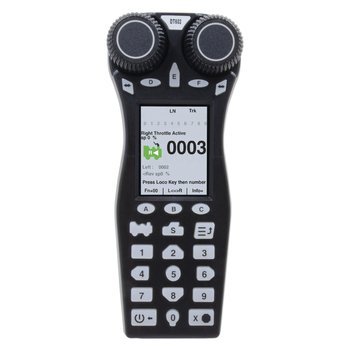
Two throttles, a colour display and 29 functions.
Manufacturer Page →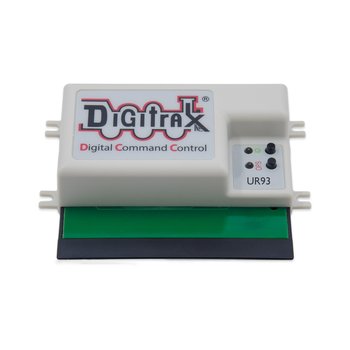
Duplex radio transceiver for compatible LocoNet throttles.
Manufacturer Page →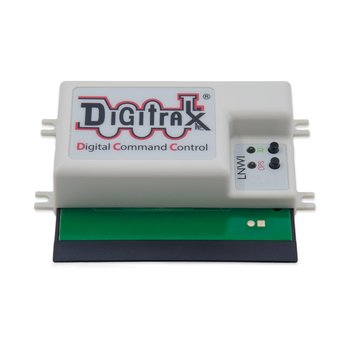
Connects compatible Android and Apple applications.
Manufacturer Page →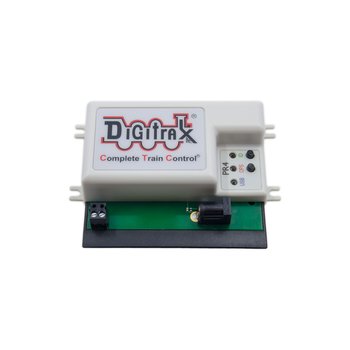
USB LocoNet interface and standalone decoder programmer.
Manufacturer Page →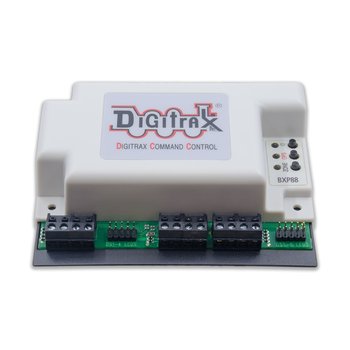
Eight monitored sections with transponding.
Manufacturer Page →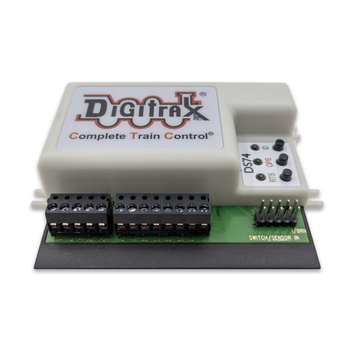
Four outputs for solenoid or motor-driven mechanisms.
Manufacturer Page →European operating, network, booster and feedback solutions.

Multiprotocol command station with a touchscreen and two throttles.
View Product →
Two throttles and a switchboard for an existing command station.
View Product →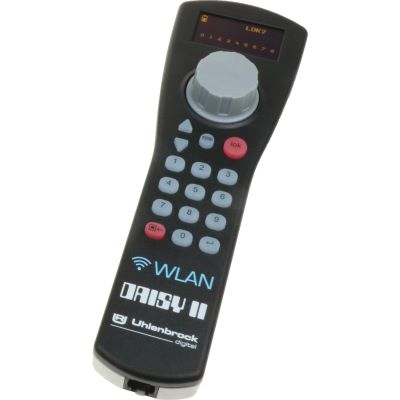
Mobile throttle for supported network protocols.
View Product →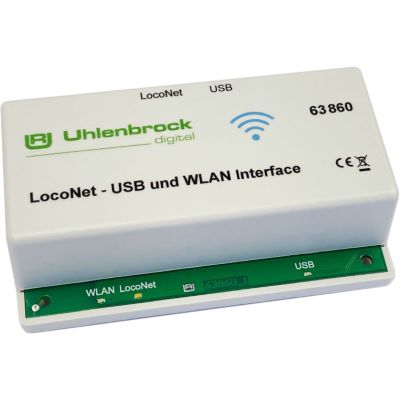
Connects LocoNet to a smartphone and computer.
View Product →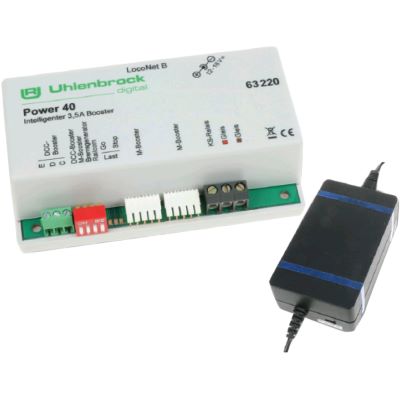
Optically isolated booster for additional power districts.
View Product →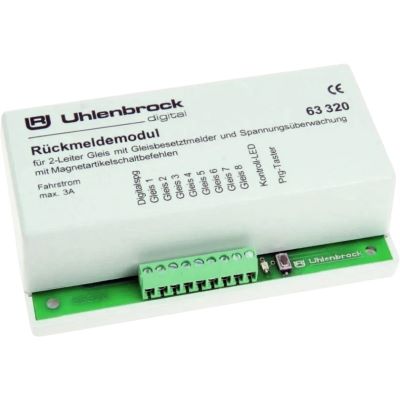
Monitors eight track sections using current sensors.
View Product →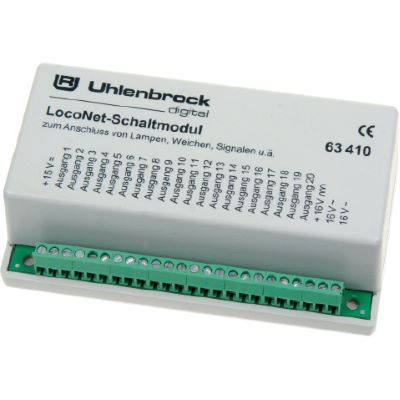
Twenty outputs for turnouts, signals and lighting.
View Product →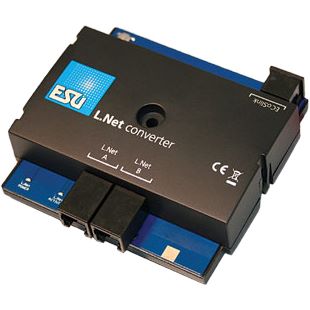
Connects supported Digitrax and Uhlenbrock devices to ECoS.
View Product →Readily available command stations for different gauges and operating concepts.
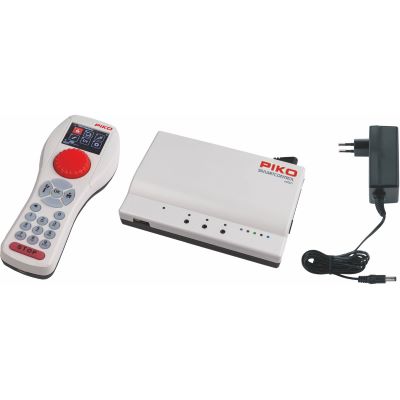
Handheld controller and compact DCC command station as a basic set.
View Product →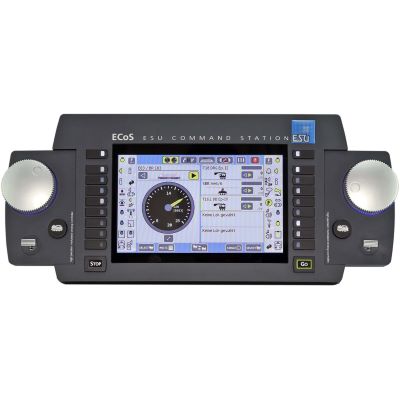
Multiprotocol operation with two throttles and a track diagram.
View Product →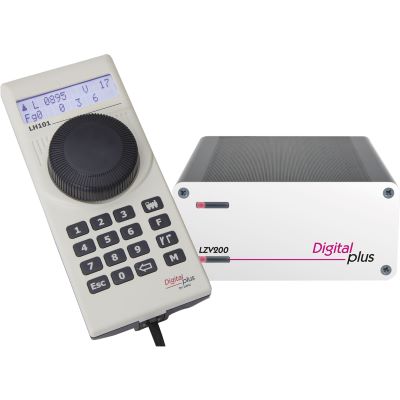
5 A command station and handheld controller with XpressNet.
View Product →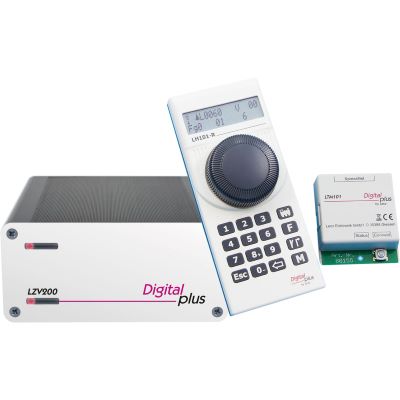
5 A command station, wireless handheld controller and receiver.
View Product →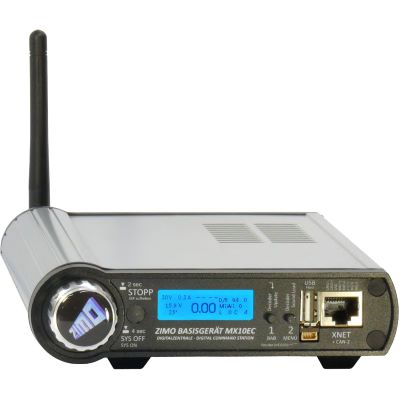
One powerful track output with CAN, LAN and radio.
View Product →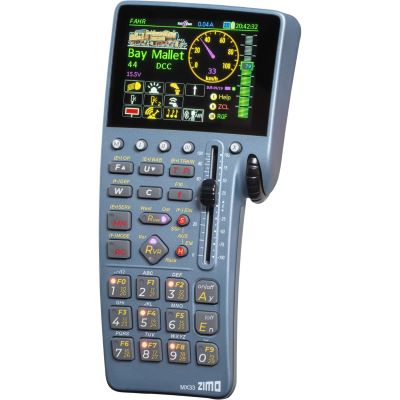
Touchscreen controller for the MX10 and MX10EC.
View Product →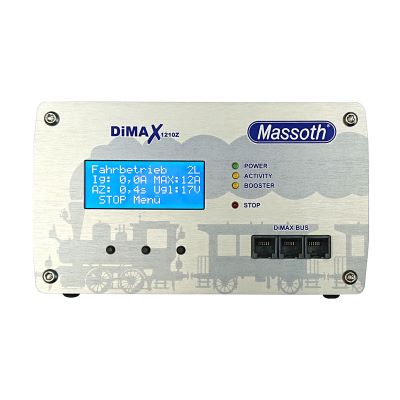
Powerful DCC control for large vehicles.
View Product →Standards-compliant DCC decoders from different manufacturers can generally be used. Special functions, RailCom, transponding and programming procedures may differ.
DCC transmits driving and switching commands through the track. LocoNet connects the stationary system devices and operating devices to one another.
Yes. It combines a command station, throttle, booster and USB in one device. LocoNet allows the layout to be expanded later.
Yes. The DCS240+ does not have an integrated throttle. A LocoNet throttle, app or computer-based operating solution is required.
The LNWI connects compatible mobile devices and apps to LocoNet. Up to four devices can be used simultaneously with each interface.
The DT602DE, UT6DE and UR93E CE versions are intended for Europe. The version approved for the relevant region is decisive.
Some LocoNet throttles can generally work together. The specific range of functions depends on the command station, throttle generation and supported LocoNet commands.
The ESU L.Net Converter integrates supported LocoNet throttles and modules. Not every specialist function is necessarily transferred.
Digitrax places a strong emphasis on a widely distributed LocoNet. NCE concentrates many operating functions in the throttle and uses its own Cab Bus.
DCC-EX suits users who want open software, flexible hardware and individually configurable computer or Wi-Fi control.
Equipped vehicles transmit an identifier. Suitable detectors can therefore recognise not only occupancy but also particular vehicles.
Large vehicles require sufficient output, adjustable track voltage, heavy wiring and separate power districts. The DCS240+, ZIMO MX10 and Massoth DiMAX are possible system concepts.
Further guides cover command stations, decoders, feedback, boosters, Wi-Fi, wiring, gauges and layout construction.