1:87 Scale
Buildings, figures, road vehicles and standard H0 scenery share the same visual scale.

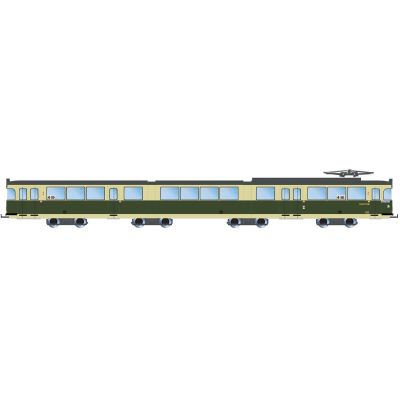
Combine trams, embedded track, stops, overhead wire, city buildings, road traffic and a depot into a convincing urban railway scene in 1:87 scale.
An H0 tram is a tram model built at a scale of 1:87. The vehicle body therefore has the same scale as conventional H0 locomotives, railway coaches, buildings, figures and road vehicles.
The model track gauge, however, depends on the prototype. Standard-gauge trams are normally represented on 16.5 mm track, metre-gauge vehicles on 12 mm H0m track and prototypes in the 750 or 760 mm gauge group on 9 mm H0e track.
A complete tram scene consists of more than the vehicle itself. Stops, passengers, overhead wire, streets, buildings, a depot and a clearly understandable route all contribute to believable urban public transport.
Trams are particularly suitable for compact model layouts. A shuttle route between two termini does not require a continuous loop.
Bidirectional trams can reverse at a simple stub terminus. Unidirectional cars normally require a turning loop, triangle or continuous circuit.
This makes a convincing tram operation possible even on a narrow shelf layout or modular urban scene.
Buildings, figures, road vehicles and standard H0 scenery share the same visual scale.
Standard-gauge H0, metre-gauge H0m and narrow-gauge H0e cover many European tram prototypes.
Tram operation provides frequent train movements without requiring long station tracks.
Tram layouts combine model railway operation with roads, architecture and urban everyday life.
The selected vehicle determines the railway era, minimum radius, stop length and character of the surrounding street scene. A short historic railcar has very different requirements from a long articulated low-floor tram.
Short motor cars and trailers fit narrow old-town streets, single-track routes, small depots and layouts representing Eras II to IV.
GT6, GT8 and related vehicles characterised many West German and Austrian tram systems during Eras III to V.
Gotha, Reko and Tatra themes combine naturally with East German urban architecture, prefabricated housing estates, depots and intensive commuter traffic.
Combino, Avenio and similar vehicles need longer stops, wider urban spaces and a contemporary surrounding scene.
Reserved track, suburban stops and longer sections can connect the city centre with outer districts and regional transport.
Display models are suitable for depots, stops, dioramas and showcases. Powered models require a compatible chassis, track gauge and electrical system.
The scale always remains 1:87. The model track gauge follows the prototype track gauge. Before purchasing a vehicle, check the tram, chassis and intended track system together.
| Designation | Scale | Model Track Gauge | Prototype Group | Typical Tram Application |
|---|---|---|---|---|
| H0 | 1:87 | 16.5 mm | Standard gauge | Many German and international tram networks |
| H0m | 1:87 | 12 mm | 850 to below 1,250 mm | Metre-gauge urban, interurban and heritage tramways |
| H0e | 1:87 | 9 mm | 650 to below 850 mm | Narrow local and interurban railways |
| H0f / H0i | 1:87 | 6.5 mm | 400 to below 650 mm | Special, industrial and very narrow local railways |
| H0p | 1:87 | 4.5 mm | 300 to below 400 mm | Rare park, exhibition and specialist railway projects |
H0m and TT both use a nominal 12 mm track gauge, while H0e and N both use 9 mm. Sleeper appearance, rail height, turnout geometry, wheelset dimensions and electrical systems can still differ.
The technical specifications of the individual tram and track system always remain decisive.
Compare model scale, track gauge and typical applications before choosing the technical basis for your tram project.
Powered trams, display models, depots, track inserts, overhead-line components and urban details are often supplied by different specialist manufacturers.






The current source selection combines powered trams, display models and infrastructure. Product images below use fixed Modellbahnshop MBS item numbers. Prices and stock status remain on the individual shop pages.
Analogue two-rail DC articulated tram with lighting for classic Graz city scenes.
View Product →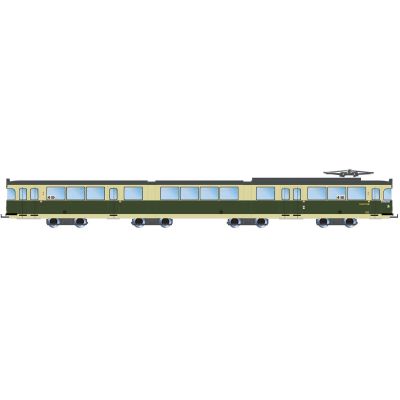
Digital version of the Graz articulated tram with factory-installed decoder and lighting.
View Product →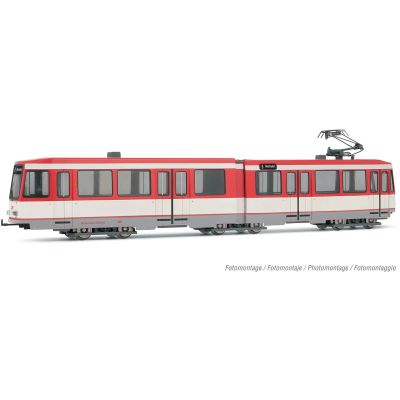
Digital H0 city tram in the characteristic red-and-white Nuremberg colour scheme.
View Product →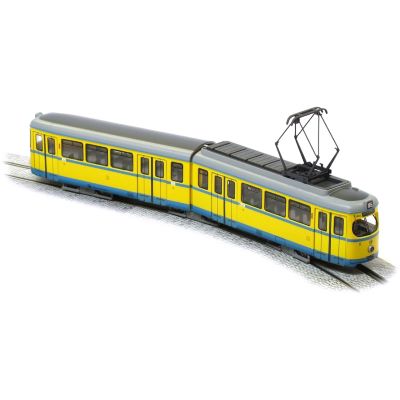
Detailed 221 mm articulated tram for depots, stops, dioramas and collections.
View Product →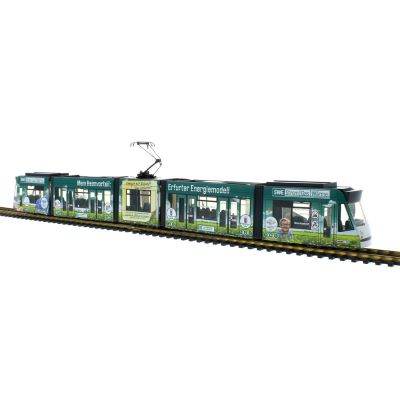
Modern green low-floor tram for contemporary Erfurt city scenes.
View Product →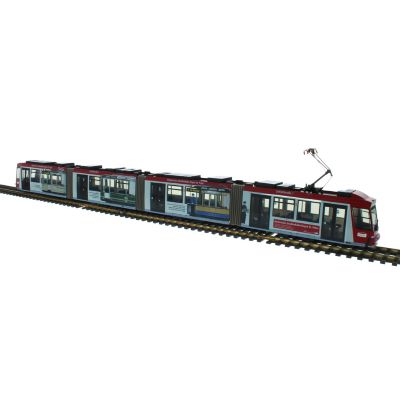
Anniversary display model for a historic Nuremberg depot and museum scene.
View Product →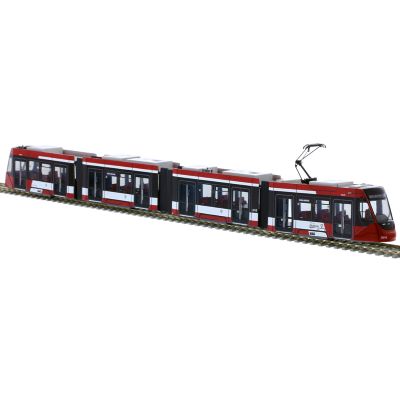
Modern VAG low-floor tram with line destination “8 Doku-Zentrum”.
View Product →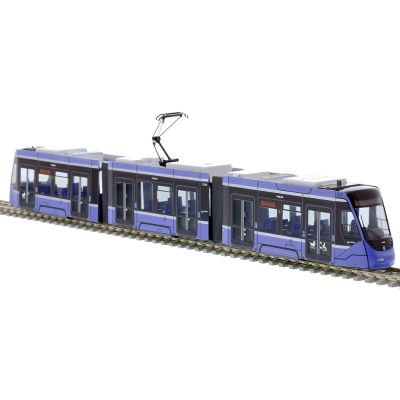
Three-section modern MVG tram for a contemporary Munich city layout.
View Product →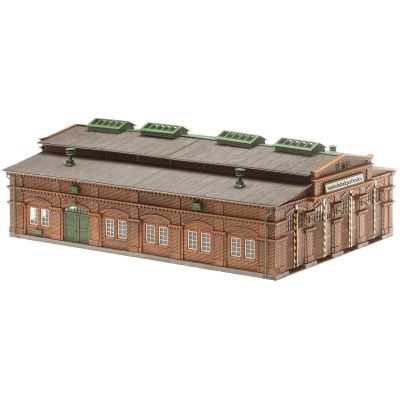
Four-stall depot with movable doors and inserts for the spaces between the tracks.
View Product →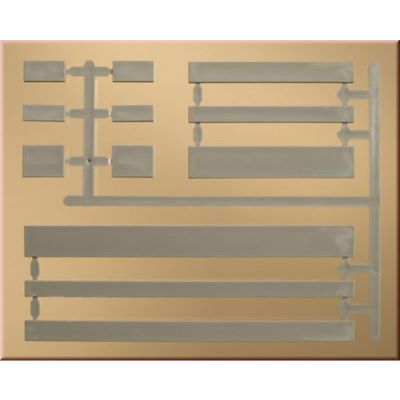
Inserts designed for tram track scenery with widths of 7, 9 and 13 mm.
View Product →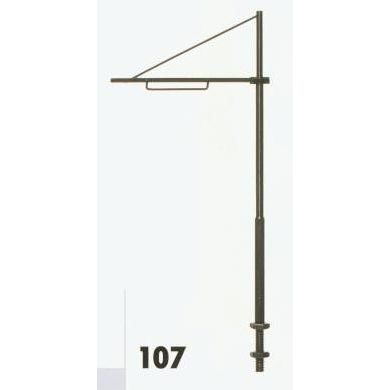
Five modern H0 tram masts for straight track, curves and junction areas.
View Product →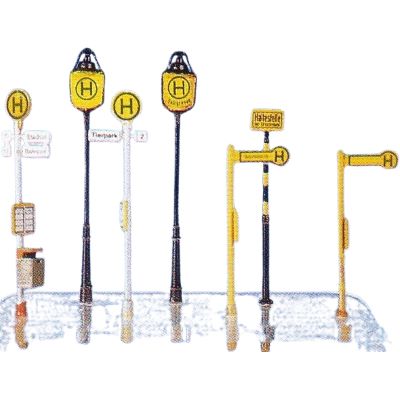
Two historical Stuttgart stops with brass-cast masts and decal lettering.
View Product →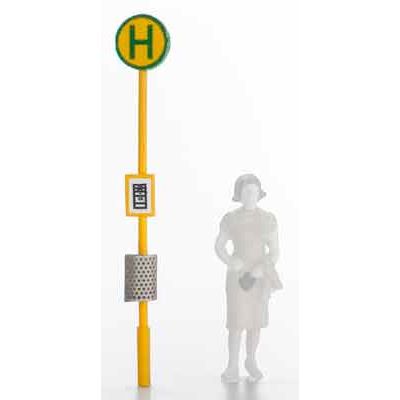
Fine brass and etched nickel-silver details for historic tram stops.
View Product →Check prototype gauge, drive, electrical system and minimum radius first. Then select the road surface, overhead wire, stops and a depot with sufficient door width and internal clearance.
Powered vehicles, multiple units and tram models in the current H0 range.
Analogue and digital DUEWAG tram models for H0.
Modern trams, buses, road vehicles and urban accessories.
Specialist tram and local-transport models for urban railway scenes.
Track components for different gauges and tram construction concepts.
Tram masts, contact wires, cantilevers and technical overhead-line details.
Houses, workshops, depots and urban structures for the tram environment.
Cars, buses, service vehicles and urban road traffic for complete street scenes.
Tram track can be embedded in a street, designed as grass track or laid on a reserved formation. When track is embedded in paving or asphalt, the railhead, flange clearance and moving parts of turnouts must remain completely free.
| Component | Purpose | Planning Note |
|---|---|---|
| Conventional Model Track | Technical basis on reserved track | Match rail height, wheelsets and minimum radius. |
| Grooved Rail | Prototypical embedded track in streets and squares | Keep the wheel-flange channel permanently free and clean. |
| Track Infill & Paving | Road surface between and beside the rails | Test the material with every vehicle before gluing. |
| Turnouts & Crossings | Junctions, depot access and crossovers | Keep blades, frogs and drives permanently accessible. |
| Mast, Cantilever & Contact Wire | Decorative or functional current collection | Check wire position against the pantograph, especially through curves. |
| Stop & Depot | Passenger exchange, storage and maintenance | Check platform edge, vehicle width and depot door clearance. |
Run the longest tram slowly in both directions through curves, turnouts and reverse curves before permanently installing paving or asphalt.
Road material must not interfere with wheel flanges, articulated joints, bogies or turnout blades.
Many layouts power their trams through the rails and use the overhead wire only as a visual feature. Functional overhead-wire operation requires compatible vehicles, pantographs, polarity and control equipment.
A convincing tram layout begins with a clear route. Stops, streets, buildings and the depot should all have a recognisable operational purpose.
Tram, stops, road surface, cars, buildings and advertising should represent a believable common period.
The longest and widest vehicle determines track gauge, minimum radius, clearance, stop length and depot dimensions.
Bidirectional trams can reverse at a stub terminus. Unidirectional cars require a loop, triangle or continuous circuit.
Check vehicle sweep, pavements, road vehicles, overhead-line masts, building corners and stop islands using the longest tram.
Multiple power feeds, documented wiring and accessible connections make both analogue and digital operation easier to maintain.
Test trams, turnouts, overhead wire and depot access completely before permanently installing the street surface.
Even a short tram line can provide several operating tasks: passengers board at stops, an additional service leaves the depot, two trams meet at a passing loop and a works vehicle checks the overhead line.
For smooth low-speed operation, railheads, wheels and pantographs must remain clean. Embedded track should be protected from dust, adhesive and paint.
Lubricant should only be applied sparingly at the locations specified for the individual vehicle.
Lift articulated trams by stable areas of the body. Articulations, couplers, exterior mirrors and roof-mounted pantographs must not be used as handles.
A display model requires a suitable powered chassis before it can be converted for operation. Sufficient room for the motor, current collection and any decoder must be available.
Paving, paint and dirt must not reduce wheel-flange clearance.
Bodies, bellows and bogies require sufficient lateral movement through curves.
The pantograph must follow the contact wire safely, including through curves and turnout areas.
Inspect and clean the vehicle first, then begin with a cautious solo test run.
H0 tram models are built at a scale of 1:87. H0 buildings, figures and road vehicles therefore fit the same urban scene.
No. 16.5 mm represents standard-gauge prototypes. Metre gauge is represented in H0m with 12 mm track, while the 750/760 mm prototype group is represented in H0e with 9 mm track.
A powered model has a motor and current collection. A display model is intended for a showcase, diorama or depot and requires a suitable chassis before it can operate.
In principle yes for standard-gauge vehicles, provided the rail profile, wheelsets and radius are compatible. For street running, the track can then be visually embedded using suitable infill, paving or grooved-rail systems.
No. Conventional track can also be visually embedded. True grooved rail gives a particularly prototypical appearance, but free wheel-flange clearance is always essential.
The required radius depends on the vehicle. The individual product specification is decisive. Long articulated and low-floor trams should always be tested before permanent track installation.
Yes, when the model has a compatible decoder or sufficient installation space for a retrofit. Decoder protocol, motor and command station must be compatible.
No. Many layouts use catenary only as a visual detail while the tram receives power through the rails. Functional overhead-wire operation is a separate technical system.
A shuttle route using a bidirectional tram, two stops and one depot siding requires little depth while still providing varied urban railway operation.
Check radius, vehicle overhang, street width, contact-wire alignment and turnout arrangement with the longest vehicle. Electrical requirements depend on the selected track system.
Town houses, stops, depots, workshops, shops and administration buildings are especially suitable. Architecture and railway era should match the selected transport operator and vehicle.
Select the prototype, track gauge and tram first. Build a temporary track route, perform complete test runs and only then add the street surface, overhead wire, stops and buildings.
Select the tram and correct track gauge first, test the complete route and then add stops, overhead wire, streets and a depot. Even a narrow layout can become a convincing city railway.
Content basis, English product links and infrastructure targets checked: 16 August 2026.