Modellbahn Keks
Welcome!
Our cookies offer you a fast, relaxed and full-featured shopping experience. Some are necessary to operate the website and its functions. Others help us to improve our services. If you agree to this, simply consent to the use of cookies for preferences, statistics and marketing by clicking on "OK". Alternatively, you can deactivate individual cookies under "Customise cookies" or all cookies, except those required for the function of our website, under "Reject all".
Container traffic between seaports and the hinterland

METRANS Model Trains | Container Trains in H0, TT & N

METRANS represents modern intermodal trains, its own terminals, multisystem locomotives and long container connections between the North Sea, Baltic Sea, Adriatic and Central and Eastern Europe. Discover suitable Vectron, TRAXX and EuroRunner locomotives, realistic train formations and current models in H0, TT and N gauge.

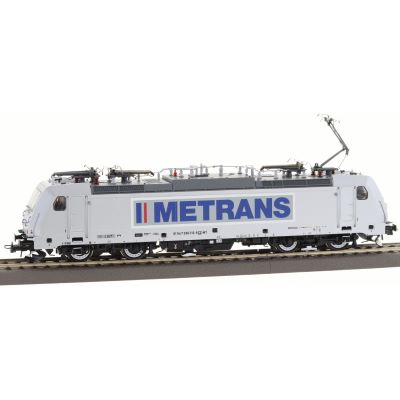
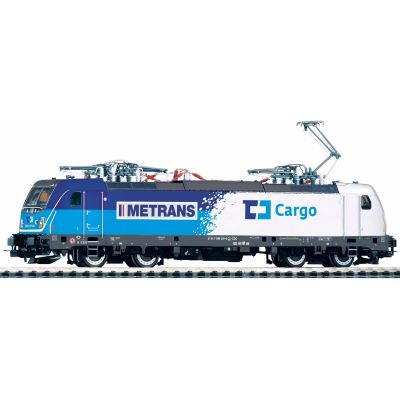
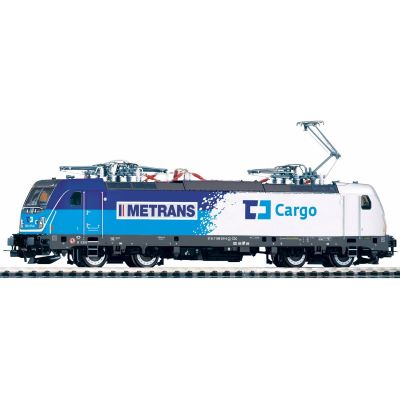
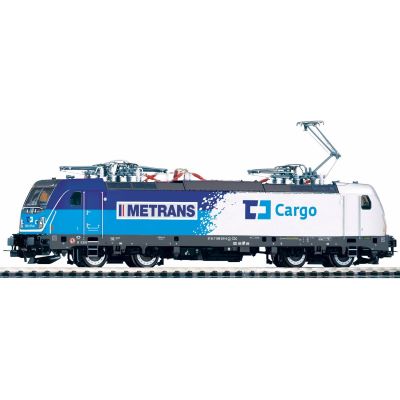
Roco H0 METRANS Class 386 electric locomotive
European hub-and-shuttle network

What Is METRANS?

METRANS is a railway and logistics company specialising in intermodal container transport. The company was founded in 1991 to connect Prague more closely with the Port of Hamburg. This first connection developed into a Europe-wide network of scheduled train services, company-owned terminals, locomotives and specially developed container flat wagons.

METRANS has been fully integrated into Hamburger Hafen und Logistik AG since 2018. Its main focus is transporting maritime containers between major ports and inland economic regions. The company also operates continental services in which containers and swap bodies are moved between European regions without a direct maritime leg.

The system follows the hub-and-shuttle principle. Regular trains with consistently high capacity utilisation connect seaports with central transhipment terminals. Containers are distributed there to other trains or lorries. This means that every origin does not have to be connected directly with every destination.

METRANS forms a particularly coherent model railway theme: grey multisystem locomotives, yellow and red logos, long container flat wagons, port sidings and modern terminals immediately create a recognisable Era VI scene.

Locomotives, terminals and wagons

Which Vehicles and Facilities Define METRANS?

A typical METRANS scene consists of more than a locomotive. Only the interaction of a multisystem locomotive, long flat wagons, loading units, handling equipment and terminal tracks represents the complete container transport operation.

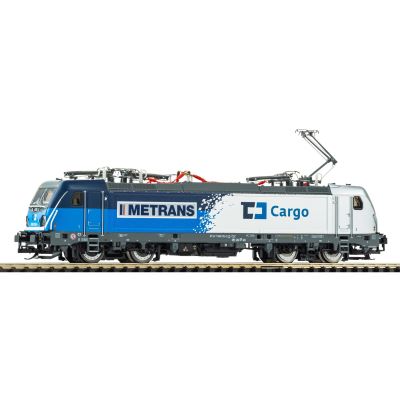
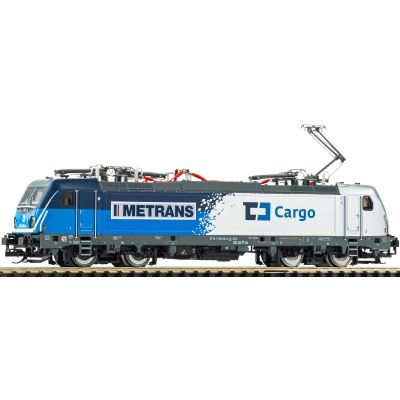
TRAXX F140 MS / Class 386

The Class 386 multisystem locomotives are designed for international container trains. They can operate under several electrical systems and reduce the need to change locomotives at national borders.

Suitable trains

Long block trains of METRANS container flat wagons operating between a port and an inland hub.

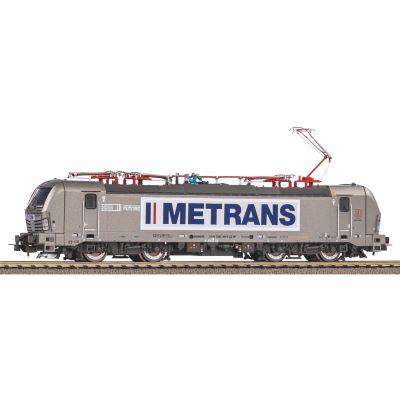
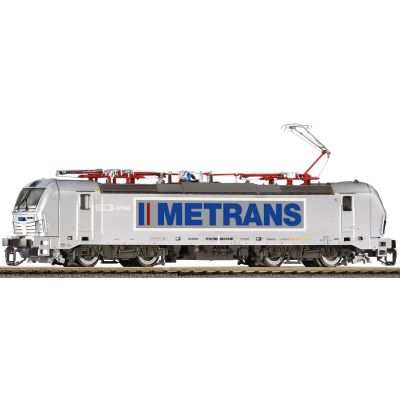
Siemens Vectron

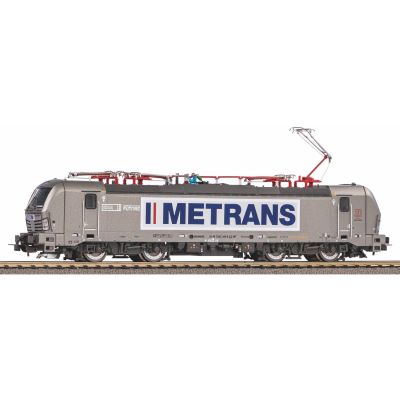
The Vectron supplements the modern electric fleet. Multisystem technology, different country packages and high tractive effort make it a typical locomotive for international Era VI operations.

For modellers

Ideal for main lines with overhead wiring, block signals and long passing loops.

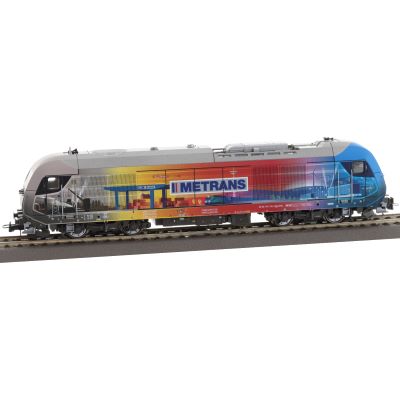
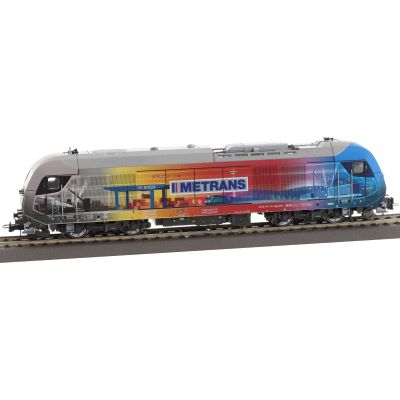
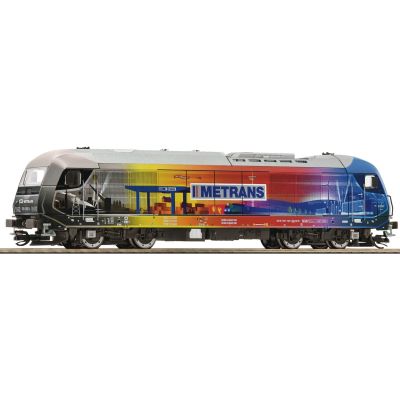
EuroRunner Class 761

Class 761 diesel locomotives operate trains on non-electrified routes and are suitable for ports, industrial branches and diversionary workings.

Special version

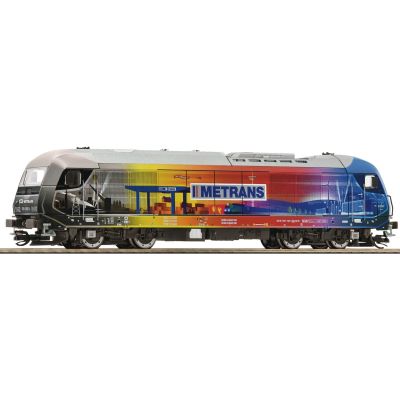
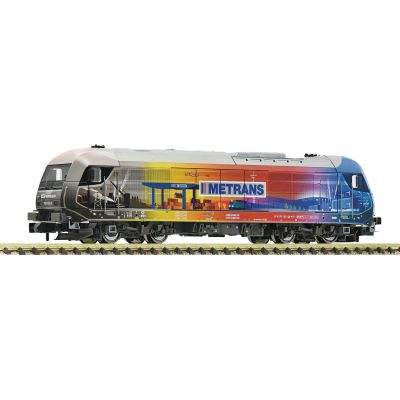
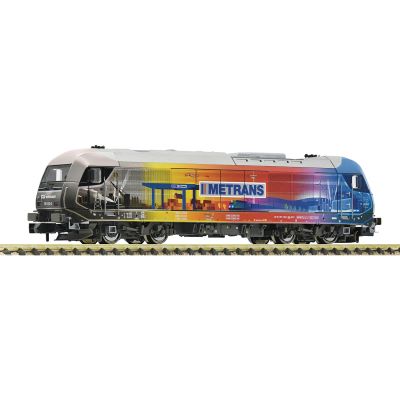
The anniversary design connects the company’s past, present and future.

Hybrid Shunting Locomotives

Container trains are divided, reformed and positioned beneath gantry cranes at terminals. Hybrid and battery technology reduces diesel operation during shunting movements.

Layout setting

A terminal with sidings, container stacks, a reach stacker and a shunting locomotive.

Lightweight Container Flat Wagons

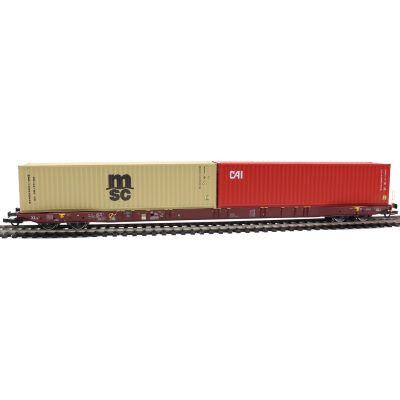
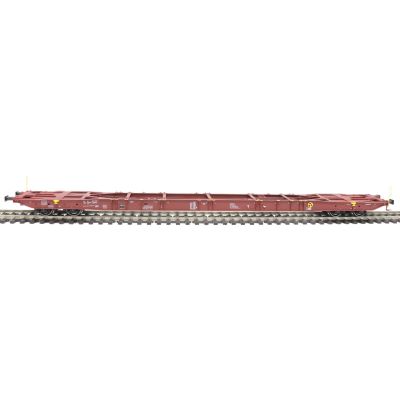
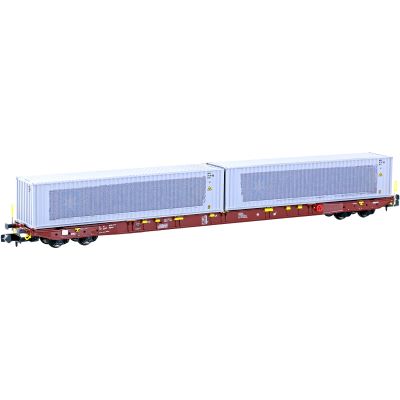
METRANS uses company-owned wagons designed specifically for container transport. Different lengths allow 20-, 30-, 40- and 45-foot containers to be carried.

Modelling advice

Several running numbers and different containers prevent obvious repetition.

Hub Terminal

A hub is more than a freight yard. Containers are transferred between trains, temporarily stored, inspected and then distributed to other services.

Space-saving representation

Two loading tracks, a gantry crane and container stacks are sufficient to create a convincing scene.

METRANS in all major model railway scales

In Which Gauges Are METRANS Models Available?

Gauge Scale Model Selection Suitable Layout Concept Planning Advice
H0 1:87 Class 386, Vectron, Class 388, EuroRunner and METRANS container flat wagons. Large container terminal, port railway or international main line. Long wagons and block trains require generous curves and sufficiently long storage tracks.
TT 1:120 Vectron, Class 388 and EuroRunner models in analogue or digital versions. Central European freight corridor on a medium-sized layout. TT permits longer trains than H0 without making locomotive details appear too small.
N 1:160 EuroRunner in anniversary livery and modern Sggnss container flat wagons. Long shuttle trains between a port and an inland hub. N gauge is especially suitable for prototypical train lengths and multi-track terminals.
Z 1:220 No broad current METRANS series in the checked shop range. General modern port-to-hinterland traffic. Suitable container wagons and custom-lettered locomotives can approximate the theme.
O, 1 and G varies No extensive regular METRANS model range. Individual model, terminal diorama or custom-designed container locomotive. The substantial space requirement makes compact shunting and terminal scenes a practical choice.
From a short model train to a port shuttle

How Do You Build a METRANS Container Train?

A convincing METRANS train has a clearly defined transport task. The locomotive predominantly hauls container flat wagons. Tank wagons, bulk wagons and traditional covered freight wagons should not be included in the same block train without a specific prototype.

Compact METRANS Train

A grey METRANS locomotive and four to six container flat wagons are sufficient for a small layout. Different loading units create a convincing international appearance despite the short train.

  • a TRAXX, Vectron or EuroRunner locomotive,
  • four to six flat wagons,
  • 20-, 40- and 45-foot containers,
  • a small terminal or port scene.

Prototypical Shuttle Train

On larger layouts, the train can consist of eight to fifteen wagons. Consistent wagon types convey the character of a block train, while different containers represent shipping lines and logistics chains.

  • a multisystem locomotive beneath overhead wiring,
  • a long and largely uniform sequence of wagons,
  • several different running numbers,
  • a passing loop or storage yard for the complete train.

Diesel Train to the Terminal

The EuroRunner is suitable for a port railway, a non-electrified terminal connection or a diversionary route. The container wagons remain the same; only the locomotive and visible infrastructure change.

Empty and Loaded Wagons

Not every flat wagon has to be completely loaded. Individual empty positions, containers of different heights and an unloaded return wagon add variety to the train. The loading pattern should nevertheless remain operationally plausible.

Important for long model trains: Check tractive effort, couplings, wagon weight and curve radii. Containers must be seated securely on the flat wagons. Hidden track sections should provide sufficient clearance from overhead wiring, tunnel portals and track helices.
20 models arranged by gauge

METRANS Locomotives and Container Flat Wagons

The selection includes analogue, digital, sound-equipped, two-rail and centre-contact models. Different locomotive variants can be combined with METRANS container flat wagons to form a complete train.

H0 Gauge – Largest Selection for DC and AC

H0 includes TRAXX, Vectron, EuroRunner and Class 388 variants as well as company-owned container flat wagons.

Questions and easy-to-understand answers

Frequently Asked Questions About METRANS Model Trains

Is METRANS a Railway Company or a Freight Forwarder?

METRANS is an intermodal logistics and railway group. The company operates train connections, terminals, locomotives and container flat wagons and also organises onward transport between terminals and customers.

Which Model Railway Era Does METRANS Belong To?

METRANS was founded in 1991. Early vehicles suit the end of Era V. Most of the available models featuring Vectron, TRAXX and modern container wagons belong to Era VI.

Which Locomotives Are Typical of METRANS?

Typical locomotives include Bombardier or Alstom TRAXX multisystem locomotives of Class 386, Siemens Vectron locomotives and Siemens EuroRunner diesel locomotives of Class 761.

Why Does METRANS Need Multisystem Locomotives?

European railway networks use different electrical and train protection systems. Multisystem locomotives can cross several countries without being replaced at every border.

Which Wagons Suit a METRANS Locomotive?

Sggnss, Sgns and other container flat wagons are particularly suitable. A typical shuttle train should consist predominantly of wagons intended for the same type of transport.

Which Containers Belong on a METRANS Train?

Suitable loads include maritime containers from different shipping lines, swap bodies and occasional tank containers. Different lengths and colours create a convincing train.

Are METRANS Locomotives Available for Märklin H0?

Yes. Several Class 386 and Class 388 models are offered as digital H0 AC versions with a centre-contact pickup shoe and sound.

Which Gauge Is Best for METRANS?

H0 offers the largest selection, TT provides a good compromise between model size and train length, and N gauge provides particularly generous space for long container trains and terminals.

How Large Must a Model Container Terminal Be?

Two loading tracks, a crane, a paved area and several container stacks are sufficient for a recognisable scene. Larger layouts can add storage, arrival and shunting tracks.

How Long Should a METRANS Model Train Be?

Four to six wagons look convincing on a small layout. Larger H0 and TT layouts can accommodate eight to fifteen wagons. Even longer shuttle trains are possible in N gauge.

Discover More Freight Railways, Container Wagons and Era VI

Learn more about international railway companies, wagon leasing companies, gauges, digital technology, train formations, container terminals and prototypical freight operations.

Open the Main Guide