Origins in Railcar Leasing
The company was founded in Chicago in 1898. Its early business model already involved providing railway cars to other companies for their transport requirements instead of using them exclusively in its own operations.
The overview GATX Freight Cars in H0, TT, N & G | Modellbahnshop connects the large-scale prototype with suitable models for different layouts. GATX is one of the internationally recognised wagon owners and leases freight cars to railway undertakings and industrial customers. Wagons carrying GATX lettering can therefore appear in many different trains, regions and countries.
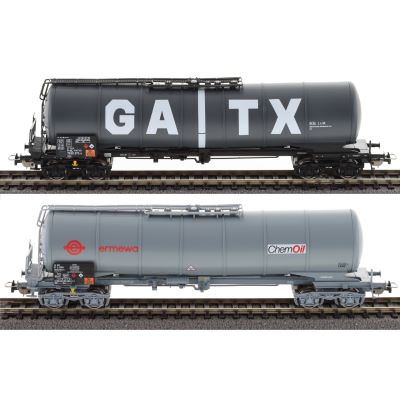
Particularly characteristic are tank wagons for mineral-oil and chemical traffic. The prototype range also includes intermodal wagons, silo wagons, open wagons, self-unloading wagons and specialist vehicles. A GATX train therefore does not have to consist exclusively of black tank wagons. Cement, grain, bulk goods, containers, swap bodies and semi-trailers also support credible operating sequences.
It is important to distinguish between the wagon owner and the train operator. GATX lettering primarily identifies the owner or lessor of the wagon. The locomotive may belong to a state railway, private freight operator or regional railway company. GATX models can therefore be combined flexibly with other railway companies .
The company’s history and role explain why GATX wagons appear in so many European train formations and are not restricted to one particular railway company.
The company was founded in Chicago in 1898. Its early business model already involved providing railway cars to other companies for their transport requirements instead of using them exclusively in its own operations.
In 2006, the previously used European names KVG Vienna, KVG Hamburg and DEC were brought together under the GATX Rail Europe brand. For model railway enthusiasts, this transition is particularly interesting when comparing lettering, logos and railway eras.
According to the company’s current fleet overview, GATX Rail Europe operates more than 36,500 railcars across nearly 220 different wagon types. This diversity explains the many model variants representing different manufacturers, countries, construction years and transport tasks.
A GATX wagon can be hauled by many different railway undertakings. A credible model train therefore depends more on route, era and cargo than on displaying the same logo on both the locomotive and wagons.
The wagon type determines which industrial sidings, loading scenes and train formations make sense on the layout. The following product groups lead directly to suitable model railway themes.
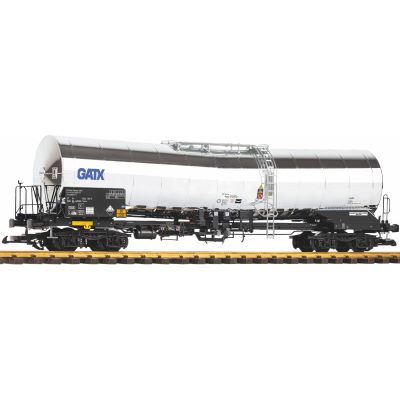
Zas, Zans, Zacns and Zacens are examples of different tank-wagon families. They are used for mineral oil, chemicals, fuels, bitumen and other liquid products. Differences include tank capacity, insulation, heating, bogies and fittings.
Discover Tank WagonsIntermodal wagons carry containers, swap bodies or semi-trailers. On a model railway they suit container terminals, ports and long European corridor trains. Different loading units create a varied appearance even when several wagons use the same basic design.
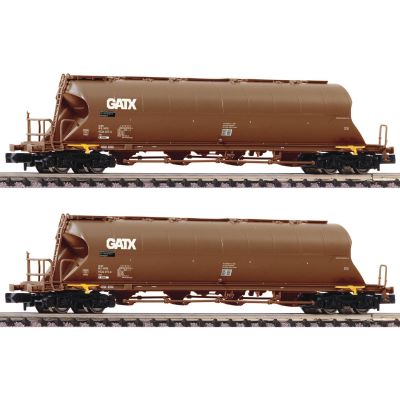
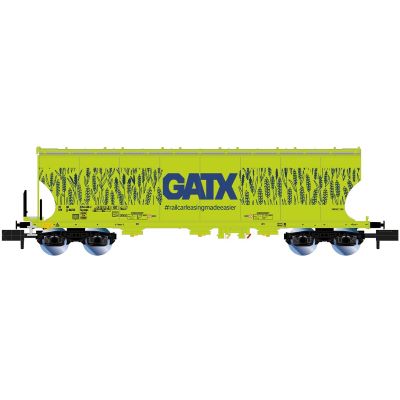
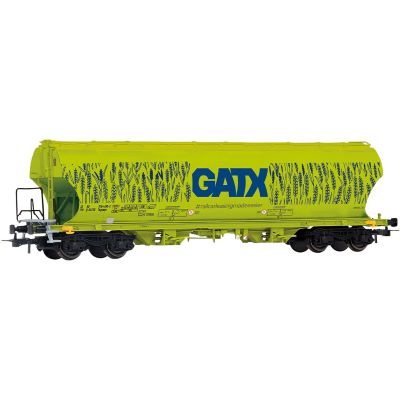
View Intermodal ModelsSilo wagons complement cement works, building-material depots, mills and agricultural loading facilities. Depending on the prototype, they carry powdered or granular products. They can form short local transfers or complete block trains.
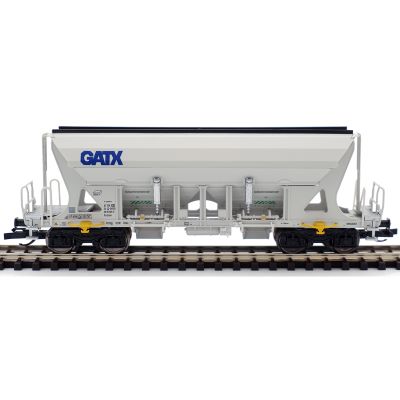
Select Silo WagonsSelf-unloading wagons suit coal, ballast, ore and construction materials. Open wagons can additionally carry timber, scrap or other weather-resistant loads. Several similar wagons create a convincing block-train character even on compact layouts.
Find Bulk-Goods WagonsSliding-tarpaulin wagons protect sensitive cargo such as steel coils. Flat and specialist wagons carry pipes, sheet metal, machinery or unusual loads. These models add variety to mixed freight trains and extend the industrial theme of a layout.
Open Further Freight CarsThe current GATX theme at Modellbahnshop includes models in H0, TT, N and G. The right gauge depends mainly on the available space, desired train length and existing track system.
| Gauge | Scale and Model Track Gauge | Particular Strength | Suitable GATX Themes |
|---|---|---|---|
| H0 | 1:87 · 16.5 mm | Very large selection, highly visible details and numerous two-rail and centre-contact models | Tank trains, intermodal traffic, cement, grain, bulk goods and mixed freight trains |
| TT | 1:120 · 12 mm | Strong compromise between train length, space requirements and visible wagon details | Chemical tank wagons, self-unloading wagons, open wagons and compact block trains |
| N | 1:160 · 9 mm | Long freight trains, broad curves and extensive industrial or port layouts | Silo, tank and container wagons on European main-line routes |
| G | often 1:22.5 · 45 mm | Large and robust vehicles for indoor layouts and suitable garden-railway concepts | Chemical tank wagons, cement silo wagons and short industrial freight trains |
In H0, the GATX livery does not determine the electrical system. The technical construction of the model is decisive. Wheelsets and axle insulation must match the centre-contact or two-rail track system. Large-scale model ratios can vary according to prototype and manufacturer.
The module requests every stored English product page again when it loads. Only clearly accessible product pages with a GATX reference and product image are displayed. Prices, stock levels and delivery information are deliberately not copied to this landing page.
Not every wagon in a convincing train has to be identical. A plausible transport task, a matching period and a locomotive that could credibly operate on the represented route are the decisive factors.
Begin with a refinery, chemical works, cement works, grain store, quarry or container terminal. The destination determines whether tank, silo, self-unloading or intermodal wagons are required.
Check the logo, revision dates and operator markings. GATX models with modern lettering are particularly suitable for Era VI . Transitional forms and earlier DEC or KVG references can represent earlier periods.
The locomotive does not have to carry GATX lettering. State railways, cargo subsidiaries and private freight operators can haul the wagons. Combinations with VTG , Wascosa or Ermewa are also credible in mixed trains.
A short block train of four to six similar wagons often appears more convincing on a compact layout than an excessively long train. Large H0, TT or N layouts can combine several wagon series, different running numbers and subtle weathering.
In European prototype operation, GATX is primarily a wagon owner and lessor. Selecting an arbitrary locomotive merely because it has a similar colour does not automatically create a credible train. A plausible route, suitable railway company and recognisable transport task are more important.
These answers help with gauge, electrical system, era, wagon combinations and the construction of credible freight operations.
GATX identifies the wagon owner or lessor. The logo does not necessarily identify the railway undertaking hauling the train. GATX wagons can therefore operate behind locomotives belonging to many European companies.
The checked Modellbahnshop selection includes H0, TT, N and G. The range varies according to manufacturer and new-product programme. The live module only displays models whose English product pages can be read clearly when the page is opened.
The livery is independent of the electrical system. Technically, the wheelsets and axle insulation must suit the centre-contact or two-rail track system. The system specification of the individual model is decisive, not the GATX logo.
Suitable locomotives belong to state railways, cargo companies and private freight operators. The exact choice depends on the country, era, electrification and route. Modern multi-system, electric and diesel locomotives are frequently suitable.
Yes. Mixed freight trains can contain wagons belonging to different owners. In block trains, a consistent transport task is more important than identical ownership. Tank wagons should be combined plausibly according to cargo and destination industry.
Many models with current GATX lettering belong to Era VI. Depending on the markings, revision date and predecessor branding, Era V may also be appropriate. The manufacturer’s era specification for the individual model remains decisive.
The letter combinations identify different technical characteristics and operating possibilities of tank wagons. These include axle arrangement, tank design and operational equipment. Wagon construction, era and cargo are more important for model selection than the classification code alone.
Four to six similar wagons already create a recognisable block train on a compact layout. Longer formations are possible on larger layouts. Different running numbers prevent a train of identical wagon types from appearing excessively uniform.
Suitable themes include refineries, fuel depots, chemical works, cement works, grain silos, quarries, ports, container terminals and large freight yards. On a small layout, one industrial siding with a transfer track and shunting facility is sufficient.
The product module requests every product page again when it loads. Pages containing a discontinuation notice, error pages, redirects without a clear product reference and pages without an identifiable GATX product image are skipped and are not displayed as product cards.
The central model railway guide covers gauges, eras and railway companies as well as layout planning, digital technology, scenery construction and maintenance.
English links, product destinations and company information reviewed on 20 August 2026. The individual product page and manufacturer documentation remain authoritative.