Modellbahn Keks
Welcome!
Our cookies offer you a fast, relaxed and full-featured shopping experience. Some are necessary to operate the website and its functions. Others help us to improve our services. If you agree to this, simply consent to the use of cookies for preferences, statistics and marketing by clicking on "OK". Alternatively, you can deactivate individual cookies under "Customise cookies" or all cookies, except those required for the function of our website, under "Reject all".
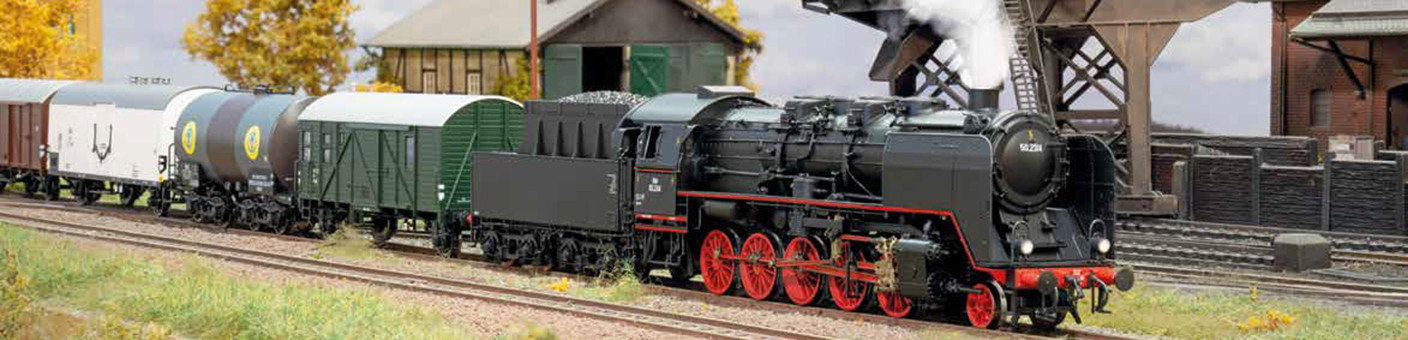
Model railway locomotive prepared for motor maintenance and carbon brush replacement
Small motor parts with an important job

Replacing Model Railway Carbon Brushes

Carbon brushes are wear parts in many traditional model railway motors. Learn how to diagnose worn brushes, identify the correct replacement part, remove the old brush and spring, inspect the brush guide and commutator and carry out a controlled test run after replacement.

Small motor parts with an important job

What Are Carbon Brushes and Why Do They Wear Out?

Carbon brushes, also called motor brushes or replacement brushes in model railway terminology, are wear parts used in traditional brushed motors. They provide the electrical contact to the rotating commutator of the motor. A small spring presses the brush against the contact surface with the required pressure.

While the motor is running, the carbon brush continuously slides across the commutator. This gradually wears away the brush material. The rate of wear depends on factors such as motor design, operating time, commutator condition and the individual vehicle.

There is therefore no universal replacement interval that applies to every model railway locomotive.

Replacing carbon brushes is a typical maintenance operation, particularly on older locomotives. Correct diagnosis should come first, however. Uneven running can also be caused by dirty wheels, poor rail contact, stiff mechanical components, decoder problems or a damaged motor.

The operating instructions and spare-parts documentation for the exact locomotive always take priority over general maintenance advice.

Not every modern model railway motor has externally replaceable carbon brushes. Maintenance-free, encapsulated or differently designed motors should not be opened if the manufacturer does not provide for brush replacement. In such cases, replacing the complete motor or using a professional repair service may be the appropriate solution.

Check first, dismantle second

Is the Carbon Brush Really Causing the Problem?

Replacing the motor brushes should not be the first response to every running problem. A brief diagnosis can prevent an otherwise functioning locomotive from being opened unnecessarily.

Observation Possible Cause Sensible Check
Locomotive jerks on several track sections Current pickup, dirty wheels or motor contact Clean and test the wheels, rails and current collectors first
Motor starts poorly Worn carbon brushes or contamination inside the motor Check brush length, springs and free movement inside the guide
Motor appears noticeably weak Contact problem or stiff drivetrain Check the gearbox and mechanical components for free movement
Carbon brush is severely shortened or damaged Normal wear or mechanical damage Identify the correct replacement part for the exact locomotive and motor version
New brushes do not solve the problem Commutator, motor, decoder or mechanical problem Continue dismantling only according to the instructions or arrange professional diagnosis

Carbon Brush and Centre Pickup Shoe Are Different Parts

A carbon brush is located inside the motor and transfers current to the commutator. The pickup shoe on a centre-contact locomotive, by contrast, collects traction current from the track. Modellbahnshop therefore provides separate categories for carbon brushes and current collectors or pickup shoes.

Workshop guide

How to Replace Model Railway Carbon Brushes Step by Step

Motor and body designs vary considerably. On some locomotives the brush holders are directly accessible; on others, the motor must first be removed. The following sequence is therefore a general guide only.

1

Identify the Locomotive and Motor Type

Before Opening the Model
Item number is more reliable than visual estimation

Keep the manufacturer, catalogue number and, wherever possible, the spare-parts drawing to hand. Brushes differ in length, diameter, cross-section and shape.

Different motor versions of the same locomotive class may also require different carbon brushes.

2

Completely Disconnect the Vehicle from Power

Remove the locomotive from the track and place it on a soft locomotive cradle. Before opening the model, photograph the original positions of the body, cables and contacts.

Collect small screws, springs and other parts in a tray so that nothing is lost during reassembly.

3

Expose the Motor According to the Manufacturer's Instructions

Release the body only at the intended fastening points. On some designs, the brush holders then become accessible. Other maintenance instructions additionally require removal of the motor.

Do not unnecessarily stress cables, plugs or sensitive circuit boards.

4

Remove the Spring and Old Carbon Brush

Carefully release the brush spring and remove the carbon brush with fine tweezers.

Small springs can easily jump away. Before removal, note or photograph exactly how the brush and spring are arranged inside the guide.

5

Inspect the Brush Guide and Commutator

The new carbon brush must be able to move freely in its guide. Carefully remove loose contamination.

If the commutator is severely damaged or worn or the motor shaft is stiff, do not simply continue grinding, cleaning or dismantling without the appropriate technical instructions.

6

Install the New Carbon Brush and Spring

Use only the brush type intended for the motor. The carbon brush must not jam and should never be forced into the guide.

Reinstall the spring in its original position and check that it presses the brush cleanly against the commutator.

7

Reassemble the Motor and Contacts Correctly

Reinstall the motor, electrical contacts and body in their documented positions. Pay particular attention to cables so that none are trapped.

Apply lubricant only to explicitly specified motor-bearing or gearbox locations. Never place oil or grease on the carbon brush or commutator contact surface.

8

Carry Out a Controlled Test Run

After complete reassembly, test the locomotive slowly and initially without a long train.

The locomotive should start smoothly and the motor should run evenly. If interruptions or unusual noises remain, further diagnosis is advisable.

Do Not Force a Closed Motor Open

If the motor has no serviceable carbon brushes according to the manufacturer's documentation, do not dismantle the motor housing merely to search for them. A replacement motor or professional repair is the safer route.

From miniature models to large scales

Carbon Brushes and Motor Designs by Model Railway Gauge

The function of a carbon brush is not linked to a particular gauge. The decisive factor is the motor installed in the vehicle. Gauge is therefore useful for narrowing the search, but it does not identify the correct brush on its own.

Gauge What to Consider During Motor Maintenance Related Guide
Z Extremely compact technology. Very small springs and contacts require particularly delicate handling. Z Gauge
N Small brushes and motor components. Check the spare-part number particularly carefully. N Gauge
TT / TTe Older TT drives can use different round and rectangular motor constructions. TT Gauge
H0 Very wide range of traditional and modern motor designs. Always identify the exact motor version. H0 Gauge
H0e / H0m / H0f Narrow-gauge vehicles often contain particularly compact specialist drives. Check the vehicle instructions carefully. H0m Gauge
0 / 1 Larger vehicles do not automatically mean that the motor brushes are freely accessible. The exact motor construction remains decisive. Check the exact vehicle documentation
G Large-scale motors can differ considerably according to manufacturer and vehicle generation. G Gauge

The current Modellbahnshop carbon-brush category contains replacement parts particularly for H0, TT and N. Always check the precise motor or vehicle assignment before ordering.

Current replacement brushes from Modellbahnshop

Select Carbon Brushes and Replacement Brushes Precisely

Exact assignment is more important than choosing a supposedly universal brush. Compare manufacturer, gauge, brush shape, motor type and catalogue number before ordering.

Browse All Current Carbon Brushes

The complete category provides current manufacturer, gauge and availability filters. Always confirm the exact locomotive or motor number before ordering.

All Carbon Brushes
Avoid workshop mistakes

Common Mistakes When Replacing Carbon Brushes

Incorrect replacement parts, damaged springs or unnecessary motor dismantling can create additional faults instead of solving the original problem.

1

Selecting Only by Gauge

An H0 carbon brush does not automatically fit every H0 motor. Motor design, shape, dimensions and spare-part number are more important than gauge alone.

2

Forcing the Brush into the Guide

A brush must be able to move inside its guide. If it jams, either the brush type is incorrect or the guide itself requires proper inspection.

3

Losing or Altering the Spring

Small brush springs can easily jump away. A bent or incorrect spring changes the contact pressure and should be replaced with the correct spare part.

4

Applying Lubricant to the Wrong Location

More oil does not mean better maintenance. Motor bearings and gearboxes should only be lubricated according to the manufacturer's instructions. Carbon brushes and electrical contact surfaces must remain clean.

5

Unnecessarily Opening an Encapsulated Motor

If the manufacturer does not provide replaceable brushes, do not force a sealed motor apart. The spare-parts diagram or repair service is the better route.

6

Immediately Running the Locomotive at Full Load

Check the complete reassembly first and then perform a controlled low-speed test. Incorrect seating or contact problems can therefore be detected before the locomotive is placed under heavy load.

Motor Still Runs Unevenly or Does Not Work?

The commutator, motor bearings, current pickup, wiring, decoder or mechanical components may be responsible. Systematic diagnosis prevents unnecessary replacement of additional parts.

Open Repair Service
Common motor-maintenance questions

Frequently Asked Questions About Replacing Model Railway Carbon Brushes

Short answers about wear, compatibility, motor design, replacement procedure and fault diagnosis.

When Should I Replace the Carbon Brushes in a Model Railway Locomotive?

There is no fixed replacement interval. Inspect the brushes when motor performance noticeably decreases, the locomotive starts poorly or the carbon brushes are visibly heavily worn or damaged.

Are Carbon Brushes and Motor Brushes the Same Thing?

In model railway terminology, both terms are frequently used for the conductive brushes inside a brushed motor. Product descriptions may also use terms such as replacement brushes or replacement carbons.

How Do I Find the Correct Carbon Brush for My Locomotive?

The safest method is to identify the manufacturer, vehicle catalogue number, motor type and spare-part number. Dimensions and gauge help with checking but do not replace a clear model-specific assignment.

Does the Motor Have to Be Removed to Replace the Carbon Brushes?

This depends on the construction. On some locomotives the brush holders are directly accessible. On others, the operating instructions require the body and then the motor to be removed.

Should Carbon Brushes Be Sanded or Shortened to Make Them Fit?

An incorrect brush should not normally be modified simply to make it fit. Use the brush type intended for the motor and follow any special manufacturer instructions if adjustment is explicitly specified.

Why Does the Locomotive Still Run Poorly with New Carbon Brushes?

The problem may be caused by dirty wheels, current collectors, the commutator, the motor itself, mechanical parts, wiring or digital electronics. Further diagnosis is then advisable.

Does Every Model Railway Locomotive Have Replaceable Carbon Brushes?

No. Modern or encapsulated motor constructions can be maintenance-free or may not contain separately replaceable carbon brushes. The vehicle's spare-parts and maintenance documentation is decisive.

Which Model Railway Gauges Use Carbon Brushes?

Carbon brushes are a feature of motor construction rather than gauge. They can therefore appear in different model railway scales. The current Modellbahnshop carbon-brush range includes products particularly for H0, TT and N.

When Should I Leave the Repair to a Specialist?

Professional inspection is advisable when sensitive circuit boards or cables must be disconnected, the motor appears badly damaged, the replacement part cannot be clearly identified or the locomotive continues to malfunction after the brush replacement.

From Carbon Brushes to Complete Locomotive Maintenance

Continue with guides covering locomotive cleaning, lubrication, motors, spare parts, digital technology, gauges, repairs and reliable model railway operation.

Open the Model Railway Guide