Base, Rerailer and Cleaning
These additions protect the vehicles, simplify handling and support reliable operation from the first day.

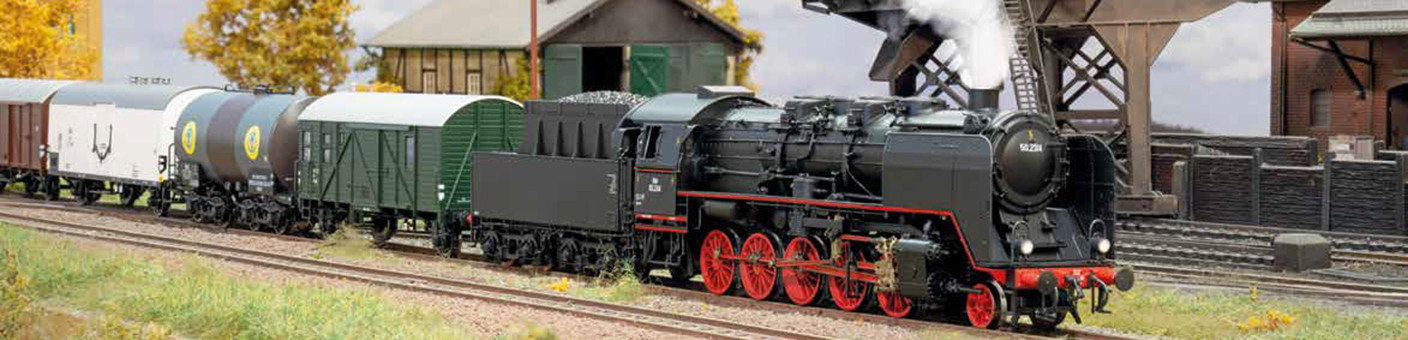
A complete starter set already includes the train, track, control equipment and power supply. This guide shows which additions are useful immediately, which track expansion should come next and which tools, digital equipment and scenery can wait.
A locomotive, coaches or wagons, track, control equipment and a power supply are normally already included in a complete model railway starter set . Additional technology should only be purchased when there is a specific operational or construction requirement.
The answer depends on whether the railway will be assembled temporarily on a table or developed into a permanent layout. A temporary circuit mainly needs a level base, sufficient distance from the table edge and safe storage for vehicles, cables and small components.
A rerailer helps place every wheel correctly on the rails. This is particularly useful in N and Z gauges and for long coaches. Suitable track-cleaning equipment should also be part of the early basic equipment because dirty railheads can impair electrical contact.
The most useful first operational expansion is usually a turnout, siding and buffer stop. A wagon can then be stored, a freight customer served or a train passed. These parts must belong to the exact track system supplied in the starter set.
A permanent layout later requires a substructure, additional power feeds, cables, tools, buildings and scenery materials. None of these are necessary for the first day. Complete extensive test runs before securing or ballasting the track.
These additions protect the vehicles, simplify handling and support reliable operation from the first day.
An additional operational route normally creates more value than another locomotive on the unchanged oval.
These product groups are needed only when the temporary circuit is developed into a permanent miniature world.
The finder considers the exact track system, type of setup, desired activity, current project stage and the main users of the railway.
Not every addition is required immediately. The correct order keeps the first setup clear and helps prevent technically unsuitable purchases.
| Addition | When Is It Needed? | Practical Benefit | What Should Be Checked? |
|---|---|---|---|
| Stable setup surface | Immediately | Protects track and vehicles from impacts, fibres and falls. | Level, dry, clean and larger than the complete track figure. |
| Rerailer | Useful immediately | Places every wheel correctly and gently on the rails. | Select the correct model for the gauge. |
| Track and wheel cleaning | From the beginning | Reduces contact problems and irregular running. | Use only suitable model railway maintenance products. |
| Turnout and siding | First expansion | Permits shunting, storage and additional routes. | Same track system, roadbed, geometry and conductor system. |
| Additional power feed | When the route becomes longer | Improves the voltage supply to more distant track sections. | Observe the manufacturer's instructions, polarity and conductor system. |
| Additional coach or wagon | After adding the siding | Creates train formation, loading and shunting tasks. | Gauge, coupling, minimum radius and total train length. |
| Substructure and trackbed | Permanent layout | Creates a level, stable route that can be landscaped. | Build only after the track plan has been fully tested. |
| Tools | Before kits and wiring | Permits clean cutting, filing, assembly and electrical work. | Knives and soldering tools must be used safely and appropriately for the user's age. |
| Buildings and scenery | After extensive testing | Turns the track setup into a believable miniature world. | Keep turnouts, wiring and hidden track accessible. |
| Further digital technology | For a defined function | Expands multi-train operation, turnout control and feedback. | Match the protocol, command station, decoder and power demand. |
The basic principles apply to every nominal size. Handling, cleaning, substructure, electrical requirements and space requirements nevertheless differ considerably.
| Gauge and Variants | Typical Scale | Particularly Useful Addition | Important When Expanding |
|---|---|---|---|
| Z and Zm | 1:220 | Rerailer, good lighting and fine cleaning equipment. | Use only exactly matching Z-gauge track and connectors. |
| N, Nm, Ne and Nf | 1:160 | Rerailer, maintenance equipment and a small turnout expansion. | Commit to one specific N-gauge track system. |
| TT, TTm, TTe and TTf | 1:120 | Track plan, turnout, siding and track-cleaning block. | Do not mix roadbed track and conventional model track without checking the transition. |
| H0, H0m, H0e and H0f | 1:87 | Rerailer, track set, tools and scenery materials. | Distinguish between centre-contact, two-rail and narrow-gauge systems. |
| 00 and S | Approximately 1:76 and 1:64 | Country- and manufacturer-specific connectors and couplings. | Check the power supply, rail profile and vehicle standard. |
| 0, 0m, 0e and 0f | Usually 1:45 | Stable substructure, generous curves and uncoupling equipment. | Consider the weight and length of the vehicles. |
| 1, 1m, 1e and 1f | 1:32 | Load-bearing route, secure storage and a powerful supply. | Plan for large radii and high vehicle weights. |
| II, IIm/G, IIe and IIf | 1:22.5 | Robust connectors, outdoor cleaning and a weather-resistant base. | Plan drainage and a safe outdoor power supply. |
| III, V, VII, X and specialist sizes | Depends on the system | Project-specific tools, structural equipment and safety systems. | Check manufacturer and operating standards individually. |
Every stage should provide a visible or operational benefit before the next purchase is made.
Assign the train, track, connection equipment, controller and power supply correctly and check that everything is complete.
Select a level area with sufficient distance between the track and every exposed edge.
Use a rerailer and check that every wheelset is correctly positioned on both rails.
Test several directions and speeds before adding scenery or securing the track.
Select a system-compatible turnout, straight sections and a buffer stop.
When the route becomes longer, add further power feeds in accordance with the system instructions.
Only now should the baseboard, trackbed and cable routes be defined.
Complete one small, thoroughly tested and fully accessible section first.
Most problems are not caused by missing accessories. They result from expanding too early or selecting technically incompatible parts.
The same gauge does not guarantee matching geometry, connections, roadbed or current collection.
More vehicles create few new tasks when there is no additional route, station track or siding.
Faulty joints become difficult to correct after screwing, gluing and ballasting.
Turnouts, cables and hidden track must remain accessible for inspection and maintenance.
Unsuitable chemicals can damage plastic, traction tyres, paint and other surfaces.
Structured expansion according to a defined task remains less expensive and easier to understand.
Knives, soldering tools and specialist equipment are required only when the corresponding construction work begins.
The controller supplied with the starter set is often sufficient for the first expansion stages.
These examples serve different tasks. Before buying, always check the gauge, exact track system, package contents and age information of the individual product.
Rerailers protect delicate vehicles. A suitable cleaning block is one of the few additions that is already useful during the first operating sessions.
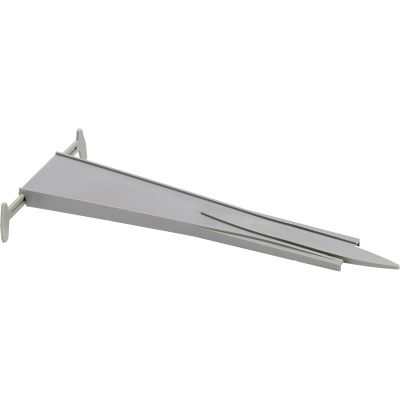
Guides locomotive and wagon wheels safely onto common H0 track and simplifies frequent placement and removal.
View Product Details →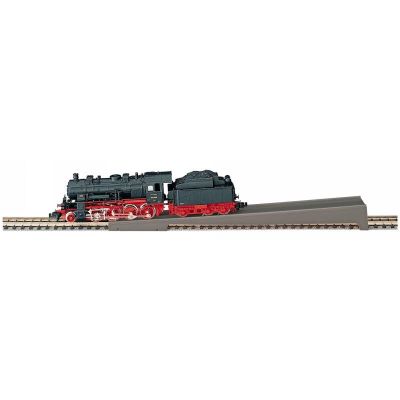
Supports the correct placement of delicate N-gauge locomotives, coaches and wagons.
View Product Details →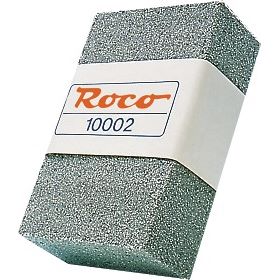
Manual cleaning block for removing dirt and oil residue from the railheads.
View Product Details →Every set belongs to a particular track system. Select only an expansion that matches the track supplied in the starter set.
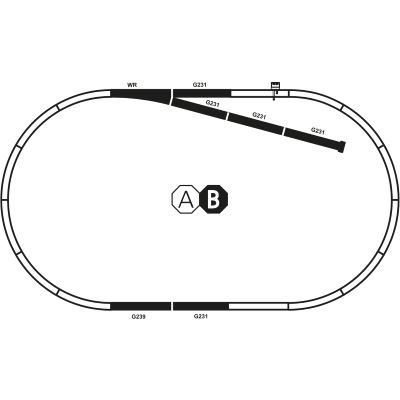
A turnout, straight sections and buffer stop create an initial siding for shunting and loading tasks.
View Product Details →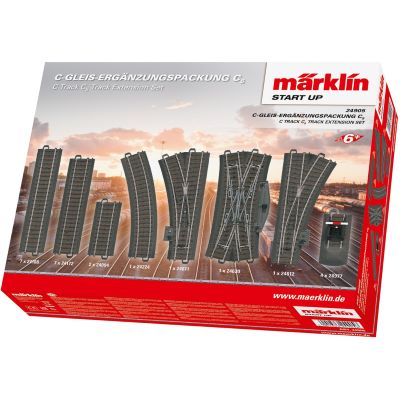
Turnouts, straight track and buffer stops add storage and shunting areas to a compatible C Track layout.
View Product Details →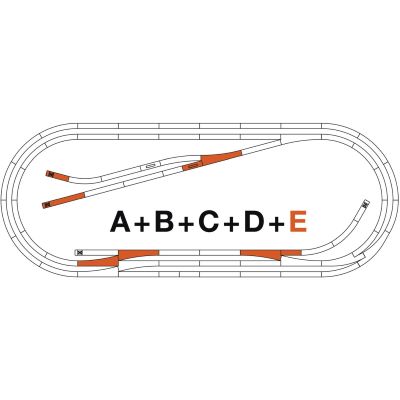
Turnouts, uncoupling track and buffer stops expand a suitable ROCO LINE circuit with station and shunting areas.
View Product Details →These products are required only after the track plan has been tested and permanent buildings or scenery are ready to be built.
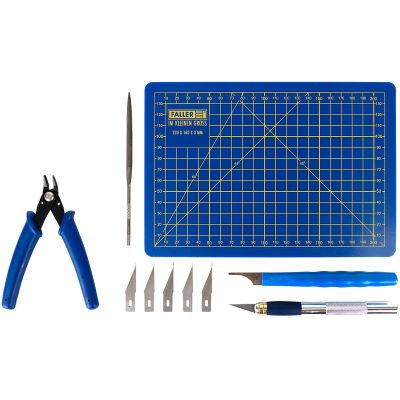
Side cutter, knife, deburrer, file and cutting mat form a compact basis for model and building-kit construction.
View Product Details →
Grass mat, scatter material, decorative moss and cork rock permit initial scenery tests away from the layout.
View Product Details →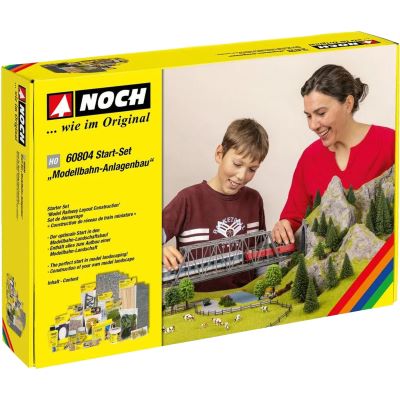
A coordinated introduction to permanent terrain and scenery after the track and technical system are established.
View Product Details →The exact system designation is more important than the brand name alone when expanding the track. Scenery, tools and many universal accessories can often be used across manufacturers.
These answers cover basic equipment, track expansion, cleaning, additional vehicles and the transition to a permanent layout.
For the first train runs, usually only a stable base, sufficient distance from the edge, a matching rerailer and suitable cleaning equipment are needed. A turnout with a siding is the most useful first operational expansion.
A complete starter set normally includes the control equipment and power supply. Check the package contents because a train pack without track and a controller is not the same as a starter set.
Buy track from the same system as the starter set. Gauge alone is not sufficient. Roadbed, rail profile, connectors, geometry and, in H0, the conductor system must match.
One turnout, several straight sections and a buffer stop form a siding. This creates shunting tasks and considerably more varied operation.
No. A second locomotive is most useful when a siding, station or digital multi-train operation is available. Without additional routes, its practical benefit remains limited.
The supplied controller is often sufficient for the initial circuit and several first locomotives. A larger command station becomes relevant when many turnouts, feedback modules or automated routes are required.
It guides every wheelset correctly onto the rails and protects delicate running gear, couplings and separately fitted details. It makes daily handling considerably easier in N and Z gauges.
Remove loose dust carefully and use suitable model railway cleaning products on the railheads. Aggressive household cleaners and excessive oil must not be applied to the track.
Normally not for a temporary setup. On a permanent layout, an additional layer can provide sound insulation or height adjustment. Test the construction before adding ballast.
Buy them after the track plan, turnouts and power supply have passed extensive test runs. Begin with a small station area instead of constructing the complete landscape at once.
Building kits initially require a side cutter, craft knife, file, tweezers and cutting mat. Soldering tools and electrical measuring equipment are needed only for wiring or conversions.
Universal tools, scenery materials and figures often can. Track, turnout drives, electrical connections, wheelsets and digital technology must be checked technically before combining.
Explore starter sets, gauges, track systems, layout planning, digital technology, scenery and maintenance in the central model railway guide.
Editorially reviewed and updated on 30 July 2026. The package contents, product safety information and technical details on the individual product page remain decisive.