
Saxon narrow gauge for H0e and G scale
Steam railway atmosphere in the Ore Mountains
Fichtelberg Railway: History, Route & Models
The Fichtelberg Railway connects Cranzahl with Kurort Oberwiesenthal. Steam locomotives, green passenger coaches, wooded mountain slopes and the Hüttenbach Viaduct make it an especially attractive prototype for compact narrow-gauge layouts and large garden railways.
From 1897 to today’s tourist services
What is the Fichtelberg Railway?
The Fichtelberg Railway is a Saxon narrow-gauge railway in the upper Ore Mountains. It begins at Cranzahl station, where it connects with the standard-gauge railway, and climbs via Neudorf to Kurort Oberwiesenthal. The prototype uses a track gauge of 750 millimetres and is now part of the SDG Saxon Steam Railway Company .
The official opening journey took place on 19 July 1897. The line soon developed into an important transport connection for local residents, businesses and excursion traffic. Transporter trucks and, later, transporter wagons allowed standard-gauge freight wagons to be carried on the narrow-gauge railway. Regular freight traffic ended in 1992, while tourist passenger services continued to grow in importance.
Why is the railway still so popular today?
The combination of daily railway operation, historic steam trains and varied low-mountain scenery is unusual. The trains do not operate only on special museum days; they connect several communities in the Ore Mountains. Passengers, hikers, winter-sports visitors and railway enthusiasts therefore use the same green coaches, giving the railway a lively and authentic character.
From BVO operation to today’s SDG
BVO Bahn GmbH took over the operation in 1998. The company has used the name SDG since 2007. Tracks, stations, workshops and vehicles have since been renewed gradually without abandoning the historic character of the route. This combination of traditional steam technology and professionally organised tourist operation makes the Fichtelberg Railway especially interesting for model railway enthusiasts.
Typical scenic elements
Dark green passenger coaches, black steam locomotives with red running gear, small stations, coniferous forest, Ore Mountain houses, snowy landscapes, hiking trails, water cranes and low platforms create a highly recognisable scene even in a limited space.
Planning tip for beginners
Begin by choosing a season and a railway era. A summer train with an open observation coach creates a different impression from a snow-covered regular Era VI service or an Era IV Deutsche Reichsbahn train.
A mountain journey through the upper Ore Mountains
Which stations define the route?
From the interchange station at Cranzahl, the railway climbs through the Sehma Valley to Germany’s highest town. Small stops, crossing stations, wooded sections and bridges provide numerous motifs for a model railway layout.
Cranzahl
Starting point with a standard-gauge connection, narrow-gauge tracks and opportunities for transfer, shunting and passenger interchange scenes.
Unterneudorf
A quiet stop suitable for a compact forest or village scene with a short platform and level crossing.
Neudorf
A larger operating location where trains can cross. The surroundings are suitable for Ore Mountain houses, crafts and tourist scenes.
Vierenstraße
A popular starting point for walks. Forest, gradient and a small stop can be combined in a space-saving scene.
Kretscham-Rothensehma
A classic intermediate station for train crossings, a goods shed, loading road and relaxed narrow-gauge operation.
Kurort Oberwiesenthal
Terminus with locomotive servicing, a workshop, locomotive run-round movements and the well-known Hüttenbach Viaduct in the town.
Steam, diesel and green passenger coaches
Which vehicles belong on the Fichtelberg Railway?
The railway’s best-known image features a powerful class 99 steam locomotive hauling green passenger coaches. From the late 1920s, the larger class 99.73–76 locomotives, known as the original-build VII K, replaced many older IV K locomotives. New-build VII K locomotives of classes 99.77–79 were added from the 1950s.
Diesel locomotives should also be included on a modern SDG layout. The FAUR locomotives L45H-083 and L45H-084 perform reserve, engineering-train, shunting and special duties. They create varied operating possibilities without abandoning the railway’s characteristic steam theme.
What does a convincing train formation look like?
A typical train consists of a steam locomotive, a luggage or baggage coach and several green passenger coaches. An open observation coach or bistro coach can be added during the summer. Deutsche Reichsbahn lettering is appropriate for Era IV, while BVO and early Fichtelberg Railway versions suit Era V. Era VI is characterised by current SDG logos and modern vehicle lettering.
From compact layouts to garden railways
Which gauge is suitable for a Fichtelberg Railway layout?
H0e offers the largest selection of prototype-oriented vehicles. G scale presents the theme in a considerably larger and more robust format. Other scales are mainly suitable for dioramas, scratch-building or freely interpreted scenes.
| Gauge | Scale and track | Suitability | Typical implementation |
|---|---|---|---|
| Z scale | 1:220 | Specialist theme | Small scenic diorama with a suggested narrow-gauge railway. |
| N scale | 1:160 | Free interpretation | A long Ore Mountain landscape in a limited space. |
| TT scale | 1:120 | Complementary Saxon theme | Deutsche Reichsbahn standard gauge with a separate narrow-gauge scene. |
| H0e | 1:87 on 9 mm track | Best prototype-oriented choice | Bemo, pmt and Technomodell vehicles on a compact layout. |
| H0m | 1:87 on 12 mm track | Not prototypically correct | Only for regauged vehicles or freely interpreted models. |
| 0e | Large narrow gauge | Scratch-building and small-series models | Terminus, diorama or high-quality display model. |
| G scale | Usually 1:22.5 on 45 mm track | Large-scale and garden railway | LGB steam locomotives and SDG coaches for indoor or outdoor operation. |
Why H0e is especially suitable
Buildings, figures and road vehicles remain in the popular 1:87 scale, while the 9 millimetre track convincingly represents the prototype’s 750 millimetre narrow gauge. Further information is available in the model railway gauge comparison .
Ore Mountain atmosphere instead of an overcrowded track plan
How do you plan a Fichtelberg Railway model layout?
A convincing layout does not require a complete reproduction of the route. A characteristic station, a gradient, forest scenery and a short steam train are enough to make the prototype immediately recognisable.
Compact terminus
A platform track, run-round loop, engine shed track and water crane enable locomotive run-round movements, shunting and servicing.
Wooded line on a gradient
A visible curve, spruce trees, embankment and hiking trail represent the mountain climb towards Oberwiesenthal.
Viaduct as a focal point
A bridge in front of town houses or a mountain slope recalls the Hüttenbach Viaduct and divides the layout into distinct scenic areas.
Cranzahl as an interchange station
Standard gauge and H0e meet. Passengers change trains, goods are transferred and vehicles are shunted.
Winter in the Ore Mountains
Snow, winter-sports visitors, illuminated houses and steaming locomotives create an especially characteristic Oberwiesenthal scene.
G scale in the garden
Real plants, natural stone, generous curves and robust LGB vehicles transfer the mountain railway atmosphere to an outdoor layout.
Combine suitable locomotives and coaches
20 suitable models for the Fichtelberg Railway
This selection includes direct Fichtelberg Railway and SDG vehicles as well as suitable historic narrow-gauge models. Check the era, coupling system, minimum radius and digital equipment before purchasing.
1:87 scale on 9 millimetre track
Fichtelberg Railway and Saxon narrow gauge in H0e
H0e offers the widest selection for compact, prototype-oriented stations and complete SDG train formations.
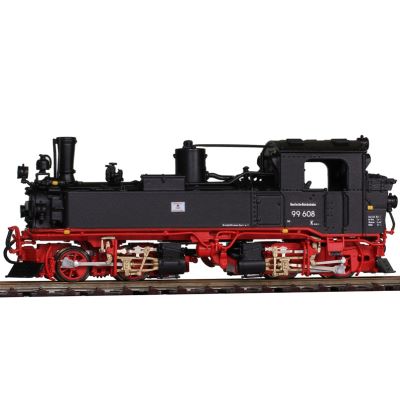
H0e · Steam locomotive
Bemo 1016898 SDG 99 608
Finely detailed small-series model for modern Saxon heritage and tourist trains.
View product →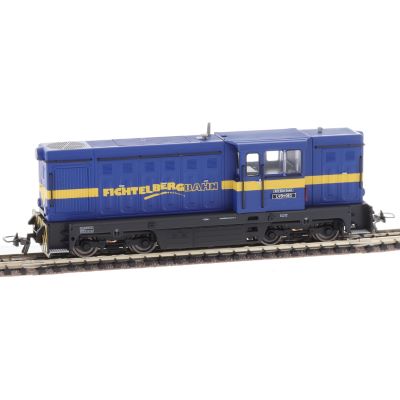
H0e · Diesel locomotive
Bemo 1020863 L45H-083 in Blue
Distinctive BVO locomotive for reserve, engineering-train and shunting duties.
View product →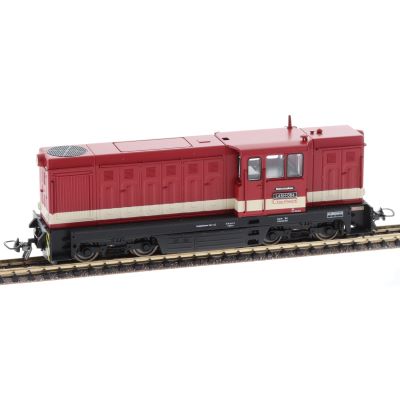
H0e · SDG
Bemo 1020874 L45H-084 in Red
Modern SDG diesel locomotive with a Next18 interface and finely applied details.
View product →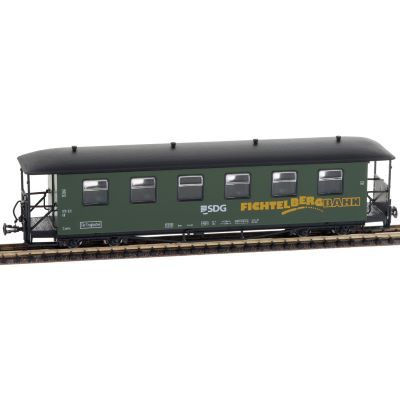
H0e · Passenger coach
Technomodell 52466 Load-Carrying Coach
Green Era V coach with characteristic Fichtelberg Railway lettering.
View product →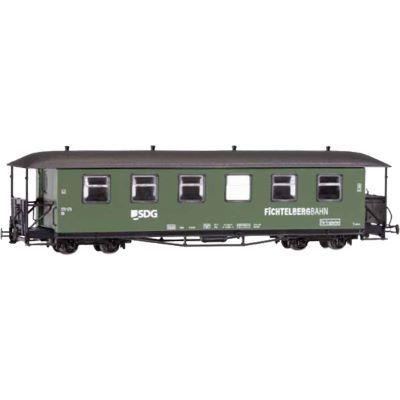
H0e · Era VI
pmt 52465 KB Passenger Coach
Coach with current SDG lettering for modern Fichtelberg Railway trains.
View product →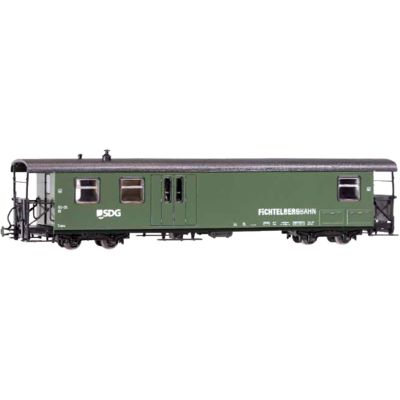
H0e · Luggage van
pmt 53426 Luggage Van
Characteristic service and baggage vehicle for prototype-oriented train formations.
View product →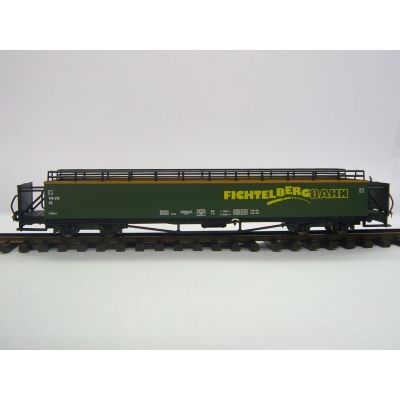
H0e · Summer train
Technomodell 52456 Observation Coach
Open coach for summer excursion trains and special services.
View product →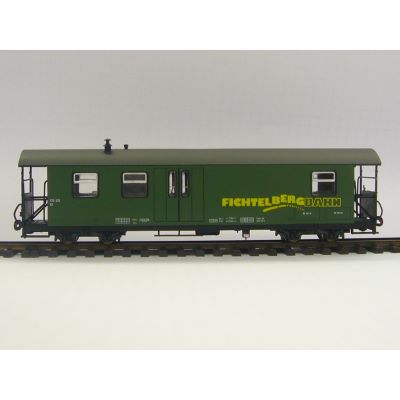
H0e · Baggage coach
Technomodell 53416 Rebuilt Baggage Coach
Green baggage coach with a seating area for Era V train formations.
View product →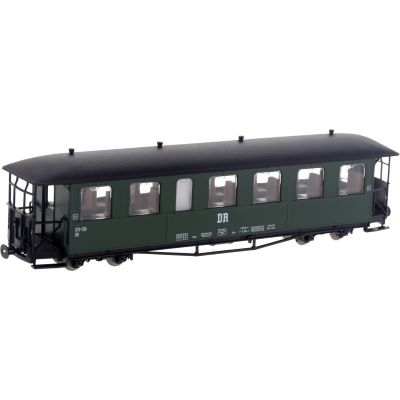
H0e · Deutsche Reichsbahn
Technomodell 52445 Passenger Coach
Historic coach for Era IV Fichtelberg Railway scenes.
View product →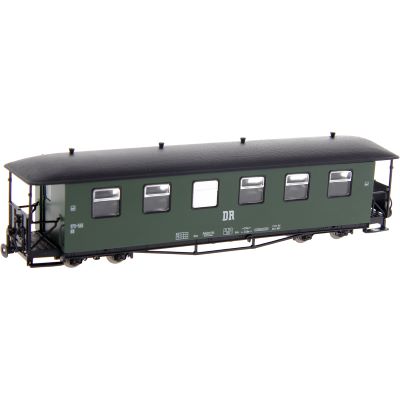
H0e · Rebuilt coach
Technomodell 52440 Passenger Coach
Classic green rebuilt version with the original roof shape.
View product →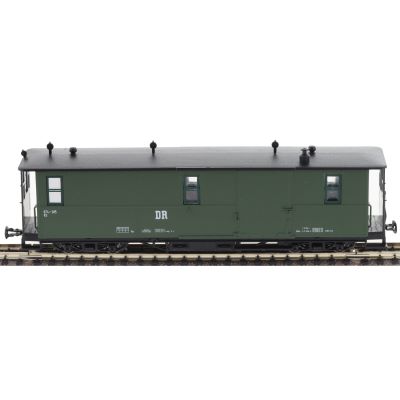
H0e · Service coach
Technomodell 53413 Conductor’s Coach
Suitable addition to historic passenger and service trains.
View product →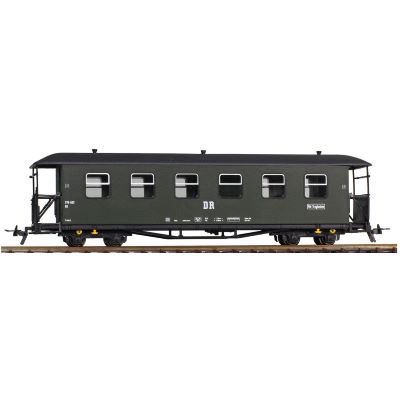
H0e · Load-carrying coach
Bemo 3020811 Coach 970-605
Versatile Saxon narrow-gauge coach for Deutsche Reichsbahn and heritage trains.
View product →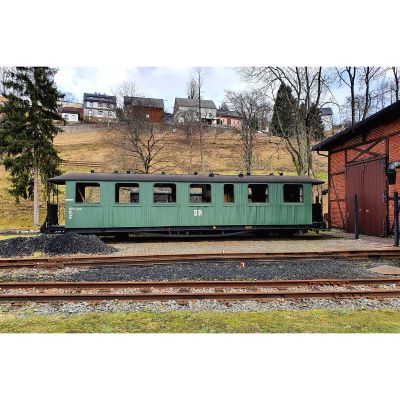
H0e · Era III
Bemo 3022822 Passenger Coach
Historic wooden-bodied coach for early narrow-gauge and heritage trains.
View product →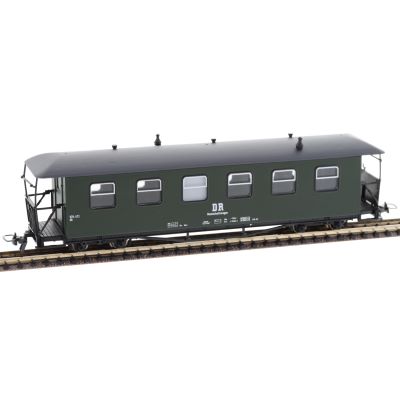
H0e · Service train
Bemo 3020890 Crew Coach
Interesting service vehicle for engineering-train and workshop scenes.
View product →
Large vehicles for indoor and outdoor layouts
Fichtelberg Railway and VII K models in G scale
LGB reproduces the powerful narrow-gauge locomotives and long green coaches particularly impressively for garden and large-scale railway layouts.
G scale · Steam locomotive
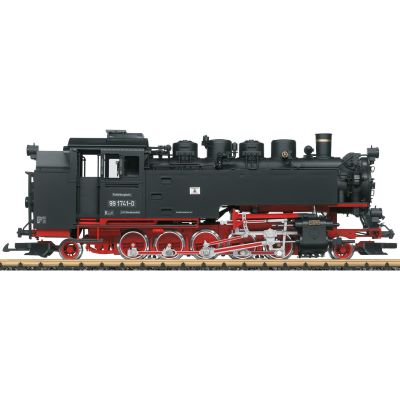
LGB 21481 SDG 99 1741
Fichtelberg Railway steam locomotive with sound, smoke and digitally controlled lighting.
View product →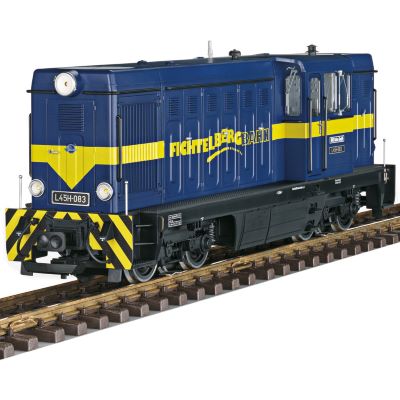
G scale · Diesel locomotive
LGB 26451 L45H-083
Blue BVO version with mfx/DCC, sound and an energy storage device.
View product →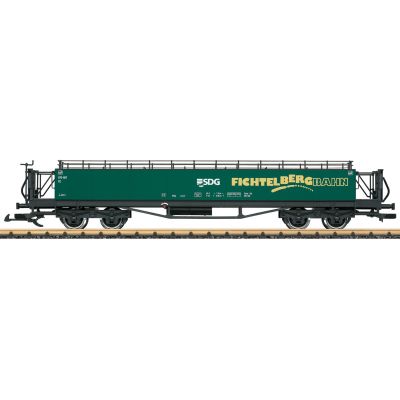
G scale · Observation coach
LGB 32357 SDG Observation Coach
Open anniversary coach for summer garden railway trains.
View product →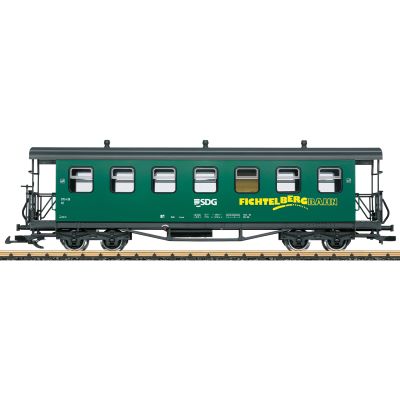
G scale · Bistro coach
LGB 36363 SDG Bistro Coach
Catering coach with the characteristic Fichtelberg Railway design.
View product →
G scale · Passenger coach
LGB 36370 SDG Passenger Coach
Large green KB coach with an interior and metal wheelsets.
View product →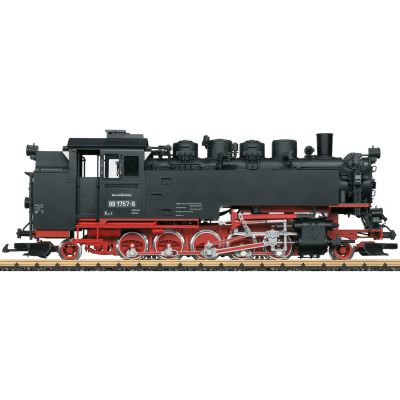
G scale · Era IV
LGB 21484 VII K Steam Locomotive
Historic Deutsche Reichsbahn version for a Fichtelberg Railway theme set before the SDG era.
View product →
Answers for visitors and model railway enthusiasts
Frequently asked questions about the Fichtelberg Railway
The most important information about the route, gauge, vehicles and layout planning is summarised below.
Where does the Fichtelberg Railway begin and end?
It begins at Cranzahl station and ends at Kurort Oberwiesenthal. Several communities and stops in the upper Ore Mountains are served along the route.
Is the Fichtelberg Railway a museum railway?
It preserves historic vehicles and steam railway atmosphere, but it is also a regularly operated tourist narrow-gauge railway providing public transport.
What is the track gauge of the prototype?
The prototype operates on a 750 millimetre gauge. This narrow gauge was used by numerous Saxon branch and mountain railways.
Why is the railway reproduced in H0e?
H0e combines the 1:87 H0 scale with 9 millimetre track. This makes it especially suitable for accurately representing a 750 millimetre narrow-gauge railway.
Which locomotive is most suitable for an SDG train?
Class 99 models are suitable for typical steam operation. L45H diesel locomotives are appropriate for reserve, shunting and engineering trains.
Can Deutsche Reichsbahn and SDG vehicles be combined?
Lettering and railway era should match in a train representing a specific period. Mixed formations are possible on heritage or collector layouts.
How much space does an H0e layout require?
Even a small terminus with a run-round loop and short section of line offers plenty of operating potential. The exact dimensions depend on curve radii, train lengths and scenery.
Which scenery suits the Fichtelberg Railway?
Typical elements include spruce forest, mountain slopes, Ore Mountain houses, small streams, bridges, hiking trails and especially effective winter scenes.
Discover more model railway topics step by step
The central model railway guide covers gauges, digital technology, track planning, vehicles, scenery construction, maintenance and prototype-oriented operation.