
Deutsche Reichsbahn (DR) – Model Railway in All Gauges
The Deutsche Reichsbahn as a Prototype for East German Model Railway Worlds
The Deutsche Reichsbahn, or DR for short, is one of the most important and popular themes in German-speaking model railways. Here, the term mainly refers to the state railway of the GDR, which shaped railway traffic in the Soviet Occupation Zone after the Second World War and later in the German Democratic Republic. The Deutsche Reichsbahn continued to exist until the end of 1993 and was then merged together with the Deutsche Bundesbahn into Deutsche Bahn AG. For model railway enthusiasts, the DR is especially appealing because it offers an unmistakable mix of steam locomotive romance, robust diesel traction, electrified main-line operation, Städteexpress trains, double-deck units, Reko coaches, narrow-gauge branch lines and intensive freight traffic.
At Modellbahnshop, you will find suitable vehicles and accessories for many gauges. The Deutsche Reichsbahn theme is particularly strong in H0, TT and N. H0e, TTe, 0 gauge, Gauge 1 and G are also represented. With suitable products from PIKO, Roco, Tillig, Fleischmann, BRAWA, Bemo, LGB, Märklin and Trix, an authentic Reichsbahn world with high recognition value can be created.
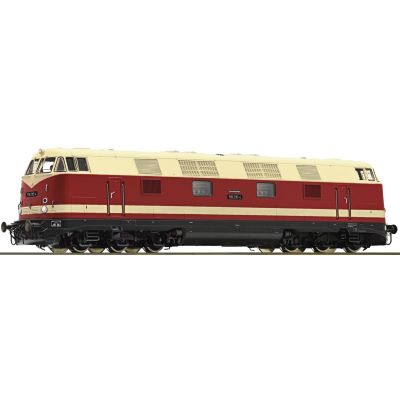
Typical DR Character in Model Form
The Deutsche Reichsbahn immediately appears distinctive on a model railway. Red diesel locomotives, green passenger coaches, heavy freight trains, overhead-line operation with classes 243 or 250 and branch-line scenes with Reko coaches create an atmosphere that clearly differs from the Deutsche Bundesbahn. The combination of classic technology and everyday operation is particularly appealing: shunting in the goods yard, coal transport, Städteexpress services, commuter traffic with double-deck coaches and narrow-gauge trains through tight valleys.
What Does Deutsche Reichsbahn (DR) Mean on a Model Railway?
On model railway products, “DR” usually refers to the Deutsche Reichsbahn of the GDR or the Reichsbahn in the area of the former GDR until the end of 1993. It is important to distinguish this from DRG, the Deutsche Reichsbahn-Gesellschaft of Era II. DR models of Eras III and IV, by contrast, show railway operation after 1945. Era III stands for the post-war period, reconstruction, steam operation, early diesel locomotives, rebuilt vehicles and older coach types. Era IV shows the modernised Reichsbahn with computer numbers, powerful diesel locomotives, new electric classes, Städteexpress services, international express trains and intensive freight traffic.
Important DR Eras for Model Railway Enthusiasts
Era III shows the Deutsche Reichsbahn of the 1950s and 1960s. Many pre-war vehicles were still in use, steam locomotives shaped the image, and numerous coaches were rebuilt or reconstructed. Typical classes include 38, 50, 52, 58, 64, 86, 89, 91 and 95, as well as early diesel locomotives and shunting locomotives. Passenger services were operated with Reko coaches, older coaches, luggage vans and short local trains.
Era IV is the most important period for many DR fans. It covers the 1970s and 1980s up to the political changes of 1989/90. Typical classes include 106, 110, 112, 118, 119, 120, 130, 131, 132, 142, 143 and 243. Passenger traffic includes Reko coaches, double-deck units, Halberstadt centre-entrance coaches, Städteexpress trains and international express trains. Freight traffic is dominated by coal, chemicals, mechanical engineering, agriculture, military transports, transit traffic and wagonload freight.
Typical DR Vehicles of Era III
- Steam locomotives of classes 38, 50, 52, 64, 86, 89, 91, 93 and 95
- Reko coaches, older coaches, luggage vans and short passenger trains
- Shunting and small locomotives for stations, goods tracks and industrial sidings
- Early diesel locomotives and branch-line vehicles
- Narrow-gauge steam locomotives of class 99 on Saxon and Harz lines
Typical DR Vehicles of Era IV
- Diesel locomotives BR 106, 110, 118, 119, 120, 130, 131 and 132
- Electric locomotives BR 211, 212, 230, 243, 250 and 254
- Städteexpress coaches, Reko coaches, double-deck coaches and Halberstadt coaches
- Coal wagons, tank wagons, silo wagons, refrigerator wagons and open freight wagons
- Narrow-gauge trains with IV K, VII K and typical passenger coaches
Important for a Coherent DR Layout
A layout looks especially believable when era, region, gauge and vehicle selection fit together. A Saxon branch line in H0e requires different vehicles from an electrified main line in TT. An Era IV layout with BR 132, double-deck coaches and industrial plant has a different effect from an Era III layout with steam locomotive, water crane and goods shed.
Deutsche Reichsbahn in All Major Gauges
Z Gauge – DR Themes in the Smallest Scale
Z gauge in 1:220 scale is a specialist field for DR themes. The range is smaller than in H0, TT or N, but Z gauge is interesting for compact layouts, collections and small scenes. Long routes, bridges, stations and landscapes on limited space are particularly suitable. Anyone who wants to represent an East German main line in a strongly reduced form can work in Z gauge with suitable German vehicles and selected accessories. DR special vehicles are rarer, but the scale is ideal for collectors who want to show as much railway as possible in a very small area.
N Gauge – Long DR Trains in Limited Space
N gauge in 1:160 scale is ideal for model railway enthusiasts who want to represent long freight trains, express trains or electrified lines with limited space requirements. DR models in N are excellent for main lines, hidden yards, freight traffic and compact layouts with plenty of train operation. An N gauge station can offer several tracks, storage groups and long train runs without requiring the space of an H0 layout.
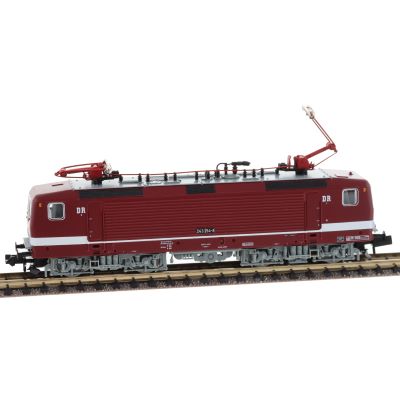
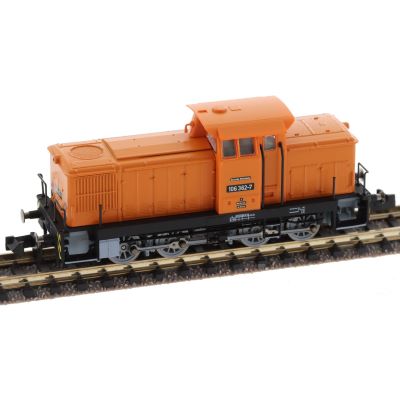
Suitable examples include the Fleischmann 7560015 N electric locomotive 243 354-8, DR, Era IV, the Fleischmann 722096 N diesel locomotive BR 106, DR, Era IV and the Fleischmann 6660001 N swivel-stake wagon, DR, Era IV. With these models, electric main-line operation, shunting traffic and freight transport can be combined convincingly in a small space.
TT Gauge – the Classic DR Gauge
TT gauge in 1:120 scale is especially important for the Deutsche Reichsbahn. In East Germany, TT has a long tradition and offers an excellent compromise between detail and space requirements. TT layouts can show realistic stations, branch lines, freight trains and main lines without requiring as much space as H0. For DR fans, TT is often the first choice because numerous locomotives and coaches from Eras III and IV are available.
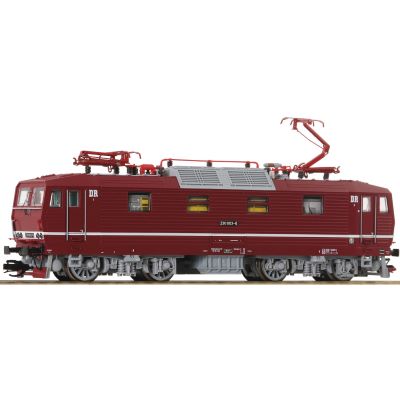
Typical TT models include the Roco 7590013 TT electric locomotive 230 003-6, DR, Era IV, DC sound, the Roco 36337 TT diesel locomotive BR 108, DR, Era IV, the Roco 7380019 TT diesel locomotive 120 144-1, DR, Era IV and the PIKO 47616 TT Reko coach, 2nd class, DR, Era III. These models make it possible to build diesel depots, main lines, branch lines and passenger trains in a very coherent way.
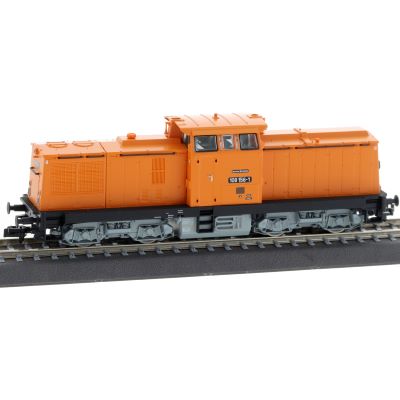
H0 Gauge – a Large Selection for DR Layouts
H0 in 1:87 scale offers the largest selection of DR vehicles and accessories. Anyone who wants to build a Deutsche Reichsbahn layout with many details, extensive operation and products from many manufacturers will find especially wide-ranging possibilities in H0. Steam locomotives, diesel locomotives, electric locomotives, shunting locomotives, Städteexpress coaches, double-deck coaches, Reko coaches, freight wagons, station buildings, signals and accessories can be combined into a very lively Reichsbahn world.
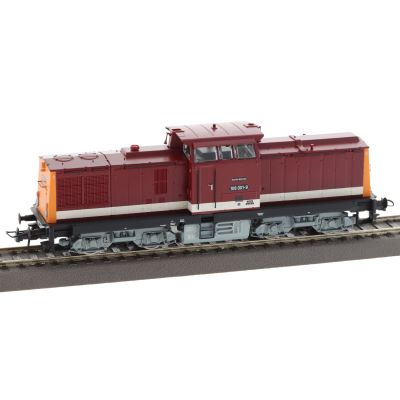
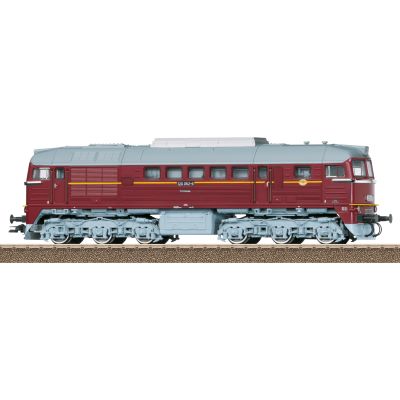
Suitable examples for H0 diesel operation include the Roco 70817 H0 diesel locomotive 108 001-9, DR, Era IV, the Trix 25200 H0 diesel locomotive BR 120, DR, Era IV and the Roco 7320060 H0 diesel locomotive 118 210-4, DR, Era IV, AC sound. For steam locomotive fans, models such as the PIKO 50735 H0 steam locomotive BR 91.3, DR, Era III, DC sound or the Roco 7100008 H0 steam locomotive 95 0045-5, DR, Era IV are suitable.
H0 Passenger Trains of the DR
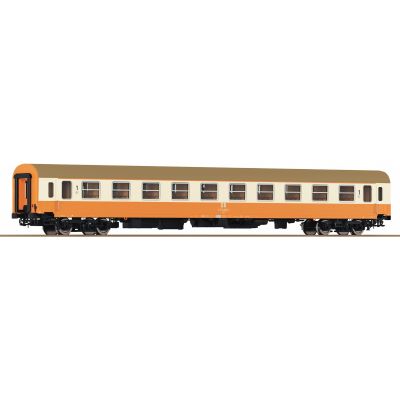
Passenger traffic on the DR was very varied. Reko coaches, modernisation coaches, double-deck coaches, Halberstadt coaches and Städteexpress coaches can be used very effectively on H0 layouts. The orange and beige Städteexpress coaches are especially distinctive and shaped fast passenger traffic between major cities in the GDR. Green double-deck coaches for commuter and local traffic are equally typical.
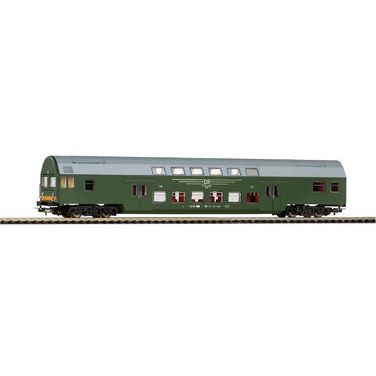
Suitable examples include the Roco 6200042 H0 passenger coach Am, 1st class “Städteexpress”, DR, Era IV, the Roco 6200130 H0 3-piece set passenger coaches, DR, Era III and the PIKO 57685 H0 double-deck control car DBmqe, DR, Era IV.
H0e, H0m and TTe – Narrow Gauge of the Deutsche Reichsbahn
The DR can hardly be represented completely without narrow gauge. Saxony, the Harz, Rügen and the Zittau Mountains still provide famous prototypes today. In model form, H0e and TTe are especially important. Tight radii, small stations, transporter wagon traffic, goods sheds, water cranes, small engine sheds and very atmospheric landscapes can be created here. The landing page narrow-gauge railways is an excellent thematic addition.
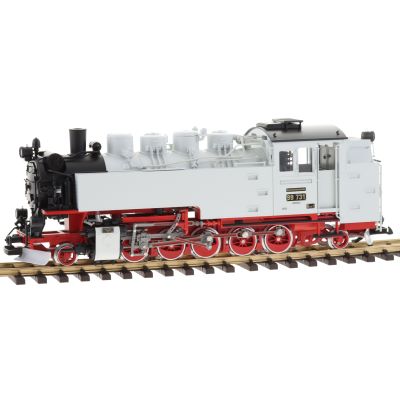
A strong example is the Bemo 1016869 H0e steam locomotive 99 1584-4 Saxon IV K Reko, DR, Era IV. Such models are ideal for Saxon narrow-gauge lines, stations with goods traffic, small villages and nostalgic layout concepts.

Narrow Gauge with Plenty of Atmosphere
Narrow-gauge DR layouts require less space than large main lines, but offer a great deal of atmosphere. Small steam trains, tight curves, half-timbered houses, loading roads, transporter wagons and short platforms make H0e and TTe especially lively.
0 Gauge – Large DR Models for Shunting Operation
0 gauge in 1:45 scale is a special collector and operating size for DR themes. The range is smaller than in H0 or TT, but the effect is enormous. Even a single diesel locomotive, an open freight wagon or a short passenger train fills a scene with life. Small stations, shunting modules, industrial sidings, locomotive outstations and goods areas are especially suitable. DR wagons and diesel locomotives in 0 gauge look very authentic thanks to their size, weight and fine details.
Shunting scenes with open wagons, coal transport, timber loading, general cargo and short transfer trains are suitable for 0 gauge. A small terminus with a loading road and siding is especially exciting. Here, a manageable fleet is already enough for realistic operation.
Gauge 1 – Large Reichsbahn Models for Collectors
Gauge 1 in 1:32 scale offers plenty of room for high-quality technology, sound, metal construction and visible details. DR models in Gauge 1 are more specialist and collector-oriented, but they look very impressive. Steam locomotives, diesel locomotives or coaches can be used as display-case models, on modules or on large layouts. A Gauge 1 DR scene lives from just a few, but very prominent vehicles.
G Gauge and Garden Railway – DR in a Large Outdoor Scale
G gauge is especially suitable for garden railways. DR themes can be represented here with robust vehicles, large radii, natural materials and long running times. The garden railway theme fits the Reichsbahn perfectly when branch lines, narrow gauge or robust diesel trains are the focus.
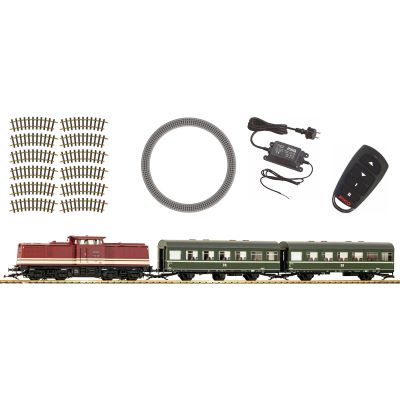
A good example is the PIKO 37145 G R/C starter set with V 100 and passenger train, DR, Era III. The set combines a large gauge, easy entry and typical DR character. LGB and Saxon prototypes are also interesting for narrow-gauge garden railway motifs, especially when lines such as Zittau, Rügen or the Harz are recreated.
Suitable DR Models at Modellbahnshop
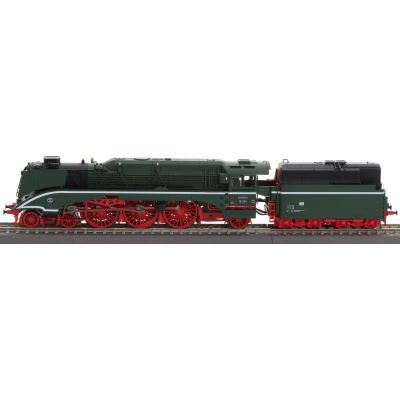
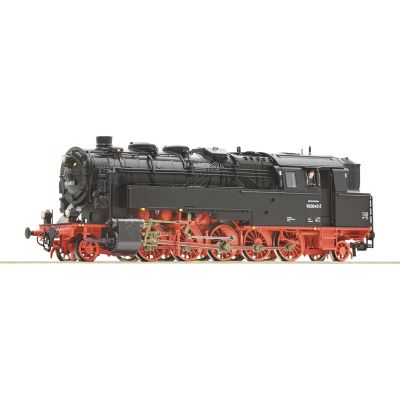
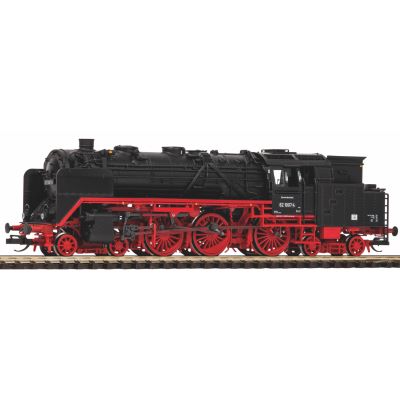
Which DR Trains Fit Together?
Branch Line with Steam Locomotive and Reko Coaches
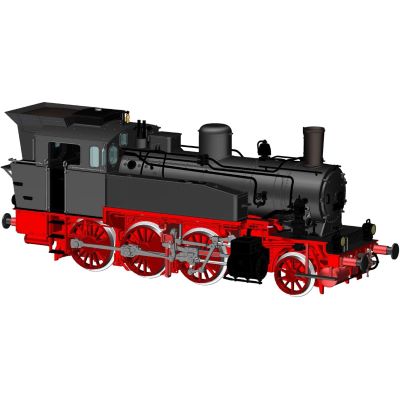
A classic DR branch line can be represented beautifully with a steam locomotive, Reko coaches, a luggage van and short freight wagons. In Era III, BR 91.3, BR 86, BR 64 or BR 93 fit particularly well. The station can be small: a station building, goods shed, loading road, water crane, semaphore signal and a small siding are enough. Road vehicles from GDR production can also be used to match the scene. Thematically, the landing pages Robur and Weimar loader are good additions, as such vehicles complete typical GDR scenes.
Diesel Operation in Era IV
For Era IV, diesel locomotives are the heart of many DR layouts. A BR 118 in front of a passenger train, a BR 120 in front of a heavy freight train, a BR 106 in shunting service or a BR 132 in front of international express trains immediately looks typical. A station with diesel fuelling point, goods tracks, signal box and industrial siding is especially believable. In the freight train section, suitable themes for coal, chemicals, construction and wagonload traffic can be found.
Electrified Main Line
DR main lines with overhead lines allow the use of BR 243, BR 250, BR 211, BR 212 or BR 230. Such layouts look especially good with long platforms, colour-light signals, storage sidings and freight traffic. The BR 243 is a very versatile prototype: it fits passenger, freight and local trains. The BR 230 is also an exciting prototype for cross-border traffic and international trains.
Städteexpress and Express Train Traffic
The Städteexpress is one of the most distinctive DR themes of Era IV. Orange and beige coaches, matching dining cars and powerful diesel or electric locomotives create a striking train image. For H0, Städteexpress coaches from Roco are especially attractive. International express trains with Halberstadt coaches, dining cars and sleeping cars also fit well into a larger DR layout.
Typical DR Train Formations
- BR 91.3 with Reko coaches and luggage van for Era III
- BR 106 with short freight wagons in the marshalling yard
- BR 118 with passenger coaches on a non-electrified main line
- BR 120 “Taigatrommel” with heavy freight wagons
- BR 243 with double-deck coaches or freight train
- BR 230 with international passenger train
- Narrow-gauge BR 99 with passenger coaches, luggage van and transporter wagons
Designing a DR Layout
A believable Deutsche Reichsbahn layout lives from its surroundings. Typical elements include goods sheds, cobblestones, simple platforms, semaphore signals, colour-light signals, coal merchants, LPG sidings, VEB factories, sawmills, construction sites and railway depots. In the GDR, the railway played a central role in passenger traffic, freight transport and industry. Goods tracks, shunting possibilities and industrial sidings should therefore hardly be missing from a DR layout.
Typical GDR road vehicles, construction machines and buildings also strengthen the effect. A Robur lorry at the loading road, a Weimar loader at the coal bunker, an IFA W50 at the goods shed or prefabricated apartment blocks in the background turn a model railway into a recognisable Reichsbahn scene. Those who focus on passenger traffic can design stations with Reko coaches, double-deck trains and commuter traffic. Those who prefer freight traffic can concentrate on coal, timber, chemicals, agriculture, mechanical engineering and shunting service.
DR Railway Depot
A railway depot is especially appealing for the DR. In Era III, steam engine sheds, coal bunkers, water cranes, ash pits and turntables dominate. In Era IV, diesel and electric locomotives are added. A fuelling point, inspection pit, workshop, stabling tracks and railway service vehicles fit very well. Various locomotive classes can be displayed visibly here and at the same time operated in a meaningful way.
DR Goods Yard
The goods yard offers a great deal of operating interest. Wagons are delivered, unloaded, shunted and collected again. Open wagons bring coal or scrap, tank wagons supply chemical and mineral oil plants, and swivel-stake wagons transport timber or steel. A small shunting locomotive such as the BR 106 is ideal here. Suitable freight wagons are available for N, TT and H0, so this theme can be realised in almost every gauge.
DR Narrow-Gauge Railway
The DR narrow-gauge railway is a world of its own. Small steam locomotives, tight curves, rural stations, transporter wagons, luggage vans and short trains create a particularly strong atmosphere. H0e and TTe are ideal when little space is available but plenty of landscape and operation are to be shown. For larger layouts or garden railways, G and IIm themes can be very impressive.
Gauge Comparison for Deutsche Reichsbahn
| Gauge | Scale | Strength for DR Layouts | Typical Themes |
|---|---|---|---|
| Z | 1:220 | Very space-saving | Compact routes, display cases, long landscapes |
| N | 1:160 | Long trains in limited space | BR 243, BR 106, freight trains, main lines |
| TT | 1:120 | Classic DR gauge | BR 118, 120, 132, Reko coaches, Städteexpress |
| H0 | 1:87 | Largest selection | Steam, diesel, electric, passenger trains, goods yard |
| H0e / TTe | 1:87 / 1:120 | DR narrow gauge | Saxony, Harz, Zittau, Rügen, transporter wagon traffic |
| 0 | 1:45 | Strong detail impact | Shunting operation, short freight trains, collector models |
| 1 | 1:32 | Premium scale | Collectors, sound models, large individual pieces |
| G / IIm | approx. 1:22.5 | Garden railway and large narrow gauge | DR branch line, V 100, Saxon narrow-gauge motifs |
Frequently Asked Questions about the Deutsche Reichsbahn in Model Form
Which gauge is best for the Deutsche Reichsbahn?
TT is especially attractive for many DR fans because this gauge has traditionally been strongly associated with East German model railway themes. H0 offers the largest selection, N is suitable for long trains in limited space, H0e and TTe are ideal for narrow gauge, and G is especially interesting for garden railways.
Which era fits the DR best?
The most important eras are III and IV. Era III shows the post-war period with steam operation, Reko coaches and classic stations. Era IV stands for diesel locomotives, electric locomotives, Städteexpress, double-deck coaches, Halberstadt coaches and intensive freight traffic.
What is the difference between DR and DRG?
In model railway products, DR usually refers to the Deutsche Reichsbahn of the GDR. DRG stands for Deutsche Reichsbahn-Gesellschaft and belongs to Era II before 1945. This distinction is important so that lettering, era and vehicle selection match.
Which locomotives are typical of the Deutsche Reichsbahn?
Typical examples include steam locomotives such as BR 91.3, 95, 52, 50, 86 and 99, diesel locomotives such as BR 106, 110, 118, 120 and 132, and electric locomotives such as BR 211, 212, 230, 243 and 250. For narrow gauge, class 99 locomotives are especially important.
Which coaches and wagons fit DR layouts?
For passenger traffic, Reko coaches, double-deck coaches, Halberstadt coaches, Städteexpress coaches and luggage vans are suitable. For freight traffic, open freight wagons, tank wagons, silo wagons, refrigerator wagons, swivel-stake wagons, flat wagons and covered freight wagons are appropriate.
How do I design a realistic GDR Reichsbahn scene?
A realistic scene is created with suitable vehicles, GDR road vehicles, simple platforms, goods sheds, industrial sidings, coal merchants, LPG or VEB themes and typical landscapes. Robur lorries, IFA vehicles, Weimar loaders, coal bunkers, old lamps, level crossings and shunting freight wagons are especially effective.
Conclusion: Deutsche Reichsbahn – a Versatile and Characterful Model Railway Theme
The Deutsche Reichsbahn is an ideal theme for model railway enthusiasts who want to combine historical atmosphere, varied operation and distinctive vehicles. Hardly any other prototype offers so many possibilities: steam operation on a branch line, BR 106 in shunting service, BR 118 in front of passenger trains, BR 120 in front of heavy freight trains, BR 243 under overhead wire, Städteexpress coaches, double-deck trains, Reko coaches and narrow-gauge class 99 steam locomotives. This makes the DR suitable for small layouts, large main lines, collections, dioramas, modules and garden railways.
In H0, the selection is especially large; TT is the classic Reichsbahn gauge; N enables long trains in limited space; H0e and TTe bring the legendary narrow-gauge railways into model form; and G makes DR and narrow-gauge themes come alive in the garden. With suitable products from Modellbahnshop, a sensible choice of era and coherent design, a lively Reichsbahn world is created that combines technology, history and model railway enjoyment.