More Capricorn Train Variants
Add-on cars, new running numbers and complete train formations could expand modern RhB garden railways.

Which locomotive, panorama train or robust garden-railway starter set should appear in 2027? This page collects specific wishes for the RhB, MGB, FO, MOB, SDG, SOEG, HSB, museum railways, American narrow gauge, track and digital technology. Wish-list ideas remain clearly separated from confirmed LGB new products for 2027.
LGB New Products 2027: Wishes for G Gauge is not an invented preview of products that have already been finalised. As of 30 August 2026, LGB lists its 2026 new-product programme and additional summer new products. A complete regular annual programme for 2027 has not yet been published.
LGB new products can address very different garden-railway worlds. Swiss metre-gauge railways appear alongside Saxon 750 mm narrow gauge, Harz steam operation, private and museum railways, American prototypes, industrial and maintenance vehicles and freely designed family starter sets.
With large vehicles, appearance is not the only important factor. Minimum radius, train length, vehicle overhang, current consumption, decoder format, volume, smoke functions, interior lighting and weather exposure determine whether a model will remain suitable for an existing railway. A convincing programme should therefore develop locomotives, matching cars and the technical infrastructure together.
These suggestions have not been announced. Interesting ideas can be saved locally and then included in the visitor’s own wish message.
Add-on cars, new running numbers and complete train formations could expand modern RhB garden railways.
Historic and modern liveries could cover regional, freight and panorama trains across several eras.
A locomotive, panorama cars and service car could be planned more easily as one coordinated MGB formation.
A coordinated train consisting of a powered vehicle, passenger cars and a baggage car would enable classic Alpine railway scenes.
Different running numbers, eras and route associations could make Saxon passenger trains more varied.
A locomotive, seated passenger car, baggage car, dining car and observation car could form one believable train.
A compact Harz train would represent branch lines and operating scenes that are less strongly associated with steam traction.
A diesel locomotive, passenger car and baggage car could create a complete southern German museum-railway formation.
Shunting lights, cab lighting, energy storage and further colour variants could broaden the locomotive’s range of uses.
A modern diesel locomotive with coordinated passenger cars would provide a convincing continuation of North American mountain-railway operation.
A compact locomotive with coupling, lighting and sound functions would bring steelworks and industrial sidings to life.
A snow blower, maintenance car and service locomotive could form an operating winter train for large outdoor railways.
Two turnouts, a passing loop and shunting opportunities would offer more operation than a simple circle.
Additional broad radii and matching transition elements could make long vehicles run and appear more smoothly.
A robust housing with diagnostics and feedback would be helpful for permanently installed outdoor turnouts.
Current-conducting couplings and retrofit light bars could simplify the power supply for long passenger trains.
Current models demonstrate the brand’s broad scope: narrow-gauge steam, modern diesel vehicles, Alpine salon cars, observation cars, creative starter sets and unusual maintenance vehicles.
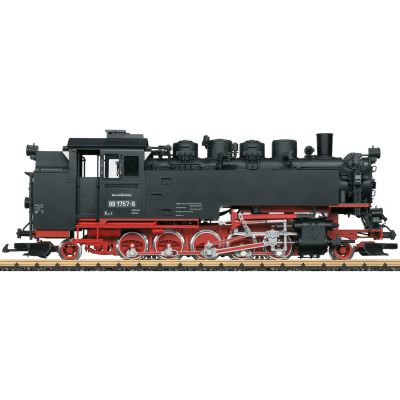
Large articulated locomotives, sound, lighting and smoke make DR line operation and present-day museum railways tangible.
View Steam Locomotive →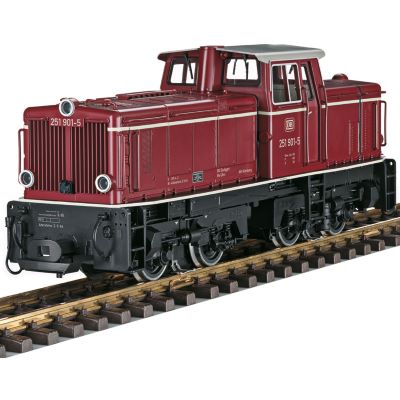
Diesel locomotives suit shunting, engineering trains, transfer workings, museum railways and operating concepts that are less dominated by steam.
View Diesel Locomotive →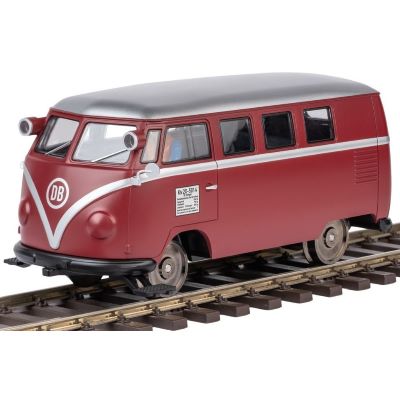
Rail trolleys, service vehicles and railcars tell different operating stories from conventional locomotive-hauled trains.
View Special Vehicle →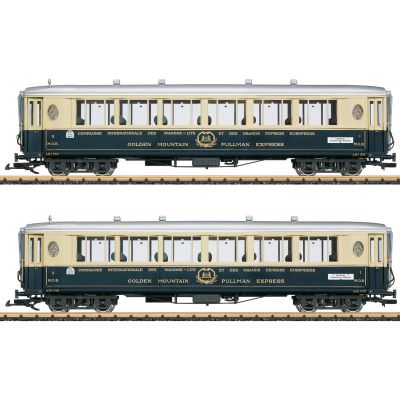
The RhB, MGB, FO and MOB combine large vehicles with viaducts, tunnels, overhead lines and impressive scenery.
View Salon Cars →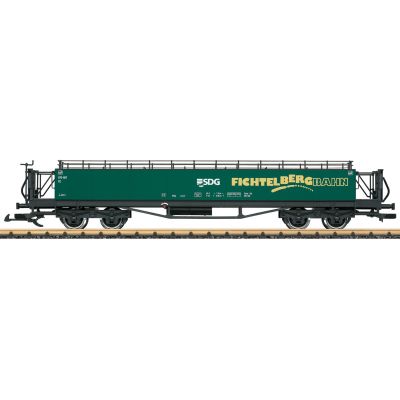
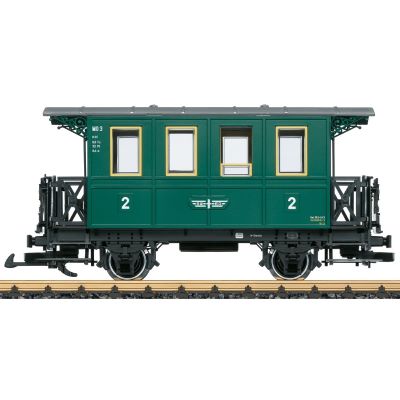
Observation cars, dining cars and historic passenger cars turn narrow-gauge railways into complete travel experiences.
View Observation Car →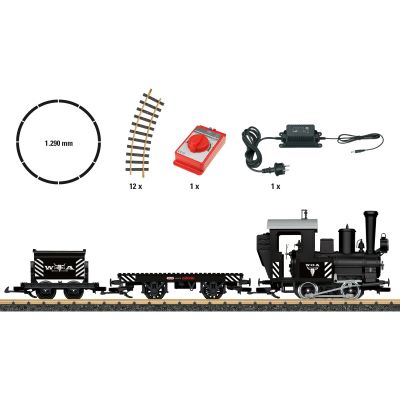
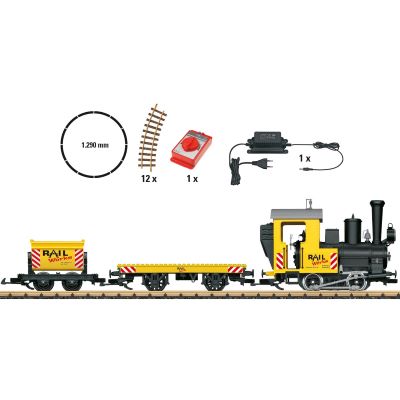
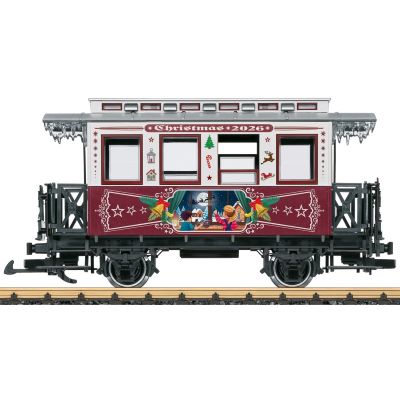
Ready-to-run combinations bring together a locomotive, cars, track circle, power supply and creative play value.
View Starter Set →LGB track uses a 45 mm model track gauge and solid brass rail without an integrated roadbed. An R1 circle is compact, but larger vehicles and long cars generally run and appear more smoothly on R3 or R5 curves.
Analogue and digital operation use the same two-rail track. The controller or command station, decoder, cable cross-section and power-feed points determine the control system. Outdoor railways also require drainage, accessible turnouts and regularly checked rail joiners.
The tightest curve determines which locomotives and cars can operate safely and look convincing.
Long routes benefit from adequately sized cables and several controllable power-feed points.
Large loudspeakers are convincing when volume, driving sounds and function sequences suit the railway’s surroundings.
Turnout motors, decoders, rail joiners and electrical connections should remain protected, labelled and accessible for maintenance.
The shared technical foundation is 45 mm track. Many European metre-gauge models are based around a scale of 1:22.5. With 750 mm railways, American prototypes or standard-gauge vehicles, scale and proportions may differ as a result of the system.
| System World | Technical Foundation | Typical Prototypes | Useful Wish Direction |
|---|---|---|---|
| IIm / Metre Gauge | 45 mm model track, frequently around 1:22.5 | RhB, MGB, FO and MOB | complete panorama trains, add-on cars and overhead-line equipment |
| 750 and 760 mm Narrow Gauge | large-scale models adapted to the 45 mm system | SDG, SOEG, DR and Austrian narrow-gauge railways | complete museum trains, further locomotive numbers and service vehicles |
| German Standard-Gauge Prototypes | 45 mm track with a model-dependent scale | DB, DR, industrial and maintenance vehicles | shunting locomotives, maintenance vehicles and modern freight themes |
| US Narrow Gauge | 45 mm track, scale depending on the prototype | White Pass, D&S and American logging railways | coordinated diesel, steam and passenger-car families |
| Track and Accessories | 45 mm, two-rail, analogue or digital | indoor railway, terrace and permanently planned garden railway | broader radii, weather-protected digital technology and maintenance |
| H0, TT, N, Z, 0 and 1 | independent model railway systems | no regular current LGB product lines | do not present as LGB new-product fields without an explicit manufacturer announcement |
 Open the LGB Manufacturer Page →
For decades, LGB has represented large vehicles on 45 mm track. Its range combines steam, diesel and electric locomotives with railcars, passenger cars, freight cars, starter sets, track, turnouts, control equipment and spare parts.
A new product is especially useful when it completes an existing train family. An additional panorama car can lengthen a Glacier Express, a suitable baggage car can complete a museum train and a new track element can improve operation across the entire railway.
For outdoor use, vehicles should be stored in a protected place after operation and the care instructions for the individual product should be observed. Track and robust vehicle bodies are designed for garden railways, but electrical connections, decoders and moving components still require regular inspection.
The form creates a structured wish message. The email button then opens the email program configured on the visitor’s device. The page does not transmit a message in the background.
This area is not filled with wish-list products. It displays only current products whose own product page carries an unambiguous new-product designation for 2027.
Verification starts when this section approaches the viewport.
The product finder combines a checked initial selection with current cards loaded from several LGB product categories. Large product images, product group, era, prototype world and technical characteristics are displayed. Delivery status, prices and availability deliberately do not appear on the cards.
Current LGB categories will be loaded when this section approaches the viewport.
These answers explain the gauge, scale, radii, digital formats, prototype worlds and distinction between wish-list ideas and confirmed products.
As of 30 August 2026, no complete regular LGB new-product programme for 2027 has been published. The official programme still covers 2026 and additional summer new products for 2026.
LGB uses a model track gauge of 45 millimetres. The same track is used for many different large-scale prototype worlds.
G gauge is a broad large-scale system term. IIm describes metre-gauge prototypes at a scale of approximately 1:22.5 running on 45 mm model track.
No. Many European metre-gauge models are based around 1:22.5. Proportions and scale may differ for 750 mm, standard-gauge or American prototypes.
Yes. The same two-rail track can be used for analogue or digital operation. The controller or command station and the decoders in the vehicles determine the operating mode.
Many digitally equipped models contain decoders compatible with mfx and DCC. The precise equipment must be checked on the relevant product page.
R1 is especially compact. Long cars and large locomotives generally look more harmonious on R3 or R5. The minimum radius specified for the particular model remains decisive.
They include the RhB, MGB, FO, MOB, Saxon narrow-gauge railways, HSB, German private and museum railways, US narrow gauge and seasonal or freely designed garden-railway themes.
A shared track gauge alone is not sufficient. Rail profile, joiners, sleeper height, geometry, wheelsets and electrical connections must be checked at the transition.
Only an explicit designation such as “New Product 2027”, “New Item 2027” or “News: 2027” on the current product page results in inclusion in the official section.
No. Wording such as “no longer in our range”, “archived” or “product removed” results in exclusion from the dynamic overview.
They provide an inventory check and product inspiration. This makes it easier to identify which locomotive, car, track and technical families already exist and where an addition might still be useful.
Yes. The form creates a prepared message and opens the email program configured on the visitor’s device. The message can still be reviewed and edited before sending.
No. The page does not transmit an email in the background. The actual sending process is initiated only after confirmation in the visitor’s email program.
A complete panorama train, another museum-railway locomotive, broader curves, weather-protected digital technology or a starter set with genuine station operation: describe your wish as specifically as possible.