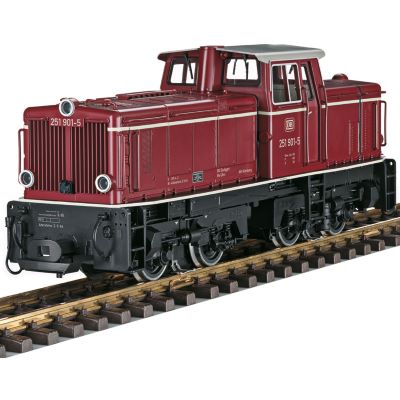
Permanent Garden Railway
A load-bearing base, effective drainage and generous curves create a stable route between flower beds, bridges and stations.

Robust locomotives, clearly visible details and impressive trains: G gauge brings narrow-gauge, mountain and themed railways into the garden, onto the terrace or into the home as a large model railway.
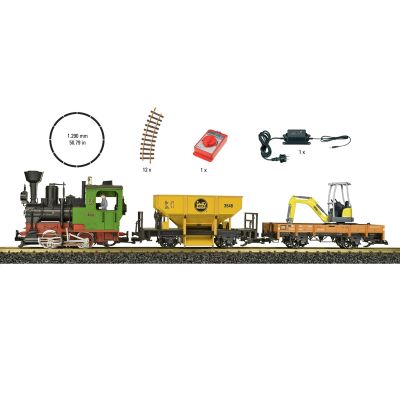
G gauge is a widely used collective term for robust large-scale and garden railways operating on 45 millimetre track. The LGB system is particularly well known and mainly represents metre-gauge prototypes in nominal size IIm at a scale of 1:22.5. These include Swiss mountain railways, Saxon narrow-gauge railways and freely designed garden-railway trains.
The letter G is often associated with garden railways or large trains, but it does not identify one compulsory scale. Although many LGB models are produced at 1:22.5, PIKO G models may use different proportions depending on the prototype and product, often approximately 1:25. The stated scale, vehicle length and minimum radius should therefore always be checked on the individual product page.
G gauge must also be distinguished from Gauge 1. Gauge 1 also uses 45 mm track but normally represents standard gauge at a scale of 1:32. A Gauge 1 locomotive and a classic IIm garden railway therefore do not necessarily match visually despite using the same track gauge. Wheelsets, couplings, curve radii, electrical systems and rail profiles must also be compatible.

Classic IIm garden railways with starter sets, narrow-gauge locomotives, RhB, DR and SDG wagons, brass track and digital models.
Open the LGB brand world →
Starter sets, German standard-gauge prototypes, diesel and steam locomotives, wagons, R1 track and large building kits.
Open the PIKO brand world →
Digital components, decoders, sound, controllers and accessories for powerful garden-railway layouts.
Open the Massoth brand world →
Stations, engine sheds, industrial buildings and accessories for large indoor and outdoor layouts.
Open the Pola brand world →The same model track gauge can represent a different prototype at different scales. The following overview classifies the common variants of nominal size II and the technically related Gauge 1.
| Designation | Typical scale | Model track gauge | Represented prototype | Typical application |
|---|---|---|---|---|
| G Gauge / IIm | Frequently 1:22.5; sometimes different | 45 mm | Metre gauge and comparable narrow gauges | LGB, RhB, SDG, mountain and garden railways |
| Gauge II | 1:22.5 | 64 mm | Standard gauge | Very large scale standard-gauge models |
| Gauge IIe | 1:22.5 | 32 mm | Narrow gauge from approximately 650 to less than 850 mm | 750 mm railways, works railways and heritage railways |
| Gauge IIi / IIf | 1:22.5 | 22.5 mm | Industrial and field railways from approximately 400 to less than 650 mm | Mines, brickworks, peat and field railways |
| Gauge IIp | 1:22.5 | 16.5 mm | Very small park and specialist railways | Park railways and individual scratch-built projects |
| Gauge 1 | 1:32 | 45 mm | Standard gauge | Large models of main, branch and goods railways |
Technical classification follows NEM 010 . G gauge is a widely used commercial and garden-railway designation. The scale, coupling, wheelset dimensions and minimum radius should therefore always be checked for the individual product.
Large vehicles are not restricted to one operating location. A level base, suitable radius, safe power supply and good accessibility are the decisive factors.
A load-bearing base, effective drainage and generous curves create a stable route between flower beds, bridges and stations.
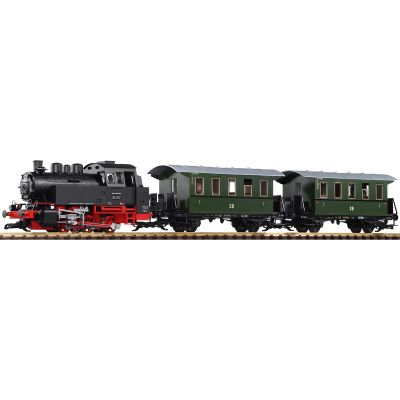
An R1 circle already requires a track-centre diameter of approximately 1.2 metres. Edge clearance, access, load capacity and weather protection require additional space.
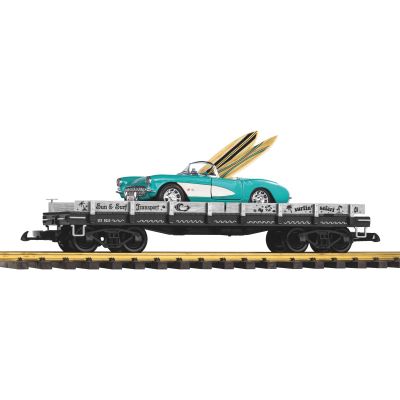
Christmas, themed and floor layouts can be assembled temporarily. The track must lie level and be secured against movement.
Begin with the intended train and available location. These determine the radius, foundation, track length, power supply and sensible size of the station and sidings.
Choose between permanent garden operation, seasonal assembly, a terrace railway or an indoor layout. Check paths, plants and accessibility.
A compacted, water-permeable ballast bed reduces settlement. Bridges, walls and paving slabs must be frost-resistant and stable.
R 600 permits compact routes. Long wagons and large locomotives look better and usually run more smoothly on wider curves.
Analogue control is often sufficient for one train. Multiple trains, sound and switchable functions favour a digital command station.
Turnouts, tunnels and concealed sections must remain accessible. Vehicles should be stored dry and protected from dirt and permanent direct weather exposure.
The following products are intended for G gauge systems on 45 mm track. Scale, coupling, digital equipment and minimum radius can vary by product and are stated on the relevant product page.
Starter sets combine a locomotive, wagons, track and control equipment. They provide an immediate introduction and can then be expanded purposefully.
Steam locomotive, goods wagons, track circle and controller as a complete basic package.

Classic garden-railway train for passenger services and a first continuous circuit.
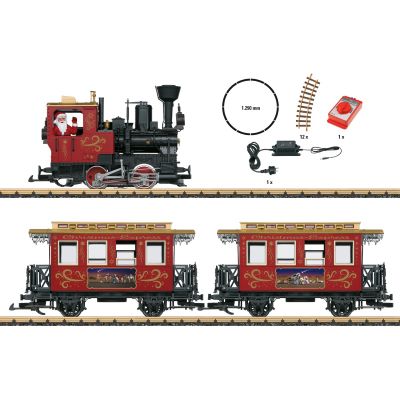
Festively decorated train for Advent, winter scenery and seasonal layouts.
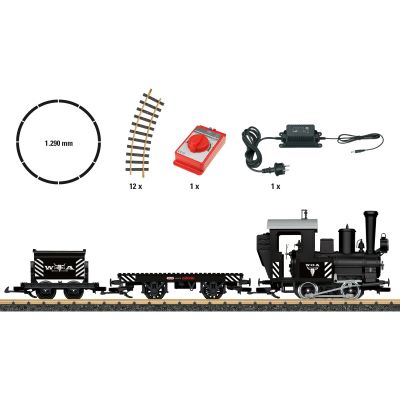
Distinctive starter set with a locomotive, two wagons, track circle and controller.
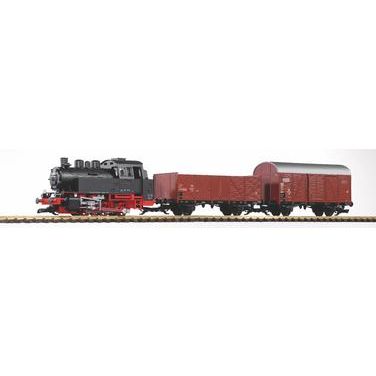
Freight-train starter set with a steam locomotive, sound and steam functions.
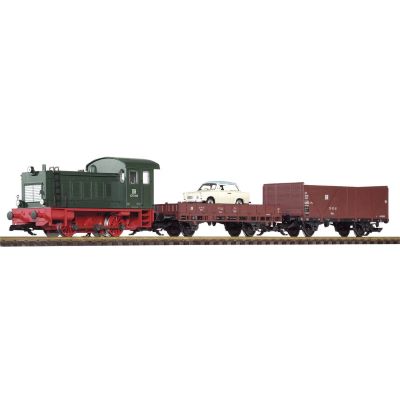
Diesel locomotive with two goods wagons for Reichsbahn and branch-line scenes.
Steam-hauled train with sound and steam for station and continuous-circuit operation.
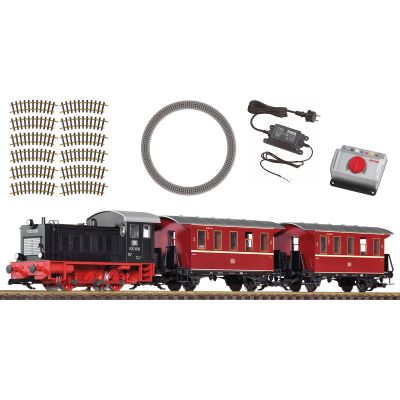
Compact diesel locomotive and two passenger coaches for a Deutsche Bundesbahn branch line.
Narrow-gauge diesels, Deutsche Bundesbahn classics, engineering locomotives and railbuses support different eras and operating tasks.
Distinctive narrow-gauge locomotive for DB- and RüBB-inspired trains.
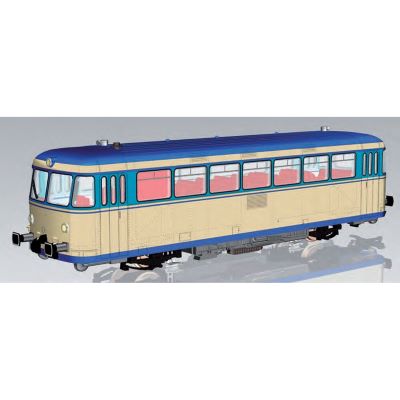
Short railbus for shuttle services and small garden-railway stations.
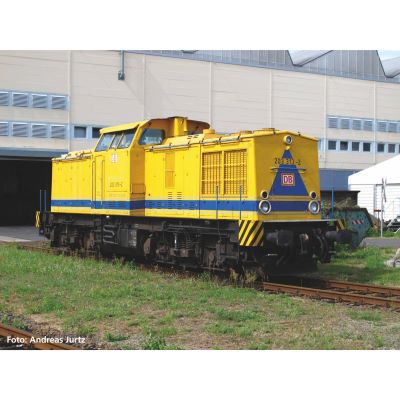
Modern engineering locomotive for works, ballast and materials trains.
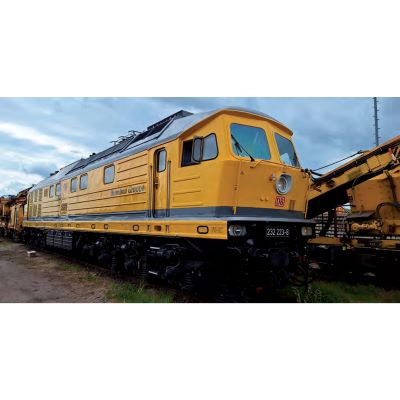
Large diesel locomotive for heavy engineering and goods trains.
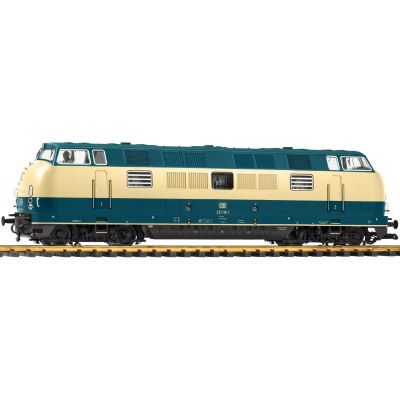
Blue-and-beige Deutsche Bundesbahn classic for passenger and goods traffic.
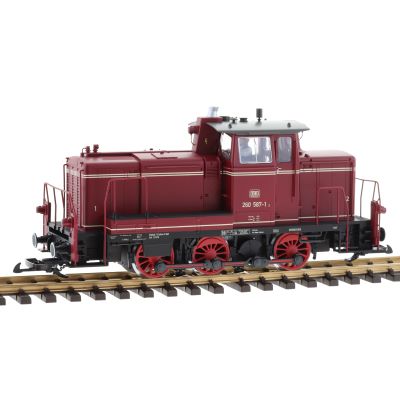
Compact shunting locomotive for stations, goods sheds and industrial sidings.
Wagons from different railway companies turn a locomotive into a credible passenger, heritage, works or goods train.
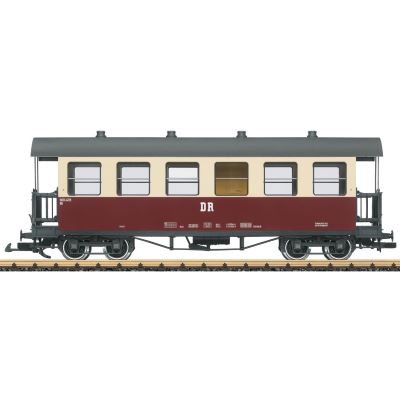
Narrow-gauge coach for Era IV passenger and heritage trains.
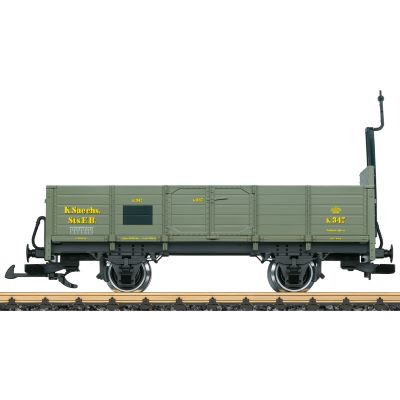
Historical wagon for coal, timber and Saxon narrow-gauge trains.
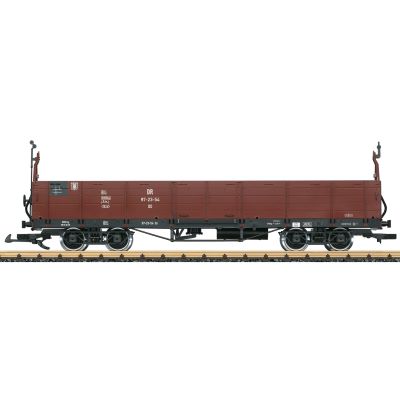
Open wagon for bulk loads, general cargo and local goods trains.
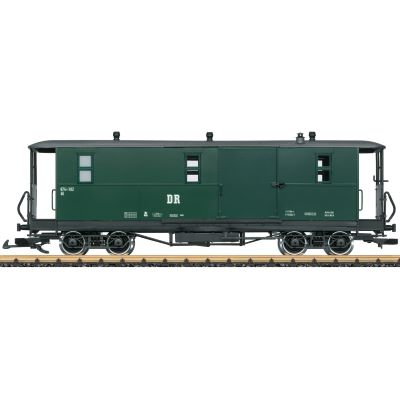
Addition for prototypical passenger and narrow-gauge trains.
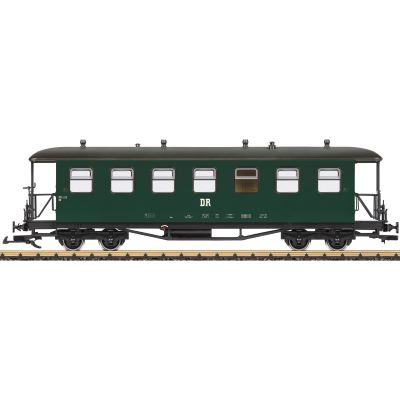
Passenger coach for Saxon and East German narrow-gauge scenes.

Modern heritage-railway coach for Saxon steam railways.
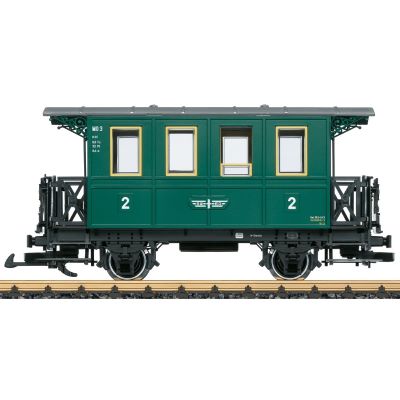
Characterful light-railway coach for German narrow-gauge themes.
Summer-themed car-transporter wagon as an eye-catching addition to a themed train.
Starter and extension sets simplify track construction. An engine shed, crossing keeper's house and water crane create recognisable railway operating locations.
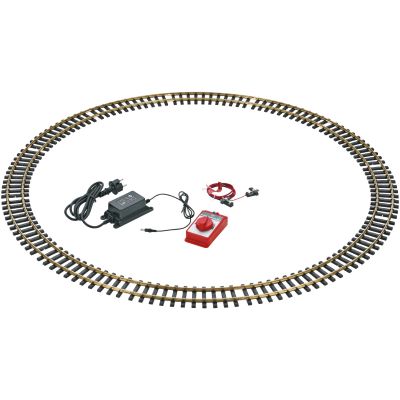
Foundation for a first track circle or an extension.
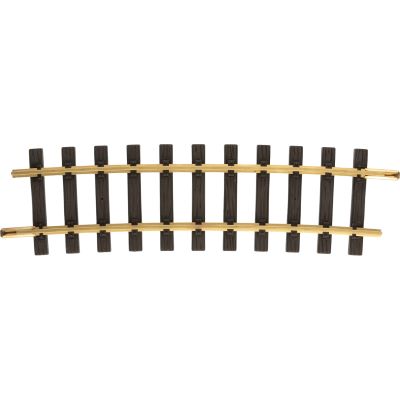
Generous 15-degree curve for long vehicles and smoother routes.
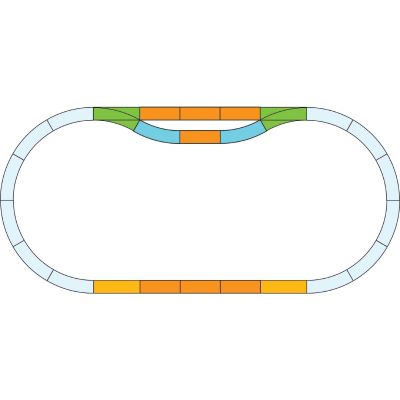
Turnouts and track for a station, shunting area and sidings.
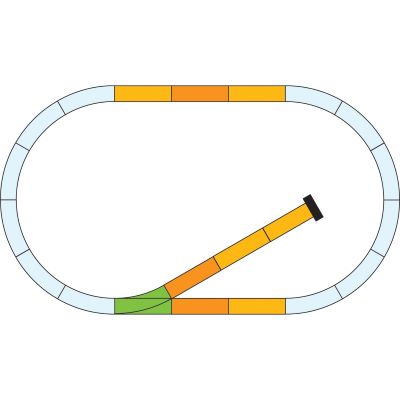
Turnout, straight track and track end for an additional siding.
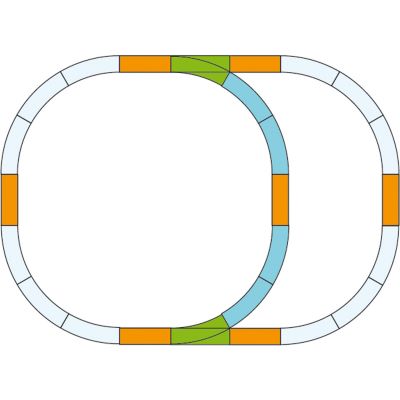
Track connection for train crossings, run-round movements and more varied operation.
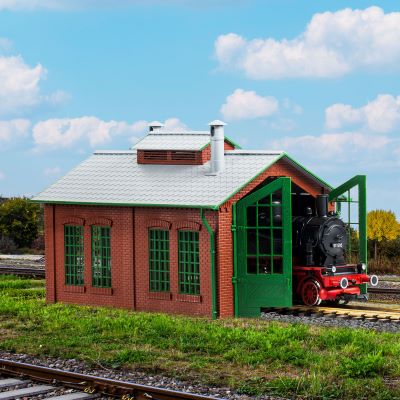
Compact operational building for locomotive servicing and storage.
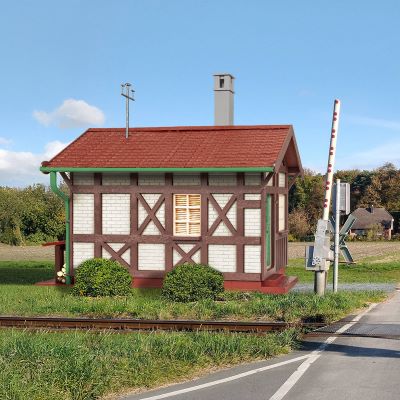
Small building for a level crossing or open railway line.
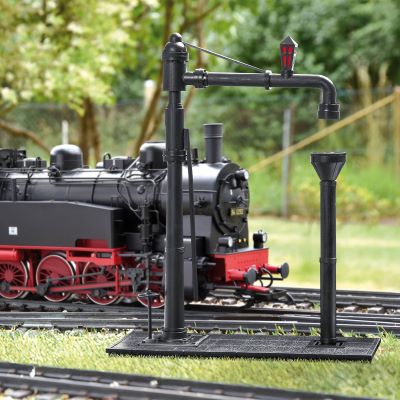
Equipment for a steam-locomotive station, railway station or locomotive depot.
A garden railway requires regular but manageable maintenance. Clean rails, unobstructed turnouts and dry vehicles are the foundation for reliable electrical pickup and long-term enjoyment.
Remove leaves, soil and plant debris. Clean brass rails with suitable products; excessively abrasive tools can roughen the surface unnecessarily.
A digital command station permits several locomotives, sound and switchable functions. Power, protocol and track voltage must suit the vehicle fleet and layout size.
Continuous rain, frost and strong sunlight affect paintwork, electronics and lubricants. Locomotives and wagons should be stored dry and protected from dust after operation.
The track gauge is the same, but the scale and represented prototype gauge are different.
Loose soil causes settlement, changes in gradient and unreliable operation.
Large locomotives and long wagons often require wider radii.
Standing water damages the foundation, structures and electrical connections.
Weather resistance does not mean that vehicles should remain outdoors without care.
G gauge vehicles use track measuring 45 millimetres between the rails. Gauge 1 also uses this track gauge, although the scale and represented prototype are different.
Many LGB models are approximately 1:22.5 and belong to nominal size IIm. Other G products may use different proportions, so the individual product specification is decisive.
Both use 45 mm track. G gauge mainly represents narrow-gauge railways at approximately 1:22.5, while Gauge 1 represents standard-gauge vehicles at 1:32.
Many vehicles can operate on the same 45 mm track. Coupling height, radius, wheelsets, scale and electrical system should nevertheless be checked.
With an R 600 radius, the track-centre diameter is approximately 1.2 metres. Vehicle overhang and a safe outer margin require a larger area.
Yes, when the dimensions, load capacity, drainage and fall protection are suitable. A shuttle route requires less width than a complete circle.
Track may be designed for outdoor operation. Locomotives, wagons, command stations and power supplies should nevertheless be stored dry and protected.
The large vehicles are easy to handle. Model railway products can nevertheless contain small parts and, depending on the product, are frequently intended for young people and adults.
Analogue control is suitable for simple operation with one train. Digital control is advantageous when several locomotives, sound, lighting and switchable functions are required.
Yes, when the digital command station supports a compatible Wi-Fi, radio or app-based control system. The specific system compatibility must be checked beforehand.
Gradients should remain as gentle and even as possible. Train length, vehicle weight, traction tyres, curves and weather conditions affect the achievable gradient.
Remove coarse dirt and plant debris first. Then use suitable track-cleaning equipment or gentle cleaning products.
Define the location, radius and control system first. Vehicles, track and buildings can then be combined into a reliable G gauge railway.
Content updated: 19 July 2026