Modellbahn Keks
Welcome!
Our cookies offer you a fast, relaxed and full-featured shopping experience. Some are necessary to operate the website and its functions. Others help us to improve our services. If you agree to this, simply consent to the use of cookies for preferences, statistics and marketing by clicking on "OK". Alternatively, you can deactivate individual cookies under "Customise cookies" or all cookies, except those required for the function of our website, under "Reject all".
Lux Modellbau – brand overview at Modellbahnshop Clean track. More enjoyment.

Lux Modellbau
Product Overview 2027

From track vacuum cleaners to wheel cleaning: discover suitable solutions for your model railway, clearly organised by task, gauge and system.

Find your cleaning setup ↓

H0 · TT · N · H0e · H0m · Care for all gauges

Overview
2027
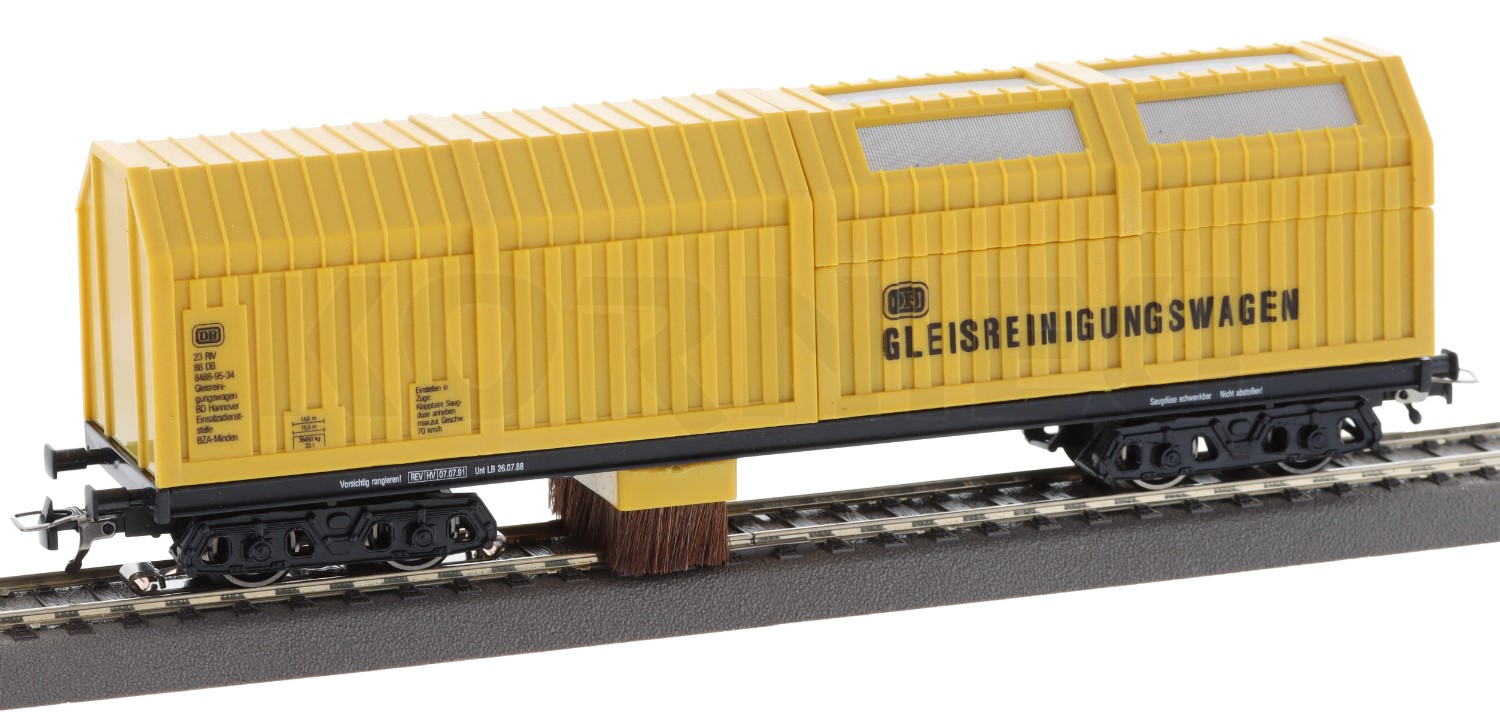
Lux Modellbau 8830 H0 track vacuum cleaning wagon for AC, analogue and digital
8830 · Track vacuum cleaner
H0 · AC · Analogue and digital
Discover ↗
01 / CLEAN YOUR TRACK 02 / CARE FOR YOUR WHEELS 03 / ADD ACCESSORIES
The right choice for your model railway

The Lux product finder

Explore the complete Lux range ↗

Find cleaning wagons, wheel cleaning systems and accessories in the Lux Modellbau Product Overview 2027. Search by name, catalogue number or EAN and combine the filters. Product details and suitable large images load directly from the shop.

Loading products …

The right cleaning starts here

Which solution suits your layout?

Compare cleaning wagons ↗

The Lux Modellbau Product Overview 2027 brings together track cleaning, wheel cleaning and model care. Where the dirt collects is crucial: loose particles lie in the track bed, stubborn residue adheres to the railheads, and dirty wheel treads carry deposits around the entire layout. Choose the cleaning task first, followed by gauge, power system and design. This helps you put together equipment whose individual parts work well together.

01

Collect dust

A track vacuum cleaning wagon picks up loose dirt as it runs along the line. This is particularly helpful on longer routes and on accessible tracks through tunnels or hidden storage yards. The range includes 8830 and 8831 for H0, 9740 for TT, 9070 for N, and 9785 and 9725 for the narrow gauges H0e and H0m. Also allow space to inspect and maintain the wagon.

02

Clean the railheads

Polishing and rail grinding wagons are an option for stubborn residue. These include H0 versions 9130 and 9131, TT polishing wagon 9735, and models 9470 for N and 9715 for H0m. The cleaning material used also affects the treatment. Check the wagon's instructions and suitability for your track before using a different polishing material.

03

Keep wheels clean

Clean rails alone are not enough if vehicles spread deposits again. Wheel cleaning systems complement track maintenance at a fixed workstation or in a built-in track section. The range includes bench-top and built-in units for several gauges, some with a decoder. Consider the design, connection and supported vehicles together. Find out more in the cleaning wheels guide.

Choose the task first, then the accessories

Start with a specific question in the product finder: do you want to remove dust from the track, clean the railheads or care for your vehicles' wheels? After choosing the task, the gauge filter narrows the range to suitable sizes. You can then enter terms such as “built-in unit”, “felt”, “C track” or a specific catalogue number in the search field. You can combine several search words. Click “Reset filters” to return to the complete overview.

The additional option for products suitable for all gauges keeps care products and universally classified aids visible. Turn it off if you only want to compare products for a single gauge. The AC and DC filters show only versions labelled accordingly; a missing system reference is not treated as confirmation of compatibility. This keeps the selection clear, even if you also look after vehicles in another gauge alongside your own layout.

An overview for planning your workshop

Before buying, consider how you will use the equipment. An easily accessible maintenance area makes it easier to replace cleaning material and inspect wheel treads. On the layout itself, a cleaning wagon should be able to negotiate its intended routes reliably. Allow for couplings, tight curves, gradients and your locomotive's pulling power. Refer to the chosen wagon's product description and operating instructions for its limits.

Store replacement materials together with their catalogue numbers. This is particularly helpful when you have several similar-looking brushes or discs. Before cleaning, check whether the material is dirty, damaged or worn. Afterwards, a short test run with a familiar vehicle will show whether it can negotiate the affected section reliably again. If problems persist, also check the power supply and the vehicle itself.

Five gauges. A clear cleaning plan.

From H0 to narrow gauge

Filter the product overview to suit your model railway. Gauge and power system are different selection criteria: H0 identifies the model scale, while AC or DC here describes the system version offered. Analogue and digital, by contrast, refer to the operating mode. A digitally operated H0 two-rail train does not therefore automatically need the AC version of a cleaning wagon. The explicitly stated compatibility of each product remains decisive.

H0: choose the right AC or DC version

For H0, 8830 and 9130 are listed as AC versions, while 8831 and 9131 are the DC variants. Centre conductor cleaning wagon 9125 is also intended for AC layouts. For wheel cleaning systems such as 9301, 9305 and the corresponding decoder versions, the product list specifies AC+DC. Suitable approach tracks and the adapter board still need to be considered in the specific installation plan. Compare the connection type, existing track system and product description before putting the equipment together.

TT: connect track care and workbench maintenance

In TT, track vacuum cleaning wagon 9740 and polishing wagon 9735 offer different cleaning methods. The list includes built-in units 9330 and 9745 and bench-top units 9335 and 9748 for wheel care. Versions 9745 and 9748 are described as units with a decoder. TT-specific brushes, discs and polishing rods are also available. Care products for all gauges remain visible in the filter if you leave that option enabled.

N: compact cleaning solutions

The N range includes track vacuum cleaning wagon 9070, rail grinding wagon 9470 and various wheel cleaning systems in the 9310 and 9315 series. Sets, replacement vacuum brushes and several discs are also available. When putting your equipment together, decide whether to start with track maintenance or equip a fixed workstation for your vehicles. A set can combine related tasks; its exact contents are listed on the linked product page.

H0e and H0m: suitable for narrow gauge

H0e and H0m are listed separately in the finder. H0e products include vacuum cleaning wagon 9785, set 9680 and wheel cleaning systems 9778 and 9779. H0m has its own selection with 9725, 9715, 9320 and 9726. Do not assume that an accessory is suitable simply because the vehicles look similar. The gauge, mounting and approved catalogue number must match. The relevant replacement vacuum brushes are also assigned separately.

Equipment that works together

Sets, wheel cleaning and connection accessories

Compare cleaning sets carefully

H0 set 9630 combines models 8830 and 9130. Set 9631 with 8831 and 9131 is listed for DC. AC set 9635 adds 9136 to the combination. For N, there is 9670 with 9070 and 9470, as well as set 9679 with the additional wheel cleaning system 9310.7. H0e set 9680 comprises 9785 and 9775. Always compare the stated contents before buying; additional shop bundles may contain further accessories.

A set is particularly useful when you need to tackle several cleaning tasks at once. If you already have a suitable wagon, a single unit or replacement material may be a more targeted addition. The product overview therefore places sets in their own group. It does not promise identical technical equipment across all the included components: information about decoders, power systems and cleaning technology applies to the product being described.

Bench-top unit or permanent installation?

A bench-top unit suits a separate maintenance area where you inspect vehicles one after another. A built-in unit needs to be incorporated into the layout plan and electrical supply. Consider the necessary connections, transitions to the existing track and an easily accessible maintenance area. The product names explicitly distinguish between these designs. The full catalogue number helps identify similarly named units, particularly when it includes a decimal point and an additional digit.

Choose a version with a decoder

The “Specified with a decoder” filter shows products whose descriptions explicitly state this equipment. “Analogue and digital” alone does not guarantee that an addressable decoder is fitted. Check the connection, operation and supported functions of the version you choose. This is particularly relevant if you want to integrate an existing wheel cleaning system into digital operation.

Allow for track transitions

H0 approach track sections 9301 052, 9301 063 and 9301 064 are listed for different connections: DC, AC C track and AC K track. Adapter board 9304 is listed as an accessory for the AC track system.

Check compatibility before ordering

Always compare the full catalogue number with your existing unit. A similar name does not ensure a suitable mechanical and electrical connection.

Small parts with a specific purpose

Replacement materials and model care

Brushes, discs and polishing rods

Cleaning tools themselves need care. The selection includes replacement vacuum brushes for H0, TT, N, H0e and H0m, various felt and polishing discs, and replacement polishing rods. Examples include H0 brush 8840, TT brush 9079 and N brush 9068. Discs explicitly specified as 1500 grit, felt discs and RP-11 cleaning discs do not automatically serve the same purpose. Choose the material intended for your equipment and follow its instructions for use.

Debris collectors, wheel contact sets and centre conductor cleaning inserts are also included in this overview. They complement specific vehicles or tasks. Equipment wagons 9013 and 9014 are explicitly described as supplied without internal equipment and are therefore not complete working cleaning wagons. These accessories remain clearly identified in the finder. This lets you extend an existing system without mistaking an empty equipment wagon for a cleaning unit that is ready to use.

Choose care products for the intended application

DLE-90 is listed as a print and paint remover in 30 ml and 100 ml sizes. It is intended for targeted work on lettering and paint finishes. KSP-98 is a plastic polish, while RP-204 is offered for wheel cleaning. KC-05 contact cream and KS-10 contact oil are intended for the corresponding contact points. These products are not interchangeable all-purpose cleaners. Choose them according to the material and task, and follow the manufacturer's instructions.

On painted or printed models, first test compatibility in a suitable inconspicuous area. Use print and paint remover only where you intend to work on that particular layer. Fine and coarse identify different versions of abrasive cleaning blocks 9053 and 9054. Do not automatically begin cleaning with the strongest mechanical treatment. You can find further aids in the tools and accessories category.

A useful routine for your model railway

Plan your next cleaning steps

  1. Identify the cause. Check whether the problem occurs at the same point on the track or only with a particular vehicle. Dirt is one possible cause of contact problems; track connections, current pickups and settings also deserve attention.
  2. Remove loose particles. Inspect the route and remove larger foreign objects. Then choose the appropriate track vacuum cleaning wagon and check its brush and collection area according to the instructions. A particularly careful visual inspection is worthwhile after scenery work or a long break from operating the layout.
  3. Treat remaining deposits selectively. Decide whether the remaining residue requires polishing or another approved treatment. Check the results on an easily accessible section before treating the entire route.
  4. Include the vehicles. Inspect the wheel treads and clean them using a suitable method. Then check how the vehicles run again. Plan regular checks according to actual use and the conditions in your layout room.

A fixed weekly schedule does not suit every model railway. Open layouts, frequent construction work and intensive use create different requirements from protected layouts with occasional running sessions. Make a note of problem areas and check them again after cleaning. The model railway maintenance intervals guide helps you turn this into a practical routine. The cleaning track guide also explains how to choose suitable methods.

Briefly explained

Answers about Lux Modellbau

Are all the products shown new releases for 2027?

The Lux Modellbau Product Overview 2027 presents the range to help with your planning. The year identifies this edition of the page. It does not mean that every listed product is being released for the first time in 2027. Refer to the information on each product page.

How do I find accessories for my existing wagon?

Search for the full catalogue number and select your gauge. Then check that the accessories are intended for your main unit. A shared dimension or similar shape is not sufficient evidence of compatibility. Replacement materials should suit the intended mounting and application.

Does a track vacuum cleaner replace wheel cleaning?

They clean different areas. A track vacuum cleaner works along the track, while a wheel cleaning system works on vehicle wheels. If deposits occur in both places, the two measures can complement each other. You should still identify the cause of an operating problem first.

What does SSF-09 mean on TT polishing wagon 9735?

Lux uses this term for control electronics with an automatic start and stop function. The TT wagon is described as suitable for analogue and digital operation. This does not automatically mean that it can be individually addressed digitally. Follow this wagon's instructions for its specific operation.

How is the B-stock version of 9125 displayed?

The B-stock item has its own label and a separate product link in the finder. You can select or hide it using the condition filter. Details of its specific condition and contents are available only in that particular listing.

Can I search by EAN?

Yes. As well as product names and catalogue numbers, the finder supports complete EANs stored in the product data. A missing EAN does not exclude a product: you can find it by name or catalogue number. For sets, the number of an included model is also a useful search term.