Before a Major Operating Session
Visually inspect vehicles and track. Look for dirty rails, foreign objects, loose components and vehicles that appear mechanically unusual.

How often should a model railway locomotive, wagon or layout actually be serviced? Use operating hours, actual condition and the manufacturer's instructions instead of relying on one universal calendar interval.
Model railway maintenance intervals cannot reasonably be reduced to one universal figure. A locomotive that runs for several hours every week puts different demands on bearings, gears, traction tyres and electrical contacts from a collector's model that is used only a few times each year.
Older motor designs, modern low-maintenance drives and large garden railway vehicles can also have very different servicing requirements.
Three factors therefore need to be considered together: operating hours, actual condition and the manufacturer's instructions. Some operating manuals specify particular operating-hour intervals for cleaning and lubrication. Other models require maintenance only at explicitly marked points.
Wear parts such as traction tyres, carbon brushes and centre pickup shoes are more appropriately assessed according to their actual condition and the specifications for the particular model.
A maintenance schedule should therefore not mean automatically dismantling and oiling a locomotive on a particular calendar date. A better approach is to inspect regularly, take symptoms seriously and intervene only where necessary.
Too much oil can be just as problematic as insufficient lubrication. Unnecessary replacement of components can also cause more problems than continuing to use an original part that is still functioning perfectly.
Visually inspect vehicles and track. Look for dirty rails, foreign objects, loose components and vehicles that appear mechanically unusual.
Observe running behaviour, wheels, electrical contact surfaces and wear. The operating instructions for the particular vehicle determine the actual service interval.
Do not ignore jerking, unusual noises, reduced traction or contact problems until the next fixed maintenance date.
Begin with visual inspection and cleaning. Do not automatically add generous amounts of lubricant merely because a long period of calendar time has passed.
The following table is an inspection plan, not a replacement for the operating instructions. Whenever a manufacturer specifies a particular interval or lubricant, that information takes priority.
| Component | When to Check | What to Inspect | Related Guide |
|---|---|---|---|
| Wheels & Wheel Contacts | Regularly and immediately if the locomotive jerks or lights flicker | Dirt, freely moving contact springs and clean wheel treads | Clean Wheels |
| Bearings | According to the model-specific manufacturer interval | Running noise, freedom of movement and lubrication plan | Lubricate Locomotives |
| Gearbox | According to the instructions and whenever running behaviour changes | Gears, worm drive, existing lubricant and foreign material | Lubricate Gearbox |
| Traction Tyres | During regular visual inspections and whenever traction decreases | Cracks, hardening, twisting and loose seating | Replace Traction Tyres |
| Carbon Brushes | Model-dependent and when motor problems occur | Wear, spring pressure and compatible motor design | Replace Carbon Brushes |
| Centre Pickup Shoe | Regularly on centre-contact vehicles and whenever contact problems occur | Wear, shape, spring action and contact surface | Replace Pickup Shoe |
| Wagon Axles | During cleaning and whenever a wagon becomes harder to roll | Axle points, bearings, contamination and rolling resistance | Maintain Wagon Axles |
| Couplings | After unwanted train separation or work on the vehicle | Height, centring, NEM pocket and freedom of movement | Adjust Couplings |
| Track | According to actual contamination, room conditions and operating intensity | Dust, contact deposits and construction or scenery residue | Clean Track |
Maintenance schedules can differ even between locomotive series and technical generations from the same manufacturer. The values below are therefore examples taken from specific operating instructions and must not be treated as universal rules for the entire brand.
One Roco operating manual recommends service work after approximately 30 operating hours.
The specified work includes cleaning wheel-current contacts and applying lubricant sparingly to the marked locations. A special grease is specified for gears and the worm drive rather than simply applying oil to these components.
A PIKO instruction manual for the E63/163 also refers to approximately 30 operating hours.
The specified work includes cleaning the wheels and wheel-contact pickups, applying one small drop of resin-free oil to the marked points and using only a small quantity of grease on gears and the worm drive.
A Märklin instruction manual for a Re 460 specifies lubrication after approximately 40 operating hours.
The same instructions emphasise very economical oiling: no more than one drop at the specified point, followed by removal of excess oil.
A specific PIKO G-scale manual specifies gearbox lubrication after approximately 25 operating hours.
The same instructions specify considerably longer replacement intervals for certain sliding and contact components. This demonstrates how differently individual maintenance points can be treated even within one vehicle.
These examples must not be transferred automatically to every Roco, Märklin, PIKO, Fleischmann, Tillig, LGB or other locomotive. Always check the operating instructions for the exact article number. Modern drives can have different maintenance requirements from older motor and gearbox designs.
Dirty wheel treads or contact springs often become noticeable before mechanical wear. Jerking, flickering lights or short digital interruptions are good reasons for inspection.
Clean first before assuming that a more complicated technical fault is responsible.
Treat only the marked lubrication points. Bearings may require a small quantity of suitable oil, while gears or worm drives may require grease depending on their construction.
Excess lubricant attracts dust and can migrate onto wheels or electrical contact surfaces.
Replace traction tyres when they are cracked, hardened or no longer seated correctly. On centre-contact vehicles, the pickup shoe is also a conventional wear component.
Replacement parts should be selected according to manufacturer, vehicle and design rather than gauge alone.
Older and certain conventional motors may have replaceable carbon brushes. Modern motor designs may require completely different servicing procedures.
A carbon-brush replacement interval must therefore never be applied automatically to every locomotive.
Wagons usually have no motor, but they are not maintenance-free. Rolling resistance, couplings, wheelsets and interior lighting can all influence the performance of a long train.
As soon as a wagon becomes harder to roll, inspect the axle points and bearings for fibres, contamination or damage.
Maintain Wagon Axles →Unwanted train separation, poor centring or different coupling heights are clear reasons to inspect the coupling system.
Adjust Couplings →Even unpowered wagon wheels can distribute dirt over freshly cleaned track and should therefore be included in regular maintenance.
Clean Wheels →Select wheelsets, couplings, bogies and other wagon spare parts according to the exact vehicle type and technical requirements.
Wagon Spare Parts →A calendar interval is particularly unsuitable for track maintenance. Dusty hobby rooms, scenery construction, smoke, open windows and intensive railway operation all influence how quickly the track becomes contaminated.
Run a reliable locomotive slowly around the layout. Repeated interruptions at the same locations are a useful indication of dirty contact surfaces or electrical problems.
Moving components must remain free. Ballast, glue and scenery fibres can restrict movement. On turnouts with powered or polarised frogs, the electrical function should also be checked.
Track-cleaning and vacuum cars are particularly useful in these locations. A regular cleaning train can help prevent a problem from being discovered only after a vehicle stops on hidden track.
Sawing, plastering, sanding, ballasting and static-grass work create contamination. Inspecting the track immediately after such work is more useful than waiting for a normal maintenance interval.
Cleaning cars, track vacuum systems, polishing cars and replacement cleaning elements can simplify preventive maintenance, particularly on long or concealed routes.
| Gauge | Special Characteristic | Maintenance Focus | Gauge Guide |
|---|---|---|---|
| Z / Zm | Very small electrical contact surfaces | Cleanliness and extremely economical lubrication | Z Gauge |
| N / Nm | Low vehicle weight | Wheels, electrical contacts and free-running wagons | N Gauge |
| TT / TTe | Many older and modern generations of drive systems | Model-specific motor and gearbox maintenance | TT Gauge |
| H0 AC / DC | Extremely wide range of vehicle designs | Wheels, gearbox, traction tyres and the pickup shoe on AC vehicles | H0 Gauge |
| H0e / H0m / H0f | Delicate narrow-gauge mechanisms | Clean electrical contacts and very small quantities of lubricant | H0e |
| 0 / 0e | Larger mechanisms and heavier vehicles | Gearbox, bearing points and electrical current collection | Gauge 0 |
| 1 | Large and often high-value vehicles | Follow the manufacturer's maintenance plan precisely | Gauge 1 |
| G / IIm | Additional exposure caused by outdoor operation | Dirt, contacts, gearbox and weather-related inspection | G Gauge |
Manufacturer pages at Modellbahnshop help you find suitable vehicles, spare parts and care products. Maintenance specifications should always be checked for the exact article number.






Lubricants, cleaners and spare parts must match the particular task. Exact vehicle compatibility is especially important for traction tyres, carbon brushes and pickup shoes.
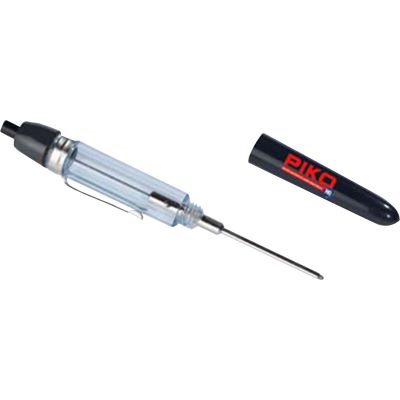
Fine dispensing tool for precise and economical work at explicitly specified lubrication points.
View Product →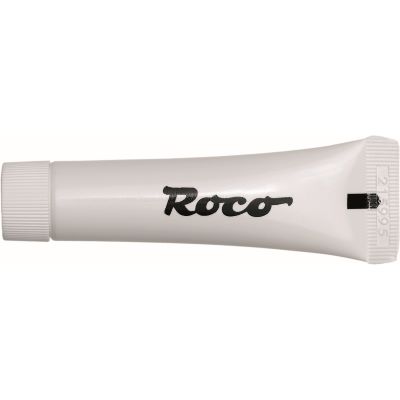
Gear grease for suitable gears, worm drives and other drive components where grease is specified.
View Product →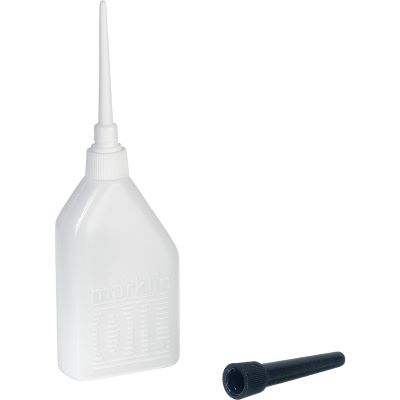
Dosing aid for applying small quantities of oil precisely to maintenance points for which lubrication is specified.
View Product →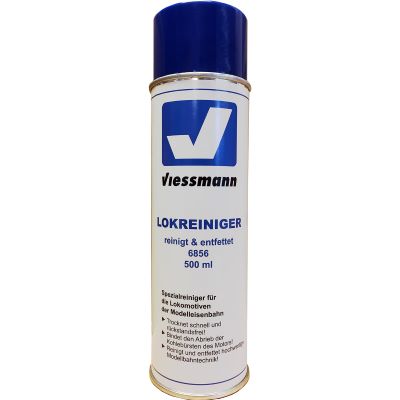
Cleaning product for suitable maintenance work on model railway vehicles and compatible components.
View Product →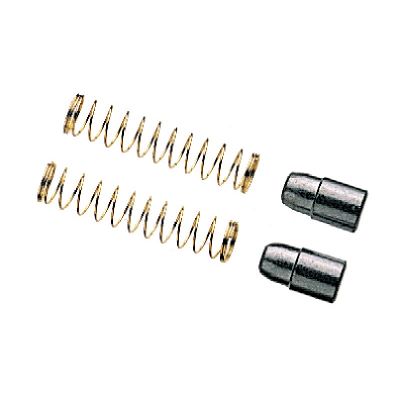
Example of a classic wear component that must be selected according to the particular motor design and locomotive.
View Product →Use the English Modellbahnshop categories to find current lubricants, wear parts, cleaning systems and technical replacement parts. Product availability and prices remain on the corresponding shop pages.
Precision oilers, special greases, cleaning products and maintenance accessories.
Replacement traction tyres for various manufacturers, vehicle types and gauges.
Motor brushes for compatible traditional motor designs in H0, N, TT and other suitable vehicles.
Centre pickup shoes, wheel contacts and roof-mounted pantographs for maintenance and repair.
Cleaning cars, track vacuum systems, polishing equipment and related maintenance accessories.
Motors, wheelsets, couplings, chassis parts and further locomotive components.
Traction tyres, carbon brushes, pickup shoes and many mechanical components should be selected according to the manufacturer, article number and technical design rather than gauge alone.
This depends on the exact vehicle. Some manufacturer instructions specify examples of approximately 30 or 40 operating hours. These figures apply only to the particular models concerned. The operating instructions for your article number and its lubrication diagram are decisive.
No. Roco and PIKO specify approximately 30 operating hours for certain models, while other models and manufacturers give different values. Such an interval must therefore not be transferred to the entire model railway market.
For a normal hobby layout, approximate documentation is often sufficient. Record major operating sessions or keep a simple maintenance log containing the date and estimated running time for vehicles that are used particularly intensively.
Not automatically. A vehicle that has hardly been used does not require the same mechanical maintenance simply because a calendar year has passed as a locomotive that operates frequently. A visual and functional inspection is nevertheless sensible before recommissioning after a long storage period.
Replace them when they become cracked, hardened, loose or twisted, or when locomotive traction decreases noticeably. Select the correct tyre according to the vehicle and wheelset rather than the gauge alone.
Only motors that use replaceable brushes require this type of maintenance. Inspection depends on actual condition and the manufacturer's specification. Wear, poor electrical contact or motor problems are reasons to check them.
Clean track according to its actual condition. Dust, scenery construction, room climate and railway operation influence the requirement more strongly than a fixed monthly interval. Repeated jerking at the same locations is a useful reason to inspect the track.
A decoder does not automatically change the basic mechanical maintenance requirements for wheels, bearings and gearboxes. Modern motor designs may, however, have different service requirements. The exact operating instructions therefore remain decisive.
Wagons are best inspected according to condition. Increased rolling resistance, squeaking axles, poor coupling centring or dirty wheelsets are clear maintenance signals.
Outdoor operation introduces additional contamination from dust, soil, vegetation and weather. PIKO specifies concrete lubrication and wear intervals for certain G-scale models, for example, but these values remain model-specific.
No. First inspect the vehicle, wheels, contacts and mechanism. Then consult the operating instructions and treat only the specified locations with the specified lubricant.
Professional repair is advisable for a blocked drive, damaged gearbox, severe overheating, electrical defect or whenever safe disassembly is not possible. Rare and valuable models in particular should not be dismantled experimentally.
Inspect regularly, document operating hours for heavily used vehicles and use lubricants and spare parts selectively. The operating instructions for the exact model remain the most important maintenance reference.
Guide reviewed: 9 August 2026