Modellbahn Keks
Welcome!
Our cookies offer you a fast, relaxed and full-featured shopping experience. Some are necessary to operate the website and its functions. Others help us to improve our services. If you agree to this, simply consent to the use of cookies for preferences, statistics and marketing by clicking on "OK". Alternatively, you can deactivate individual cookies under "Customise cookies" or all cookies, except those required for the function of our website, under "Reject all".
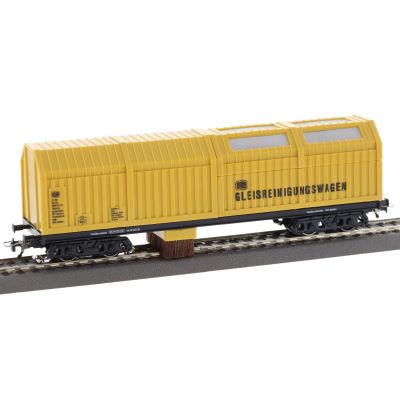
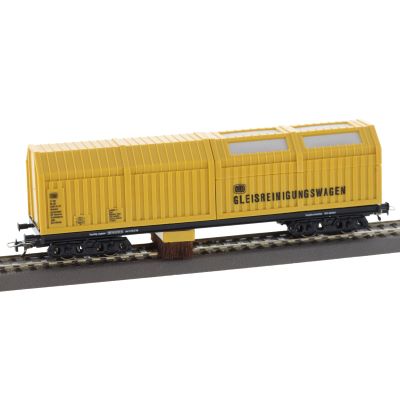
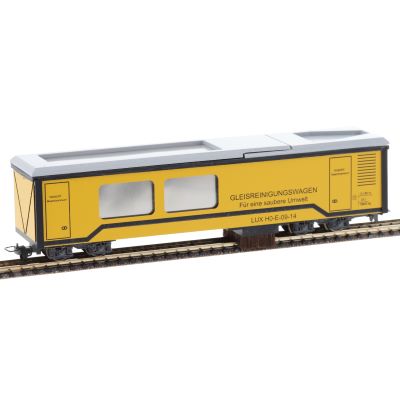
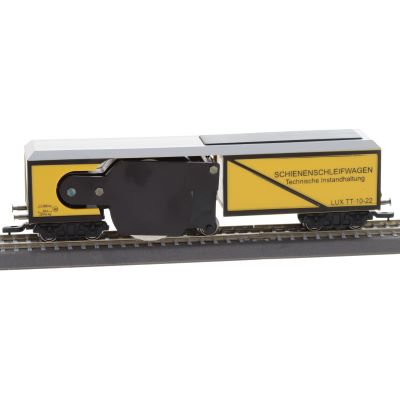
LUX Modellbau H0 track vacuum cleaner wagon representing active model railway track cleaning
The cleaning principle makes the difference

Compare Model Railway Cleaning Cars

Which cleaning car is right for your layout? Compare classic track-cleaning wagons, active track vacuum cars, polishing systems, wet-cleaning cars and more intensive cleaning solutions for H0, N, TT, H0e, H0m and G gauge.

Choose according to the cleaning task

Which Cleaning Car Makes Sense for Which Layout?

There is no single best cleaning car for every model railway. A simple wagon equipped with felt or a cleaning element performs a different task from a motorised track vacuum cleaner. Likewise, a polishing car and a rail grinding car are not the same thing.

For regular maintenance of lightly contaminated rails, classic track-cleaning cars from Märklin, PIKO, Roco, Fleischmann or Tillig are straightforward solutions. They can be included in a normal train and work on the railheads while the train is moving.

If the main problem is dust, fibres and small scenery particles in tunnels or hidden staging yards, an active track vacuum cleaner car is usually the more suitable tool because it actually collects loose debris instead of merely moving it around the layout.

Polishing systems or dedicated grinding systems are intended for more persistent deposits. On a large layout, the best solution is therefore often not one individual car but a coordinated cleaning train: first remove loose particles, then maintain the electrical contact surfaces.

Models compared directly

Model Railway Cleaning Cars Compared

The table compares characteristic examples of different cleaning concepts. Gauge and power system matter, but the most important question is what type of contamination you want to remove.

Model Gauge / System Principle Especially Suitable For Character
Märklin 46049 H0 · AC Polishing felts Regular contact-surface care Easy to run in a normal train
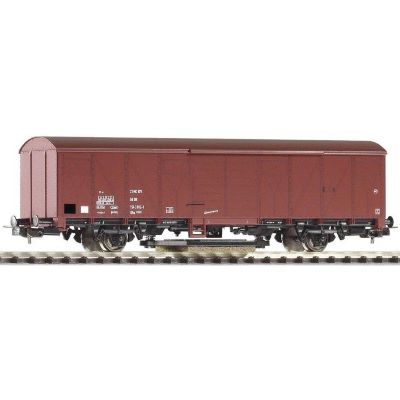
PIKO 54998 H0 · DC Cleaning insert Continuous route maintenance Discreet freight-car appearance
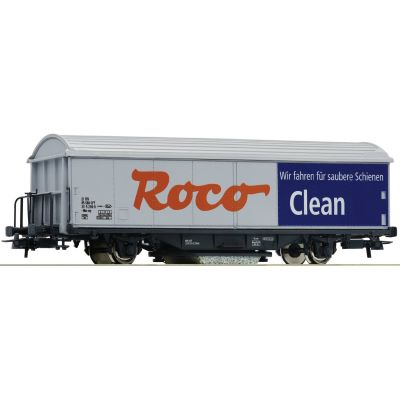
Roco 46400 Roco-Clean H0 · DC Cleaning element Standard mechanical maintenance Proven passive cleaning principle
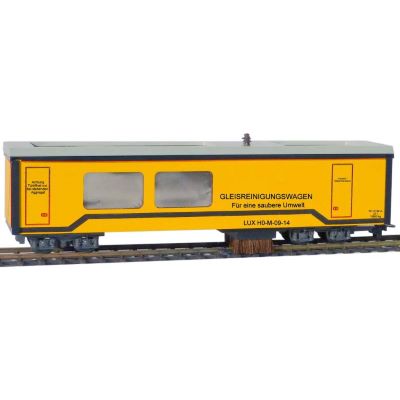
LUX 8830 H0 · AC Active vacuum cleaner Tunnels & hidden staging Automatic start/stop function
LUX 8831 H0 · DC Active vacuum cleaner Dust and loose particles Suitable for analogue and digital layouts
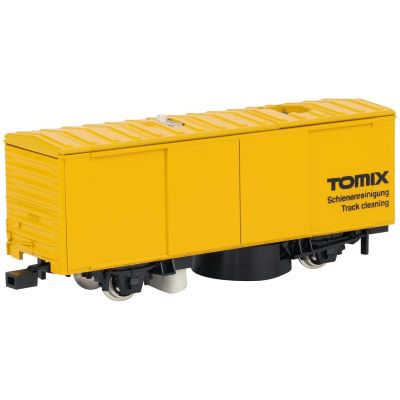
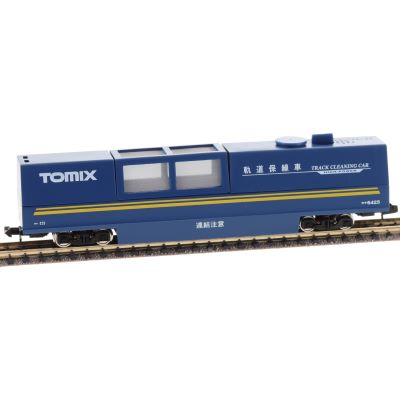
Tomytec H0-790 H0 · AC/DC Vacuuming, discs & polishing Several cleaning tasks with one car Cleaning functions powered separately
Fleischmann 6660015 N · DC Integrated cleaning system Regular N-gauge route maintenance Compact passive solution
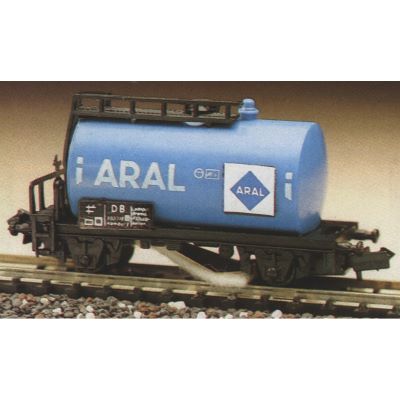
Herkat 1401 N · DC Wet cleaning Oily or adhering residues Tank and cleaning slider
LUX 9070 N Active vacuum cleaner Large N-gauge layouts Analogue and digital operation
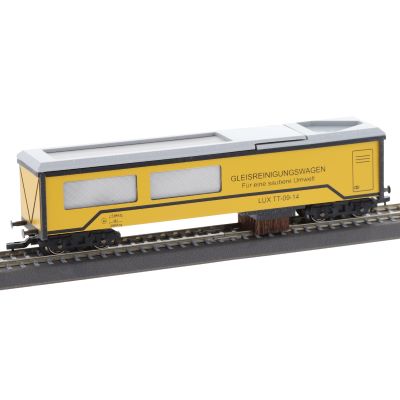
Tillig 95291 TT · DC Cleaning slider Simple continuous TT maintenance Cleaning function integrated into the car
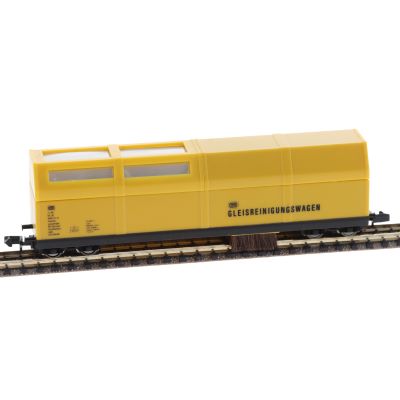
LUX 9740 TT Active vacuum cleaner Dust on long TT routes Automatic cleaning technology
LUX 9735 TT Motorised polishing car Contact film and surface care Active polishing system
LUX 9785 H0e Active vacuum cleaner Narrow gauge and hidden track Analogue and digital operation
LUX 9725 H0m Active vacuum cleaner Metre-gauge layouts Compact specialist cleaning vehicle
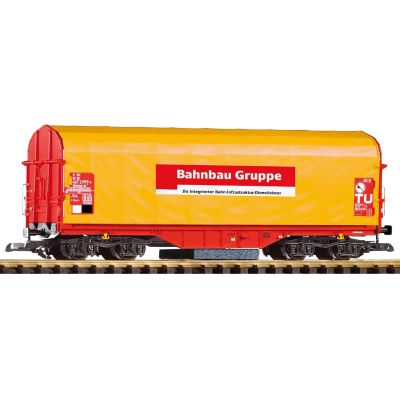
PIKO 37720 G · DC Track-cleaning car Garden railway route maintenance Designed for large-scale railways

Check the Complete Vehicle Specification

For AC/DC conversions, wheelsets, couplings and minimum radii, always follow the specifications of the individual product. Active cleaning cars also require the power or energy supply intended for the respective system.

Not every cleaning car does the same job

Track Vacuum, Polishing Car or Track-Cleaning Wagon?

1

Classic Track-Cleaning Cars

Cleaning Principle
Ideal for Regular Maintenance Runs

A felt pad, cleaning slider or cleaning element rests against the railheads. Märklin 46049, PIKO 54998, Roco-Clean and Tillig 95291 are typical examples. They do not require a dedicated cleaning motor and can simply be included in a train.

2

Track Vacuum Cleaner Cars

Cleaning Principle
Ideal for Tunnels and Hidden Staging Yards

An active vacuum system collects dust, fibres and loose particles instead of simply moving them around the layout. LUX offers corresponding vehicles for H0, N, TT, H0e and H0m. On large layouts, this is a particularly useful first stage of the cleaning process.

3

Polishing and Wet Cleaning

Cleaning Principle
Ideal for Adhering Contact Films

Polishing cars work specifically on the rail surface. Wet-cleaning systems such as selected Herkat cars apply an appropriate cleaner to the contact surface in a controlled manner. Liquids should always be used sparingly and only in accordance with the manufacturer's instructions.

4

Grinding Cars for Heavier Deposits

Cleaning Principle
Ideal for Targeted Intensive Cleaning

Grinding systems work more mechanically than simple felt or polishing solutions. They should not automatically be used on every maintenance run. For routine care, remove loose dirt first and clean only as intensively as necessary.

For Large Layouts: Treat Cleaning as a System

An effective sequence is often to vacuum dust and loose particles first and then polish the contact surfaces or follow with a suitable cleaning car. This prevents the second vehicle from having to travel over loose scenery debris and fibres.

View Cleaning Cars
From the smallest scale to the garden railway

Select Cleaning Cars by Gauge

The current cleaning-car category has dedicated gauge filters for H0, N, TT, H0e, H0m and G. For other scales, universal manual cleaning products and items explicitly approved for the relevant gauge are especially important.

Gauge Cleaning Cars in the Current Range What Should You Pay Particular Attention To?
Z Gauge No dedicated cleaning-car filter Very small contact surfaces; use universal tools with particular precision.
N Gauge Large selection Consider the low vehicle weight and small wheel contact surfaces.
TT Gauge Dedicated range focus Passive and active cleaning cars are available.
TTe Gauge No dedicated cleaning-car filter Check the narrow-gauge profile, wheelsets and vehicle width carefully.
H0 Gauge Largest selection Distinguish between AC and DC .
H0e Specialised systems LUX offers active cleaning vehicles for narrow-gauge systems, among other solutions.
H0m Specialised systems Check the coupling and metre-gauge track geometry.
H0f No dedicated cleaning-car filter Plan small field-railway track so that gentle manual cleaning remains possible.
0 Gauge No dedicated cleaning-car filter Large rail profiles make direct manual cleaning comparatively easy.
Gauge 1 No dedicated cleaning-car filter Follow manufacturer approvals for the vehicle and track system.
G Gauge Dedicated cleaning products Outdoors, remove leaves, soil and coarse foreign objects before cleaning the railheads.
Brands in the cleaning category

Manufacturers of Cleaning Cars and Accessories

Go directly to the relevant manufacturer worlds at Modellbahnshop and compare cleaning cars, vacuum systems and replacement cleaning components.

Five steps to the right solution

What Should You Look for When Choosing a Cleaning Car?

1

Check the Gauge and Power System

Basic Requirement
Particularly Important in H0

The car must suit the gauge. With H0, also check whether it is intended for AC or DC operation. Wheelsets, current collection and the centre conductor can differ.

2

Identify the Contamination

Define the Task
Dust Is Not the Same as Contact Film

Loose particles call for a vacuum cleaner. Felt, polishing systems or suitable grinding systems are more appropriate for deposits on the electrical contact surfaces.

3

Consider Accessibility

Layout Planning
Hidden Staging Yards Benefit Particularly

The more difficult a track is to reach by hand, the more useful an active cleaning vehicle becomes.

4

Check Tractive Effort and Minimum Radius

Railway Operation
Cleaning Creates Additional Resistance

Cleaning elements press against the track and therefore increase rolling resistance. The locomotive needs adequate tractive reserves. The car length, coupling and minimum radius must also suit the layout.

5

Plan for Consumable Parts

Long-Term Use
Felts and Brushes Are Wear Parts

Before buying, check the availability of replacement felts, vacuum brushes, grinding elements, polishing discs and other replaceable cleaning components.

Selected products by cleaning principle

Discover Cleaning Cars and Cleaning Systems

The following examples demonstrate different cleaning concepts, from simple passive rail maintenance to motorised vacuum and polishing systems.

Directly from the webshop

Filter Current Cleaning Cars in the Shop

The current Modellbahnshop cleaning-car category contains the live product range. Use the shop filters to narrow the selection by gauge, manufacturer, availability and other product properties, or search directly for terms such as H0 vacuum cleaner, N cleaning car or TT polishing car.

Open the Current Cleaning-Car Range

Browse the latest cleaning cars, track vacuum systems, polishing and grinding equipment, wheel-cleaning systems and replacement cleaning components directly in the English Modellbahnshop category.

Open Complete Category
Decision support

Frequently Asked Questions About Comparing Cleaning Cars

The most important questions about cleaning methods, gauges, power systems and cleaning trains.

Which Model Railway Cleaning Car Is Best?

It depends on the contamination. A classic cleaning car is often sufficient for normal maintenance. A track vacuum cleaner is better for loose dust, while polishing or suitable grinding systems can be useful for adhering deposits.

Is a Track Vacuum Cleaner Better Than a Cleaning Car?

They perform different tasks. A vacuum cleaner collects loose particles, while classic cleaning cars primarily work on the railheads. On larger layouts, the two principles complement each other very well.

Which Cleaning Car Is Suitable for a Hidden Staging Yard?

An active track vacuum cleaner is particularly practical because it collects dust and fibres in areas that are difficult to reach. A polishing or classic cleaning car can then follow it.

Does a Cleaning Car Work on a Digital Layout?

Passive cars operate independently of digital control. With motorised systems, the specification of the individual product must be observed. Many current LUX track vacuum cleaner cars are designed for analogue and digital layouts.

Do I Need an AC or DC Cleaning Car for H0?

The current collection and wheelsets must match the track system. Centre-contact and two-rail layouts should therefore be considered separately. Some cars can be adapted with suitable wheelsets, while others are available as separate AC and DC versions.

Which Cleaning Car Is Suitable for N Gauge?

Passive cars from Fleischmann or Herkat are suitable for simple regular maintenance. Tomytec offers several cleaning functions, while the LUX 9070 provides an active vacuum solution for larger N-gauge layouts.

Should a Cleaning Train Contain Several Cars?

This can be useful on large layouts. A logical sequence is to vacuum loose particles first and then clean or polish the railheads. The locomotive must have sufficient tractive effort for the additional rolling resistance.

Does a Cleaning Car Replace Complete Model Railway Maintenance?

No. Wheels and current collectors can also become dirty. Turnouts, electrical feeds and particularly critical sections of track should also be inspected directly from time to time. Track-cleaning cars are one important part of a complete maintenance routine.

From Track Cleaning to Complete Model Railway Maintenance

Cleaning cars keep the route clean, but reliable long-term operation also depends on clean wheels, pickup shoes, pantographs, locomotives and gear mechanisms.

Open the Main Guide

Range checked: 9 August 2026